
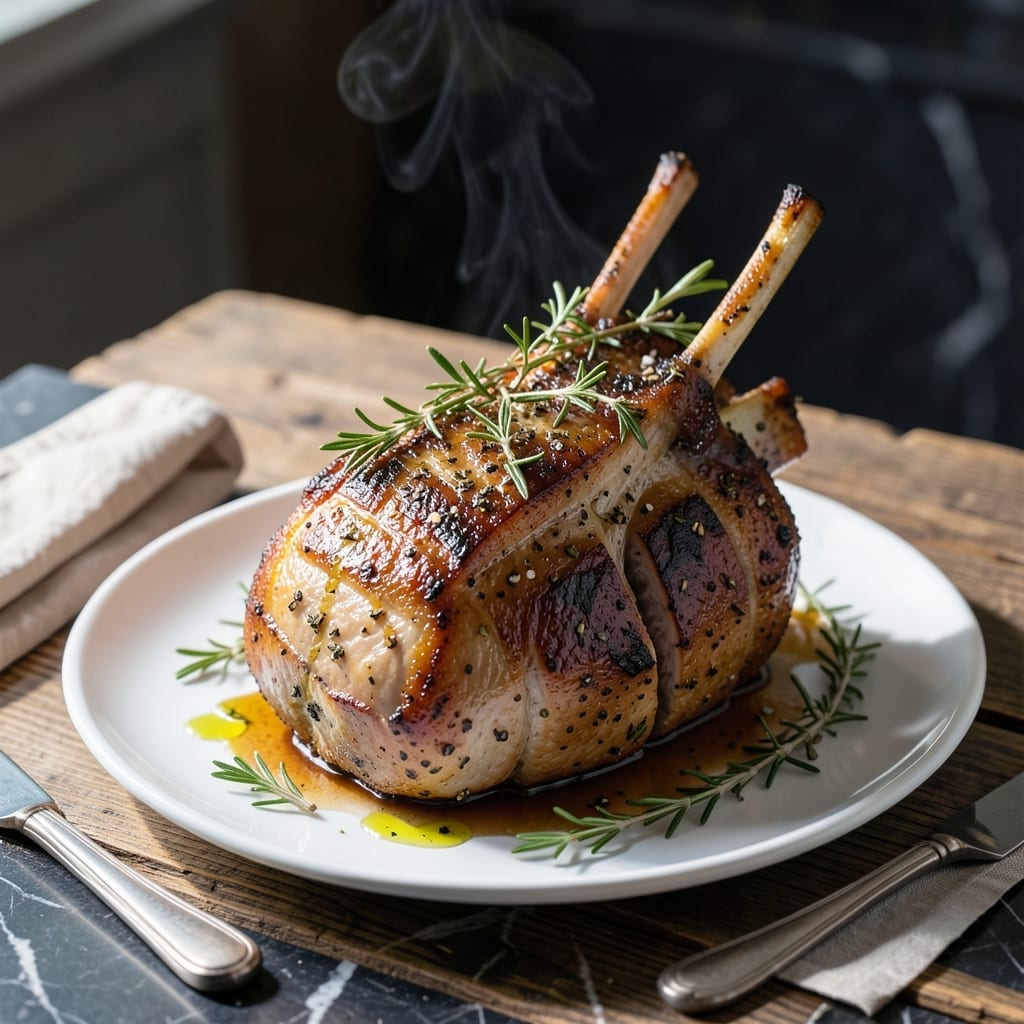
This herb-crusted rack of pork delivers juicy, tender results with minimal effort. The secret lies in a simple dry brine and a flavorful herb crust that forms a beautiful golden seal.
I developed this method after years of testing various techniques, settling on a straightforward approach that ensures the meat stays moist throughout cooking. The herb mixture adds aromatic depth without overpowering the natural pork flavor.
The final dish features a perfectly crispy exterior giving way to tender meat. Each bite offers a balance of savory herbs and rich pork flavor that feels special enough for company.
Serve with roasted vegetables for a complete meal that impresses every time.
Ingredients for Recipe for Rack of Pork
Elegant yet approachable ingredients create a restaurant-worthy centerpiece with minimal effort.
| Ingredient | Amount | Notes |
|---|---|---|
| Pork Rib Roast 🥩 | 2 lb | Bone-in, frenched for presentation |
| Kosher Salt 🧂 | 2 tbsp | Diamond Crystal preferred for dry brine |
| Freshly Ground Black Pepper 🌶️ | 1 tbsp | Coarse grind for crust |
| Fresh Rosemary 🌿 | 2 tbsp | Finely chopped, stems discarded |
| Fresh Thyme Leaves 🍃 | 2 tbsp | Stripped from stems |
| Fresh Sage Leaves 🍃 | 1 tbsp | Finely minced |
| Garlic Cloves 🧄 | 4 cloves | Peeled and minced |
| Dijon Mustard 🟡 | 2 tbsp | For herb crust adhesion |
| Extra-Virgin Olive Oil 🫒 | 2 tbsp | For searing and brushing |
| Unsalted Butter 🧈 | 2 tbsp | Melted for basting |
| Dry White Wine 🍷 | ½ cup | For deglazing pan |
| Low-Sodium Chicken Stock 🥘 | ½ cup | For pan sauce |
| Shallot 🧅 | 1 whole | Finely diced for sauce |
The pork rib roast is non-negotiable here. Source bone-in, frenched racks from a reputable butcher like Whole Foods or your local meat counter for the best marbling and presentation. Look for a vibrant pink color with a thin fat cap—this ensures juiciness. The dry brine with Diamond Crystal kosher salt is key; its coarse texture adheres perfectly to the meat’s surface, creating that ideal crust.
Need to swap fresh herbs? Dried at one-third the amount works in a pinch, though the flavor won’t be as bright. No white wine? Apple cider vinegar with a splash of water mimics the acidity for deglazing. For the mustard, whole-grain Dijon adds texture, but smooth works too. If shallots aren’t available, red onion is an acceptable substitute, though slightly sharper in flavor.
The frenched bones make this look impressive, but they’re also practical—easier to carve. Store the raw pork in the fridge for up to 3 days, or freeze for 6 months. Leftovers (if any) keep 4 days refrigerated. Reheat gently in a low oven to preserve moisture.
Why You’ll Love This Recipe
- Hands-Off Cooking: I rub the roast with salt, pepper, rosemary, and thyme, then let the oven do all the work.
- Herb-Crusted Perfection: The fresh rosemary and thyme form a fragrant crust that makes every bite ridiculously good.
- Dinner Party Star: Honestly, it looks impressive but takes almost no effort—ideal for hosting.
- Leftovers for Days: One roast feeds my family twice, and the sandwiches the next day? Even better.
Step-by-Step Instructions for Rack of Pork
This professional method ensures perfectly juicy results with an elegant herb crust every time.
Step 1: Prepare and Season the Pork Rib Roast
Pat the 2 lb Pork Rib Roast completely dry with paper towels. This critical step ensures the herb crust adheres properly and promotes even browning. Trim any excess fat, leaving a thin layer for flavor and moisture.
In a small bowl, combine the 2 tbsp Kosher Salt, 1 tbsp Freshly Ground Black Pepper, 2 tbsp Fresh Rosemary, 2 tbsp Fresh Thyme Leaves, 1 tbsp Fresh Sage Leaves, and 4 cloves Garlic Cloves. Rub this mixture evenly over the entire surface of the roast, pressing firmly to create a flavorful crust.
Step 2: Sear and Establish the Herb Crust
Preheat your oven to 400°F. Heat the 2 tbsp Extra-Virgin Olive Oil in a large oven-safe skillet over medium-high heat. Once shimmering, sear the roast on all sides for 2-3 minutes per side until deeply browned.
During the final minute of searing, brush the top and sides of the roast with the 2 tbsp Dijon Mustard. This acts as a glue for the herb mixture, ensuring it stays in place during roasting. The mustard will caramelize slightly, adding depth to the crust.
Step 3: Roast to Perfect Doneness
Transfer the skillet with the roast to the preheated oven. Roast for 20-25 minutes or until the internal temperature reaches 145°F for medium-rare. Use a meat thermometer inserted into the thickest part of the meat, avoiding the bone.
Halfway through the roasting time, baste the roast with the 2 tbsp Unsalted Butter for added richness and to enhance the crust’s development. The butter should be melted and golden when added to the pan.
Step 4: Rest and Prepare the Pan Sauce
Remove the roast from the oven and transfer it to a cutting board. Tent loosely with foil and let it rest for 10-15 minutes. This allows the juices to redistribute throughout the meat, ensuring every slice is moist and flavorful.
While the roast rests, place the skillet on the stovetop over medium heat. Add the 1 whole Shallot and cook for 2 minutes until softened. Deglaze with the 0.5 cup Dry White Wine, scraping up any browned bits. Add the 0.5 cup Low-Sodium Chicken Stock and simmer for 3-4 minutes until slightly reduced.
Step 5: Slice and Serve
Carve the roast between the ribs into individual chops. Arrange on a serving platter and drizzle with the pan sauce. The meat should be pink and juicy with a fragrant, golden-brown herb crust.
Serve immediately while warm. Each chop should offer tender, flavorful meat with a perfect balance of herbs in every bite. The pan sauce adds a complementary touch of acidity and depth to the dish.
Pro Tips For Making Recipe For Rack Of Pork
- Reverse Sear the Roast: Start in a 250°F oven until the internal temp hits 135°F, then finish with a 5-minute high-heat sear in a screaming-hot pan. I learned this the hard way—slow and low keeps the meat juicy while the crust gets that perfect crackle.
- Dry the Surface Well: Pat the pork rib roast completely dry with paper towels before seasoning. Sounds weird, but it works: even a little moisture prevents the salt and herbs from sticking properly, and you’ll miss out on that crispy exterior.
- Skip the Cold Pan: Let the roast sit at room temperature for at least 30 minutes before cooking. After burning three batches, I finally figured out that starting with a cold center leads to uneven cooking and a sad, gray band in the middle.
- Bruise the Herbs: Roll the rosemary and thyme between your palms before sprinkling them on the pork. My grandmother swore by this, and she was right: it releases the oils and makes the flavor actually penetrate the meat, not just sit on top.
Pro Cooking Tips for This Dish
Perfect Searing Technique
Always start with a completely dry roast—pat it thoroughly with paper towels. This ensures a proper sear and prevents steaming. I use a cast iron skillet for even heat distribution, heated over medium-high heat until the oil shimmers. 🔥
Internal Temperature Control
Invest in an instant-read thermometer—I trust ThermoWorks for accuracy. Pull the roast at 140°F; it will rise to 145°F while resting. Overcooking is the most common mistake, turning tender pork into tough, dry meat.
Herb Crust Adhesion
The Dijon mustard is your secret glue. Brush it generously on all sides before pressing on the herb mixture. This creates a flavorful barrier that locks in moisture and ensures the crust stays put during roasting.
Press the herbs firmly into the mustard so they form a thick, even layer. This step makes all the difference in texture and flavor. 💡
Resting Time Matters
Never skip the 10-15 minute rest under foil. This allows juices to redistribute, so every slice stays moist. I tent mine loosely to keep it warm without overcooking from residual heat.
Pan Sauce Pro Tip
Deglaze with white wine while the pan is still hot to lift all those flavorful browned bits. Reduce the sauce by half for a rich, concentrated flavor that complements the pork beautifully.
Nutrition Facts
Frequently Asked Questions
How do I prevent the herb crust from burning?
Press the herbs firmly into the Dijon mustard so they adhere well. If the crust starts browning too quickly, tent the roast with foil for the last 10 minutes of cooking.
Can I use dried herbs instead of fresh?
Yes, use 1/3 the amount of dried herbs. Fresh herbs provide brighter flavor, but dried work in a pinch. Rehydrate them slightly with oil to help adhesion.
What if my roast isn’t frenched?
You can french it yourself with a sharp knife, or ask your butcher to do it. This step exposes the rib bones for a more elegant presentation and easier carving.
How long should I let it rest before slicing?
A 10-15 minute rest is essential. This allows juices to redistribute, ensuring moist, flavorful meat. Skipping this step can result in dry pork.

- BBQ Sausage Recipe Oven: Smoky Depth Without the Grill - September 28, 2026
- BBQ Chicken Bowl Recipe Rice: Smoky Sweetness Over Fluffy Grains - September 28, 2026
- Beef Cutlet Recipe Ideas: Crispy Breaded Patties With Bold Seasonings - September 28, 2026