
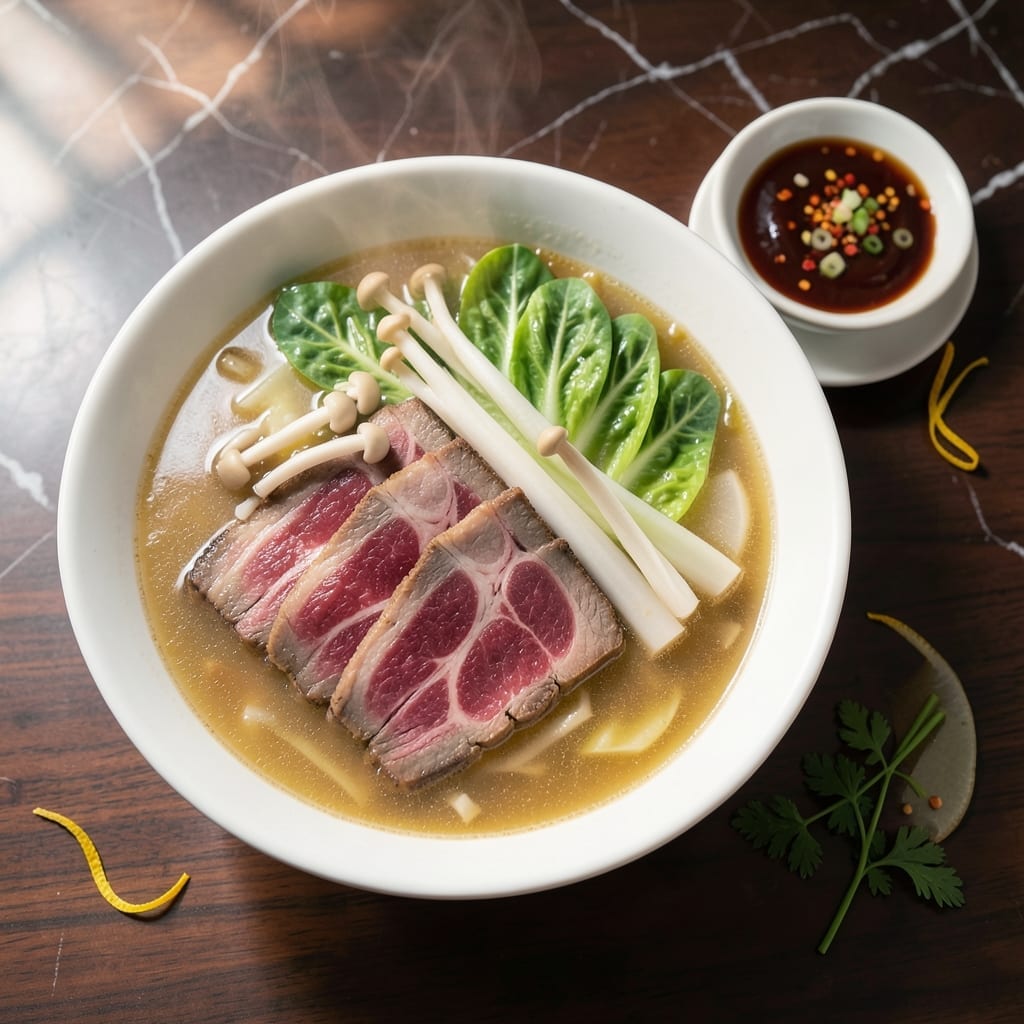
This traditional Japanese hot pot brings the authentic shabu shabu experience to your kitchen. The delicate broth and fresh ingredients create a meal that’s both comforting and elegant.
Thinly sliced meat and vegetables cook quickly in the simmering broth, while dipping sauces add layers of flavor. This dish is perfect for gathering around the table with family and friends.
Ingredients for Recipe for Shabu Shabu Soup
Traditional Japanese ingredients create an authentic hot pot experience at home with minimal effort.
| Ingredient | Amount | Notes |
|---|---|---|
| Kombu Seaweed 🌊 | 2 pieces | Dried, 4-inch squares |
| Bonito Flakes 🐟 | 1 cup | Dried, for dashi broth |
| Water 💧 | 8 cups | Filtered for clear broth |
| Soy Sauce 🫒 | ½ cup | Low-sodium preferred |
| Mirin 🍶 | ¼ cup | Sweet rice wine |
| Rice Vinegar 🍚 | 2 tbsp | Unseasoned for dipping sauce |
| Sugar 🧂 | 1 tbsp | Granulated white |
| Ribeye Steak 🥩 | 1 lb | Thinly sliced, sashimi-grade |
| Napa Cabbage 🥬 | 1 whole | Cored and sliced |
| Shiitake Mushrooms 🍄 | 8 oz | Fresh, stems removed |
| Carrots 🥕 | 2 whole | Julienned or thinly sliced |
| Tofu 🧈 | 14 oz | Firm or extra-firm, drained |
| Green Onions 🧅 | 4 whole | Thinly sliced, for garnish |
| Sesame Seeds 🌿 | 2 tbsp | Toasted, for garnish |
| Udon Noodles 🍜 | 8 oz | Dried or fresh |
The broth base demands quality. Kombu and bonito flakes are non-negotiable for authentic dashi—look for them at Asian markets or the international aisle. I source mine from H Mart or Mitsua for consistent quality. The ribeye should be sashimi-grade (ask your butcher to slice it paper-thin). For the tofu, House Foods or Nasoya extra-firm holds up best in the hot broth.
No kombu? Dried shiitake mushrooms can steep in hot water for a vegetarian dashi. Swap ribeye for thinly sliced chicken breast or pork loin if preferred. Mirin substitute? Use dry sherry with a pinch of sugar. For the noodles, soba or ramen work too. The dipping sauces are flexible—adjust soy, vinegar, and sugar ratios to taste.
Prep everything before heating the broth—shabu shabu cooks fast. Store kombu and bonito in airtight containers in a cool, dark place for up to 1 year. Leftovers keep 3 days refrigerated, but the meat and veggies are best fresh. Slice garnishes right before serving.
Why You’ll Love This Recipe
- 5-Minute Broth: I just simmer kombu and bonito flakes in water—no chopping, no fuss.
- Umami Bomb: The soy and mirin turn the dashi into this rich, savory base that’s ridiculous with thinly sliced meat or tofu.
- Dinner Party Hero: Honestly, it’s the easiest way to feed a crowd—everyone cooks their own at the table.
- Budget Stretcher: A handful of flakes and seaweed makes gallons of broth, and leftovers taste even better the next day.
Step-by-Step Instructions for Shabu Shabu Soup
Authentic technique ensures a delicate, umami-rich broth that highlights each ingredient’s natural flavor.
Step 1: Prepare the Dashi Broth Base
Wipe the 2 pieces Kombu Seaweed with a damp cloth to remove any surface dust. Place the kombu in a large pot with the 8 cups Water and let it soak for 30 minutes to begin extracting flavor. This cold-start method prevents bitterness while maximizing umami.
Heat the pot over medium heat until just before boiling—you’ll see tiny bubbles forming around the kombu edges. Remove the kombu immediately to avoid bitterness. Add the 1 cup Bonito Flakes, then turn off the heat. Let the bonito steep for 10 minutes until it sinks to the bottom. Strain through a fine-mesh sieve for a crystal-clear broth.
Step 2: Prepare the Dipping Sauces and Ingredients
In a small bowl, combine the 0.5 cup Soy Sauce, 0.25 cup Mirin, 2 tbsp Rice Vinegar, and 1 tbsp Sugar. Stir until the sugar dissolves completely. This ponzu-style sauce should balance sweet, salty, and tangy notes. Set aside to let flavors meld.
Arrange all ingredients on a large platter: thinly slice the 1 lb Ribeye Steak against the grain, core and slice the 1 whole Napa Cabbage, julienne the 2 whole Carrots, and remove stems from the 8 oz Shiitake Mushrooms. Drain and cube the 14 oz Tofu. Thinly slice the 4 whole Green Onions and toast the 2 tbsp Sesame Seeds for garnish.
Step 3: Assemble and Cook the Hot Pot
Transfer the strained dashi to a donabe (clay pot) or heavy pot and bring to a gentle simmer over medium-low heat. The broth should shimmer but not boil vigorously—this maintains the delicate flavors. If using a portable burner at the table, transfer the broth now and keep it warm.
Allow diners to cook their own ingredients: swish the ribeye slices in the broth for 10-15 seconds until just cooked through. Add the napa cabbage, shiitake mushrooms, and carrots to the pot, cooking for 2-3 minutes until tender-crisp. The tofu can be added directly to the broth to warm through for 1-2 minutes.
Step 4: Serve with Udon Noodles and Garnishes
Cook the 8 oz Udon Noodles separately according to package instructions, then drain and rinse under cold water to stop the cooking process. Divide the noodles among bowls and ladle the hot broth over them at the table.
Encourage diners to dip cooked ingredients into the ponzu sauce before eating. Garnish individual servings with green onions and toasted sesame seeds. The broth will intensify in flavor as more ingredients cook in it, so save some plain broth in a separate pot to refresh the main pot as needed throughout the meal.
Pro Tips For Making Recipe For Shabu Shabu Soup
- Wipe the Kombu: I learned this the hard way—always gently wipe the kombu with a damp cloth first to remove any grit, or you’ll end up with a cloudy broth instead of that clear, elegant dashi.
- Cold Start the Kombu: Add the kombu to cold water and heat slowly to just below boiling, then remove it—this extracts maximum umami without bitterness. Pull it out at the first sign of tiny bubbles.
- Skip the Boiling Bonito: Steer clear of boiling the bonito flakes; toss them into the hot (not boiling) kombu broth, turn off the heat, and let them steep for 10 minutes—any longer and the soup turns bitter.
- Strain Twice: After steeping, strain the broth through a fine-mesh sieve first, then again through cheesecloth or a coffee filter for a silky-smooth soup base—sounds fussy, but it’s worth the 2 extra minutes.
Storing and Reheating This Dish
Broth Storage
Store leftover dashi in an airtight container in the fridge for up to 3 days. I recommend glass jars for best flavor preservation. The broth will intensify as it cools, making it perfect for future hot pots. ❄️
Meat and Veggies
Cooked ribeye, tofu, and vegetables don’t reheat well—they’re best enjoyed fresh. If you must store them, use a shallow container and consume within 24 hours. The texture will soften, but the flavors remain delicious.
Noodle Handling
Cooked udon noodles keep for 2 days refrigerated in a sealed container. To prevent sticking, toss them with 1 tsp neutral oil before storing. Reheat by dunking in boiling water for 30 seconds to restore their springy texture.
Reheating Broth
Gently reheat dashi in a pot over medium-low heat until simmering—never boil. This preserves the delicate umami notes. For a quick fix, microwave in 30-second bursts, stirring between each. 🔥
Freezing Tips
Dashi freezes beautifully for up to 3 months in quart-sized freezer bags. Lay flat to save space. Thaw overnight in the fridge or in cold water for 30 minutes before reheating.
Sauce Storage
Ponzu sauce keeps for 1 week refrigerated in a jar. The flavors deepen over time. If it separates, just stir vigorously before using. I love how it evolves after a day or two.
Frequently Asked Questions
Can I use chicken instead of beef?
Use 1 lb boneless chicken breast or thigh, sliced paper-thin. It cooks even faster than beef—just 5-10 seconds in the broth. Chicken thigh stays juicier than breast.
What’s the best pot for serving?
A portable electric hot pot or donabe (clay pot) keeps broth simmering at the table. For stovetop, a wide, shallow pot works best. Avoid cast iron—it can react with acidic ingredients.
How do I slice the meat so thin?
Freeze the meat for 20-30 minutes to firm it up, then slice against the grain at a 45-degree angle. Ask your butcher to slice it for you—most will do it for free if you buy the meat there.
Can I make this vegetarian?
Yes! Use vegetarian dashi (kombu + shiitake mushrooms) and swap meat for extra tofu, mushrooms, and thinly sliced tempeh. Add 1 tbsp miso paste to the broth for depth.
Nutrition Facts

- BBQ Sausage Recipe Oven: Smoky Depth Without the Grill - September 28, 2026
- BBQ Chicken Bowl Recipe Rice: Smoky Sweetness Over Fluffy Grains - September 28, 2026
- Beef Cutlet Recipe Ideas: Crispy Breaded Patties With Bold Seasonings - September 28, 2026