
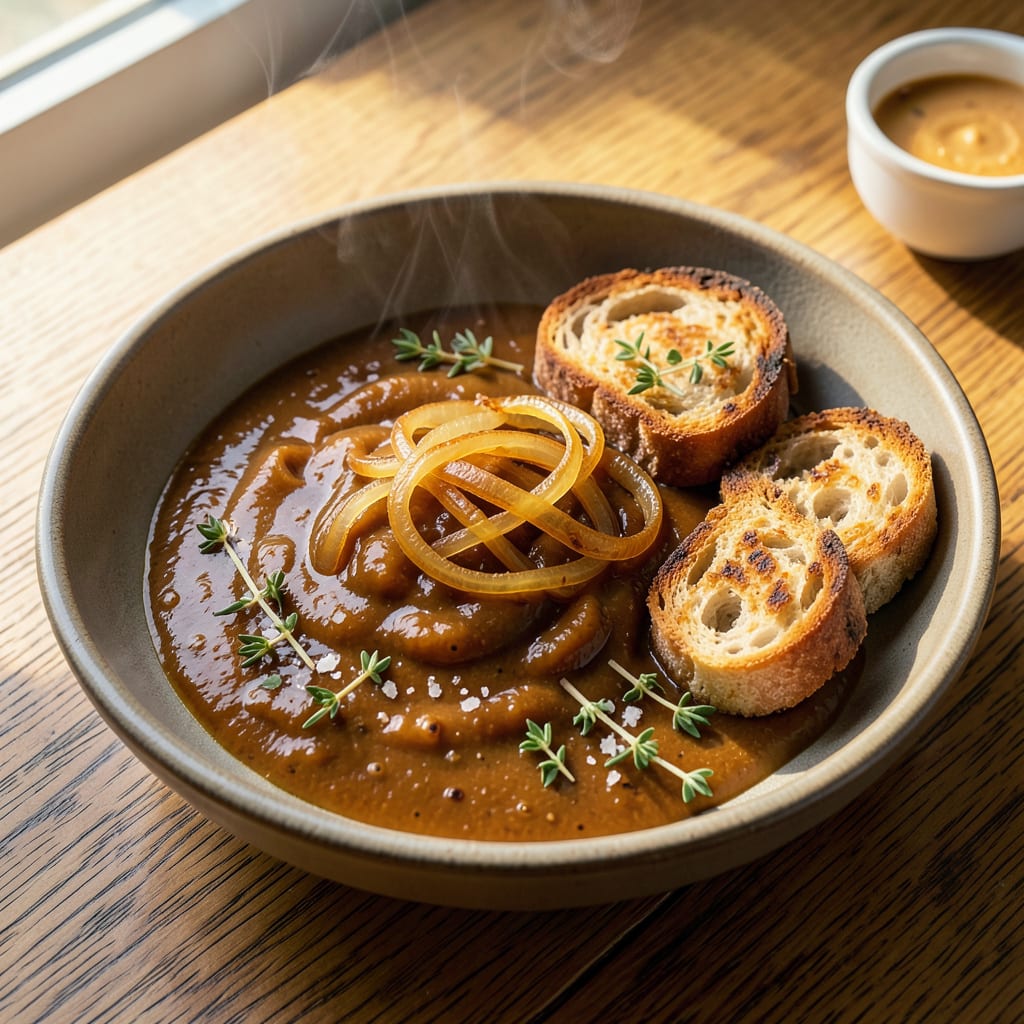
This sweet onion sauce combines caramelized onions, brown sugar, and apple cider vinegar for a rich, tangy-sweet flavor. Simmer 15 minutes until thickened, then blend until smooth for burgers, steaks, or dips.
I love how this sauce transforms simple ingredients into something extraordinary through the magic of caramelization. The slow cooking process breaks down the onions’ natural sugars, creating a deep, complex base that pairs perfectly with the bright acidity of vinegar. 🔥 What’s brilliant is its versatility—you can adjust the sweetness by tweaking the brown sugar or add a dash of Worcestershire for extra umami depth. The blending step ensures a silky texture that clings beautifully to whatever you’re serving it with.
This isn’t just another condiment—it’s a flavor powerhouse that elevates everything from backyard BBQ to gourmet dishes. The 15-minute simmer is the secret to achieving that perfect balance where the sweetness doesn’t overpower but rather enhances the natural onion flavor. I’ve found it works particularly well as a glaze for grilled chicken or as an unexpected twist in vegetarian dishes where it adds richness without meat.
💡 In This Article
- How Caramelization Creates Perfect Sweet Onion Sauce
- 5 Creative Ways to Use Sweet Onion Sauce Beyond Burgers
How Caramelization Creates Perfect Sweet Onion Sauce
The magic starts when onions hit the pan at medium-low heat (around 275-300°F). This gentle temperature triggers the Maillard reaction, where natural sugars and amino acids transform into hundreds of new flavor compounds. Unlike simple burning, proper caramelization develops rich, nutty, and slightly bitter notes that form the sauce’s complex foundation.
The process takes patience—about 30-40 minutes of slow cooking—because rushing with high heat creates harsh, acrid flavors instead of deep sweetness. 🔥
As onions break down, their cell walls rupture, releasing fructose and glucose that brown and intensify. The addition of brown sugar (typically 2-3 tablespoons per large onion) amplifies this effect through inversion—where sucrose splits into simpler sugars that caramelize more readily. This is why the sauce develops that signature glossy sheen and concentrated flavor.
The apple cider vinegar (about 1/4 cup) then cuts through the sweetness, adding brightness while its acetic acid helps stabilize the emulsion when blended. ✨
What most people overlook is how umami boosters elevate the final product. A splash of Worcestershire sauce (1-2 teaspoons) or soy sauce adds glutamates that make the sweetness taste more rounded and satisfying. These ingredients also contain trace minerals that enhance the Maillard reaction.
The 15-minute simmer after blending allows these flavors to marry completely, with the liquid reducing by about 20% to achieve that perfect coat-the-back-of-a-spoon consistency. 💫
Temperature control during blending matters too. Letting the mixture cool slightly (to about 140°F) before pureeing prevents volatile aromatic compounds from escaping as steam. This preserves those delicate caramelized notes you worked so hard to develop.
The final texture should be velvety smooth but still show tiny flecks of deeply browned onion—a visual clue to the depth of flavor within. For comparison, think of it as a cross between French onion soup concentrate and a sophisticated BBQ sauce. ⚡
The science explains why this sauce pairs so well with rich foods. The caramelized sugars create a flavor bridge that complements fatty proteins like ribeye steak or pulled pork, while the vinegar’s acidity cuts through the richness.
This balance is why it works equally well as a dip for crispy onion rings (where the crunch contrasts the sauce’s silkiness) or as a glaze for grilled vegetables (where it adds meaty depth to plant-based dishes). The Maillard compounds also interact with charred surfaces from grilling, creating an even more complex flavor profile. 🌟
Pro tip: For extra depth, try adding a pinch of baking soda (about 1/8 teaspoon) when cooking the onions. This raises the pH slightly, speeding up caramelization by about 25% while keeping the onions tender. Just be careful—too much can make them mushy.
The difference is noticeable in side-by-side tests, with the treated batch developing deeper color and more pronounced sweetness in the same cooking time. This small adjustment can shave 10 minutes off your caramelization without sacrificing quality. 💛

- BBQ Sausage Recipe Oven: Smoky Depth Without the Grill - September 28, 2026
- BBQ Chicken Bowl Recipe Rice: Smoky Sweetness Over Fluffy Grains - September 28, 2026
- Beef Cutlet Recipe Ideas: Crispy Breaded Patties With Bold Seasonings - September 28, 2026