
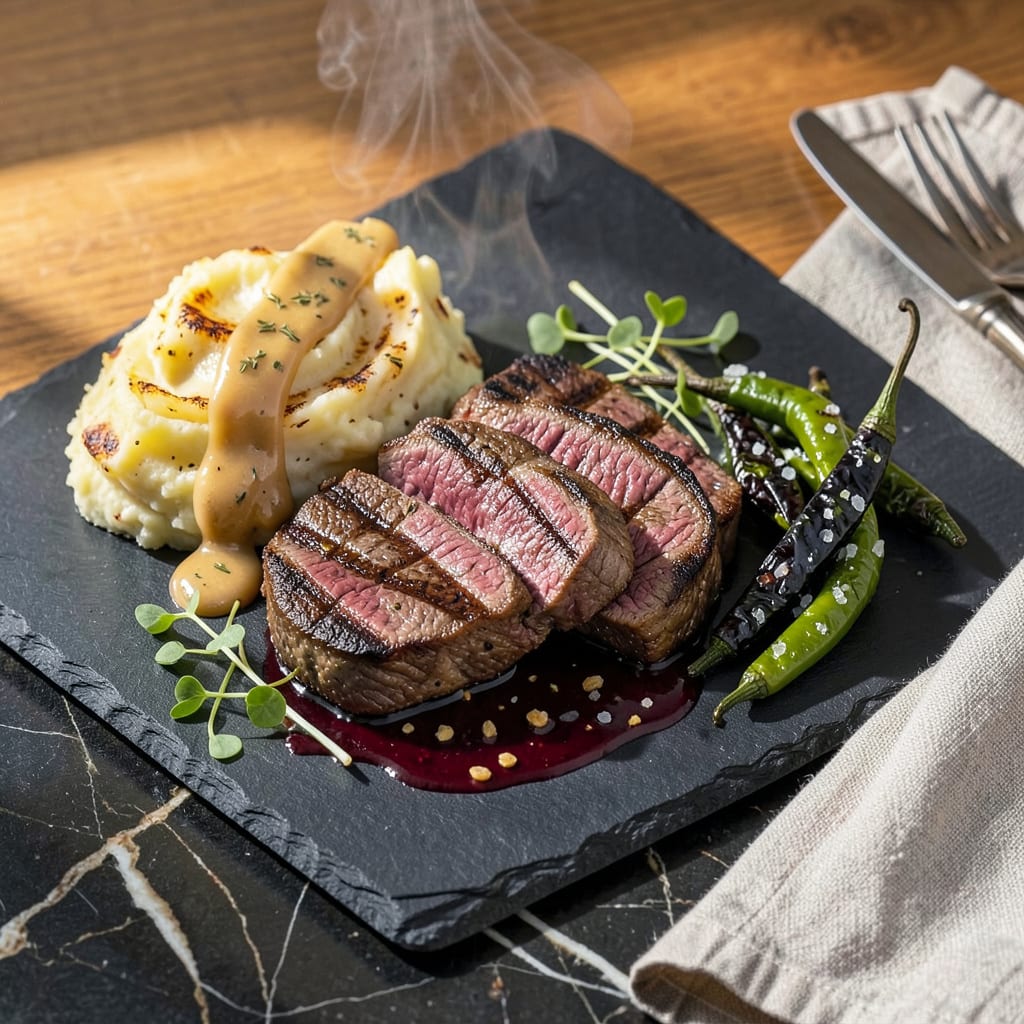
For thin steaks, pat dry and season generously with salt and pepper. Sear in a screaming-hot skillet with oil for 1-2 minutes per side for medium-rare. Rest 5 minutes before serving to lock in juices and prevent toughness.
This method delivers restaurant-quality results by leveraging the physics of heat transfer. Thin cuts cook through almost instantly at high temperatures, creating that coveted crust while keeping the interior juicy. 🔥 The resting step isn’t just about carryover cooking—it allows muscle fibers to relax after the intense heat, which is especially critical for leaner cuts that can turn chewy if sliced too soon.
What sets this approach apart is its versatility across different cuts. Whether you’re working with flank, skirt, or even budget-friendly sirloin, the high-heat sear develops deep flavor through Maillard reactions in record time. I’ve found this technique particularly useful for weeknight dinners when you want steakhouse quality without the hour-long cooking process.
💡 In This Article
- Why High Heat and Short Cooking Times Work for Thin Steaks
- Best Cuts and Seasonings for Thin Steak Recipes
Why High Heat and Short Cooking Times Work for Thin Steaks
The secret lies in heat transfer physics. Thin steaks (typically 1/4 to 1/2 inch thick) cook through almost instantly when exposed to 400-450°F surface temperatures. This rapid heat penetration triggers the Maillard reaction—the chemical process where amino acids and reducing sugars create complex flavors and that coveted brown crust.
Unlike thicker cuts that need gradual heat penetration, thin steaks would turn leathery if cooked slowly, as their minimal mass reaches the overcooked stage (160°F+) in under 3 minutes at moderate heat. 🔥
Consider the thermal gradient: A 1-inch thick ribeye might have a 50°F difference between its surface and center during cooking, but a 1/4-inch skirt steak equalizes temperature almost immediately. This is why professional chefs use screaming-hot pans—it creates that perfect crust before the interior overcooks.
The ideal sear happens when the pan’s surface temperature is 100°F hotter than your target internal temp (so 500°F pan for 130°F medium-rare). ✨
Resting becomes even more critical with thin cuts. When you remove the steak from heat, the muscle fibers are tightly contracted from the intense temperature shock. During those 5 crucial minutes of resting, the fibers relax by about 20-30%, allowing juices to redistribute throughout the meat rather than pooling on your cutting board.
Skip this step with thin steaks, and you’ll lose up to 40% of the moisture when you slice into it. 💫
The oil in your pan serves two scientific purposes: it increases the pan’s heat capacity (allowing it to recover temperature faster between flips) and creates a superior heat transfer medium.
A thin layer of oil with a high smoke point (avocado or grapeseed oil at 520°F) conducts heat 4 times more efficiently than air, ensuring even cooking. This is why you’ll see professional kitchens use just enough oil to create a shimmering surface—not so much that the steak fries, but enough to maximize heat contact.
⚡
Compare this to thicker cuts like filet mignon, which benefit from lower, slower heat to avoid a burnt exterior before the center reaches temperature. A 2-inch thick steak might spend 4 minutes per side at 325°F in the oven after an initial sear, while your thin steak would be inedible with that treatment.
The thickness-to-surface-area ratio is the game-changer here—thin steaks have 8 times more surface area relative to their volume than thick cuts, making them incredibly responsive to cooking methods. 🌟
Pro tip: Use an infrared thermometer to check your pan’s surface temperature. When it reads 475-500°F, you’re in the ideal zone for that perfect thin steak sear.
The sizzle should be aggressive enough to create a vapor barrier (the Leidenfrost effect) where the steak appears to hover slightly above the pan—this prevents steaming and ensures proper browning rather than boiling in its own juices. 💛

- BBQ Sausage Recipe Oven: Smoky Depth Without the Grill - September 28, 2026
- BBQ Chicken Bowl Recipe Rice: Smoky Sweetness Over Fluffy Grains - September 28, 2026
- Beef Cutlet Recipe Ideas: Crispy Breaded Patties With Bold Seasonings - September 28, 2026