
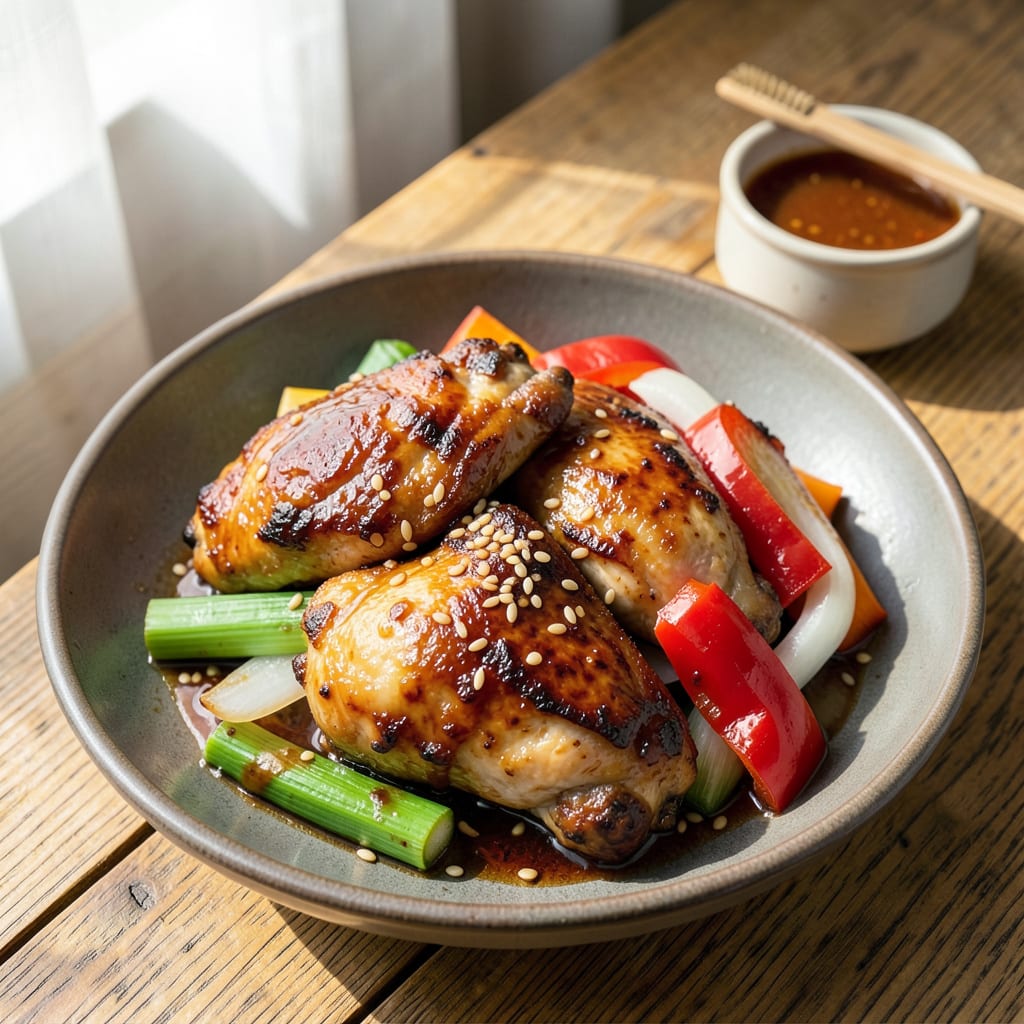
Combine ½ cup soy sauce, ¼ cup mirin, 2 tbsp brown sugar, 1 tbsp grated ginger, 2 minced garlic cloves, and 1 tbsp honey. Simmer for 3-5 minutes until slightly thickened, then cool before using as a marinade for meats or tofu.
This balanced blend creates that signature sticky-sweet glaze teriyaki is famous for. The mirin adds depth and shine, while fresh ginger and garlic cut through the richness with aromatic brightness. I love how the brown sugar and honey work together—they caramelize beautifully when cooked, giving proteins that irresistible glossy finish. ✨
What makes this version foolproof is the simmering step—it concentrates flavors and prevents a watery marinade. For best results, let your protein soak for at least 30 minutes (or up to overnight for deeper flavor penetration). The sauce also doubles as a dipping condiment if you reduce it further to a thicker consistency.
💡 In This Article
- Key Ingredients That Define Authentic Teriyaki Flavor
- Best Proteins and Techniques for Teriyaki Marinade
Key Ingredients That Define Authentic Teriyaki Flavor
The magic of teriyaki starts with soy sauce, which delivers that deep umami foundation. Traditional Japanese versions use koikuchi shoyu (dark soy sauce) for its richer, more complex profile compared to standard Western soy sauces. The fermentation process creates over 300 flavor compounds, including glutamates that trigger our umami taste receptors.
This is why cheap soy sauces fall flat—they lack this depth.
Mirin isn’t just sweetness—it’s the secret to that signature glossy finish. Authentic hon-mirin (14-15% alcohol) reduces differently than imitation versions, creating a silkier texture. The sugar content (about 14%) caramelizes at 320°F, which is why proper simmering develops that sticky sheen. Western adaptations often use pineapple juice, but it lacks mirin’s ability to balance saltiness while adding subtle fermented rice notes.
Fresh ginger and garlic aren’t just for aroma—they contain enzymes that tenderize proteins. Ginger’s zingibain breaks down collagen, while garlic’s allicin helps penetrate meat fibers. The 1:2 ratio of ginger to garlic in this recipe ensures the ginger’s brightness doesn’t overpower.
Toasting these aromatics in the simmering sauce (before adding liquids) deepens their flavor through Maillard reactions.
The brown sugar and honey combo serves two critical functions. Brown sugar’s molasses content adds caramel notes that white sugar can’t, while honey’s fructose caramelizes at lower temps (230°F) for quicker glaze formation. Together they create a more stable emulsion than sugar alone, preventing that dreaded “sugar crash” where the glaze separates when cooled. 🔥
Traditional Japanese teriyaki often includes katsuobushi (bonito flakes) for extra umami, but this Western-friendly version achieves similar depth through the soy-mirin balance. The 3-5 minute simmer isn’t arbitrary—it’s the sweet spot where alcohol evaporates (lowering the boiling point to 185°F) but before sugars burn.
This creates the perfect viscosity for clinging to proteins without being syrupy.
What most home cooks miss is the acid balance. While not in the base recipe, a splash of rice vinegar (about 1 tsp) can brighten the sauce if your soy sauce is particularly salty. The science here is about pH levels—teriyaki should sit around 5.5-6.0 for optimal flavor perception.
Too acidic and it tastes sharp; too alkaline and it tastes flat.
For those avoiding alcohol, substitute mirin with a mix of rice vinegar + extra sugar (3:1 ratio), but expect less shine. The alcohol in mirin isn’t just for flavor—it helps dissolve and distribute the sugar molecules more evenly during cooking. This is why non-alcoholic versions often taste grainy or separate more easily. ✨

- BBQ Sausage Recipe Oven: Smoky Depth Without the Grill - September 28, 2026
- BBQ Chicken Bowl Recipe Rice: Smoky Sweetness Over Fluffy Grains - September 28, 2026
- Beef Cutlet Recipe Ideas: Crispy Breaded Patties With Bold Seasonings - September 28, 2026