
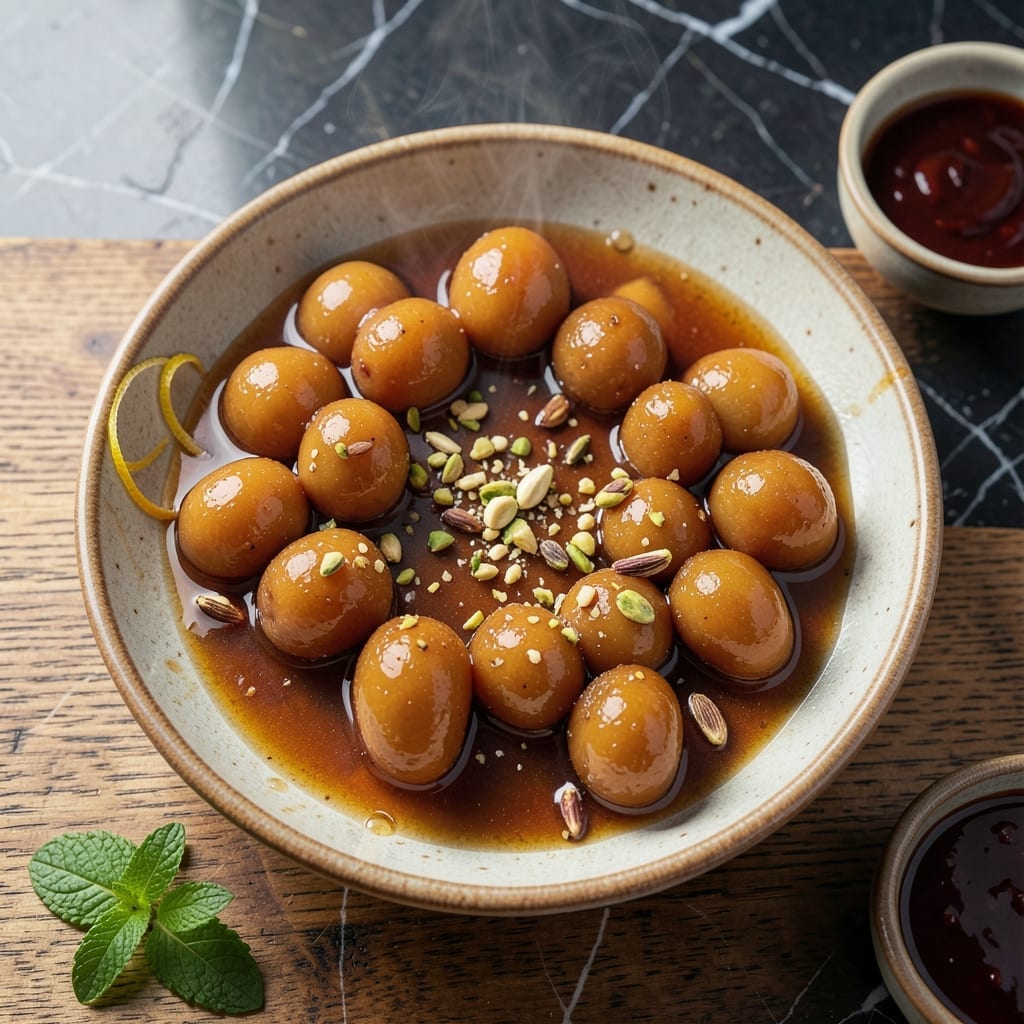
This traditional Indian dessert delivers soft, melt-in-your-mouth dumplings soaked in fragrant rose-scented syrup. I’ve perfected the balance of sweetness and texture through careful frying and syrup temperature control.
Each bite offers a delicate, syrupy richness with a subtle cardamom aroma. The key lies in using low heat to cook the dumplings evenly without browning, ensuring they absorb the syrup fully.
Ingredients for Recipe Gulab Jamun
Pantry staples and a few special touches create this beloved Indian sweet.
| Ingredient | Amount | Notes |
|---|---|---|
| Milk Powder 🥛 | 1 cup | Full-fat for richness |
| All-Purpose Flour 🌾 | ¼ cup | For binding dumplings |
| Ghee 🧈 | 2 tbsp | Or substitute clarified butter |
| Cardamom Pods 🌿 | 6 whole | Lightly crushed, seeds only |
| Sugar 🍚 | 1 ½ cups | Granulated white sugar |
| Water 💧 | 1 ½ cups | For syrup base |
| Rose Water 🌹 | 1 tsp | Food-grade, for fragrance |
| Saffron Threads 🌼 | 1 pinch | Optional, for color and aroma |
| Pistachios 🌰 | 2 tbsp | Finely chopped, for garnish |
| Vegetable Oil 🫒 | 2 cups | For deep frying dumplings |
| Baking Soda 🧂 | ¼ tsp | For light texture |
| Kewra Water 💧 | ½ tsp | Optional, for authentic flavor |
The milk powder is non-negotiable here—full-fat only for that melt-in-your-mouth texture. Indian grocery stores carry it in bulk, but any well-stocked supermarket works. Cardamom pods should be green (not black) and freshly crushed—the seeds inside are what you need. For ghee, I grab Patel Brothers’ brand or make my own by simmering butter. The saffron? Splurge on Kashmiri saffron if you can find it.
No rose water? Substitute orange blossom water in a pinch, but use half the amount. Skipping saffron? A pinch of turmeric adds color (but not flavor). Out of pistachios? Slivered almonds or cashews work just as well. The oil for frying can be any neutral variety—sunflower or canola are my go-tos. If your dumplings crack while frying, add a touch more flour next time.
Dumplings are best served warm but can sit at room temp for 2-3 hours. Syrup keeps in the fridge for 1 week—reheat gently before soaking dumplings. Store-bought milk powder? Check the expiration—freshness matters for texture. Always keep ghee in a cool, dark place.
Why You’ll Love This Recipe
- No-Fuss Mixing: I just stir milk powder, flour, and ghee—no fancy techniques, and the dough comes together in minutes.
- Budget Sweet: Milk powder and basic pantry staples keep costs low, and leftovers taste even better the next day.
Step-by-Step Instructions for Syrup-Soaked Sweet Dumplings
Here’s how I make these melt-in-your-mouth treats with a perfect syrup soak every time.
Step 1: Prepare the Syrup Base
In a medium saucepan, combine the 1.5 cups sugar with the 1.5 cups water. Heat over medium-high heat and stir until the sugar completely dissolves. This creates a clear, simple syrup that will infuse with all those beautiful flavors.
Once dissolved, add the 6 whole cardamom pods (lightly crushed to release their seeds), 1 tsp rose water, and 1 pinch saffron threads. Reduce heat to low and let it simmer for 5-7 minutes until fragrant. The syrup should be light golden in color with a delicate floral aroma.
Remove from heat and stir in the 0.5 tsp kewra water. Keep the syrup warm while you prepare the dumplings—this ensures they’ll soak up the liquid properly when added later.
Step 2: Form the Dumpling Dough
In a mixing bowl, combine the 1 cup milk powder, 0.25 cup all-purpose flour, and 0.25 tsp baking soda. The baking soda is crucial for that light, airy texture that makes these dumplings so special.
Add the 2 tbsp ghee (melted but cooled) and mix with your fingers until the mixture resembles coarse crumbs. Then, gradually add just enough of the warm syrup (about 2-3 tablespoons) to bring the dough together. It should be soft but not sticky—if it feels too dry, add a few drops more syrup.
The dough is ready when it can be pinched together without crumbling. Divide it into 16-18 equal portions and roll each into a smooth ball between your palms. There should be no cracks on the surface—this prevents them from breaking apart during frying.
Step 3: Fry the Dumplings to Golden Perfection
Heat the 2 cups vegetable oil in a deep, heavy-bottomed pan over medium-low heat. The oil is ready when a small piece of dough dropped in rises slowly to the surface. If it rises too quickly, the oil is too hot and will cook the outside before the inside is done.
Fry the dumplings in batches, being careful not to overcrowd the pan. They’ll sink at first, then gradually rise. Gently swirl the pan occasionally to ensure even browning. Fry for 4-5 minutes until they’re a uniform, deep golden brown all over.
Remove with a slotted spoon and drain on paper towels. The dumplings should be light and spongy to the touch, not hard or greasy. If they’re browning too quickly, reduce the heat slightly—low and slow is the secret here.
Step 4: Soak and Serve
While the dumplings are still hot, transfer them directly into the warm syrup. They should be fully submerged. Let them soak for at least 2 hours—this is non-negotiable for maximum flavor penetration. The dumplings will nearly double in size as they absorb the syrup.
Serve warm or at room temperature, garnished with the 2 tbsp finely chopped pistachios. Each dumpling should be glistening with syrup, tender all the way through, and bursting with fragrant cardamom and rose flavors. The syrup itself should be slightly thickened from the soaking process, coating each piece beautifully.
Pro Tips For Making Recipe Gulab Jamun
- Test the Oil Temperature: Drop a tiny piece of dough into the ghee or oil—if it rises slowly with bubbles, it’s ready. Too hot, and your jamuns will brown outside while staying raw inside; I learned this the hard way after wasting a whole batch.
- Knead With Light Hands: Use just enough ghee to bring the milk powder and flour together—overworking the dough makes jamuns dense. My grandmother swore by this, and she was right: soft hands mean soft gulab jamuns.
- Skip the Lumps: Sift the milk powder and flour together before mixing—lumps in the dough lead to cracked jamuns that absorb too much syrup. Sounds tedious, but it actually changes the outcome.
- Warm the Syrup: Heat the sugar syrup with cardamom until just warm, not boiling, before soaking the fried jamuns. Cold syrup makes them harden up, and nobody wants a dry gulab jamun.
Storing and Reheating Leftovers
Room Temperature Storage
These syrup-soaked dumplings stay fresh at room temperature for 2-3 hours in an airtight container. I often leave them out for gatherings, as they taste best when not chilled. The syrup keeps them moist and flavorful during this time. 💡
Refrigerator Storage
For longer storage, place in an airtight container and refrigerate for up to 3 days. The dumplings will firm up slightly but soften again when brought back to room temperature. Always store with the syrup to maintain moisture.
Freezer Storage
Freeze without syrup in a single layer on a tray first, then transfer to a freezer bag for up to 1 month. To serve, thaw overnight in the fridge, then warm in fresh syrup for 15-20 minutes to restore texture.
Reheating on Stovetop
Gently warm in a saucepan with 2-3 tbsp syrup over low heat for 5-7 minutes. Stir occasionally to prevent sticking. This method keeps them soft and prevents drying out. 🔥
Microwave Reheating
Place 4-5 dumplings with 2 tbsp syrup in a microwave-safe bowl. Cover with a damp paper towel and heat on 50% power for 30-second intervals until warm.
Serving After Storage
Always garnish with fresh chopped pistachios after reheating to add crunch. The syrup may thicken when cold, so thin with 1-2 tbsp warm water if needed before reheating.
Frequently Asked Questions
Can I use khoya instead of milk powder?
Yes! Khoya (reduced milk solids) works beautifully and creates an even richer texture. Use the same amount by volume, but note it may need slightly less syrup for soaking.
Why did my dumplings crack while frying?
This usually happens if the dough is too dry. Add a few more drops of syrup or milk to achieve a smoother consistency before rolling. Over-handling the dough can also cause cracks.
Can I make these without deep frying?
For a lighter version, try baking at 350°F for 15-20 minutes. They won’t be as traditional but will still absorb the syrup well. Brush with ghee first for extra flavor.
How do I adjust the syrup sweetness?
Taste before soaking! If too sweet, dilute with 1-2 tbsp warm water. For more sweetness, simmer the syrup longer to reduce it slightly before adding dumplings.
Nutrition Facts

- BBQ Sausage Recipe Oven: Smoky Depth Without the Grill - September 28, 2026
- BBQ Chicken Bowl Recipe Rice: Smoky Sweetness Over Fluffy Grains - September 28, 2026
- Beef Cutlet Recipe Ideas: Crispy Breaded Patties With Bold Seasonings - September 28, 2026