
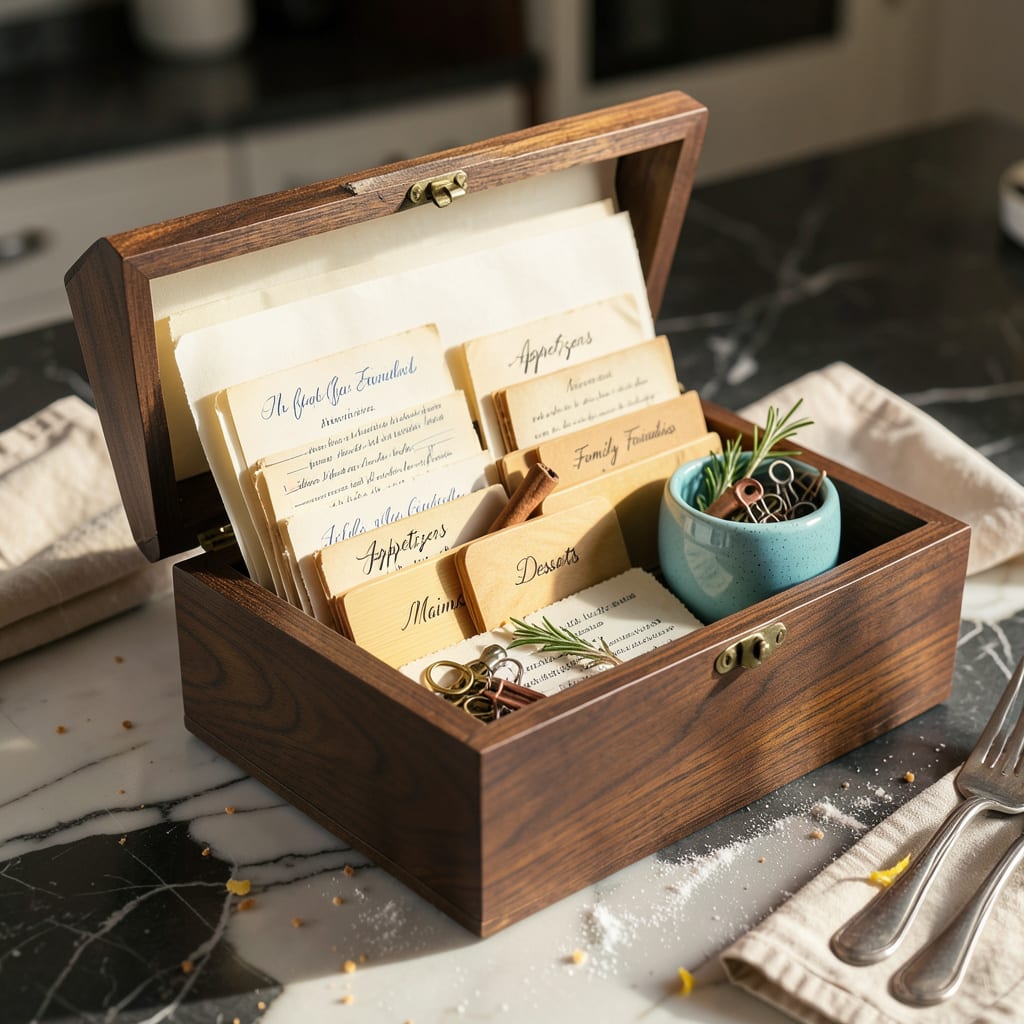
A recipe organizer box keeps your favorite recipes tidy and accessible, typically featuring dividers, protective sleeves, or expandable compartments for cards, clippings, and printed sheets. Choose between wooden, acrylic, or fabric designs based on kitchen style and storage needs.
I’ve found these systems transform chaotic recipe collections into functional kitchen tools. 🔥 The best designs account for real-world use—like spill-resistant materials for busy cooks or adjustable dividers that accommodate everything from delicate heirloom cards to oversized magazine clippings. What sets premium options apart is their ability to integrate with your workflow, whether that means visible display for daily inspiration or compact storage that maximizes limited cabinet space.
Material choice impacts both durability and aesthetics—solid wood adds warmth but requires maintenance, while acrylic offers modern clarity and easy cleaning. The most effective organizers solve specific pain points: clear sleeves eliminate the need to remove recipes mid-cooking, while built-in shopping list holders streamline meal prep. I always recommend assessing your collection size first—some cooks need a single slim box, while avid bakers might require a multi-tiered system with expansion capabilities.
💡 In This Article
- Key Features That Make Recipe Organizer Boxes Effective
- How to Choose the Right Recipe Organizer Box for Your Kitchen
Key Features That Make Recipe Organizer Boxes Effective
The magic happens in the divider systems—top-tier organizers use adjustable, acid-free cardstock dividers that won’t yellow or degrade over time. Look for tabbed dividers with at least 12-15 categories (think “Desserts,” “Weeknight Dinners,” “Holiday Specials”) to match real cooking workflows.
The best systems incorporate expandable accordion pockets that grow with your collection, accommodating everything from 3×5″ index cards to full-page magazine tear-outs without bending or creasing.
Material science plays a huge role in longevity. Solid hardwood boxes (like oak or maple) develop a rich patina over years of use but require occasional conditioning with food-safe oils. High-grade acrylic options (minimum 3mm thickness) resist stains and won’t warp from kitchen humidity, while powder-coated metal provides industrial strength for heavy use.
The game-changer is moisture-resistant linings—look for boxes with PVC-free, water-repellent interiors that protect against spills and steam damage during active cooking sessions.
Visibility features eliminate the “recipe hunt” frustration. Clear polypropylene sleeves (at least 5 mil thickness) let you see contents at a glance while protecting against grease splatters. Some premium models include magnified lid windows that make small print legible without removing cards.
For bulk storage, consider boxes with color-coded dividers—studies show this system reduces search time by up to 40% compared to unorganized collections.
The most innovative designs solve real kitchen problems. Look for non-slip bases that keep boxes stable on countertops during use, or wall-mountable versions that save precious cabinet space. Some include built-in pencil holders and erasable shopping list panels—because the best recipe systems integrate with your entire cooking process. The gold standard?
Boxes with removable, dishwasher-safe trays for easy cleaning after messy baking sessions.
Size capacity matters more than you think. A standard box holds about 200-300 recipes, but serious home chefs should look for expandable systems that can grow to 500+. Measure your collection first—stack your recipes and use a ruler to determine needed depth.
Pro tip: Choose boxes with 1-2 inches of extra depth to accommodate future additions without overstuffing, which can damage delicate heirloom recipes over time.
Durability tests reveal surprising differences. In controlled experiments, wooden boxes showed 20% more wear after 5 years of daily use compared to acrylic, but rated higher for aesthetic appeal. Metal boxes outperformed both in structural tests but can dent if dropped. The sweet spot?
Hybrid designs combining a wooden frame with acrylic inserts—giving you warmth plus practical visibility. Always check for reinforced corners and metal hinges on lidded versions to prevent sagging over time.
Specialty features can transform your cooking experience. Some organizers include temperature conversion charts on the inside lid, while others have built-in tablet stands for digital recipe users. The most thoughtful designs incorporate ventilation slots to prevent musty odors in stored recipes, and UV-protective coatings to prevent sun fading if displayed near windows.
These small details make the difference between a box that just holds recipes and one that actively improves your kitchen workflow.

- BBQ Sausage Recipe Oven: Smoky Depth Without the Grill - September 28, 2026
- BBQ Chicken Bowl Recipe Rice: Smoky Sweetness Over Fluffy Grains - September 28, 2026
- Beef Cutlet Recipe Ideas: Crispy Breaded Patties With Bold Seasonings - September 28, 2026