
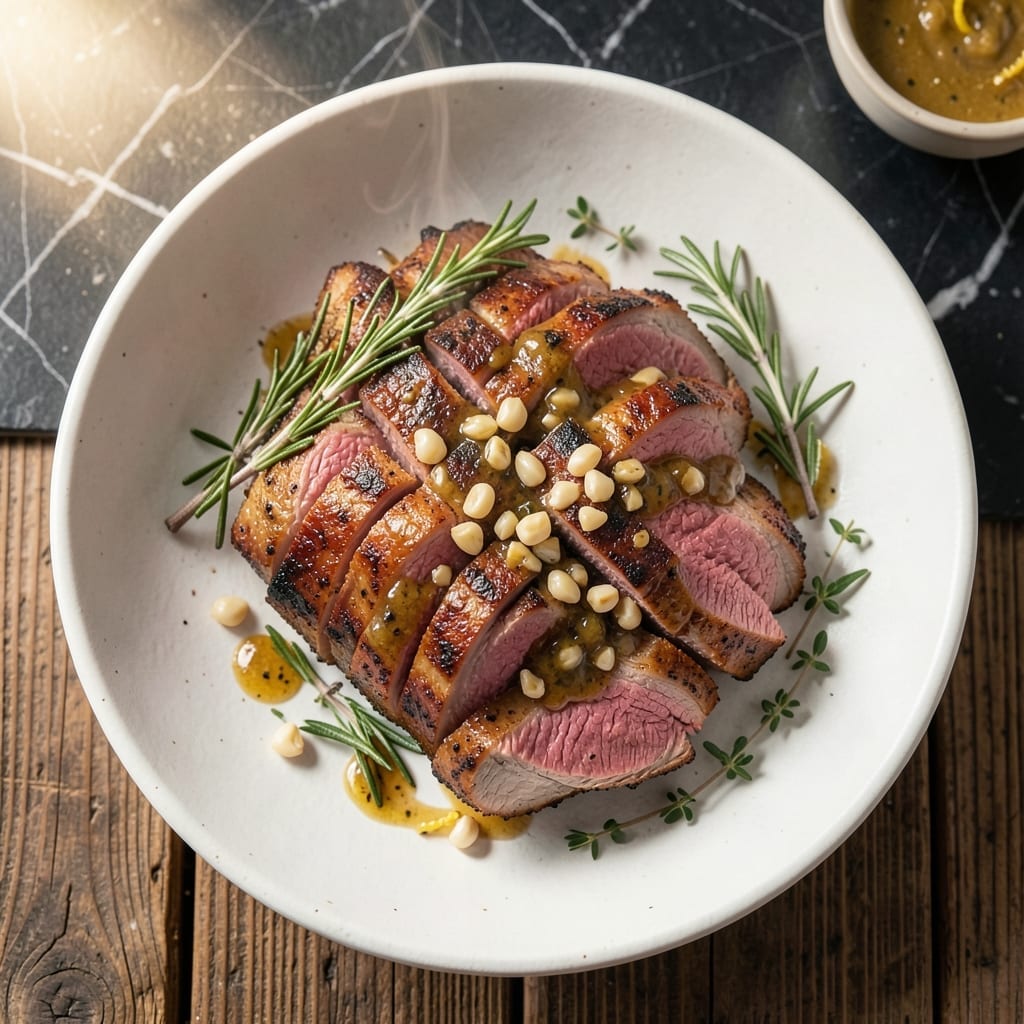
This roasted pork tenderloin delivers tender, juicy results with minimal effort. A simple herb crust transforms the meat into a flavorful centerpiece.
With precise timing and temperature control, you’ll achieve perfectly cooked pork every time. Serve with your favorite sides for a complete meal.
Ingredients for Recipe Roasted Pork Tenderloin
A handful of fresh herbs and pantry staples create this showstopping centerpiece effortlessly.
| Ingredient | Amount | Notes |
|---|---|---|
| Pork Tenderloin 🥩 | 1 ½ lb | Trimmed of excess fat |
| Olive Oil 🫒 | 2 tbsp | Extra-virgin preferred for depth |
| Dijon Mustard 🟡 | 2 tbsp | Smooth, not whole grain |
| Fresh Rosemary 🌿 | 2 tbsp | Finely chopped for even coating |
| Fresh Thyme Leaves 🍃 | 2 tbsp | Stems removed before chopping |
| Garlic Cloves 🧄 | 4 cloves | Minced for maximum flavor release |
| Kosher Salt 🧂 | 1 ½ tsp | Diamond Crystal preferred for texture |
| Black Pepper 🌶️ | 1 tsp | Freshly cracked for best aroma |
| Dried Sage 🌿 | 1 tsp | Rubbed between fingers to release oils |
| Ground Mustard 🟡 | ½ tsp | Adds subtle earthy depth to crust |
| Breadcrumbs 🍞 | ½ cup | Panko for extra crunch |
| Lemon Zest 🍋 | 1 tbsp | From one large lemon |
The pork tenderloin is the star—look for a pale pink, moist piece (not the grayish ones sitting too long in the case). I grab mine from Whole Foods or Costco when I want a bigger cut for leftovers. The fresh herbs matter here: organic rosemary and thyme from the produce section have more aroma than the sad bunches in those plastic clamshells. Don’t even think about using dried for the crust.
No fresh rosemary? Dried at half the amount works in a pinch (but fresh is better). Out of Dijon? Whole grain mustard adds nice texture—just strain the seeds if you hate the pop. Breadcrumbs missing? Crushed saltines or panko both work. The lemon zest can be swapped for 1 tbsp lemon juice if that’s what you’ve got, though you’ll lose that bright, aromatic punch.
The herb crust can be prepped 1 day ahead and stored in the fridge. The pork itself? Cook it the same day you buy it or freeze it for up to 3 months. Leftovers keep 4-5 days in the fridge—perfect for sandwiches or salads the next day.
Why You’ll Love This Recipe
- One Pan Meal: I just toss the pork with olive oil, mustard, and herbs, then roast—no extra dishes to wash.
- Herb-Crusted Perfection: That crispy Dijon-rosemary crust with the juicy pork inside? I make it just to sneak bites before serving.
- Weeknight Hero: Between us, this is my secret for a fancy-feeling dinner on a Tuesday night.
- Leftovers for Days: The sliced pork reheats beautifully in sandwiches or salads—I always double the batch.
Step-by-Step Instructions for Herb-Crusted Roasted Pork Tenderloin
Here’s your foolproof method for juicy, perfectly seasoned pork with a crispy herb crust.
Step 1: Prepare the Herb Crust Mixture
In a small bowl, combine the 2 tbsp Dijon Mustard, 2 tbsp Olive Oil, 4 cloves Garlic Cloves, 2 tbsp Fresh Rosemary, 2 tbsp Fresh Thyme Leaves, 1.5 tsp Kosher Salt, 1 tsp Black Pepper, 1 tsp Dried Sage, 0.5 tsp Ground Mustard, and 1 tbsp Lemon Zest.
Mix thoroughly until the herbs and spices are evenly distributed. The mustard and oil will create a paste that clings beautifully to the pork. This step ensures every bite is packed with flavor.
Step 2: Coat the Pork Tenderloin
Pat the 1.5 lb Pork Tenderloin dry with paper towels to remove any excess moisture. This helps the crust adhere properly and promotes even browning.
Rub the herb-mustard mixture all over the surface of the pork, pressing it in firmly so it forms a thick, even layer. Don’t skip this—it’s what gives the dish its signature crust. Let it sit at room temperature for 15 minutes while you preheat the oven.
Step 3: Add the Breadcrumb Layer
Spread the 0.5 cup Breadcrumbs on a plate. Roll the coated pork tenderloin in the breadcrumbs, pressing gently to ensure they stick to the mustard-herb mixture. This adds a delightful crunch to every bite.
Place the pork on a wire rack set over a baking sheet. The rack allows air to circulate, ensuring the crust crisps evenly on all sides rather than steaming.
Step 4: Roast to Perfection
Preheat your oven to 400°F. Roast the pork tenderloin for 25-30 minutes, or until the internal temperature reaches 145°F. Use a meat thermometer to check—this is the only way to guarantee perfect doneness without overcooking.
The crust should be golden brown and the pork juicy and slightly pink in the center. If the breadcrumbs start to darken too quickly, tent the pork with foil for the last 5-10 minutes.
Step 5: Rest and Serve
Transfer the pork to a cutting board and let it rest for 10 minutes. This allows the juices to redistribute, ensuring every slice is moist and flavorful. Skipping this step means those precious juices will end up on your cutting board instead of in your dish.
Slice the pork tenderloin into 1-inch thick medallions and serve immediately. The crust should crackle slightly as you cut into it, revealing tender, perfectly cooked meat underneath.
Pro Tips For Making Recipe Roasted Pork Tenderloin
- Pat It Dry: Blot the tenderloin with paper towels before seasoning—excess moisture steams the meat instead of letting it sear properly.
- Sear First: Start in a screaming hot pan with olive oil for 2-3 minutes per side to lock in juices before transferring to the oven.
- Use Fresh Herbs: Skip the dried stuff; finely chop the rosemary and thyme so they cling better and release more flavor into the mustard rub.
- Rest Before Slicing: Give it 8-10 minutes under foil after roasting—this keeps the juices from pooling on the cutting board instead of in the meat.
Make-Ahead Tips for This recipe roasted pork tenderloin
Herb Crust Prep
Mix your herb paste 1 day ahead and store it in an airtight container in the fridge. The flavors meld overnight, making the crust even more aromatic. 💡
Pork Storage
Buy your tenderloin 1-2 days before cooking for optimal freshness. If storing longer, wrap it tightly in plastic wrap and freeze for up to 3 months. Thaw overnight in the fridge before using.
Breadcrumb Trick
Toast your ½ cup breadcrumbs in a dry pan for 2-3 minutes the day before. This enhances their crunch and prevents sogginess when stored. Let them cool completely before sealing in a container.
Day-Of Prep
Pat the pork dry and apply the herb crust up to 4 hours ahead. Keep it uncovered in the fridge so the surface stays dry. This ensures the breadcrumbs stick perfectly when you’re ready to roast.
Leftovers
Store cooked pork in shallow containers for up to 5 days. For meal prep, slice before storing so it reheats evenly. Add a splash of broth when warming to keep it juicy. ❄️
Reheating Tips
Reheat slices in a 350°F oven for 10-12 minutes on a wire rack. Microwave works in a pinch—cover with a damp paper towel and use 50% power for 1-2 minutes.
Frequently Asked Questions
What internal temperature should the pork reach?
Use a meat thermometer to check for doneness. Pull it from the oven when it hits 145°F internally. This ensures it’s safe to eat while staying juicy and tender.
Can I use dried herbs instead of fresh?
Yes, but use half the amount. 1 tbsp dried replaces 2 tbsp fresh for rosemary and thyme. The flavor will be more concentrated, so adjust to taste.
How do I prevent the breadcrumbs from burning?
If they brown too quickly, tent the pork with foil. This protects the crust while allowing the meat to finish cooking through in the 400°F oven.
Why is resting important after roasting?
Letting it rest for 10 minutes allows juices to redistribute. Slicing too soon causes those flavorful juices to spill out, leaving the meat dry.
Nutrition Facts

- BBQ Sausage Recipe Oven: Smoky Depth Without the Grill - September 28, 2026
- BBQ Chicken Bowl Recipe Rice: Smoky Sweetness Over Fluffy Grains - September 28, 2026
- Beef Cutlet Recipe Ideas: Crispy Breaded Patties With Bold Seasonings - September 28, 2026