
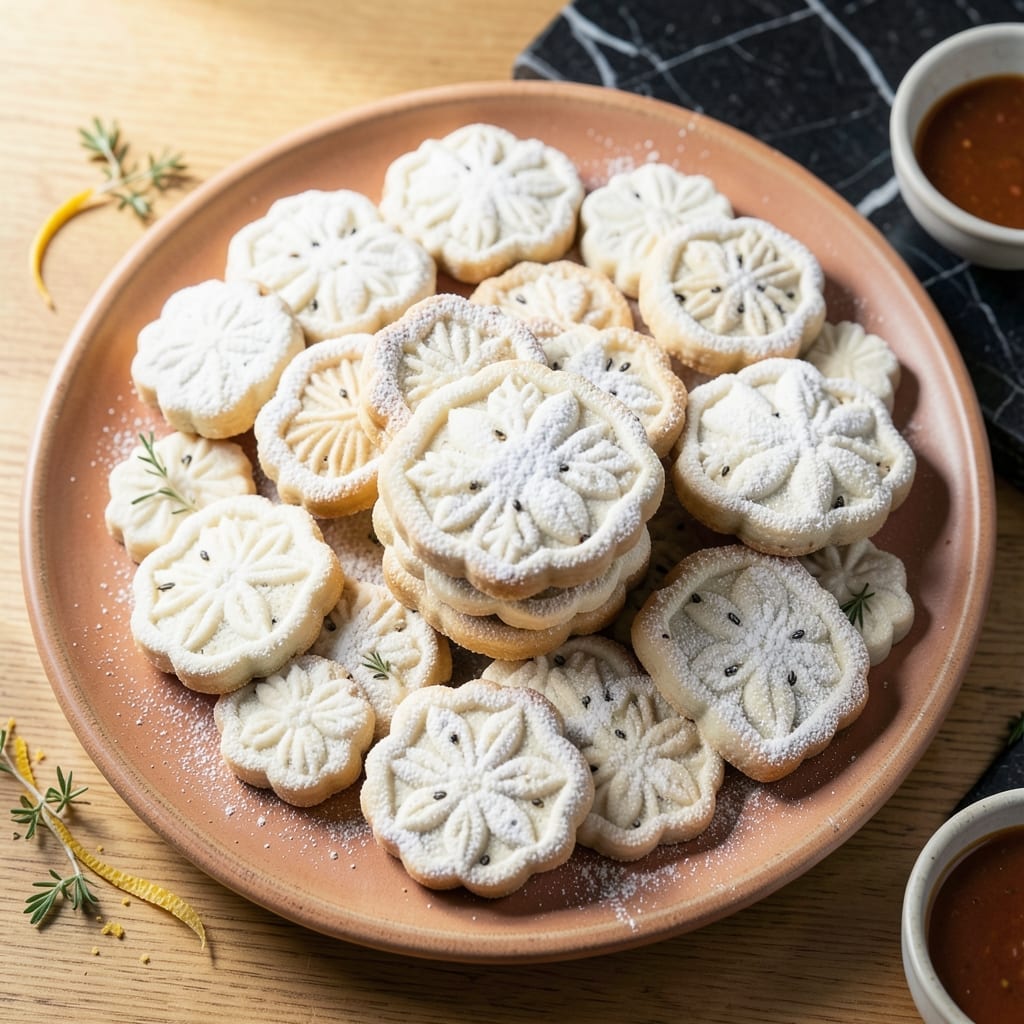
These traditional German cookies showcase beautiful embossed designs and a distinctive anise flavor that’s been cherished for centuries.
Using a springerle mold creates intricate patterns while the dough rests overnight, ensuring the perfect texture for baking.
Ingredients for Recipe for German Springerle Cookies
Traditional ingredients for embossed cookies with that classic anise aroma everyone loves.
| Ingredient | Amount | Notes |
|---|---|---|
| All-Purpose Flour 🌾 | 2 cups | Sifted for smooth texture |
| Granulated Sugar 🍚 | 1 cup | Fine grain preferred |
| Unsalted Butter 🧈 | ½ cup | Softened to room temperature |
| Large Eggs 🥚 | 2 whole | Room temperature for binding |
| Anise Seeds 🌿 | 1 tbsp | Lightly crushed for flavor |
| Baking Powder 🧂 | 1 tsp | Fresh for optimal rise |
| Salt 🧂 | ¼ tsp | Fine sea salt preferred |
| Whole Milk 🥛 | 2 tbsp | For dough consistency |
| Lemon Zest 🍋 | 1 tsp | Freshly grated for brightness |
| Vanilla Extract 🌿 | 1 tsp | Pure extract for depth |
| Powdered Sugar 🍚 | ½ cup | For dusting finished cookies |
The flour is the foundation here. King Arthur all-purpose is the gold standard for baking—consistent protein content, no surprises. Anise seeds are non-negotiable for authenticity; Penzeys carries high-quality options if your local store’s selection is lacking. Butter should be European-style if possible (higher fat content), but standard unsalted works fine. Always check the expiration on your baking powder—old leavening agents are the silent killer of cookie rise.
No anise seeds? Anise extract at one-quarter the amount can substitute, but the texture won’t be the same. For a nutty twist, almond extract at half the quantity works well too. The milk can be swapped for heavy cream if you want a richer dough, or dairy-free milk for dietary needs. The lemon zest is optional but brightens the flavor—don’t skip it if you have fresh lemons.
Dough must rest overnight (12-24 hours) to develop the embossed patterns. Store baked cookies in an airtight container at room temperature for up to 2 weeks. Freeze dough balls for up to 3 months—thaw before pressing into molds.
Why You’ll Love This Recipe
- Mix and Rest: I can prep the dough in 15 minutes, then let it chill while I tackle the rest of my to-do list.
- Anise Magic: The warm, licorice-like aroma from the anise seeds fills my kitchen and makes the whole house smell like a cozy bakery.
- Holiday Starter: These are my go-to for Christmas cookie exchanges—everyone loves the intricate designs from the mold.
- Budget Friendly: A batch costs me pennies compared to store-bought, and I can freeze half the dough for later.
Step-by-Step Instructions for German Springerle Cookies
This traditional method ensures properly textured, embossed cookies with authentic flavor.
Step 1: Prepare the Dough Base
In a stand mixer fitted with the paddle attachment, beat the 0.5 cup Unsalted Butter and 1 cup Granulated Sugar on medium speed for 3-4 minutes until light and fluffy. The mixture should appear pale yellow and slightly increased in volume, indicating proper aeration.
Add the 2 whole Large Eggs one at a time, mixing for 30 seconds after each addition until fully incorporated. Scrape down the sides of the bowl as needed. Stir in the 1 tsp Vanilla Extract, 1 tsp Lemon Zest, and 1 tbsp Anise Seeds until evenly distributed throughout the mixture.
Step 2: Incorporate Dry Ingredients
In a separate bowl, whisk together the 2 cups All-Purpose Flour, 1 tsp Baking Powder, and 0.25 tsp Salt until well combined. With the mixer on low speed, gradually add the dry ingredients to the wet mixture, mixing just until the flour is mostly incorporated.
Add the 2 tbsp Whole Milk and continue mixing for another 15-20 seconds until the dough comes together. It should be slightly sticky but manageable. Avoid overmixing, as this can develop gluten and make the cookies tough rather than tender.
Step 3: Chill and Roll the Dough
Transfer the dough to a lightly floured surface and gently knead it 2-3 times to ensure all ingredients are fully combined. Shape it into a disc, wrap it in plastic wrap, and refrigerate for at least 1 hour or up to 24 hours.
Chilling firms the dough, making it easier to roll and press into the traditional springerle molds. The anise flavor will also intensify during this resting period, creating a more pronounced taste in the finished cookies.
Step 4: Press and Dry the Cookies
Preheat your oven to 325°F. On a lightly floured surface, roll the chilled dough to a thickness of ¼ to ⅜ inch. Press the dough firmly into a springerle mold to create the characteristic embossed design. If you don’t have a mold, use a floured rolling pin to imprint a pattern.
Using a sharp knife, cut the dough into individual cookies and place them on a parchment-lined baking sheet. Let them dry uncovered at room temperature for 1-2 hours until the surface feels slightly firm to the touch. This drying step is crucial for maintaining the embossed design during baking.
Step 5: Bake and Finish
Bake the cookies in the preheated oven for 12-15 minutes or until the edges are just beginning to turn light golden brown. The centers should remain pale to preserve the embossed pattern.
Allow the cookies to cool completely on the baking sheet. Once cooled, dust them generously with the 0.5 cup Powdered Sugar for a traditional finish. Store in an airtight container at room temperature for up to 2 weeks.
Pro Tips For Making Recipe For German Springerle Cookies
- Chill the Dough: After mixing, refrigerate the dough for at least 2 hours—I learned this the hard way when my first batch spread into a blob instead of holding its springerle mold shape.
- Toast Anise Seeds: Lightly toast the anise seeds in a dry pan for 1-2 minutes before adding; it wakes up their flavor and makes a real difference in the final cookie.
- Press Firmly: When pressing dough into the mold, use steady, even pressure and tap the back to release cleanly—resist the urge to rush or you’ll lose the design.
- Dry Thoroughly: Let the molded cookies dry overnight uncovered; this step is non-negotiable for that crisp, defined impression that’s the hallmark of springerle.
Perfect Pairings for This Dish
Beverage Pairings
These cookies pair beautifully with warm beverages. I love serving them with a hot cup of chamomile tea—its floral notes complement the anise flavor perfectly. A café au lait with extra steamed milk creates a creamy contrast to the cookies’ crisp texture. 💛
Dessert Wine Options
For a special treat, try a German Riesling Kabinett with its light sweetness and citrus notes. The wine’s acidity balances the cookies’ richness. Moscato d’Asti from Italy offers a similar effect with its gentle fizz and stone fruit flavors.
Coffee Complements
A light roast coffee with citrus or floral notes enhances the anise and lemon zest. I brew Ethiopian Yirgacheffe beans for this pairing. Avoid dark roasts—their bitterness competes with the delicate cookie flavors.
Holiday Serving Ideas
Serve these cookies with mulled wine at Christmas markets for an authentic German experience. The warm spices in the wine echo the cookies’ anise notes. For summer, pair with iced lavender lemonade for a refreshing contrast.
Cheese Board Addition
Add these cookies to a dessert cheese board with aged Gouda and honeycomb. The salty cheese and sweet honey create a perfect bite. Include dried apricots for additional texture and flavor contrast.
After-Dinner Pairing
These cookies shine with espresso as an after-dinner treat. The intense coffee flavor cuts through the sweetness. For a non-alcoholic option, try sparkling apple cider—its bubbles cleanse the palate between bites.
Frequently Asked Questions
Why do these need to rest overnight?
The overnight rest allows the dough to dry slightly, making it easier to press into molds. It also deepens the anise flavor for a more authentic taste.
Can I skip the drying step before baking?
No, this step is crucial! Drying forms a slight crust that helps preserve the embossed design during baking. Skipping it may cause the patterns to blur.
What if I don’t have a springerle mold?
Use a floured rolling pin to imprint patterns, or press with textured kitchen tools. A wine bottle with an interesting base also works in a pinch.
How do I know when they’re done baking?
The edges should be just turning light golden brown while centers remain pale. Bake for 12-15 minutes at 325°F for best results.
Nutrition Facts

- BBQ Sausage Recipe Oven: Smoky Depth Without the Grill - September 28, 2026
- BBQ Chicken Bowl Recipe Rice: Smoky Sweetness Over Fluffy Grains - September 28, 2026
- Beef Cutlet Recipe Ideas: Crispy Breaded Patties With Bold Seasonings - September 28, 2026