
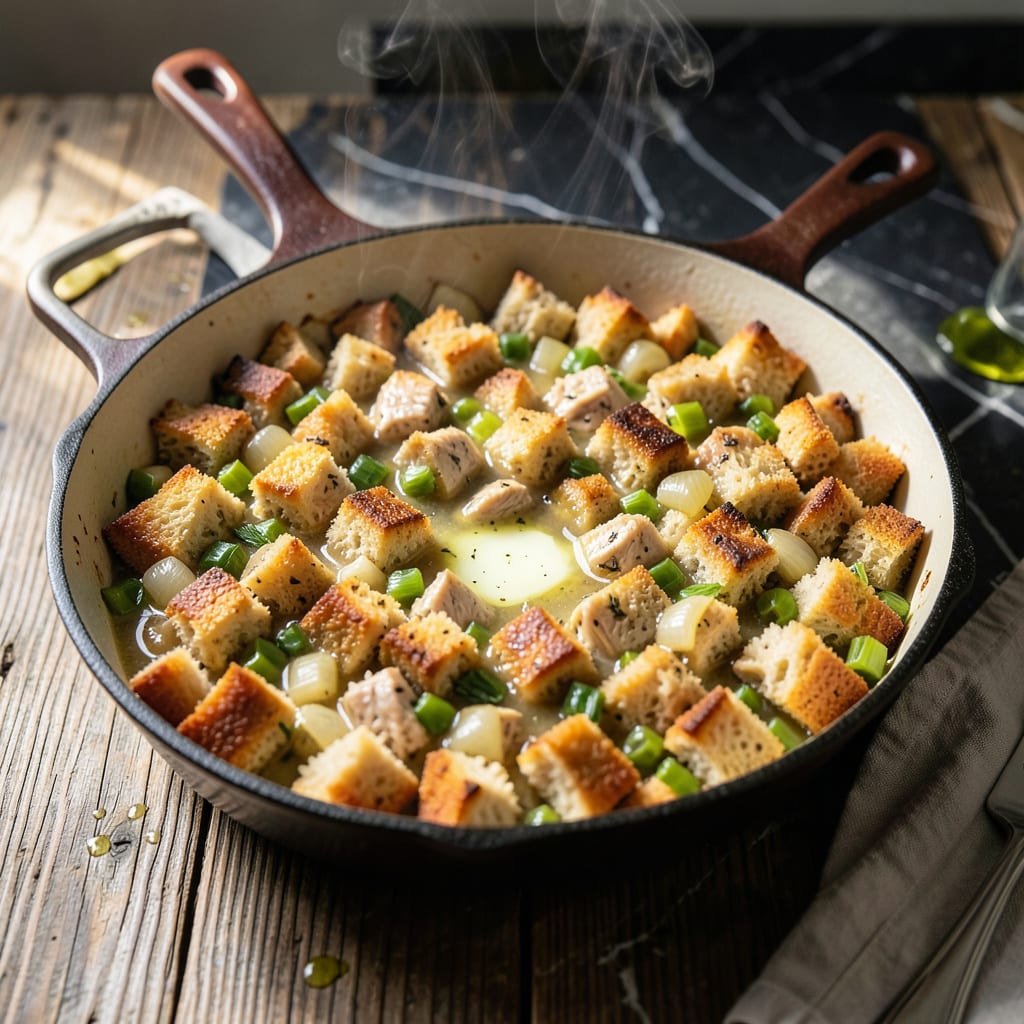
I’ve relied on this classic herbed stuffing for years—it brings that familiar, comforting flavor to any meal. The back-of-the-box method delivers perfectly seasoned bread cubes with minimal effort.
With just a few ingredients and 10 minutes of stovetop time, you’ll have a side dish that pairs beautifully with roasted meats or holiday feasts. It’s a timeless favorite for a reason.
Ingredients for Recipe Stove Top Stuffing Back of Box
Classic herbed bread cubes with just a handful of pantry staples. Simple, comforting, foolproof.
| Ingredient | Amount | Notes |
|---|---|---|
| Dried Bread Cubes 🍞 | 6 cups | Herb-seasoned variety preferred |
| Unsalted Butter 🧈 | ½ cup | Or substitute margarine |
| Celery Stalks 🌿 | 2 whole | Finely diced for texture |
| Yellow Onion 🧅 | 1 whole | Medium, finely chopped |
| Chicken Broth 🥫 | 2 ½ cups | Use vegetable broth for vegetarian |
| Dried Sage 🌿 | 1 tsp | Rubbed between fingers to release flavor |
| Dried Thyme 🍃 | 1 tsp | Crushed lightly before adding |
| Dried Rosemary 🌿 | ½ tsp | Crushed to enhance aroma |
| Ground Black Pepper 🌶️ | ½ tsp | Freshly ground preferred |
| Table Salt 🧂 | 1 tsp | Adjust to taste at end |
| Dried Parsley 🌿 | 1 tbsp | For color and freshness |
The bread cubes are the foundation here. Stovetop Stuffing mix (herb-seasoned) is what the back-of-the-box method was designed for—find it in the baking aisle at any grocery store. If you’re making this from scratch, day-old cornbread or sourdough works too (cube and dry in a low oven first). The celery and onion add that essential crunch and aroma—don’t skip them even if you’re tempted.
No herb-seasoned cubes? Plain dried bread works—just add extra sage and thyme. Vegetarian? Swap chicken broth for vegetable broth. Margarine can replace butter in a pinch (though the flavor won’t be as rich). Out of fresh celery? Celery salt at half the amount gives a similar note. The key is keeping the liquid-to-bread ratio right, so don’t eyeball the broth.
This keeps well for 3-4 days in the fridge, though it’s best fresh. Reheat in the microwave with a splash of broth to revive the moisture. Can be prepped a day ahead—just hold off on baking until you’re ready to serve (the bread soaks up liquid as it sits).
Why You’ll Love This Recipe
- One Pot Wonder: I just melt butter, sauté celery and onion, then toss in the bread cubes and broth—no oven, no fuss.
- Buttery Comfort: That rich butter soaks into the bread cubes while the celery and onion add just the right crunch.
- Holiday Shortcut: I make this for Thanksgiving prep or a quick Tuesday side—equally at home with turkey or chicken.
- Budget Stretcher: A box of bread cubes, a few veggies, and broth feed my family for pennies. Honestly, I keep extra boxes on hand for last-minute meals.
Step-by-Step Instructions for Classic Herbed Bread Stuffing
This classic stovetop method delivers perfectly seasoned stuffing with minimal effort and maximum flavor.
Step 1: Sauté the Aromatic Vegetables
Melt the 0.5 cup Unsalted Butter in a large skillet over medium heat. Once foaming subsides, add the finely diced 2 whole Celery Stalks and chopped 1 whole Yellow Onion. Cook for 5-7 minutes, stirring occasionally, until the vegetables soften and turn translucent.
Watch for the edges to just begin browning—that’s when you know the flavors are developing properly. This base layer is crucial for building depth in your stuffing. The butter should coat the vegetables completely without burning.
Step 2: Toast the Bread Cubes
Add all 6 cups Dried Bread Cubes to the skillet, stirring to coat them evenly in the buttery vegetable mixture. Spread them out in a single layer as much as possible. Cook for 2-3 minutes until the cubes start to turn light golden brown and become slightly crisp.
This toasting step prevents soggy stuffing by creating a barrier that absorbs the broth without turning mushy. Stir frequently to ensure even browning. You’ll notice the kitchen filling with that warm, buttery aroma—this means you’re on the right track.
Step 3: Season and Moisten
Sprinkle the 1 tsp Dried Sage, 1 tsp Dried Thyme, 0.5 tsp Dried Rosemary, 0.5 tsp Ground Black Pepper, and 1 tsp Table Salt evenly over the bread cubes. I always rub the herbs between my fingers as I sprinkle to release their essential oils.
Pour in the 2.5 cups Chicken Broth all at once, then add the 1 tbsp Dried Parsley. Stir gently but thoroughly to combine. The mixture should be moist but not soupy—you want the broth to be mostly absorbed by the cubes within 1-2 minutes.
Step 4: Simmer and Finish
Reduce the heat to low, cover the skillet, and let the stuffing cook for 5-7 minutes. This allows the bread to fully absorb the liquid and the flavors to meld together. Check at the 5-minute mark—if it looks dry, add a splash more broth.
You’ll know it’s ready when the top looks slightly crusty and the inside is tender but still holds its shape. Remove from heat and let it sit covered for 2 minutes before serving. This resting time lets the stuffing set so it holds together when scooped onto your plate.
Pro Tips For Making Recipe Stove Top Stuffing Back Of Box
- Sauté Veggies First: Cook the celery and onion in butter for 3-4 minutes before adding liquid—this builds flavor the box recipe skips.
- Use Hot Broth: Heat the chicken broth before mixing it in, or the bread cubes will soak up cold liquid and turn mushy.
- Skip the Lid: Resist covering the pot; the stuffing needs to steam off a little to stay light, not turn to paste.
- Butter the Pan: Coat your pan with an extra pat of butter before adding the mix—prevents sticking and adds richness.
Common Mistakes When Making Perfect Results
Over-Saturating Bread
Adding too much chicken broth is the most common mistake. The 6 cups dried bread cubes only need 2.5 cups liquid—more than that creates a mushy mess. Trust the back-of-box ratio. I learned this the hard way my first Thanksgiving. 💡
Skipping the Toast
Don’t rush past toasting the cubes in butter. Those 2-3 minutes of browning create a flavor barrier that prevents sogginess. Skip this, and your stuffing will taste like wet bread. Stir frequently for even color.
Undercooking Vegetables
The celery and onion need 5-7 minutes to soften and develop sweetness. Raw bits ruin the texture. Use medium heat to avoid burning the butter. You’ll smell when they’re ready.
Over-Stirring After Adding Broth
Once the broth goes in, stir just enough to distribute it, then let it sit. Constant stirring breaks down the bread cubes and releases too much starch. The 1-2 minutes of absorption time is critical.
Ignoring the Rest
That final 2-minute rest off heat lets the stuffing set properly. Serving immediately means it’ll fall apart on the plate. Cover the skillet to trap steam and finish the cooking process.
Using Cold Broth
Cold chicken broth slows down the cooking and can make the stuffing greasy. I always warm mine for 30 seconds in the microwave first. This helps the bread absorb liquid evenly from the start.
Nutrition Facts
Frequently Asked Questions
Can I use fresh bread instead of dried cubes?
Yes, but dry it first by cubing and baking at 300°F for 10-15 minutes until stale. Fresh bread holds too much moisture and will turn mushy.
How do I make this vegetarian?
Simply swap chicken broth for vegetable broth. The herbs and butter will still give it rich flavor. No other changes needed!
Why does my stuffing turn out soggy?
Sogginess usually means too much liquid or not toasting the cubes long enough. Stick to 2.5 cups broth and toast for 2-3 minutes first.
Can I prepare this ahead of time?
Mix everything except broth, cover, and refrigerate overnight. Add liquid and cook just before serving for best texture.

- Blue Zone Recipe Ideas: Longevity-Boosting Meals for Vibrant Living - September 28, 2026
- Beefaroni Recipe With Tomato Soup: One-Pot Nostalgic Comfort - September 28, 2026
- Bread Recipe KitchenAid Mixer: Foolproof Loaf With Perfect Rise - September 28, 2026