
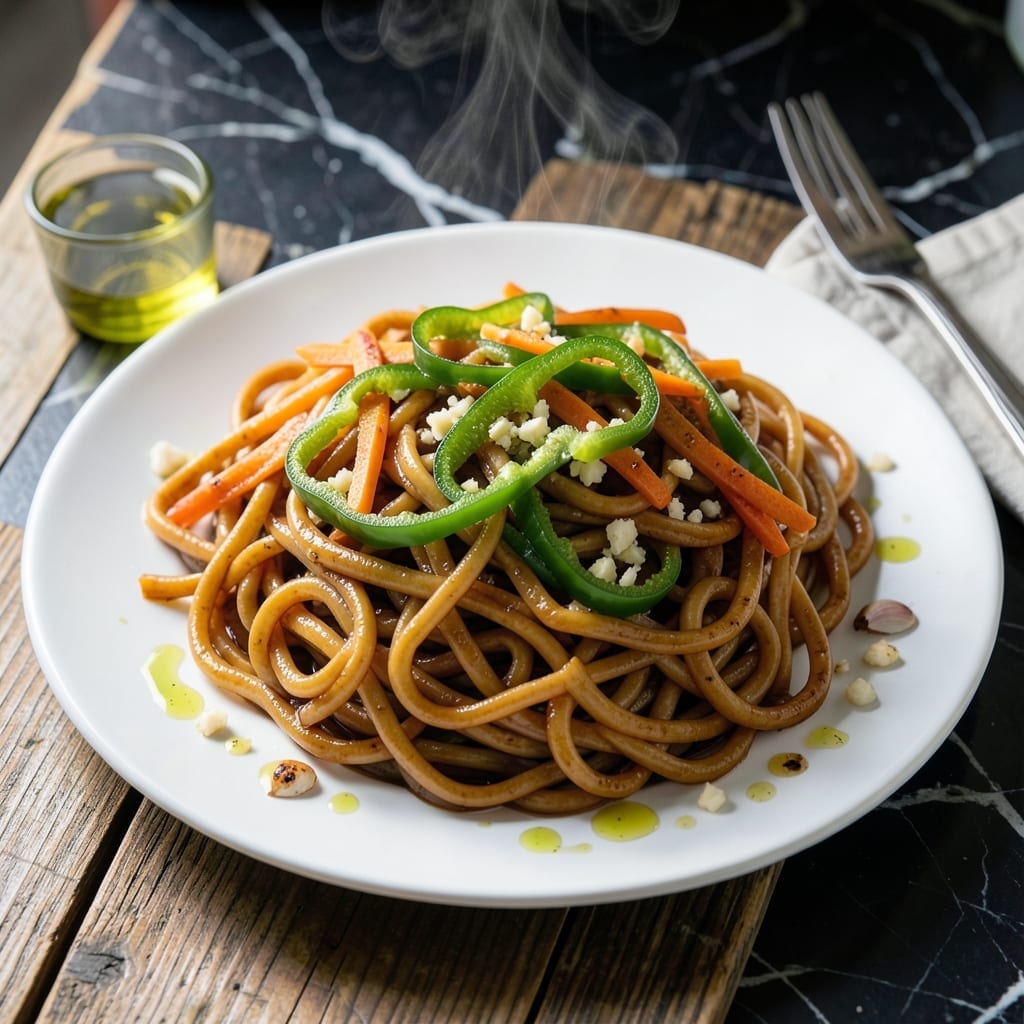
This street-style dish transforms simple ingredients into a comforting meal with bold flavors and satisfying textures. The stir-fried noodles capture the essence of Indo-Chinese cuisine at home.
Every bite delivers savory depth from soy sauce, subtle heat from spices, and a springy noodle texture that makes this a go-to recipe for quick, flavorful dinners.
Ingredients for Recipe to Make Hakka Noodles
Bold flavors and satisfying textures come together in this comforting street-style dish.
| Ingredient | Amount | Notes |
|---|---|---|
| Hakka Noodles 🍜 | 1 lb | Egg or wheat-based, parboiled |
| Vegetable Oil 🫒 | 3 tbsp | High smoke point preferred |
| Garlic Cloves 🧄 | 6 cloves | Finely minced for aroma |
| Ginger 🌿 | 1 whole | Peeled and grated |
| Green Bell Pepper 🌶️ | 1 whole | Thinly sliced for crunch |
| Carrot 🥕 | 1 whole | Julienned for texture |
| Cabbage 🥬 | 2 cups | Shredded finely |
| Green Onions 🧅 | 3 whole | Chopped, whites and greens separated |
| Soy Sauce 💧 | 3 tbsp | Low-sodium recommended |
| Chili Sauce 🌶️ | 2 tbsp | Sweet and spicy variety |
| Vinegar 💧 | 1 tbsp | White or rice vinegar |
| Salt 🧂 | 1 tsp | Adjust to taste |
| Black Pepper 🌶️ | ½ tsp | Freshly ground preferred |
| Sesame Oil 🫒 | 1 tsp | Toasted for finishing |
| Cilantro 🌿 | ¼ cup | Fresh, chopped for garnish |
The noodles are the foundation. Hakka noodles are essential here—look for them in the refrigerated section at Asian grocery stores like H Mart or Patel Brothers. If unavailable, egg noodles or even spaghetti work in a pinch, but the texture won’t be quite the same. Choose firm, fresh veggies—vibrant green bell peppers and crisp carrots make all the difference.
No chili sauce? Sriracha mixed with a touch of honey gets you close. For a milder version, use ketchup with a pinch of cayenne. Vegetable oil can be swapped for peanut or canola oil—just avoid olive oil, as its flavor is too strong. The soy sauce should be low-sodium to control the saltiness, but regular works if you adjust seasoning at the end.
Store unused noodles in an airtight container in the fridge for up to 3 days. Leftover stir-fry keeps well for 2-3 days, though the noodles may soften slightly. Reheat in a skillet with a splash of water to revive the texture.
Why You’ll Love This Recipe
- 20-Minute Meal: I can get these noodles from pantry to plate faster than takeout arrives, and the aromatics do most of the work.
- Garlic-Ginger Punch: The sizzle of fresh garlic and ginger in hot oil hits first, then the bell pepper adds that crisp sweetness that makes every bite exciting.
- Weeknight Hero: It’s my Tuesday night lifesaver—equally good for a solo dinner or feeding a table of four without extra effort.
- Leftovers Love: Honestly, they taste even better the next day, and the ingredients cost less than a single delivery fee.
Step-by-Step Instructions for Hakka Noodles
This method ensures perfectly textured noodles with bold, balanced flavors every time.
Step 1: Prepare and Parboil the Hakka Noodles
Bring a large pot of water to a rolling boil. Add the 1 lb Hakka Noodles and cook for 2-3 minutes until they float to the surface. This parboiling softens them without fully cooking, which prevents mushiness during stir-frying.
Drain immediately in a colander and rinse under cold water to stop the cooking process. Toss the noodles with 1 tsp Sesame Oil to prevent sticking while you prepare the remaining ingredients. Set aside.
Step 2: Stir-Fry the Aromatics and Vegetables
Heat 3 tbsp Vegetable Oil in a large wok or skillet over high heat until it shimmers. Add the 6 cloves Garlic Cloves and 1 whole Ginger (peeled and grated), stir-frying for 30 seconds until fragrant but not browned.
Add the 1 whole Green Bell Pepper (thinly sliced), 1 whole Carrot (julienned), and 2 cups Cabbage (shredded finely). Stir-fry for 4-5 minutes until the vegetables are tender-crisp and the green bell pepper begins to blister slightly at the edges.
Step 3: Combine Noodles with Sauce and Vegetables
Add the parboiled Hakka Noodles to the wok along with the 3 whole Green Onions (chopped, whites and greens separated). Toss everything together to combine evenly.
Pour in the 3 tbsp Soy Sauce, 2 tbsp Chili Sauce, 1 tbsp Vinegar, 1 tsp Salt, and 0.5 tsp Black Pepper. Stir-fry for an additional 3-4 minutes until the noodles are fully tender and coated in the sauce. The sauce should cling to the noodles without pooling at the bottom of the wok.
Step 4: Finish and Garnish
Taste and adjust seasoning if needed, adding more salt or black pepper to suit your preference. The flavors should be bold and well-balanced, with a slight tang from the vinegar and heat from the chili sauce.
Transfer to serving plates and garnish with the reserved green onion greens and 0.25 cup Cilantro (fresh, chopped). Serve immediately while hot, with the noodles glistening from the sauce and the vegetables retaining their vibrant color.
Pro Tips For Making Recipe To Make Hakka Noodles
- Blanch the Noodles: Parboil the hakka noodles for just 2-3 minutes in salted water before stir-frying—this keeps them from turning mushy when tossed with the bell peppers and aromatics. I learned this the hard way after ending up with a gluey clump instead of distinct strands.
- Hot Oil, Fast Cook: Heat the vegetable oil until it shimmers before adding garlic and ginger, then keep the flame high while stir-frying. After burning three batches, I finally figured out that low heat makes the veggies steam instead of sear.
- Slice Bell Peppers Thin: Cut the green bell pepper into thin, even strips so they soften quickly and cook uniformly with the noodles. Sounds weird, but it works: thicker pieces stay crunchy while the noodles overcook.
- Use Day-Old Noodles: If possible, use hakka noodles that have been cooked and refrigerated overnight—they’re firmer and absorb the garlic-ginger flavor better without falling apart. My grandmother swore by this, and she was right.
Health Benefits of This Dish
Rich in Carbohydrates
This dish provides a substantial energy boost from the 1 lb Hakka noodles, which are packed with complex carbohydrates. These carbs break down slowly, offering sustained energy that keeps you feeling full and satisfied for hours after your meal. 💪
Vitamin-Rich Vegetables
The colorful veggies in this recipe—green bell pepper, carrot, and cabbage—deliver a powerhouse of vitamins. You get a healthy dose of vitamin C from the pepper, vitamin A from the carrot, and vitamin K from the cabbage, all in one flavorful bite.
Digestive Health Boost
Both ginger and garlic in this dish are known for their digestive benefits. Ginger aids in digestion and can help soothe the stomach, while garlic supports gut health and boosts the immune system. Together, they add depth of flavor and wellness perks.
Low in Saturated Fat
With just 3 tbsp vegetable oil used for stir-frying, this creation remains relatively low in saturated fat. The focus on vegetables and noodles, rather than heavy proteins or creamy sauces, makes it a heart-healthy choice for a comforting meal.
I love how this dish proves that flavor doesn’t need to come with excess fat.
Antioxidant Properties
The cabbage and bell pepper are rich in antioxidants, which help combat oxidative stress in the body. These compounds support overall health and may reduce the risk of chronic diseases. 🥗
Quick Energy Source
Thanks to the balance of carbs and veggies, this meal provides quick energy without the crash. It’s perfect for a satisfying lunch or dinner that refuels your body while delighting your taste buds with its bold, savory flavors.
Frequently Asked Questions
Can I use regular spaghetti instead of Hakka noodles?
Yes, you can substitute with spaghetti or egg noodles. Parboil for 1 minute less than package instructions to prevent mushiness during stir-frying. The texture will differ slightly but the flavor remains delicious.
How do I make it spicier?
Add 1 tsp of red pepper flakes or 1 tbsp of sriracha along with the chili sauce. For extra heat, include finely chopped green chilies when stir-frying the aromatics.
Why are my noodles mushy?
Overcooking is the most common cause. Parboil for only 2-3 minutes until they float, then rinse with cold water immediately. Stir-fry on high heat for no longer than 4 minutes to maintain texture.
Nutrition Facts

- BBQ Sausage Recipe Oven: Smoky Depth Without the Grill - September 28, 2026
- BBQ Chicken Bowl Recipe Rice: Smoky Sweetness Over Fluffy Grains - September 28, 2026
- Beef Cutlet Recipe Ideas: Crispy Breaded Patties With Bold Seasonings - September 28, 2026