
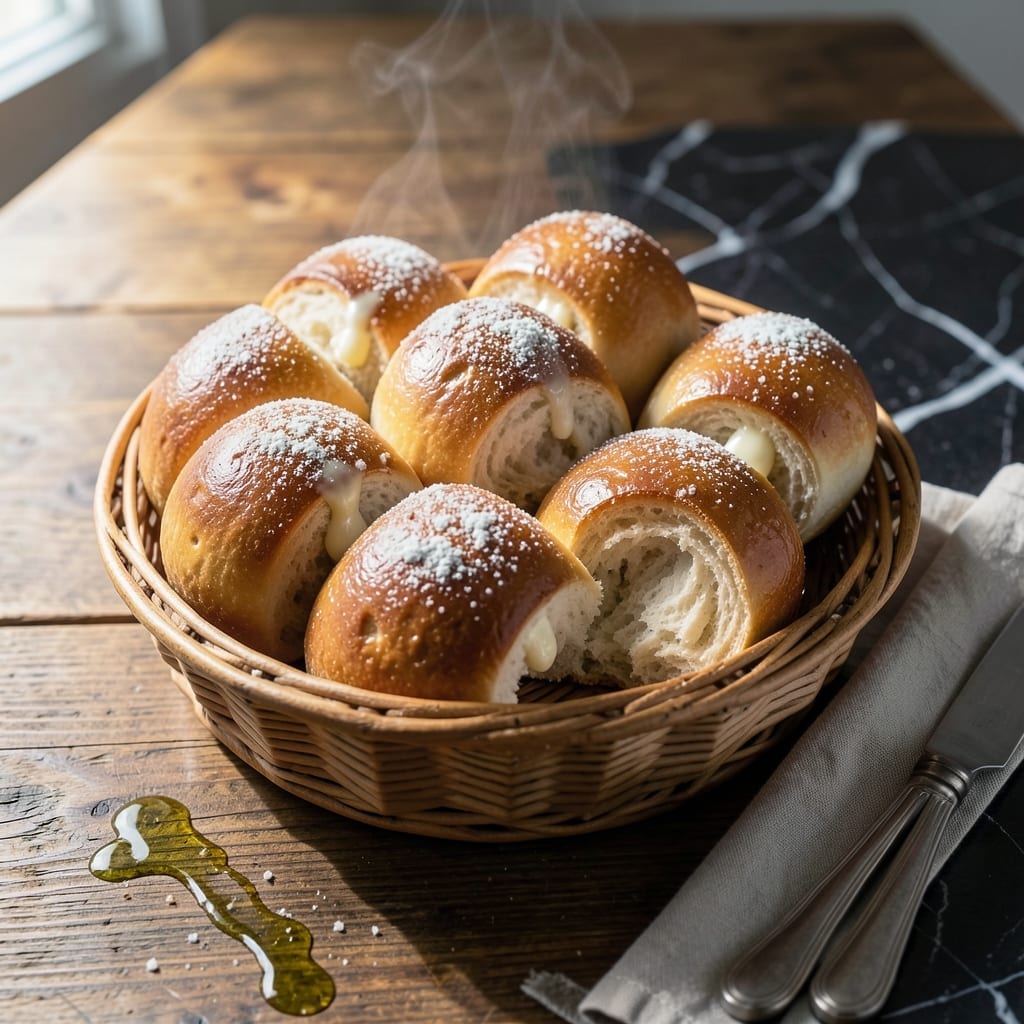
This bread maker method takes the guesswork out of homemade rolls, delivering soft, fluffy results every time.
With minimal effort and precise machine settings, you can produce bakery-quality buns that are perfect for sandwiches or dinner sides.
Ingredients for Bread Roll Recipe Bread Maker
Precise measurements and quality dry ingredients ensure perfect bread machine rolls every time.
| Ingredient | Amount | Notes |
|---|---|---|
| Bread Flour 🌾 | 4 cups | All-purpose works in a pinch |
| Warm Water 💧 | 1 ¼ cups | 110°F to 115°F temperature |
| Granulated Sugar 🍚 | ¼ cup | Feeds the yeast activation |
| Active Dry Yeast 🍞 | 2 ¼ tsp | 1 packet plus 1/4 tsp |
| Salt 🧂 | 1 ½ tsp | Fine sea salt preferred |
| Unsalted Butter 🧈 | 3 tbsp | Softened to room temperature |
| Large Egg 🥚 | 1 whole | Room temperature for best rise |
| Dry Milk Powder 🥛 | ¼ cup | Enhances softness and browning |
| Honey 🍯 | 1 tbsp | Adds subtle sweetness and tenderness |
| Vital Wheat Gluten 🌾 | 1 tbsp | Optional for extra chew |
The flour is non-negotiable for this application. King Arthur Bread Flour (12.7% protein) delivers consistent results due to its higher gluten content. Bread flour from Bob’s Red Mill works equally well. Yeast must be fresh—check the expiration date and store unopened packets in the freezer. Saf-Instant or Fleischmann’s are reliable brands. The water temperature is critical: too hot kills yeast, too cold slows activation (use a thermometer for accuracy).
No bread flour? All-purpose flour plus 1 tbsp vital wheat gluten per cup approximates the protein content. Short on dry milk? Replace with 1/4 cup liquid milk and reduce water by 2 tbsp. Honey can be swapped for maple syrup or agave at equal volume. Unsalted butter is essential—salted can inhibit yeast activity and make the rolls too salty. The egg provides richness but can be omitted for a vegan version (texture will be slightly less tender).
Store rolls in an airtight container at room temperature for 2-3 days or freeze for 1 month. Reheat frozen rolls wrapped in foil at 350°F for 10-15 minutes. For best results, use ingredients within their expiration dates—yeast and baking powder lose potency over time (even unopened).
Why You’ll Love This Recipe
- Hands-Off Baking: The bread maker does all the kneading and rising—I just measure the flour, yeast, and warm water, then walk away.
- Warm, Buttery Flavor: That golden crust with a soft, slightly sweet interior? It’s all from the sugar and yeast working their magic together.
- Meal Prep Hero: I bake a batch on Sunday, and we’ve got fresh rolls for sandwiches, soup dippers, or even mini sliders all week.
- Penny-Pincher Approved: Five basic pantry staples and zero specialty ingredients. Honestly, it costs less than a loaf from the store.
Step-by-Step Instructions for Bread Maker Rolls
Master the technique for consistently perfect, pillowy rolls with minimal effort.
Step 1: Activate the Yeast and Prepare Wet Ingredients
Begin by adding the 1.25 cups Warm Water to your bread maker pan. The ideal temperature is between 110°F to 115°F—too hot will kill the yeast, too cool will slow activation. Stir in the 0.25 cup Granulated Sugar, 1 tbsp Honey, and 2.25 tsp Active Dry Yeast.
Allow the mixture to sit undisturbed for 5-7 minutes until the surface becomes frothy and bubbly. This visual confirmation means the yeast is active and ready to leaven your dough. I always double-check this step—if there’s no foam, your yeast may be expired.
Step 2: Combine Dry Ingredients and Butter
In the bread maker pan, add the 4 cups Bread Flour, 1.5 tsp Salt, 0.25 cup Dry Milk Powder, and 1 tbsp Vital Wheat Gluten. Distribute them evenly over the liquid ingredients, being careful not to disturb the yeast mixture beneath.
Cut the 3 tbsp Unsalted Butter into small pieces and place them in different corners of the pan. This ensures even distribution as the machine begins mixing. The butter should be softened to room temperature to incorporate smoothly without leaving lumps.
Step 3: Add Egg and Set Bread Maker
Create a small well in the center of the dry ingredients and add the 1 whole Large Egg. This step is crucial for binding and adding richness. Make sure the egg is at room temperature to prevent shocking the yeast or creating uneven texture in your dough.
Secure the pan in your bread maker and select the dough setting. Most machines will mix for 10-15 minutes, then rest for 20-30 minutes before the first rise. During the initial mixing phase, check through the window to ensure all ingredients are incorporating properly.
Step 4: Monitor the Dough and Shape Rolls
After the first rise cycle (typically 1-2 hours depending on your machine), the dough should have doubled in size and look smooth and elastic. If it appears too sticky, add 1 tbsp of bread flour; if too dry, add 1 tsp of warm water. Let the machine complete its full dough cycle.
Once the cycle finishes, transfer the dough to a lightly floured surface. Divide into 12 equal portions (about 3 oz each) and shape into smooth balls by pulling the dough taut on the bottom. Place them in a greased baking dish with sides just touching.
Step 5: Final Rise and Bake to Golden Perfection
Cover the shaped rolls with a clean kitchen towel and let them rise in a warm, draft-free place for 30-45 minutes or until nearly doubled in size. They should look puffy and feel light when gently pressed.
Preheat your oven to 375°F. Bake the rolls for 15-18 minutes until they’re golden brown on top and sound hollow when tapped. Brush the tops with melted butter immediately after removing from the oven for added shine and softness. Serve warm for the best texture and flavor.
Pro Tips For Making Bread Roll Recipe Bread Maker
- Test Your Yeast: I learned this the hard way—always proof your active dry yeast in the warm water with a pinch of sugar first. If it doesn’t foam within 5 minutes, your rolls won’t rise.
- Weigh Your Flour: Sounds weird, but it works: measuring bread flour by weight (about 136g per cup) instead of volume gives consistent texture every time.
- Skip Cold Water: Warm water should feel like a baby’s bath—around 110°F. Any colder, and the yeast won’t activate; too hot, and you’ll kill it.
- Add Salt Last: Mix your salt into the flour before adding yeast. Direct contact with salt can slow down yeast activation, and nobody wants flat rolls.
Regional Styles of This Recipe
Southern Buttermilk Style
Replace ¼ cup water with buttermilk for a tangy richness popular in Southern kitchens. I also add 1 tsp cornmeal to the dough for subtle texture. These rolls pair perfectly with fried chicken or holiday meals.
New England Brown Bread
Swap 1 cup bread flour for molasses and ½ cup rye flour for a darker, denser roll. Add 1 tsp cinnamon and ½ tsp ginger for warmth. Traditionally steamed, these work wonderfully in bread machines too. 🗺️
Texas Sweet Rolls
Increase sugar to ⅓ cup and add 1 tsp vanilla extract for a sweeter profile favored in Texas. These make excellent breakfast rolls or sliders. I often add zest from 1 orange for bright citrus notes.
Midwest Dinner Rolls
This is the classic soft style—keep the original recipe but add 1 tbsp potato flour for extra tenderness. Midwest bakers swear by this trick for sandwich rolls that stay fresh for days.
Pacific Northwest
Incorporate 2 tbsp whole wheat flour and 1 tbsp flaxseeds for a heartier version. Use local honey instead of granulated sugar for regional authenticity. These rolls have a nutty depth that complements seafood dishes.
Hawaiian Sweet Rolls
Replace ¼ cup water with pineapple juice and add ½ cup crushed pineapple (drained) to the dough. The tropical sweetness makes these irresistible for pull-apart rolls. 💛
Frequently Asked Questions
Can I use all-purpose flour instead of bread flour?
Yes, but add 1 tbsp vital wheat gluten per cup to match bread flour’s protein. This ensures proper rise and chewy texture. All-purpose alone may yield slightly denser rolls.
Why didn’t my dough rise in the bread maker?
Check your yeast first—it may be expired. Also verify water temperature was 110°F-115°F. Too hot kills yeast, too cold prevents activation. Always use fresh, active yeast.
How do I make whole wheat rolls in my machine?
Replace up to 50% of bread flour with whole wheat. Add 1 extra tbsp water per cup of whole wheat flour, as it absorbs more liquid. Expect a denser, nuttier result.
Can I bake the rolls directly in the bread maker?
No, bread makers aren’t designed for shaping individual rolls. Use the dough cycle only, then shape and bake in your oven at 375°F for best results.
Nutrition Facts

- BBQ Sausage Recipe Oven: Smoky Depth Without the Grill - September 28, 2026
- BBQ Chicken Bowl Recipe Rice: Smoky Sweetness Over Fluffy Grains - September 28, 2026
- Beef Cutlet Recipe Ideas: Crispy Breaded Patties With Bold Seasonings - September 28, 2026