
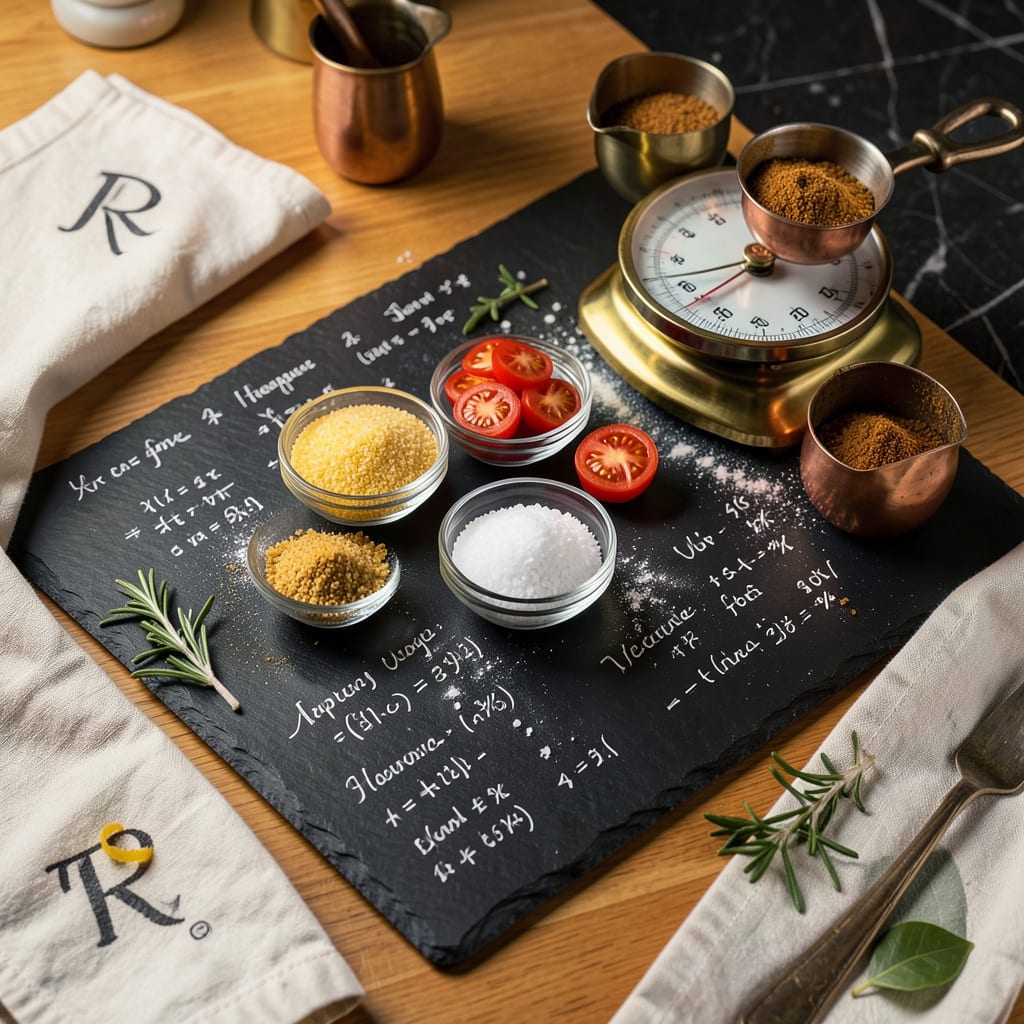
The recipe yield formula calculates output by dividing total edible product weight by portion size. For scaling, multiply each ingredient by the desired yield divided by the original yield. Always account for waste and cooking loss for accuracy.
This calculation method is the backbone of professional kitchen operations and smart home cooking. 🔥 I’ve found that understanding the difference between raw weight and finished product prevents costly mistakes—especially when working with proteins that shrink during cooking or vegetables that lose water content. The magic happens when you apply these ratios to real-world scenarios like adjusting a family recipe for a crowd or converting restaurant portions to home kitchen quantities.
What many don’t realize is how yield percentages account for the invisible factors that impact your final dish. ✨ A 10-pound turkey might only yield 6 pounds of edible meat after accounting for bones and shrinkage, while delicate herbs can lose up to 30% volume when chopped. These calculations become particularly valuable when you’re working with expensive ingredients or planning large gatherings where precision matters most.
💡 In This Article
- How the Recipe Yield Formula Works in Professional Kitchens
- Practical Applications of Recipe Yield Calculations
How the Recipe Yield Formula Works in Professional Kitchens
The foundation lies in understanding the difference between as-purchased weight and edible portion weight. A 10-pound salmon fillet might only yield 7 pounds of usable meat after removing skin and bones—that’s a 70% yield.
Professional kitchens use standardized conversion factors: beef trimming typically results in 75-80% yield, while delicate leafy greens might only offer 50-60% after washing and trimming. 🔥
Cooking loss adds another layer of complexity. Proteins shrink dramatically during cooking—ground beef loses about 25-30% of its weight as fat renders, while chicken breasts can shrink by 20-25% when roasted. Vegetables behave differently: mushrooms release water and reduce by 50%, while root vegetables like carrots maintain 90%+ of their weight when cooked.
These percentages become the “hidden multipliers” in professional yield calculations.
Here’s where the math gets practical: if a recipe calls for 4 pounds of raw chicken to serve 8 people, you can’t simply double the ingredients for 16 servings. You must account for the 23% cooking loss first. The formula becomes: (Desired servings × Portion size) ÷ (1 – Cooking loss %).
For our chicken example, that’s (16 × 8oz) ÷ 0.77 = 16.9 pounds of raw chicken needed. ✨
Professional kitchens build “yield charts” for every ingredient category. A typical chart might show:
- Beef tenderloin: 65% yield after trimming silver skin
- Shrimp (21-25 count): 55% yield after peeling/deveining
- Fresh spinach: 30% yield after washing and stemming
The concept of 100% yield exists only in theory. Even simple ingredients like flour have 5-10% loss from sifting and measuring inaccuracies. Liquids evaporate, fats separate, and every transfer between containers leaves residue. High-volume kitchens factor in 2-5% operational loss just from normal handling.
This is why professional recipes always specify whether measurements are for raw or cooked ingredients—a distinction that can make or break your cost calculations. 💫
Temperature and cooking method dramatically affect yields. A brined turkey might retain 15% more moisture than an unbrined one, while sous vide cooking can reduce shrinkage by 30-40% compared to grilling.
Professional chefs adjust their yield calculations based on equipment too—a convection oven might produce 10% higher yields than a standard oven due to more even cooking and reduced moisture loss. These are the invisible variables that separate amateur guesswork from professional precision.

- BBQ Sausage Recipe Oven: Smoky Depth Without the Grill - September 28, 2026
- BBQ Chicken Bowl Recipe Rice: Smoky Sweetness Over Fluffy Grains - September 28, 2026
- Beef Cutlet Recipe Ideas: Crispy Breaded Patties With Bold Seasonings - September 28, 2026