
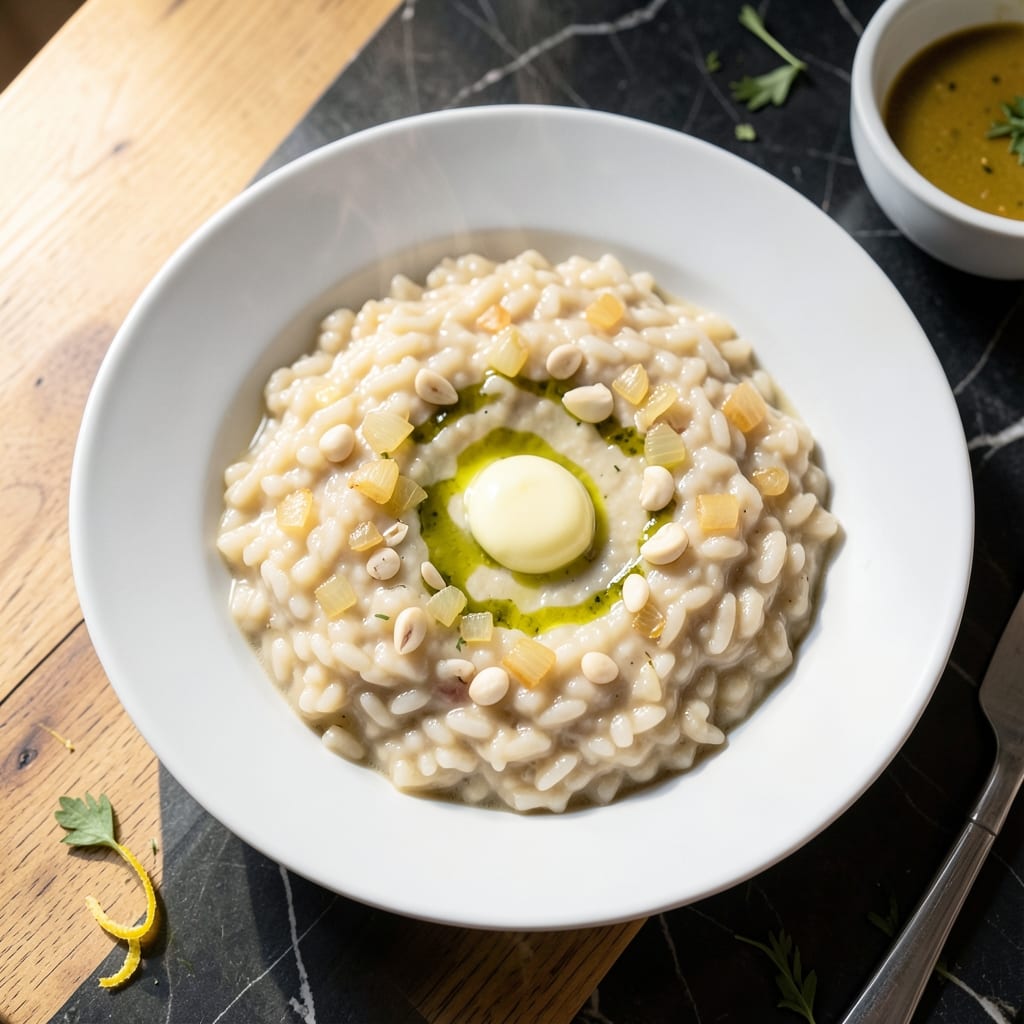
I spent years perfecting risotto, convinced wine was essential—until I discovered this broth-infused method. The key lies in slow, steady stirring and the right liquid ratio.
This technique delivers creamy, restaurant-quality risotto without a single drop of alcohol. Warm broth gradually releases starch from Arborio rice, creating that signature velvety texture.
No special equipment needed, just patience and a good wooden spoon. The result is rich, comforting, and every bit as luxurious as traditional versions.
Perfect for weeknight dinners or impressive enough for guests. Let’s begin with the foundation.
Ingredients for Risotto Recipe Without Wine
Arborio rice, warm broth, and patience transform into velvety, restaurant-quality risotto without alcohol.
| Ingredient | Amount | Notes |
|---|---|---|
| Arborio Rice 🌾 | 1 ½ cups | Short-grain, unrinsed for starch |
| Vegetable Broth 💧 | 6 cups | Low-sodium, warmed before use |
| Yellow Onion 🧅 | 1 whole | Finely diced for even cooking |
| Garlic Cloves 🧄 | 3 cloves | Minced to release flavor |
| Unsalted Butter 🧈 | 3 tbsp | Divided for toasting and finishing |
| Extra-Virgin Olive Oil 🫒 | 2 tbsp | For sautéing base |
| Parmesan Cheese 🧀 | ¾ cup | Freshly grated from wedge |
| Dry White Wine Substitute 🍏 | ½ cup | Apple cider vinegar plus water |
| Kosher Salt 🧂 | 1 tsp | Diamond Crystal preferred |
| Freshly Ground Black Pepper 🌶️ | ½ tsp | Coarse grind for texture |
| Fresh Thyme Sprigs 🍃 | 2 whole | Leaves stripped, stems discarded |
| Fresh Flat-Leaf Parsley 🌿 | ¼ cup | Chopped for garnish |
| Lemon Zest 🍋 | 1 tsp | Finely grated for brightness |
The Arborio rice is non-negotiable—its high starch content is what creates that signature creamy texture. Look for Italian brands like Acquerello or Carnaroli at specialty stores or Whole Foods. The vegetable broth must be low-sodium; you’ll reduce it significantly, and salty broth will make the finished dish inedible. For the Parmesan, Parmigiano-Reggiano is ideal, as its aging process delivers the nutty depth this dish requires.
No vegetable broth? Chicken broth works (though this becomes non-vegetarian). For the wine substitute, equal parts apple cider vinegar and water mimics acidity without alcohol. Fresh thyme can be swapped for dried at one-third the amount. The butter is essential for richness, but olive oil can replace it in a pinch—though the flavor profile will be different.
Risotto waits for no one—serve immediately for best texture. Leftovers keep 3-4 days in the fridge but will thicken; loosen with a splash of warm broth. Not freezer-friendly. Fresh herbs must be added last-minute to preserve color and aroma.
Why You’ll Love This Recipe
- One Pot Wonder: I just dump everything in a single pan and stir—no fancy equipment, no wine to buy.
- Buttery Richness: The butter and garlic melt into the Arborio rice until it’s creamy and indulgent without a drop of alcohol.
- Feeds the Crowd: I stretch it with extra broth for a big family dinner or portion it for my weekly meal prep.
Step-by-Step Instructions for Risotto Without Wine
Master this technique for perfectly creamy results without traditional wine.
Step 1: Sauté Aromatics in Fat
Heat 2 tbsp Extra-Virgin Olive Oil and 1 tbsp Unsalted Butter in a wide, heavy pan over medium heat. The butter should foam but not brown. Add the 1 whole Yellow Onion, finely diced, and cook for 5-6 minutes until translucent and sweet.
Stir in the 3 cloves Garlic Cloves, minced, and the leaves from 2 whole Fresh Thyme Sprigs. Cook for 1 minute until fragrant. This aromatic base builds the flavor foundation for your risotto, so take your time to develop the flavors properly.
Step 2: Toast the Rice and Begin Liquid Addition
Add the 1.5 cups Arborio Rice to the pan and stir to coat with the fat. Toast for 2-3 minutes until the edges of the rice grains appear translucent and the center remains opaque. This step enhances the nutty flavor of the rice.
Pour in the 0.5 cup Dry White Wine Substitute and stir continuously until the liquid is fully absorbed. The rice should sizzle as the acidity from the substitute helps break down the starches for creaminess.
Step 3: Gradually Incorporate Warm Broth
Begin adding the 6 cups Vegetable Broth, ½ cup at a time, stirring frequently. Wait until each addition is mostly absorbed before adding the next. This gradual process, taking about 18-20 minutes, coaxes the starches from the rice to create a creamy texture.
The risotto is ready when the rice is al dente—tender with a slight bite—and the mixture has a porridge-like consistency. Taste as you go to ensure the rice is cooking evenly. Keep the remaining broth warm to maintain the cooking temperature.
Step 4: Finish with Butter, Cheese, and Seasonings
Remove the pan from heat. Stir in the remaining 2 tbsp Unsalted Butter, the 0.75 cup Parmesan Cheese, 1 tsp Kosher Salt, and 0.5 tsp Freshly Ground Black Pepper. The butter and cheese should melt into the risotto, creating a rich, glossy finish.
Fold in the 1 tsp Lemon Zest for a bright contrast to the creamy rice. The lemon zest adds a subtle freshness that balances the richness of the dish. Let the risotto rest for 1-2 minutes off the heat to allow the flavors to meld.
Step 5: Garnish and Serve Immediately
Spoon the risotto into warmed shallow bowls. Garnish with the 0.25 cup Fresh Flat-Leaf Parsley, chopped, for a pop of color and freshness. The parsley should be added just before serving to preserve its vibrant appearance and crisp texture.
Serve immediately while the risotto is still creamy and fluid. The texture will thicken as it cools, so timing is critical. Each serving should have a glossy sheen and a slight flow when tilted, indicating perfect creaminess.
Pro Tips For Making Risotto Recipe Without Wine
- Toast the Rice: Cook the Arborio in butter for 2-3 minutes until edges look glassy—I learned this the hard way after my first few risottos turned out gummy instead of creamy.
- Warm the Broth: Keep your vegetable broth hot in a separate pot. Cold broth slows cooking and makes the rice seize up, and after burning three batches, I finally figured out why.
- Skip the Rinse: Don’t wash the Arborio first—you’ll remove the starch that gives risotto its signature silkiness. My grandmother swore by this, and she was right.
- Finish with Cold Butter: Stir in 1-2 tablespoons of cold unsalted butter at the very end. Sounds weird, but it works: it stops the cooking instantly and gives the dish a rich, velvety finish.
Health Benefits of This risotto recipe without wine
Nutrient-Rich Arborio
Arborio rice provides complex carbohydrates for steady energy, plus small amounts of iron and zinc. Its high starch content isn’t just for texture—it also feeds beneficial gut bacteria, supporting digestive health. I love how this humble grain packs such nutritional value. 💪
Bone Broth Benefits
Using vegetable broth infuses your dish with vitamins and minerals. Look for low-sodium versions at your grocery store to control salt intake. The slow cooking process extracts maximum nutrients from the vegetables used in the broth.
Heart-Healthy Fats
Extra-virgin olive oil and butter contribute healthy fats that help your body absorb fat-soluble vitamins from the dish. These fats also provide satiety, keeping you full longer. I always use unsalted butter to manage sodium levels.
Calcium Boost
The Parmesan cheese adds a significant calcium punch—about 300mg per serving—supporting bone health. It also provides protein and vitamin B12, essential for energy metabolism. Freshly grated always tastes better and melts more smoothly. 🧀
Antioxidant Herbs
Fresh thyme and parsley aren’t just for flavor—they’re packed with antioxidants. Thyme contains thymol, a compound with anti-inflammatory properties. I strip thyme leaves myself for the freshest taste.
Digestive Support
Garlic and onions contain prebiotic fibers that nourish your gut microbiome. The lemon zest adds vitamin C and aids iron absorption from the rice. These small ingredients make a big nutritional difference.
Nutrition Facts
Frequently Asked Questions
What can I use instead of wine?
Apple cider vinegar mixed with water in equal parts works perfectly. The acidity mimics wine’s role in breaking down starches for that creamy texture.
Why does my risotto turn mushy?
Overcooking or adding too much broth at once causes this. Add ½ cup at a time and stir frequently. Stop when rice is al dente.
Can I make this ahead of time?
Risotto is best served immediately. If needed, undercook slightly, then finish with warm broth just before serving.
Do I need to rinse the rice?
No! The starch on Arborio rice is essential for creaminess. Rinsing washes away this key component.

- BBQ Sausage Recipe Oven: Smoky Depth Without the Grill - September 28, 2026
- BBQ Chicken Bowl Recipe Rice: Smoky Sweetness Over Fluffy Grains - September 28, 2026
- Beef Cutlet Recipe Ideas: Crispy Breaded Patties With Bold Seasonings - September 28, 2026