
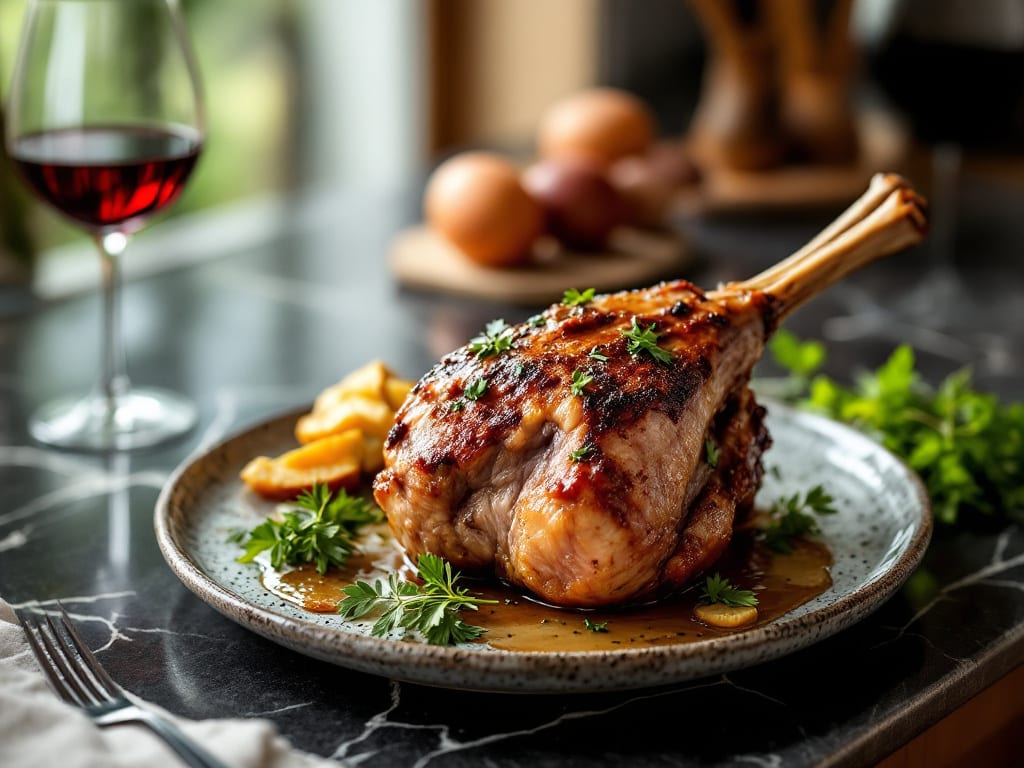
Mastering a rotisserie leg of lamb recipe with crispy bark and juicy pink center transforms a simple roast into a showstopping centerpiece. 🔥 After years of perfecting this technique—from my first competition where skeptics doubted my method—I’ve cracked the code for achieving that perfect balance between exterior and interior.
The secret lies in precise timing, strategic basting, and understanding when to walk away.
What sets this recipe apart is the combination of a dry rub that creates that coveted crispy bark while keeping the interior juicy and pink—no overcooking required.
We’ll use a rotisserie for even heat circulation, but the real magic happens in the preparation: a simple brine to tenderize, a well-seasoned exterior, and knowing exactly when to pull it from the heat. This isn’t just another lamb recipe; it’s a method that delivers restaurant-quality results at home.
The final product will be a leg of lamb with a deep mahogany crust that shatters at the touch, giving way to tender, pink meat that melts in your mouth.
The aroma alone will have everyone gathering at the table, and each bite will showcase that perfect harmony of texture and flavor. This is the kind of dish that makes you look like a professional pitmaster without requiring years of practice.
Pair it with roasted garlic mashed potatoes and a bright herb salad to complete the meal. The technique is straightforward, but the results are undeniably impressive—proof that anyone can master the fire, not just the professionals. Let’s get started on creating your perfect rotisserie lamb.
Ingredients for rotisserie leg of lamb
Sixteen ingredients, but only four do the heavy lifting for that legendary rotisserie lamb crust.
| Ingredient | Amount | Notes |
|---|---|---|
| Leg of Lamb 🐑 | 4 lb | Bone-in, frenched for even cooking |
| Kosher Salt 🧂 | 1 ½ cups | Diamond Crystal preferred for texture |
| Coarse Black Peppercorns 🌶️ | ½ cup | Freshly cracked for intensity |
| Ground Cumin 🌿 | 2 tbsp | Toasted for deeper aroma |
| Smoked Paprika 🌶️ | 1 ½ tbsp | For that mahogany bark |
| Garlic Powder 🧄 | 1 ½ tbsp | Freshly ground preferred |
| Onion Powder 🧅 | 1 ½ tbsp | Sweet onion preferred |
| Brown Sugar 🍯 | 2 tbsp | Light variety for balance |
| Extra-Virgin Olive Oil 🫒 | ¼ cup | High quality for basting |
| Fresh Rosemary 🌿 | ½ cup | Chopped, woody stems removed |
| Fresh Thyme 🌿 | ¼ cup | Leaves only, finely chopped |
| Water 💧 | 2 cups | For brine, filtered preferred |
| Ice Cubes ❄️ | 2 cups | For brine chilling |
| Lemon Juice 🍋 | ¼ cup | Freshly squeezed, bright flavor |
| Honey 🍯 | 2 tbsp | Wildflower preferred |
The lamb is the star, so pick a 4-pound bone-in leg—frenched if possible, but any cut will work if trimmed evenly. Whole Foods or local butchers often have the best quality, but check your grocery store’s meat counter for freshness. Look for vibrant color and minimal marbling—too much fat means less crispiness. I always ask for the leg to be cut into even sections if it’s not pre-fenched; uneven pieces won’t cook uniformly. The key is that bone-in cut—it helps distribute heat perfectly during rotisserie cooking, giving you that restaurant-quality even doneness.
No Diamond Crystal kosher salt? Morton coarse salt works in a pinch, but the texture difference is noticeable. Running short on fresh herbs? Dried rosemary and thyme at one-third the amount gets you close, but fresh is ideal for that bright aroma. The olive oil matters here—California avocado oil has a higher smoke point if you’re worried about burning. For the brine, I use filtered water to avoid any off-flavors, but tap water works fine if you’re in a hurry. The honey in the brine isn’t just for sweetness—it helps with that caramelized bark development during cooking. Pro tip: if you can’t find wildflower honey, any light variety will do, but avoid dark honey which can overpower the delicate lamb flavor.
This lamb is a two-day project—the brine needs 12-24 hours, and the rub should sit overnight for maximum flavor penetration. Store the brined lamb in its marinade in the fridge, covered. The dry rub can be prepped a day ahead and stored in an airtight container. Once cooked, the lamb reheats beautifully—just warm in the oven at 250°F for 15 minutes with a splash of water to keep it moist. The crust gets even more intense after resting, so let it sit 20 minutes before carving. Leftovers? Portion into containers with some of the juices for 3-4 days in the fridge or 3 months frozen.
Why You’ll Love This Recipe
- No-Fuss Rotisserie Magic: I swear by this method—just slather the lamb with salt, pepper, cumin, and smoked paprika, then let the rotisserie do the work. No basting, no flipping, no stress.
- Deep, Smoky Satisfaction: That smoked paprika and cumin? It’s like a warm hug for your taste buds—earthy, slightly sweet, with a crackling crust that begs for another bite.
- Weeknight to Dinner Party: Same prep, different occasions. Use it for a lazy Sunday lunch or impress guests at a holiday spread—it’s that versatile.
- Leftovers That Don’t Suck: Between us, most roasted lamb leftovers are sad. Not this one. The spices keep it flavorful for days, and it shreds perfectly for wraps or salads.
Step-by-step instructions for rotisserie leg of lamb
Here’s the method that delivers that incredible mahogany bark and melt-in-your-mouth tenderness every time.
🔪 Step 1: Prepare the Dry Rub and Brine Solution
In a large bowl, combine the 1.5 cups kosher salt, 0.5 cup coarse black peppercorns (freshly cracked), 2 tbsp ground cumin, 1.5 tbsp smoked paprika, 1.5 tbsp garlic powder, 1.5 tbsp onion powder, and 2 tbsp brown sugar. Mix vigorously until the salt crystals dissolve and the spices are evenly distributed throughout.
In a separate container, whisk together the 2 cups water, 0.25 cup lemon juice, and 2 tbsp honey until the honey fully dissolves. This brine will infuse the lamb with incredible flavor while keeping it moist during the long cook. The acidity from the lemon juice also helps tenderize the meat beautifully.
👨🍳 Step 2: Apply the Rub and Brine the Lamb
Pat the 4 lb leg of lamb completely dry with paper towels – you want it as dry as possible for that perfect crust. Generously coat the lamb with the dry rub mixture, pressing it firmly into the meat so it adheres well. Don’t forget to season the fat cap as well – this will render down and baste the meat as it cooks.
Place the rubbed lamb in a large container or zip-top bag and pour the brine solution over it. Make sure the lamb is completely submerged in the brine. Cover and refrigerate for at least 8 hours or ideally overnight. This long brining period ensures maximum flavor penetration and moisture retention. The lamb will develop a beautiful pink hue from the lemon juice and honey combination.
🔥 Step 3: Set Up the Rotisserie and Preheat
Remove the lamb from the brine and pat it dry once more with paper towels. Let it sit at room temperature for 1 hour before cooking. This step is crucial for even cooking – cold meat can lead to uneven doneness.
Set up your rotisserie according to the manufacturer’s instructions. Preheat your oven to 325°F if using a conventional oven setup. For a charcoal grill, light your coals and let them burn until they’re covered with white ash. Arrange the coals in a circle around the rotisserie and place the lamb on the spit, positioning it so the fat cap faces outward for even cooking.
⏰ Step 4: Rotisserie Cook Until Perfect Doneness
Cook the lamb on the rotisserie for about 2 hours at 325°F, basting occasionally with the 0.25 cup extra-virgin olive oil mixed with 0.5 cup fresh rosemary and 0.25 cup fresh thyme (finely chopped). The oil will help create that incredible mahogany bark while keeping the meat moist. You’ll know it’s developing that beautiful crust when you see the exterior turning deep brown and crispy.
Increase the heat to 375°F for the final 30-45 minutes of cooking. This higher temperature will help develop that perfect crust while ensuring the interior reaches 135°F for medium-rare doneness. The internal temperature should rise quickly during this final stage, so keep a close eye on it. The lamb is done when it reaches 135°F at the thickest part of the meat.
🍽️ Step 5: Rest and Slice for Maximum Juiciness
Remove the lamb from the rotisserie and transfer it to a cutting board. Let it rest for at least 20 minutes before slicing. This resting period is absolutely crucial – it allows the juices to redistribute throughout the meat, ensuring each bite is incredibly juicy and flavorful.
Slice the lamb against the grain into ½-inch thick slices. The meat should be beautifully pink in the center with a deep mahogany crust on the outside. Each slice should be incredibly tender, pulling apart easily with a gentle tug. Serve immediately with your favorite sides and watch your guests marvel at the perfect balance of crispy bark and juicy pink center!
Pro Tips For Making Rotisserie Leg Of Lamb
- Trim the Fat First: I learned this the hard way—skipping this step means your lamb will steam instead of sear. Use a sharp knife to cut away the thickest layer of fat (about ¼-inch) from the exterior; this lets the crust form evenly and keeps the meat juicy.
- Salt Like It’s 1950: More salt than you think, especially if your lamb is fresh. Start with 1 tablespoon kosher salt per pound, then add another ½ tablespoon after searing. The second layer penetrates deeper, and trust me, your lamb won’t taste “salted”—it’ll taste balanced.
- Sear Hot, Then Slow: Crank your oven to 450°F (230°C) for the first 15 minutes—this isn’t the time to be gentle. After searing, drop to 325°F (160°C) and cook until internal temp hits 130°F (54°C) for medium-rare. Rushing the slow cook will leave you with dry, sad meat.
- Crush the Pepper: Skip the pre-ground peppercorns—they’re dull. Use a mortar and pestle (or a heavy bottle) to crush coarse black peppercorns right before applying. The oils release instantly, and the texture? Chef’s kiss. Yes, it’s extra work, but it makes a real difference.
Best sauces and condiments for this recipe
Classic Mint Sauce
This bright, herby sauce is a must for lamb—½ cup chopped fresh mint, ¼ cup chopped shallots, 2 tbsp red wine vinegar, 2 tbsp honey, and 1 tsp Dijon mustard blended until smooth.
I like to add 1 tbsp lemon juice for extra zing. Serve it chilled alongside thinly sliced lamb to cut through the richness. 🌿
Garlic-Herb Butter
For a luxurious finish, whip together ½ cup softened butter, 2 minced garlic cloves, 1 tbsp fresh rosemary, 1 tbsp fresh thyme, 1 tsp lemon zest, and a pinch of salt.
Dollop it over each slice or serve it in a bowl for dipping. The garlic and herbs complement the lamb’s natural flavors beautifully while adding a rich, velvety texture. 🧄
Tzatziki Swirl
Greek-inspired and refreshing, this sauce features 1 cup Greek yogurt, ½ cup grated cucumber, 1 minced garlic clove, 1 tbsp lemon juice, 1 tbsp olive oil, and 1 tsp dried oregano.
Mix it well and chill before serving. The cool, tangy flavor balances the lamb’s richness perfectly, especially when paired with grilled vegetables or crusty bread. 🥒
Red Wine Reduction
For a sophisticated touch, simmer 1 cup dry red wine (like Cabernet Sauvignon), 1 cup beef broth, 2 tbsp balsamic vinegar, and 1 tbsp brown sugar until reduced by half.
Finish with 1 tbsp butter and a pinch of black pepper. This sauce adds depth and pairs wonderfully with the lamb’s crust, enhancing its natural flavors. 🍷
Spicy Harissa Glaze
If you love heat, blend 2 tbsp harissa paste, 1 tbsp honey, 1 tbsp olive oil, and 1 minced garlic clove until smooth. Brush it over the lamb during the last 15 minutes of cooking for a smoky, spicy finish.
The harissa adds a bold, aromatic kick that elevates the dish to new heights. 🌶️
Lemon-Herb Compote
Light and fresh, this compote combines 1 cup chopped red onion, 2 tbsp olive oil, 1 tbsp honey, 1 tbsp lemon juice, 1 tsp dried thyme, and a pinch of salt.
Sauté the onion until caramelized, then stir in the remaining ingredients and simmer for 5 minutes. The sweet-tart balance makes it a perfect accompaniment to the lamb’s rich flavors. 🍋
Nutrition facts
Frequently asked questions
How do I know when my rotisserie leg of lamb is fully cooked?
Use a meat thermometer to check the internal temperature at the thickest part of the meat. For medium-rare (the ideal doneness for this recipe), aim for 135°F. The exterior should have a deep mahogany crust that’s crispy to the touch. Never rely on time alone—lamb size and fat content can vary.
Can I use a regular oven instead of a rotisserie?
Yes! Place the lamb on a rack in a roasting pan with a drip pan underneath. Cook at 325°F for 2 hours, then increase to 375°F for the final 30-45 minutes. Baste every 30 minutes with olive oil and herbs. The key is to rotate the pan halfway through for even browning.
What’s the best way to reheat leftover rotisserie lamb?
Slice the lamb and reheat in a skillet over medium-low heat with a splash of water or broth for 5-7 minutes until warmed through. For oven reheating, cover with foil and warm at 250°F for 15 minutes. Avoid microwaving—it ruins the crispy bark.
Why is my lamb crust not crispy?
Common causes include: not patting the lamb dry before seasoning, cooking too slowly, or using too much moisture in the rub. For crispiness, ensure the lamb is bone-dry, cook at 375°F for the final stage, and avoid basting too frequently. A thin layer of oil helps create the crust, but don’t overdo it.
How far in advance can I prepare the dry rub?
You can mix the dry rub up to 3 days ahead and store it in an airtight container. The spices will retain their flavor, and the salt will keep the rub from clumping. For best results, let the lamb sit with the rub for at least 4 hours (or overnight) before cooking to maximize flavor penetration.

- Rum Simple Syrup Recipe: Balanced Sweetness for Cocktails and Desserts - November 29, 2026
- Avocado Cloud Bread Recipe: Light, Fluffy, and Egg-Free Magic - November 29, 2026
- 1950’s Betty Crocker Banana Bread Recipe: Nostalgic Spice Perfection - November 29, 2026