
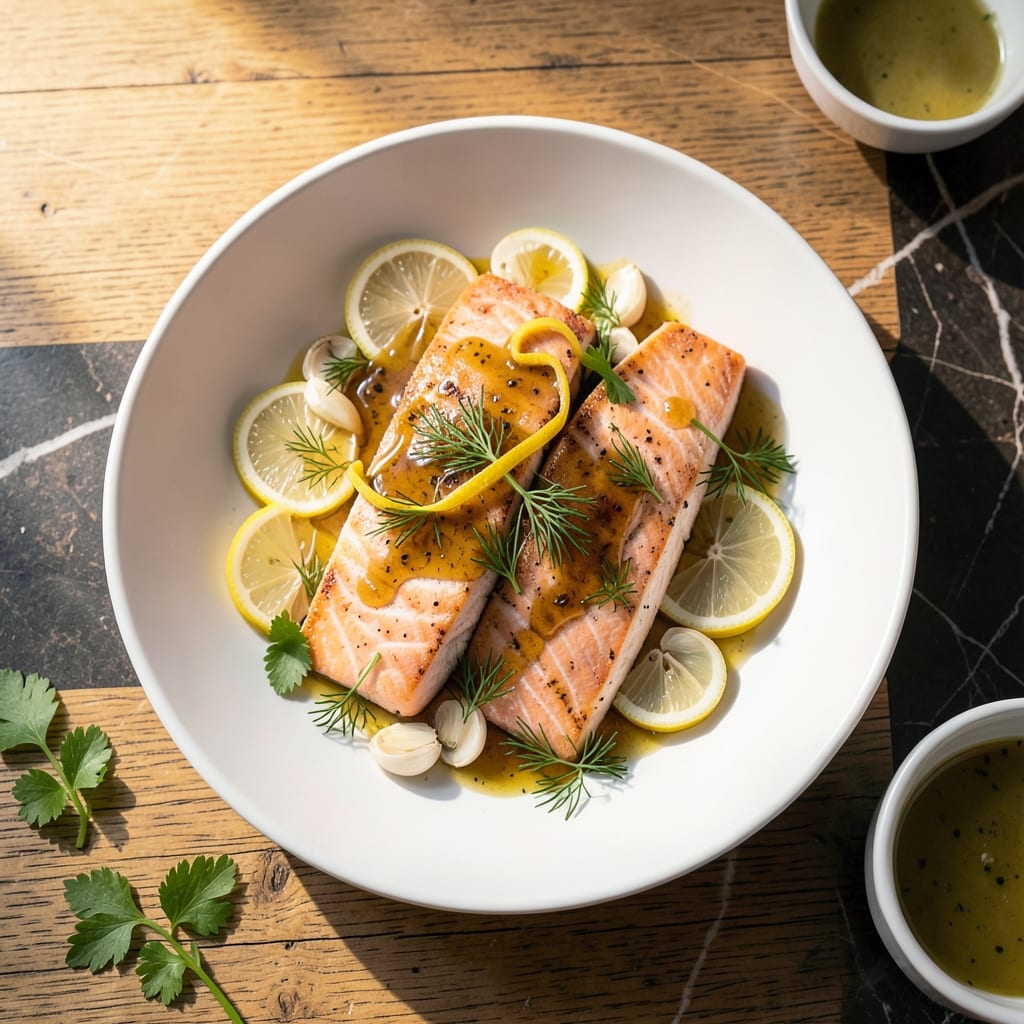
This heart-healthy salmon recipe proves that delicious and nutritious can go hand in hand. I developed this method after years of testing to create a dish that supports cardiovascular wellness without sacrificing flavor.
The key is using fresh salmon rich in omega-3 fatty acids and preparing it with low-sodium seasonings. A simple lemon-herb marinade enhances the natural flavors while keeping the dish healthy and light.
By baking at 375°F, the salmon stays tender and moist, locking in all the beneficial nutrients. The result is a perfectly cooked fillet with a bright, citrusy finish that’s as good for your heart as it is for your taste buds.
Serve with steamed vegetables or a side salad for a complete, balanced meal that supports your well-being. Here’s how to make it.
Ingredients for Salmon Recipe for High Blood Pressure
Fresh salmon, bright herbs, and a zesty marinade make this dish sing.
| Ingredient | Amount | Notes |
|---|---|---|
| Wild-Caught Salmon Fillets 🐟 | 1 ½ lb | Skin-on or skinless, fresh preferred |
| Extra-Virgin Olive Oil 🫒 | 2 tbsp | High-quality for best flavor |
| Fresh Lemon Juice 🍋 | 3 tbsp | About 1 large lemon |
| Garlic Cloves 🧄 | 3 cloves | Minced finely for marinade |
| Fresh Dill 🌿 | 2 tbsp | Chopped, or substitute dried |
| Fresh Parsley 🌿 | 2 tbsp | Chopped, for garnish |
| Dijon Mustard 🟡 | 1 tbsp | Low-sodium variety preferred |
| Honey 🍯 | 1 tsp | Or maple syrup for vegan option |
| Sea Salt 🧂 | ½ tsp | Fine grain, low-sodium |
| Black Pepper 🌶️ | ½ tsp | Freshly ground preferred |
| Lemon Zest 🍋 | 1 tsp | From 1 large lemon |
| Dry White Wine 🍷 | 2 tbsp | Optional, deglaze pan |
The salmon is the star here—wild-caught is ideal for maximum omega-3s (that’s the heart-healthy stuff). Look for bright, moist fillets at Whole Foods or a trusted fishmonger. If you’re buying frozen, thaw overnight in the fridge for best texture. The olive oil matters too; grab a bottle of California Olive Ranch or similar high-quality extra-virgin.
No fresh dill? Dried dill at one-third the amount works fine, or swap in fresh tarragon. Out of Dijon? Whole-grain mustard adds a nice texture. The honey can be maple syrup if you’re avoiding refined sugar. For the wine, chicken broth with a splash of vinegar mimics the acidity if you’re skipping alcohol.
Marinate the salmon for 10-15 minutes max—longer and the acid starts to cook it. Leftovers keep 2-3 days in the fridge, though it’s best fresh. Freeze cooked salmon for up to 1 month (the texture changes slightly, but it’s still good in salads or pasta).
Why You’ll Love This Recipe
- One Pan Wonder: I just toss the salmon with olive oil, lemon, garlic, and dill on a sheet pan and let the oven do the work.
- Bright & Zesty: The fresh lemon juice and dill make the salmon taste so vibrant and fresh, never dull or fishy.
- Meal Prep Magic: I make a big batch on Sunday and it stays moist and flavorful for lunches all week.
- Heart-Smart Choice: Honestly, it’s packed with omega-3s and good fats, so I feel great serving it to my family.
Step-by-Step Instructions for Salmon for High Blood Pressure
This method preserves all the heart-healthy benefits while delivering restaurant-quality results at home.
Step 1: Prepare the Heart-Healthy Marinade
In a bowl, whisk together the 2 tbsp Extra-Virgin Olive Oil, 3 tbsp Fresh Lemon Juice, 1 tbsp Dijon Mustard, 1 tsp Honey, 1 tsp Lemon Zest, 0.5 tsp Sea Salt, and 0.5 tsp Black Pepper. The olive oil’s healthy fats will help your body absorb the salmon’s omega-3s.
Finely mince the 3 cloves Garlic Cloves and stir them in along with 2 tbsp Fresh Dill. Let this marinade sit for 5 minutes to allow the flavors to meld. The garlic and dill not only add flavor but also contain antioxidants that support heart health.
Step 2: Marinate the Salmon Fillets
Place the 1.5 lb Wild-Caught Salmon Fillets in a shallow dish or zip-top bag. Pour the marinade over, ensuring all surfaces are coated. Let it marinate at room temperature for 15-20 minutes—any longer and the acid in the lemon juice will begin to “cook” the fish.
Wild-caught salmon contains higher levels of omega-3 fatty acids than farmed, making it particularly beneficial for managing blood pressure. The marinade’s ingredients work synergistically to enhance both flavor and nutritional value.
Step 3: Cook the Salmon to Flaky Perfection
Heat a large nonstick skillet over medium-high heat. Remove the salmon from the marinade (reserve the marinade) and place it in the hot pan. Cook the fillets for 4-5 minutes per side until they develop a golden crust and flake easily with a fork.
Avoid overcrowding the pan—cook in batches if necessary. The salmon is done when it reaches an internal temperature of 145°F and the flesh turns from translucent to opaque. This gentle cooking method preserves the delicate omega-3 fatty acids.
Step 4: Create a Light Pan Sauce and Finish
Remove the salmon to a serving platter and tent with foil. In the same skillet, pour in the 2 tbsp Dry White Wine and the reserved marinade. Simmer over medium heat for 2-3 minutes until slightly thickened, stirring to incorporate all the browned bits from the pan.
Spoon this bright, citrusy sauce over the salmon and sprinkle with the remaining 2 tbsp Fresh Parsley. The sauce adds moisture and additional heart-healthy compounds from the garlic and herbs without adding excessive sodium.
Pro Tips For Making Salmon Recipe For High Blood Pressure
- Skin Side Down: Always start with the skin side down in the pan—it keeps the salmon from sticking and gives you that perfect crisp without overcooking the flesh.
- Room Temp First: Pull the salmon out of the fridge 15 minutes before cooking; cold fillets seize up in the pan and cook unevenly, no matter how good your heat control is.
- Skip the Overcrowding: If your pan isn’t big enough for all the fillets with space between them, cook in batches—steaming from crowded salmon turns it pale and soggy.
- Zest the Lemon: Use the lemon zest along with the juice—it packs way more flavor and you’ll need less salt, which matters for blood pressure.
Make-Ahead Tips for This salmon recipe for high blood pressure
Prep the Marinade Early
Mix the 2 tbsp Extra-Virgin Olive Oil, 3 tbsp Fresh Lemon Juice, 1 tbsp Dijon Mustard, and herbs up to 24 hours ahead. Store in an airtight container in the fridge. The flavors deepen overnight, saving you time on busy weeknights. 💡
Marinate Just Before Cooking
Add the 1.5 lb Wild-Caught Salmon Fillets to the pre-made marinade 15-20 minutes before cooking. This prevents the acid from breaking down the fish too early. I learned this the hard way after a few mushy fillets in my early cooking days.
Par-Cook for Meal Prep
Bake the salmon at 375°F for 8-10 minutes until it reaches 130°F internal temperature. Cool and store in the fridge for up to 2 days. Finish cooking just before serving to maintain perfect texture.
Portion for Easy Reheating
Divide cooked salmon into individual portions in glass containers. This makes reheating single servings quick and even. I use Pyrex containers—they’re durable and microwave-safe. ❄️
Gentle Reheating Method
Reheat portions in a skillet over medium-low heat with a splash of water or broth. Cover and warm for 3-4 minutes to preserve moisture. Microwaving works in 30-second bursts at 50% power.
Sauce on the Side
Store the pan sauce separately and reheat in a small saucepan. This prevents soggy salmon and lets you control the moisture. Drizzle fresh over each serving for that just-made taste.
Nutrition Facts
Frequently Asked Questions
Why is wild-caught salmon better for heart health?
Wild-caught contains higher omega-3 levels than farmed, which directly supports cardiovascular health. These fatty acids help reduce inflammation and lower blood pressure naturally.
Can I use frozen salmon for this?
Yes, but thaw overnight in the fridge first for best texture. Avoid microwave thawing as it can start cooking the fish. Pat dry before marinating to ensure even flavor absorption.
How do I know when it’s perfectly cooked?
The salmon is done at 145°F internal temp when the flesh turns opaque and flakes easily. Look for a golden crust after 4-5 minutes per side in the pan.
What’s the best way to store leftovers?
Keep in an airtight container for 2-3 days refrigerated. For longer storage, freeze for up to 1 month, though fresh is always best for texture and flavor.

- BBQ Sausage Recipe Oven: Smoky Depth Without the Grill - September 28, 2026
- BBQ Chicken Bowl Recipe Rice: Smoky Sweetness Over Fluffy Grains - September 28, 2026
- Beef Cutlet Recipe Ideas: Crispy Breaded Patties With Bold Seasonings - September 28, 2026