
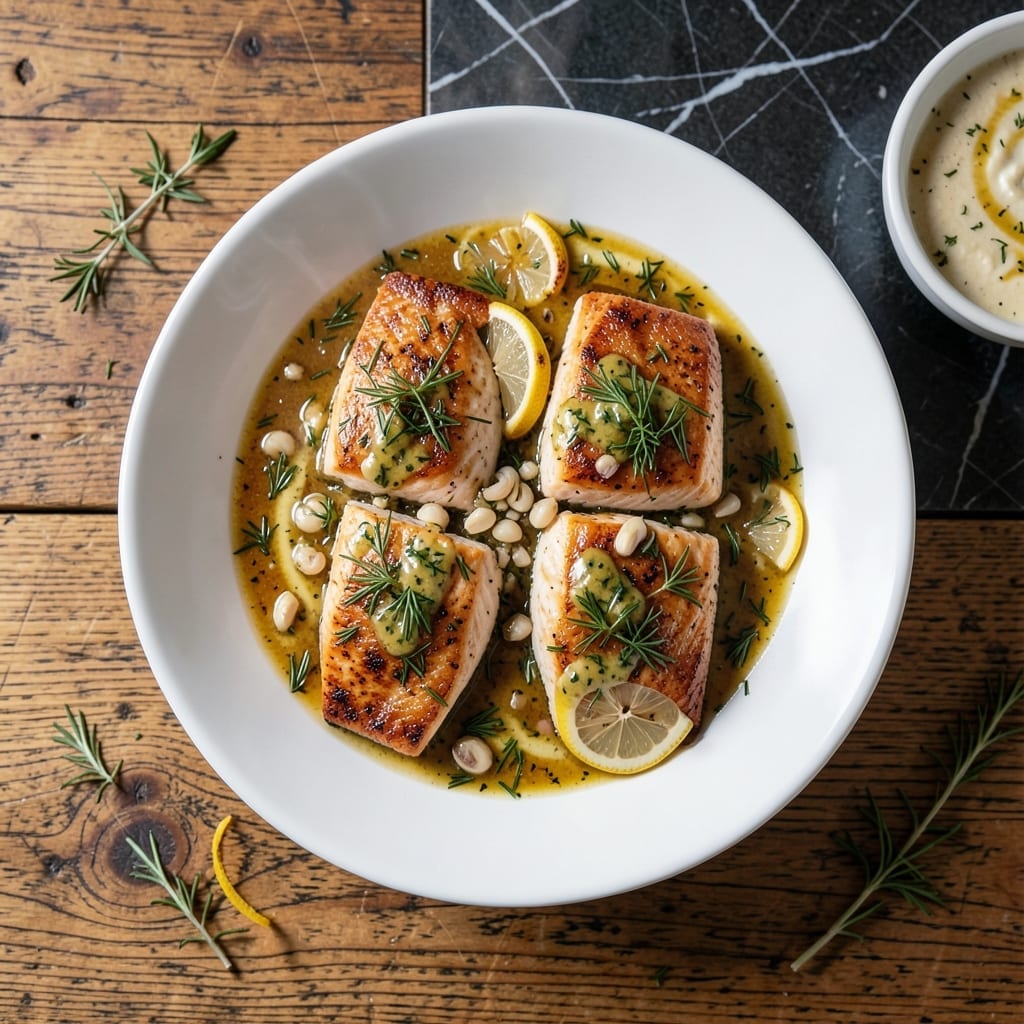
This oven-baked salmon delivers perfectly flaky results every time, with minimal effort and maximum flavor. The key is precise temperature control and a simple lemon-herb crust that enhances without overpowering.
I’ve refined this method through years of testing to ensure the salmon stays moist while developing a golden, flaky texture. The lemon-herb topping adds brightness and aroma, making it restaurant-worthy yet approachable.
At 400°F, the salmon cooks evenly, with the crust forming a delicate seal that locks in juices. The result is tender, buttery fish with a crisp, fragrant finish.
Serve with roasted vegetables or a light salad for a complete, elegant meal. This technique guarantees flaky, flavorful salmon with no guesswork.
Ingredients for Salmon Recipe Oven
Fresh salmon plus bright herbs and citrus make this dish sing with minimal effort.
| Ingredient | Amount | Notes |
|---|---|---|
| Salmon Fillets 🐟 | 4 whole | Skin-on, wild-caught preferred |
| Lemon 🍋 | 1 whole | Zested and juiced |
| Fresh Dill 🌿 | ¼ cup | Chopped, stems removed |
| Fresh Parsley 🍃 | ¼ cup | Chopped, flat-leaf variety |
| Garlic Cloves 🧄 | 3 cloves | Minced finely |
| Dijon Mustard 🟡 | 2 tbsp | Smooth, not grainy |
| Extra-Virgin Olive Oil 🫒 | 3 tbsp | Divided for crust and baking |
| Panko Breadcrumbs 🍞 | ½ cup | For crispy topping texture |
| Salt 🧂 | 1 tsp | Diamond Crystal kosher preferred |
| Black Pepper 🌶️ | ½ tsp | Freshly ground for best flavor |
| Honey 🍯 | 1 tbsp | Or substitute maple syrup |
| Shallot 🧅 | 1 whole | Finely minced for depth |
The salmon quality is non-negotiable. Wild-caught sockeye or king from Whole Foods or Trader Joe’s offers superior flavor and texture. Skin-on fillets hold together better during baking, and a uniform thickness ensures even cooking. For the herbs, organic dill and parsley from the produce section have more vibrant color and aroma than pre-packaged options. Always check for bright, unfading leaves—wilted herbs lack the punch needed for the crust.
No fresh herbs? Dried dill or parsley at one-third the amount works in a pinch, though the flavor will be more muted. For a nutty twist, swap panko for crushed almonds or hazelnuts. If you’re avoiding honey, maple syrup or agave provides similar sweetness. The Dijon can be replaced with whole-grain mustard for texture, but avoid yellow mustard—it’s too sharp and overpowers the delicate salmon.
Store fresh salmon in the coldest part of your fridge and use within 1-2 days. The herb crust components can be prepped a day ahead—keep them separate and refrigerated. Leftovers reheat gently in a 300°F oven for about 10 minutes to preserve moisture.
Why You’ll Love This Recipe
- Set It & Forget It: Honestly, I just toss the salmon on a tray with lemon slices, herbs, and garlic, then let the oven do the work.
- Bright & Zesty: The combo of fresh dill, parsley, and lemon makes every bite taste like a sunny day.
- Meal Prep Hero: I make a double batch on Sunday and it reheats beautifully for lunches all week.
- One Pan Magic: Cleanup is a breeze—just a sheet pan and a spatula, and I’m done.
Step-by-Step Instructions for Salmon Recipe Oven
Achieve restaurant-quality results with this precise method for tender, flaky oven-baked salmon.
Step 1: Prepare the Lemon-Herb Crust
In a medium bowl, combine the 0.25 cup Fresh Dill, 0.25 cup Fresh Parsley, 3 cloves Garlic Cloves, 1 whole Shallot, 2 tbsp Dijon Mustard, 1 tbsp Honey, and 1 tbsp Extra-Virgin Olive Oil. Mix thoroughly until the herbs and aromatics are evenly distributed throughout the mustard and honey base.
Add the 0.5 cup Panko Breadcrumbs and stir to create a moist, crumbly topping. The mixture should hold together when pressed but remain loose enough to sprinkle. This crust delivers a perfect balance of fresh herbal notes, sweetness, and crispy texture that complements the richness of the salmon.
Step 2: Season and Coat the Salmon Fillets
Pat the 4 whole Salmon Fillets dry with paper towels to ensure the crust adheres properly. Place them skin-side down on a parchment-lined baking sheet. Season both sides lightly with the 1 tsp Salt and 0.5 tsp Black Pepper, then brush the flesh side generously with the remaining 2 tbsp Extra-Virgin Olive Oil.
Spoon the crust mixture evenly over each fillet, pressing gently to create an even layer that clings to the surface. The oil helps the topping crisp and brown beautifully in the oven while the seasoning enhances the natural flavor of the salmon without overpowering it.
Step 3: Bake to Flaky Perfection
Preheat your oven to 400°F to ensure even cooking with a golden crust. Once preheated, bake the salmon for 12-15 minutes, depending on the thickness of your fillets. The salmon is done when the internal temperature reaches 145°F and the flesh flakes easily with a fork.
Watch for the crust to turn golden brown and the edges of the fillets to appear opaque. Avoid overbaking, as the salmon will continue cooking slightly from residual heat. The lemon zest in the crust will release its citrus oils, infusing the fish with bright, aromatic notes.
Step 4: Rest and Serve Immediately
Remove the salmon from the oven and let it rest for 5 minutes before serving. This allows the juices to redistribute, ensuring each bite is moist and tender. The crust will firm up slightly during this time, making it easier to serve without losing the topping.
Garnish with additional fresh dill or parsley if desired, and serve with lemon wedges from the 1 whole Lemon for a final burst of acidity. The combination of crispy, herbed crust and perfectly flaky salmon delivers a dish that’s both elegant and effortlessly impressive.
Pro Tips For Making Salmon Recipe Oven
- Preheat the Oven: Always start with a 400°F oven—any cooler and the salmon steams instead of roasting, leaving it pale and mushy.
- Pat It Dry: Blot the fillets with a paper towel before seasoning; I learned this the hard way after my first three batches came out soggy.
- Skin Side Down: Place the salmon skin-side down on the baking sheet to prevent sticking and guarantee even cooking—no flipping required.
- Zest Before Juicing: Grate the lemon zest first, then juice it; sounds obvious, but it’s annoying to realize you forgot after the halves are squeezed dry.
Serving Suggestions for salmon recipe oven
Elegant Plating Ideas
Transfer each fillet to a warm plate using a fish spatula, keeping the crust intact. I arrange them on a bed of baby arugula tossed with 1 tsp lemon juice and 1 tbsp olive oil. The greens add color contrast and a peppery bite. 💫
Wine Pairing
A crisp Sauvignon Blanc from New Zealand cuts through the richness beautifully. For red lovers, a light Pinot Noir with bright acidity complements the lemon-herb flavors. I always chill whites to 45-50°F for optimal taste.
Side Dish Classics
Roasted asparagus at 400°F for 12 minutes mirrors the salmon’s cooking temperature. Toss with olive oil and sea salt. Alternatively, quinoa pilaf with toasted pine nuts adds a nutty texture. Both pair perfectly with this dish.
Garnish Like a Pro
Sprinkle extra dill and parsley over the top for freshness. Add thin lemon slices for visual appeal. A drizzle of honey glaze enhances the crust’s sweetness. I always keep these elements simple to let the salmon shine.
Family-Style Service
For gatherings, place the whole salmon on a wooden board with lemon wedges. Let guests serve themselves. This creates an interactive experience while showcasing the beautiful crust. I find it’s the most impressive way to present this meal.
Bread Companion
A warm baguette or ciabatta is perfect for soaking up any juices. Toast slices lightly and rub with garlic for extra flavor. This simple addition turns the dish into a complete meal. 🥖
Nutrition Facts
Frequently Asked Questions
What temperature should I use?
Bake at 400°F for even cooking and a golden crust. This ensures the salmon cooks through while the topping crisps beautifully.
How do I know when it’s done?
Check for an internal temp of 145°F and flesh that flakes easily. The crust should be golden brown and edges opaque.
Can I use frozen salmon?
Yes, but thaw completely in the fridge first. Pat very dry to help the crust stick. Avoid refreezing after thawing.
What if my crust burns before the fish cooks?
Tent loosely with foil if it browns too quickly. Lower oven temp to 375°F and add 2-3 minutes to cooking time.

- BBQ Sausage Recipe Oven: Smoky Depth Without the Grill - September 28, 2026
- BBQ Chicken Bowl Recipe Rice: Smoky Sweetness Over Fluffy Grains - September 28, 2026
- Beef Cutlet Recipe Ideas: Crispy Breaded Patties With Bold Seasonings - September 28, 2026