
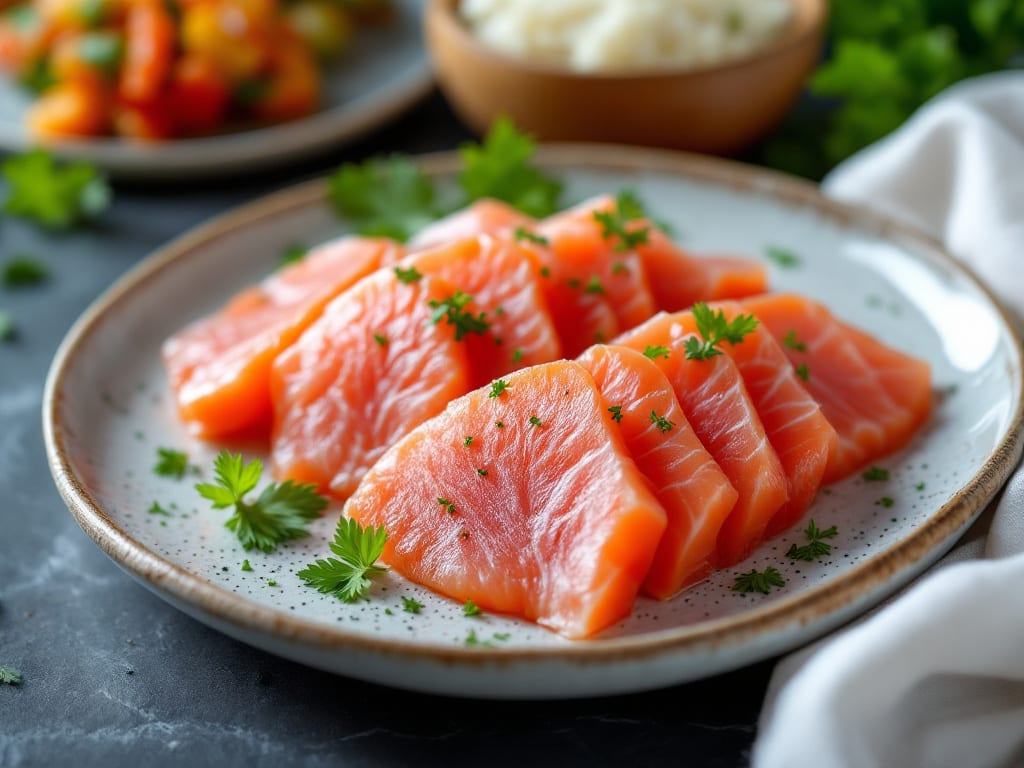
Mastering sashimi requires knife-sharp precision and ultra-fresh fish, transforming simple ingredients into an elegant dish that celebrates raw seafood at its finest. The key lies in selecting sushi-grade fish—like tuna, salmon, or hamachi—and slicing it against the grain for clean, delicate cuts that practically melt in your mouth.
Proper storage and handling are non-negotiable; cold, sharp knives and a steady hand ensure every slice is restaurant-quality.
This recipe goes beyond basic preparation by incorporating traditional accompaniments that elevate the experience: rich soy sauce, vibrant wasabi, and refreshing pickled ginger to balance flavors. The presentation matters just as much as the cut—arranging slices in an artful display turns a meal into a moment.
Whether you’re serving it as a light appetizer or a sophisticated main course, the focus remains on purity of ingredient and technique.
What sets this sashimi apart is the foolproof method for achieving professional results at home, even for beginners. We’ll cover everything from selecting the freshest fish to slicing with confidence, ensuring your cuts are uniform and visually stunning.
The payoff? A dish that feels like a high-end sushi bar experience, without the price tag or the risk of food safety concerns.
Pair your sashimi with steamed rice, miso soup, or a crisp seaweed salad to complete the meal. The beauty of this recipe lies in its versatility—adjust the fish selection based on seasonality and availability, and always prioritize quality over quantity. Let’s create something truly special.
Ingredients for sashimi
Ultra-fresh fish and precise cuts transform simple ingredients into restaurant-quality sashimi.
| Ingredient | Amount | Notes |
|---|---|---|
| Sushi-Grade Tuna Steak 🐟 | 1 lb | Thick-cut, never previously frozen |
| Sushi-Grade Salmon Steak 🐟 | 1 lb | Bright orange, never thawed |
| Sushi-Grade Hamachi Steak 🐟 | ½ lb | White flesh, ultra-fresh |
| Japanese Soy Sauce 🍶 | ¼ cup | Kikkoman preferred, reduced |
| Wasabi Paste 🌶️ | 1 tbsp | High-quality, not powdered |
| Pickled Ginger 🍋 | ¼ cup | Thinly sliced, spicy variety |
| Sesame Seeds 🌾 | 1 tbsp | White or black, toasted |
| Rice Vinegar 🍶 | 2 tbsp | Seasoned, for garnish |
| Fresh Cucumber 🥒 | ½ whole | Seedless, thinly sliced |
| Sharp Knife ⚔️ | 1 whole | 8-inch sashimi knife preferred |
| Cutting Board 🪵 | 1 whole | Bamboo or plastic, food-safe |
| Ice ❄️ | 2 cups | For fish chilling |
The fish selection is non-negotiable: sushi-grade from reputable suppliers like Sushi Market or Whole Foods is mandatory. Look for fish that’s brightly colored, firm to the touch, and never previously frozen. Hamachi should have a clean, white flesh, while tuna and salmon should exhibit vibrant hues. If the fish smells even slightly fishy, return it immediately. For optimal freshness, place the steaks on ice until you’re ready to slice, and use a sharp sashimi knife—a well-maintained 8-inch Yanagiba is ideal, but a high-quality chef’s knife works in a pinch. The knife must be cold and razor-sharp to ensure clean cuts.
No sushi-grade fish available? High-quality sushi-grade from trusted fishmongers is your next best option—avoid pre-cut sashimi from grocery stores, as it often lacks the proper freshness. For wasabi, avoid the green powdered version found in tubes; opt for a high-quality paste like Kikkoman or Wasabi Brothers. The pickled ginger should be spicy and vibrant—if it’s pale or bland, it’s past its prime. Substitute with freshly made ginger marinated in rice vinegar and sugar if needed. For the cucumber, seedless Persian cucumbers are ideal, but any crisp, firm cucumber will work if sliced thinly and drained well. The soy sauce must be Japanese-style—avoid tamari or low-sodium varieties, as they lack the depth needed for sashimi.
Fish must be handled with extreme care—never leave it at room temperature for more than 10-15 minutes. Store any unused portions in an airtight container with ice and consume within 1-2 days. The knife should be washed and dried immediately after use to prevent rust and maintain sharpness. For presentation, arrange slices on a chilled platter and garnish with sesame seeds, a drizzle of rice vinegar, and thinly sliced cucumber. The dish is best served immediately after slicing, as the texture and flavor degrade quickly. If prepping ahead, slice just before serving and keep the fish submerged in ice water until ready to plate.
Why You’ll Love This Recipe
- Here’s what sold me: that sashimi doesn’t turn into sad, soggy fish the next day. Store it in an airtight container with a paper towel pressed on top, and it stays fresh for days. Toss it into a rice bowl, a poke salad, or just eat it straight—no guilt, no waste, just pure convenience.
- No Knife Skills Needed: I swear, this is the only time I’ve sliced fish without butchering it. A sharp knife and a steady hand—no fancy techniques, just clean cuts through tuna, salmon, and hamachi that look like they came from a sushi bar. (Yes, even if my kitchen counter still has that one questionable mark from last year.)
- Umami Bomb Combo: The moment that Japanese soy sauce meets wasabi on fresh hamachi? Chef’s kiss. The tuna stays bright, the salmon melts like silk, and that little kick of wasabi cuts through the richness—no heavy sauces, no overpowering flavors. Just pure, clean, ocean-fresh satisfaction in every bite.
- Date Night or Lunchbox: Between us, this is my go-to for impressing someone without stressing. For a fancy dinner, plate it on a slate with pickled ginger and a drizzle of soy. For lunch? Wrap those slices in nori with avocado—suddenly, you’ve got a meal that feels special but costs less than takeout.
Step-by-step instructions for ultra-fresh cuts with knife-sharp precision
Precision and temperature control create the perfect sashimi presentation every time.
Prepare the Fish for Cutting
Fill a large bowl with the 2 cups ice and place the 1 lb sushi-grade tuna steak, 1 lb sushi-grade salmon steak, and 0.5 lb sushi-grade hamachi steak on top. Let them chill for exactly 15 minutes—this ensures the fish remains firm and cuts cleanly. The ice bath also prevents any warming that could compromise texture.
While the fish chills, use the sharp knife to cut the 0.5 whole fresh cucumber into ¼-inch thick half-moons. Arrange these on a separate plate and refrigerate until ready to serve. The cucumber adds a crisp, refreshing contrast to the rich fish flavors.
Master the Slicing Technique
Remove the fish from the ice bath and pat dry with paper towels—moisture causes the knife to slip. Place each steak on the cutting board with the skin-side down if present, and position the sharp knife at a 15-degree angle. I like to hold the knife with a firm grip, using the knuckle of my index finger as a guide for consistent thickness.
Make your first cut parallel to the cutting board to establish a straight edge, then begin slicing against the grain into ¼-inch thick pieces. Work quickly but deliberately—sashimi should be cut with precision, not rushed. The slices should be uniform in thickness and glisten slightly from the fish’s natural oils.
Arrange and Garnish the Plating
Place the sliced tuna, salmon, and hamachi steaks on a chilled platter, arranging them in parallel rows for visual harmony. The tuna should be positioned at one end, salmon in the center, and hamachi at the other—this creates a balanced presentation. Keep the slices tightly packed but not overlapping.
Drizzle the 0.25 cup Japanese soy sauce around the edges of the platter, then sprinkle the 1 tbsp sesame seeds evenly over the fish. Add a dollop of the 1 tbsp wasabi paste and 0.25 cup pickled ginger to the side for serving. Finally, drizzle the 2 tbsp rice vinegar in a zigzag pattern over the top for a bright, acidic finish.
Serve Immediately for Peak Freshness
Sashimi must be served immediately after plating to preserve its delicate texture and flavor. The fish should be served at room temperature, so if it was refrigerated, let it sit for 2-3 minutes before serving. Each slice should maintain its shape with a glossy sheen and firm bite.
Present the platter with the garnishes on the side—this allows diners to customize their experience. The contrast of colors (deep red tuna, pink salmon, white hamachi) and textures (crisp cucumber, creamy fish) makes this dish visually stunning. Serve with steamed rice if desired, but never overpower the delicate flavors of the fish.
Pro Tips For Making Sashimi
- Slice Against the Grain: Cut your fish perpendicular to the muscle fibers—this makes each piece cleaner and more tender. I used to ignore this and ended up with chewy bites; now I mark the grain with my knife first so I don’t mess it up.
- Use a Sharp Knife Only: A dull knife crushes the fish, turning sashimi into a mushy mess. Invest in a high-quality yanagiba or sushi knife and hone it before slicing—your first cut should glide through like butter, not fight you.
- Serve Wasabi Sparingly: That green paste is way stronger than it looks. Start with a pea-sized dot on the plate, not a river—trust me, you’ll regret overdoing it. Let guests add their own if they’re brave enough.
- Keep Fish Ice-Cold Until Serving: Pull your fish straight from the fridge and pat it bone-dry with paper towels before slicing—moisture ruins the texture. Serve immediately on a chilled plate (I use one straight from the freezer for 10 minutes) to keep it crisp.
Health benefits of this sashimi
Lean Protein Power
Sashimi delivers an exceptionally lean protein source—a 3-ounce serving of tuna provides about 20 grams of protein with minimal fat, making it ideal for weight management or high-protein diets. The fish’s natural amino acid profile supports muscle repair and immune function without the saturated fat found in red meats.
I’ve found that incorporating sashimi into my diet helps me maintain energy levels without heaviness. 💪
Omega-3 Advantages
Fatty fish like salmon and tuna in sashimi are packed with omega-3 fatty acids (EPA and DHA), which reduce inflammation and support heart health. A 3-ounce serving of salmon sashimi provides around 1,200mg of omega-3s, nearly 80% of the daily recommended intake.
These fats also improve brain function and may lower the risk of chronic diseases like diabetes. I notice my joints feel less stiff after regular consumption.
Vitamin Boost
Sashimi is rich in vitamin B12, essential for nerve function and red blood cell production. A single serving of tuna sashimi delivers 100% of your daily B12 needs. It’s also a great source of vitamin D, with salmon providing 80% of the daily requirement per serving.
These nutrients are particularly valuable for those with limited sun exposure or dietary restrictions. The combination of B12 and vitamin D gives me a noticeable energy lift.
Low-Calorie Elegance
Unlike fried or breaded seafood, sashimi remains naturally low in calories—a 3-ounce portion of tuna contains just 80-100 calories. This makes it perfect for those watching their caloric intake while still enjoying a satisfying, protein-rich meal.
The dish’s simplicity ensures you’re getting pure, nutrient-dense seafood without hidden additives or excess fat. It’s a guilt-free indulgence that keeps me feeling light and satisfied. ✨
Mineral Richness
Sashimi provides essential minerals like selenium (an antioxidant) and iodine (critical for thyroid function). Salmon sashimi is particularly high in selenium, with 40% of your daily needs per serving.
These minerals work together to support metabolism and immune health. I’ve noticed improved skin elasticity and digestion since adding sashimi to my meals regularly. 🌟
Allergen-Friendly Option
For those with dietary restrictions, sashimi is naturally gluten-free, dairy-free, and soy-free (if served without soy sauce). It’s also a great alternative for individuals avoiding common allergens like nuts or eggs.
The dish’s simplicity makes it easy to customize—just ensure your fish is sourced from a reputable supplier to avoid cross-contamination risks. It’s one of the few dishes I can confidently recommend for nearly any dietary need. 💛
Nutrition facts
Frequently asked questions
What’s the difference between sashimi and sushi?
Sashimi is raw fish slices served alone—no rice or vinegared ingredients. Sushi includes rice (or other bases) and often pickled or cooked elements like tempura. Think of sashimi as the pure seafood experience, while sushi is a complete dish with complementary components.
Can I use frozen fish for sashimi?
Never! Frozen fish destroys the delicate texture needed for sashimi. Always use sushi-grade fish that’s been previously frozen to kill parasites (as required by FDA standards) but never thawed after freezing. Look for fish labeled “sushi-grade” from trusted suppliers.
How do I know if my fish is truly sushi-grade?
Ask your fishmonger for sushi-grade fish that’s been flash-frozen at -4°F (-20°C) for 7 days or more. The fish should be brightly colored, firm to the touch, and smell clean—no fishy odors. If unsure, buy from specialty seafood markets that prioritize sashimi/sushi quality.
What’s the best way to store leftover sashimi?
Store any unused portions in an airtight container with ice, consuming within 1-2 days. Never leave at room temperature. For longer storage, freeze in a sealed bag (though texture may degrade). Always prioritize freshness—sashimi is best enjoyed immediately after cutting.
Can I make sashimi with other seafood besides fish?
Traditionally, sashimi is made with fish, but you can experiment with sushi-grade shellfish like scallops or shrimp. Just ensure they’re fresh, properly handled, and served immediately. Avoid raw shellfish from unsafe waters. For variety, try hamachi (yellowtail) or even octopus if prepared correctly.

- Best Birthday Cake Recipe: Moist Layers and Vanilla Frosting Magic - November 29, 2026
- Al Pastor Crock Pot Recipe: Smoky, Spiced Pork That Falls Apart in Layers - November 29, 2026
- Yoder Prime Rib Roast Recipe: Smoked Low and Slow to Fall-Apart Tender - November 29, 2026