
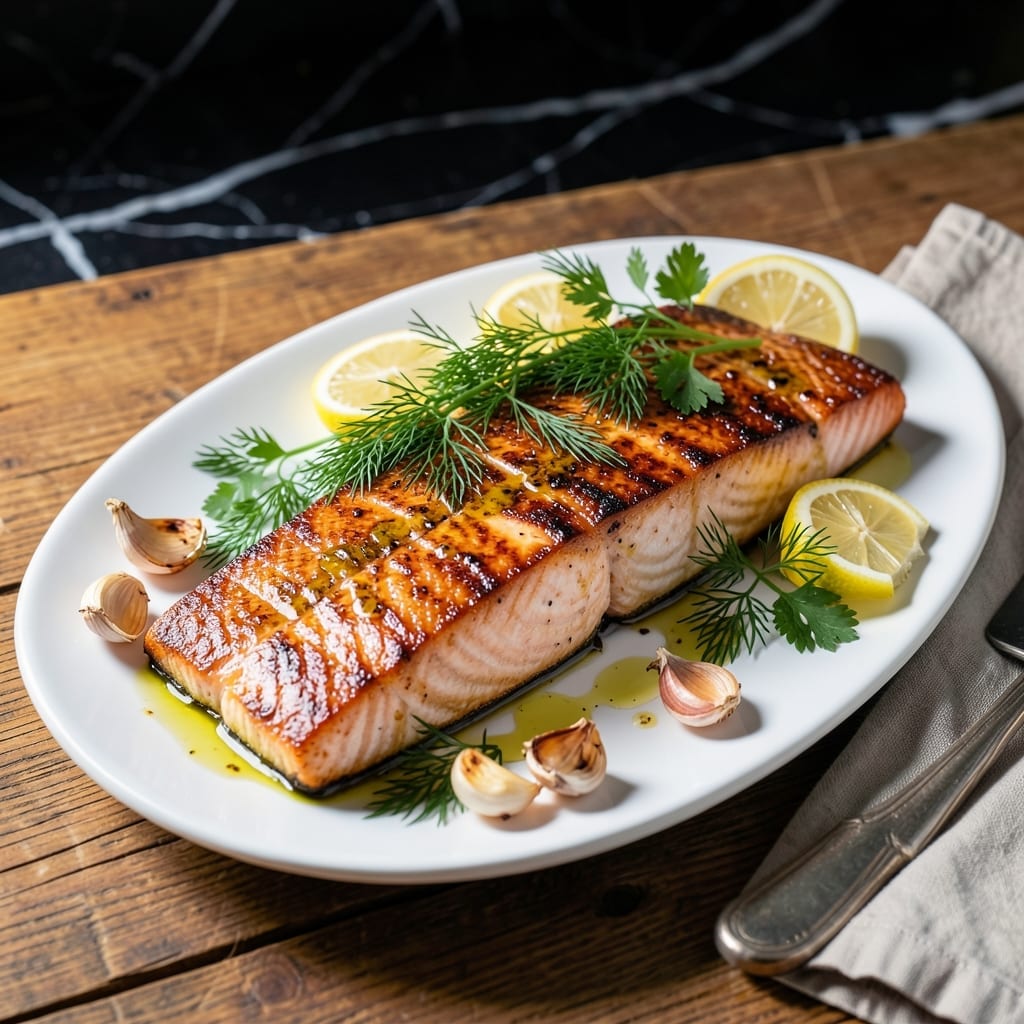
This kosher salmon preparation delivers perfectly flaky results every time with a bright lemon-herb glaze that enhances without overpowering.
The method ensures proper scaling and cleaning according to kosher dietary laws, while maintaining the fish’s natural moisture. A simple glaze of lemon, garlic, and fresh herbs adds layers of flavor.
What emerges is tender salmon with a golden, caramelized exterior and a sauce that complements the delicate fish. The technique works for both weeknight dinners and holiday meals.
Serve with your favorite kosher sides for a complete, tradition-respecting meal.
Ingredients for Side of Salmon Recipe Kosher
Fresh salmon and bright herbs create this flaky, glaze-enhanced centerpiece for any kosher meal.
| Ingredient | Amount | Notes |
|---|---|---|
| Salmon Fillet 🐟 | 2 lb | Skin-on, kosher-certified, center-cut preferred |
| Lemon Juice 🍋 | ¼ cup | Freshly squeezed from 2-3 lemons |
| Lemon Zest 🍋 | 1 tbsp | Finely grated from 1 lemon |
| Garlic Cloves 🧄 | 4 cloves | Minced fine for even distribution |
| Fresh Dill 🌿 | ¼ cup | Chopped, stems discarded |
| Fresh Parsley 🍃 | ¼ cup | Chopped, flat-leaf variety |
| Olive Oil 🫒 | ¼ cup | Extra-virgin for superior flavor |
| Dijon Mustard 🟡 | 1 tbsp | Smooth, not whole grain |
| Honey 🍯 | 2 tbsp | Kosher-certified for dietary compliance |
| Kosher Salt 🧂 | 1 ½ tsp | Diamond Crystal preferred for texture |
| Black Pepper 🌶️ | 1 tsp | Freshly ground for optimal aroma |
| Paprika 🌶️ | ½ tsp | Sweet or smoked variety |
| White Wine 🍷 | ¼ cup | Dry variety, kosher-certified |
The salmon must be kosher-certified—look for reliable brands like Empirical or Season at specialty markets or online. Center-cut fillets ensure even cooking and presentation. For the herbs, fresh dill and parsley are non-negotiable for that vibrant finish. The lemon should be organic if possible, since you’re using the zest (that’s where the oils live). Most mainstream grocery stores carry kosher fish in the seafood section.
No white wine? Substitute with kosher apple cider vinegar at half the amount. Honey can be replaced with agave nectar for a vegan twist, though the flavor profile shifts slightly. If you can’t find fresh herbs, dried at one-third the quantity works, but rehydrate them in warm water first. The Dijon mustard adds depth—whole grain works too if that’s what’s in your pantry.
Salmon stays fresh in the fridge for 1-2 days before cooking. The glaze can be made 24 hours ahead and stored separately. Leftovers keep for 3 days refrigerated, though the fish is best enjoyed the day it’s prepared. Always bring salmon to room temperature before cooking for even doneness.
Why You’ll Love This Recipe
- One Pan Wonder: I love that I just throw the salmon, lemon, garlic, and dill on a sheet pan and let the oven do the work.
- Bright and Zesty: The lemon juice and zest with fresh dill make every bite pop with freshness.
- Weeknight Hero: It’s my go-to for Shabbat dinner or a quick Friday night meal when time is tight.
- Leftovers Win: Honestly, the next-day salmon is just as good in salads or sandwiches—no waste here.
Step-by-Step Instructions for Lemon-Herb Glazed Salmon
Here is the method. Straightforward, tested, delivers flaky results every time.
Step 1: Prepare the Salmon and Marinade
Pat the 2 lb Salmon Fillet dry with paper towels, removing any excess moisture from the surface. This ensures the skin crisps properly during cooking rather than steaming. Place the fillet skin-side down in a shallow dish.
In a bowl, whisk together the 0.25 cup Olive Oil, 0.25 cup Lemon Juice, 1 tbsp Lemon Zest, 1 tbsp Dijon Mustard, 2 tbsp Honey, minced 4 cloves Garlic Cloves, 0.25 cup Fresh Dill, 0.25 cup Fresh Parsley, 1.5 tsp Kosher Salt, 1 tsp Black Pepper, and 0.5 tsp Paprika until fully emulsified. The mixture should be smooth and fragrant.
Step 2: Marinate for Maximum Flavor Infusion
Pour the marinade evenly over the salmon, ensuring the fillet is fully coated on all sides. Use your hands to gently press the marinade into the flesh, particularly focusing on the thicker center-cut portions where flavor penetration matters most.
Cover the dish and refrigerate for 30-45 minutes. This marination time allows the acid in the Lemon Juice and White Wine to begin breaking down the surface proteins, which enhances tenderness while the herbs and spices infuse into the fish. Do not exceed 1 hour or the texture may become mealy.
Step 3: Cook the Salmon to Flaky Perfection
Preheat your oven to 375°F. Transfer the marinated salmon to a parchment-lined baking sheet, skin-side down. Pour any remaining marinade over the top. Place the baking sheet on the middle rack of the oven.
Bake for 12-15 minutes, depending on the thickness of your fillet. The salmon is done when the thickest part reaches an internal temperature of 145°F and flakes easily with a fork. The edges should appear opaque, while the center remains slightly translucent—this ensures it stays moist and finishes cooking during resting.
Step 4: Rest and Garnish for Service
Remove the salmon from the oven and transfer it to a serving platter. Tent loosely with foil and allow it to rest for 5-10 minutes. This resting period lets the muscle fibers relax, ensuring the fillet stays intact when portioned and redistributes the juices for maximum flavor in every bite.
Before serving, drizzle any accumulated pan juices over the top and garnish with additional chopped Fresh Dill or Fresh Parsley for a vibrant finish. The salmon should separate effortlessly into flakes when tested with a fork, with a glossy, herb-infused glaze clinging to each piece.
Pro Tips For Making Side Of Salmon Recipe Kosher
- Pat Salmon Dry: I learned this the hard way—moisture on the fillet steams instead of sears, so press it between paper towels for 1-2 minutes to guarantee that crispy skin.
- Zest Before Juicing: Grate the lemon zest first, then cut and juice the same lemon—this saves time and ensures you use every bit of flavor without wasting half a lemon.
- Skip Overcrowding: Resist the urge to cram the pan; cook the salmon in a single layer with space between pieces, or it’ll steam in its own juices instead of browning.
- Rest 5 Minutes: Pull the salmon off the heat just before it’s fully done, tent with foil, and let it rest—this keeps it tender and lets the residual heat finish the cooking.
Troubleshooting Great side of salmon recipe kosher
Overcooked Salmon
If your salmon turns out dry, it likely cooked too long. Pull it from the oven as soon as it hits 145°F internal temperature—use a ThermoWorks instant-read thermometer for accuracy. The fish continues cooking while resting, so removing it slightly underdone prevents dryness. 🌡️
Uneven Cooking
Thicker portions often finish before thinner edges. For even results, ask your fishmonger for a center-cut fillet of uniform thickness. If working with uneven pieces, fold thinner sections under before baking to create a more level surface.
Sticking to Pan
Salmon skin sticking usually means the pan wasn’t hot enough or the fillet wasn’t dry before cooking. Always pat the salmon thoroughly dry and use parchment paper or a well-seasoned cast iron skillet to ensure easy release. A light brush of olive oil on the parchment helps too.
Glaze Separation
If your lemon-herb glaze separates, it’s likely due to temperature shock. Ensure all ingredients are at room temperature before whisking. If separation happens, a quick 10-second whisk usually brings it back together. Emulsify gradually for best results.
Weak Herb Flavor
Fresh herbs lose potency quickly. Use organic fresh dill and parsley and add them to the glaze just before cooking. If using dried, remember they’re 3 times more concentrated—reduce the amount and rehydrate in warm water first.
Kosher Compliance Issues
Double-check that your salmon and white wine carry reliable kosher certification. I trust Empirical or Season brands. Also, ensure no dairy touches the fish during prep or serving to maintain kosher dietary laws. 💡
Nutrition Facts
Frequently Asked Questions
How long should I marinate the salmon?
Marinate for 30-45 minutes in the fridge. This infuses flavor without making the texture mealy. Never exceed 1 hour as the acid can start to break down the fish too much.
Can I use frozen salmon?
Yes, but thaw it completely first. Place frozen fillets in the fridge overnight or submerge in cold water for 30 minutes. Pat very dry before marinating to prevent steaming.
What can I substitute for white wine?
Use kosher apple cider vinegar at half the amount. For a milder taste, try 1/4 cup vegetable broth with 1 tbsp lemon juice. Both maintain the acidity needed for flavor balance.
How do I prevent the glaze from burning?
Bake at 375°F and check at 12 minutes. If the edges darken too quickly, loosely tent with foil. The natural sugars in honey can caramelize fast.

- BBQ Sausage Recipe Oven: Smoky Depth Without the Grill - September 28, 2026
- BBQ Chicken Bowl Recipe Rice: Smoky Sweetness Over Fluffy Grains - September 28, 2026
- Beef Cutlet Recipe Ideas: Crispy Breaded Patties With Bold Seasonings - September 28, 2026