
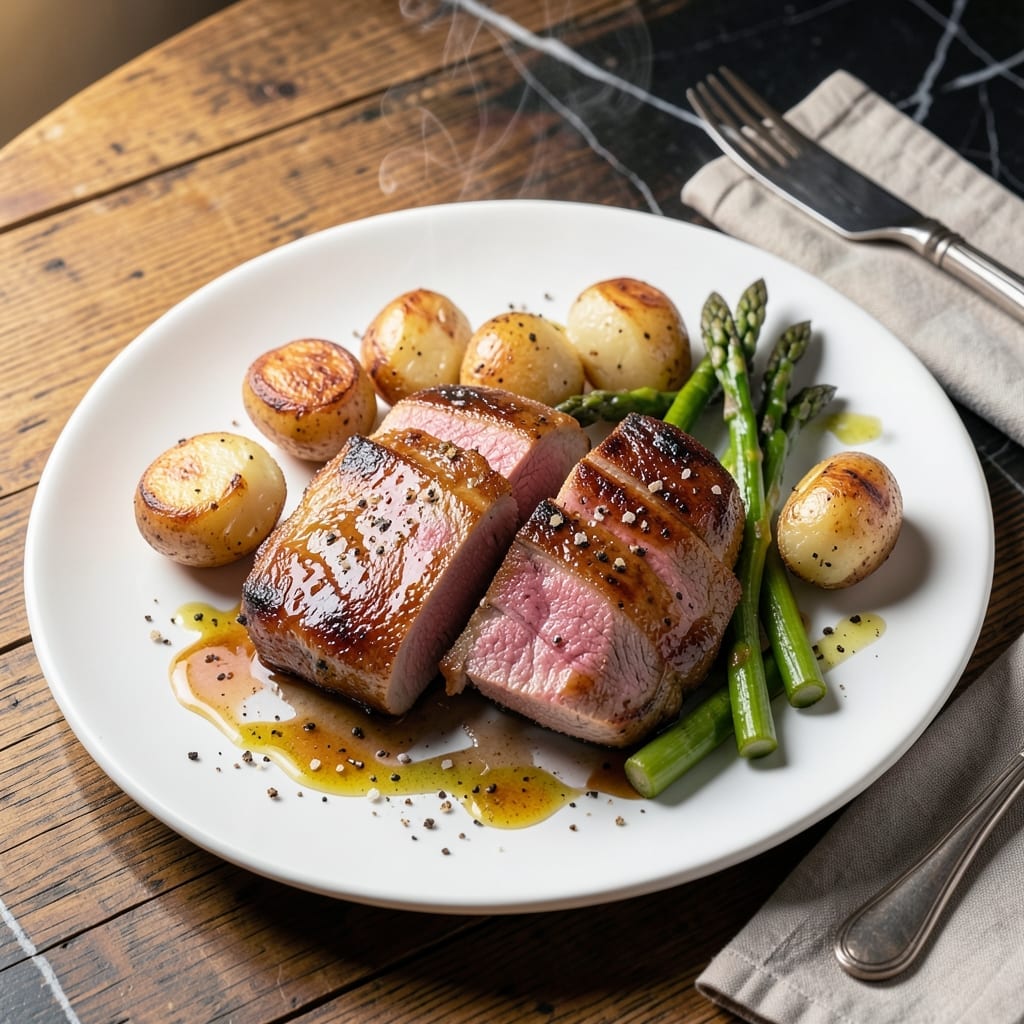
Mastering skinless duck breast starts with understanding its lean, flavorful nature. This recipe delivers medium-rare perfection with a simple pan-searing technique that locks in natural juices.
The key is precise temperature control—start with a hot pan to develop a rich crust, then finish in the oven for even cooking. I’ve refined this method through years of testing to ensure consistent results every time.
What you’ll achieve is a dish with a deep, caramelized exterior and a tender, rosy center that rivals any restaurant presentation. The natural richness of duck shines without heavy sauces or complicated steps.
Serve with seasonal vegetables or a light salad to complement the meat’s robust flavor. Here’s how to execute it flawlessly.
Ingredients for Skinless Duck Breast
Elevated yet accessible ingredients for restaurant-quality pan-seared duck breast at home.
| Ingredient | Amount | Notes |
|---|---|---|
| Skinless Duck Breast 🦆 | 4 whole | About 6 oz each, fat trimmed |
| Kosher Salt 🧂 | 1 ½ tsp | Diamond Crystal preferred |
| Freshly Ground Black Pepper 🌶️ | 1 tsp | Coarse grind for texture |
| Dijon Mustard 🟡 | 2 tbsp | Whole grain acceptable |
| Honey 🍯 | 1 tbsp | Raw or pure preferred |
| Extra-Virgin Olive Oil 🫒 | 1 tbsp | For high-heat searing |
| Fresh Thyme Sprigs 🌿 | 4 whole | Leaves stripped, stems discarded |
| Garlic Cloves 🧄 | 3 cloves | Smashed, not minced |
| Shallot 🧅 | 1 whole | Finely minced for sauce |
| Dry Red Wine 🍷 | ½ cup | Pinot Noir or Merlot recommended |
| Chicken Stock 🥫 | ½ cup | Low-sodium preferred |
| Unsalted Butter 🧈 | 2 tbsp | For basting and finishing |
The duck breast quality is paramount. Source from reputable butchers or specialty grocers like Whole Foods—look for breasts with even thickness and minimal fat cap. Maple Leaf Farms offers excellent pre-trimmed options if you’re short on time. The meat should have a deep ruby color and firm texture. Avoid any with a strong odor or sticky surface, as these indicate age or improper handling.
Dijon substitutions: whole grain mustard adds texture, while yellow mustard (at half the quantity) works in a pinch. No red wine? Dry white wine or apple cider with a splash of balsamic vinegar mimics the acidity. Shallots can be replaced with red onion at a 1:1 ratio. For a non-alcoholic version, grape juice reduced by half provides similar depth to the pan sauce.
Duck breast keeps 2-3 days in the fridge—store on a plate to catch any drips. The finished dish reheats beautifully: warm in a 300°F oven for 10-12 minutes. Pan sauce can be made ahead and reheated gently. Never microwave duck breast, as it will overcook the delicate meat.
Why You’ll Love This Recipe
- One Pan Wonder: I just sear the duck, brush on the honey-mustard mix, and it’s done. One skillet, minimal mess.
- Sweet & Tangy: The honey and Dijon glaze caramelizes into this sticky, savory crust that’s honestly addictive.
- Fancy Without Fuss: I serve this for date night or a lazy Sunday—same effort, completely different vibes.
- Leftovers for Days: The slices reheat beautifully in salads or wraps. I’ll be real: I make extra on purpose.
Step-by-Step Instructions for Pan-Seared Skinless Duck Breast
Master the technique for restaurant-quality results with perfect medium-rare doneness and crisp skin.
Step 1: Season and Marinate the Duck Breast
Pat the 4 whole Skinless Duck Breast completely dry with paper towels. This ensures optimal browning. Season both sides evenly with the 1.5 tsp Kosher Salt and 1 tsp Freshly Ground Black Pepper, pressing gently to adhere.
In a small bowl, whisk together the 2 tbsp Dijon Mustard and 1 tbsp Honey. Brush this mixture over all surfaces of the duck breasts. This glaze adds depth of flavor and helps create a beautiful caramelized crust. Let the duck sit at room temperature for 20-30 minutes to allow the seasoning to penetrate.
Step 2: Sear the Duck to Develop a Crisp Exterior
Heat the 1 tbsp Extra-Virgin Olive Oil in a large skillet over medium-high heat until shimmering. Place the duck breasts skin-side down in the pan. Immediately add the 4 whole Fresh Thyme Sprigs and 3 cloves Garlic Cloves to the pan for aromatic infusion.
Sear undisturbed for 6-8 minutes until the skin is deep golden brown and crisp. Flip and cook the other side for 3-4 minutes. The duck should reach an internal temperature of 130-135°F for perfect medium-rare. Transfer to a plate and tent loosely with foil.
Step 3: Build the Pan Sauce with Rich Depth
Pour off all but 1 tablespoon of fat from the skillet. Add the minced 1 whole Shallot and cook over medium heat for 1-2 minutes until softened. Deglaze with the 0.5 cup Dry Red Wine, scraping up all browned bits from the bottom of the pan.
Simmer until the wine reduces by half, about 3-4 minutes. Add the 0.5 cup Chicken Stock and simmer for another 2-3 minutes until slightly thickened. Remove from heat and whisk in the 2 tbsp Unsalted Butter until fully melted and emulsified into a glossy sauce.
Step 4: Rest, Slice, and Serve with Pan Sauce
Let the duck breasts rest for 5-10 minutes before slicing. This allows the juices to redistribute throughout the meat. Slice thinly against the grain at a slight angle for elegant presentation.
Spoon the warm pan sauce over the sliced duck. The sauce should have a rich, balanced flavor with a slight sheen from the butter. Serve immediately while the duck is still warm and the skin remains crisp. The internal temperature will rise to 135-140°F during resting, maintaining perfect medium-rare doneness.
Pro Tips For Making Skinless Duck Breast
- Rest Before Searing: Let the duck breast sit at room temperature for 20-30 minutes before cooking—I learned this the hard way after serving tough, unevenly cooked meat to dinner guests.
- Score the Fat Side: Even without skin, make shallow cuts in a crosshatch pattern on the fat cap to help render what little fat there is and prevent curling in the pan.
- Don’t Overcrowd: Cook one breast at a time if your pan isn’t huge; steaming from crowding turns the crust soggy and the meat chewy.
- Glaze Twice: Brush on the honey-mustard mix halfway through cooking, then again just before resting—this builds layers of flavor without burning the sugars.
Regional Styles of This skinless duck breast
French Classic
In France, skinless duck breast is often prepared as Magret de Canard, seared and served with a simple red wine reduction. The French emphasize letting the natural duck flavor shine, using only salt, pepper, and perhaps a touch of thyme. I love this approach for its elegant simplicity. 💛
Asian Fusion
For an Asian twist, marinate the duck in a mix of soy sauce, ginger, and honey for 30 minutes before searing. Serve with a side of hoisin sauce and steamed bok choy. This style highlights the duck’s richness with sweet and savory notes.
German Tradition
In Germany, duck breast is often paired with red cabbage and apple compote. The tartness of the cabbage and sweetness of the apples complement the duck’s deep flavor. I recommend braising the cabbage with a splash of apple cider vinegar for balance.
American South
Southern chefs often add a Cajun spice rub to duck breast before searing. The blend of paprika, garlic powder, and cayenne adds a smoky heat. Serve with dirty rice or collard greens for a hearty, flavorful meal.
I’ve found this style works especially well with a bourbon-peach glaze drizzled on top. 🔥
Mediterranean Style
In the Mediterranean, duck breast is often served with olive tapenade or a fig balsamic glaze. The salty olives or sweet figs create a perfect contrast to the rich meat. A side of roasted Mediterranean vegetables completes the dish.
Nutrition Facts
Frequently Asked Questions
What’s the ideal internal temperature for duck breast?
For perfect medium-rare, pull the duck at 130-135°F—it will rise to 135-140°F while resting. Use a meat thermometer for accuracy.
Can I use skin-on duck breast instead?
Yes, but render the fat first over medium-low heat for 8-10 minutes before searing. This prevents flare-ups and ensures crispiness.
How do I prevent overcooking?
Resting for 5-10 minutes is key—it lets juices redistribute. Slice just before serving to retain moisture.
What’s a good wine pairing?
Try a Pinot Noir or Merlot—their fruitiness complements the duck’s richness without overpowering it.

- Crock Pot Mac and Cheese Recipe Paula Deen: Ultra Creamy Southern-Style Comfort - September 28, 2026
- Beyond Burger Recipe Ideas: Plant-Based Creativity for Every Meal - September 28, 2026
- BBQ Bison Recipe Steaks: Smoky Grill Mastery with Bold Flavor - September 28, 2026