
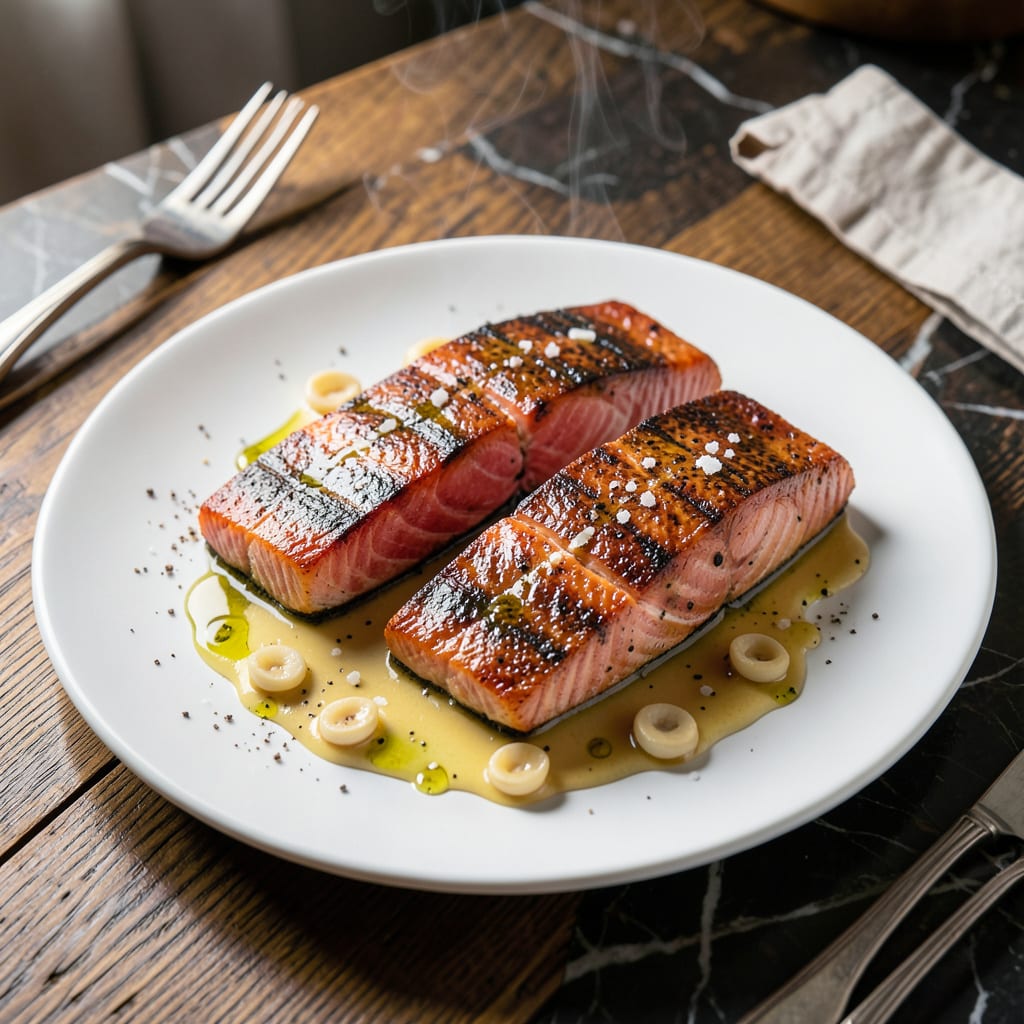
This pan-seared sockeye salmon delivers perfectly flaky flesh and crispy skin every time. The key is starting with a cold pan to render the fat slowly without overcooking the delicate meat.
With just a few simple ingredients and proper technique, you’ll achieve restaurant-quality results at home. The skin becomes shatteringly crispy while the interior stays moist and tender, making this dish a true standout.
Ingredients for Sockeye Salmon Recipe Pan
Quality sockeye fillets and a few pantry staples create this standout pan-seared dish with restaurant flair.
| Ingredient | Amount | Notes |
|---|---|---|
| Sockeye Salmon Fillets 🐟 | 4 whole | Skin-on, about 6 oz each |
| Kosher Salt 🧂 | 1 tsp | Diamond Crystal preferred |
| Freshly Ground Black Pepper 🌶️ | ½ tsp | Coarsely ground for texture |
| Olive Oil 🫒 | 2 tbsp | High smoke point preferred |
| Unsalted Butter 🧈 | 2 tbsp | Cold, cubed for basting |
| Garlic Cloves 🧄 | 3 cloves | Lightly crushed, peeled |
| Fresh Thyme Sprigs 🌿 | 4 whole | Optional for aromatic basting |
| Lemon 🍋 | 1 whole | Sliced for garnish and acidity |
| Fresh Dill 🌿 | ¼ cup | Chopped, for finishing |
| Capers 🫒 | 2 tbsp | Drained, for briny contrast |
The sockeye salmon is non-negotiable here—wild-caught from Alaska delivers the richest flavor and vibrant color. Look for fillets with bright, moist flesh and unblemished skin (the good stuff, not the previously frozen kind). Most Whole Foods or high-end seafood counters will have it fresh, but frozen at-sea sockeye from Trader Joe’s works in a pinch if thawed properly. The skin should glisten, not look dull or dried out.
No fresh thyme? Dried thyme at one-third the amount works, but add it directly to the butter. Short on capers? Chopped green olives give a similar briny kick. The butter can be swapped for ghee if you want a higher smoke point, but don’t use margarine—it lacks the richness. The lemon is flexible; lime or even orange slices add a nice twist (worth the extra minute).
Salmon cooks fast—use it within 1-2 days of purchase or freeze for up to 3 months. The basting butter can be prepped ahead and kept chilled. Leftovers? They’re great cold on salads or flaked into pasta the next day.
Why You’ll Love This Recipe
- I’ll be real: the cold salmon on salad the next day might be even better than fresh.
- One Pan Magic: I toss the fillets in, season, and let the pan do the work—no flipping, no fuss.
- Buttery Richness: That combo of olive oil and butter makes the salmon flaky and decadent every time.
- Weeknight Hero: Honestly, it’s my go-to for busy evenings when I need something fast but impressive.
Step-by-Step Instructions for Sockeye Salmon Pan-Seared to Perfection
Master the technique for restaurant-quality salmon with crispy skin and tender, flaky flesh.
Step 1: Season and Prepare the Sockeye Salmon Fillets
Pat the 4 whole Sockeye Salmon Fillets completely dry with paper towels—this is critical for achieving crispy skin. Season both sides evenly with the 1 tsp Kosher Salt and 0.5 tsp Freshly Ground Black Pepper, pressing gently to adhere.
Let the fillets sit at room temperature for 10-15 minutes while you prep the remaining ingredients. This step ensures even cooking and prevents the salmon from seizing up when it hits the hot pan.
Step 2: Sear the Salmon Skin-Side Down for Maximum Crispiness
Heat the 2 tbsp Olive Oil in a large skillet over medium-high heat until shimmering but not smoking. Carefully place the fillets skin-side down in the pan, pressing gently with a fish spatula for the first 10 seconds to prevent curling.
Cook undisturbed for 4-5 minutes until the skin is golden brown and crispy and the edges appear opaque. Resist the urge to peek—this ensures proper crust formation and even cooking.
Step 3: Baste with Aromatics for Layered Flavor
Reduce heat to medium and add the 2 tbsp Unsalted Butter, 3 cloves Garlic Cloves, and 4 whole Fresh Thyme Sprigs to the pan. Tilt the skillet slightly and spoon the foaming butter over the fillets continuously for 1-2 minutes to baste.
This basting technique infuses the salmon with garlic and thyme aroma while the butter adds richness. The garlic should turn fragantly golden but not burn—remove the pan from heat if it starts browning too quickly.
Step 4: Finish Cooking and Add Final Touches
Flip the fillets and cook for an additional 2-3 minutes until they reach an internal temperature of 125-130°F and flake easily when tested with a fork. The flesh should appear opaque with a slightly translucent center for perfect doneness.
Remove from heat and immediately squeeze fresh juice from the 1 whole Lemon over the fillets. Sprinkle with the 0.25 cup Fresh Dill and 2 tbsp Capers for brightness and briny contrast.
Step 5: Rest and Serve for Optimal Texture
Transfer the salmon to a warm plate and let rest for 3-5 minutes before serving. This brief rest allows the juices to redistribute, ensuring every bite is moist and flavorful.
Serve the fillets skin-side up to showcase the crispy texture. The skin should have a deep golden color and audibly crisp when cut into, while the flesh remains tender and flaky throughout.
Pro Tips For Making Sockeye Salmon Recipe Pan
- Preheat That Pan: Get your pan screaming hot over medium-high before adding the salmon—I learned this the hard way after too many pale, sad fillets. Wait until a drop of water sizzles and evaporates instantly.
- Pat It Dry: Blot the sockeye fillets with a paper towel before seasoning. Sounds tedious, but it guarantees a proper sear instead of steamed, soggy fish.
- Skin Side Down First: Start cooking the sockeye skin-side down for 4-5 minutes to crisp it up, then flip only once. Resist the urge to peek or move it—this keeps the skin from sticking.
- Baste with Butter: Tilt the pan slightly and spoon the melted butter over the salmon repeatedly for the last 2 minutes. My grandmother swore by this, and it makes the flesh silky and flavorful.
Perfect Pairings for These Flavors
Wine Pairings
A crisp Sauvignon Blanc from New Zealand cuts through the richness beautifully, with its citrus notes complementing the lemon and capers. I love Kim Crawford or Oyster Bay for reliable quality. 🍷
Beer Options
A light pilsner like Stella Artois or a citrusy wheat beer such as Blue Moon pairs wonderfully. The carbonation cleanses your palate between bites of the buttery, crispy-skinned salmon.
Side Dish Ideas
Roasted asparagus with a squeeze of lemon mirrors the salmon’s flavors. Toss 1 lb asparagus with 1 tbsp olive oil and roast at 400°F for 12-15 minutes.
Starch Pairings
Wild rice pilaf adds earthy depth that balances the salmon’s richness. For a quicker option, couscous with chopped parsley and lemon zest works in 5 minutes. I often use Near East brand for convenience.
Salad Options
A simple arugula salad with shaved fennel and a light vinaigrette adds freshness. Toss 4 cups arugula with 1 tbsp olive oil and 1 tsp lemon juice for contrast. 🥗
Bread Choices
A crusty baguette or sourdough soaks up the buttery pan sauce beautifully. Warm the bread in the oven at 350°F for 5 minutes before serving for best results.
Nutrition Facts
Frequently Asked Questions
What’s the best pan for searing?
Use a heavy stainless steel or cast iron skillet for even heat distribution. Avoid nonstick as it won’t get hot enough for crispy skin. A 12-inch pan gives fillets space to cook without crowding.
How do I prevent the skin from sticking?
Ensure the pan is very hot before adding fillets and don’t move them for the first 4 minutes. Pat the skin completely dry beforehand for maximum crispiness.
Can I use frozen fillets?
Thaw overnight in the fridge first. Pat extremely dry and ensure they’re at room temperature before cooking. Frozen fillets release moisture that can prevent crispy skin.
How do I know when it’s done?
The flesh should reach 125-130°F internally and flake easily. Look for opaque edges with a slightly translucent center for perfect doneness.

- BBQ Bison Recipe Steaks: Smoky Grill Mastery with Bold Flavor - September 28, 2026
- Chicken Breast Recipe Tender: Brine-Soaked Juiciness Without Overcooking - September 28, 2026
- Baked Chicken Recipe for Acid Reflux: Gentle Flavors for Sensitive Stomachs - September 28, 2026