
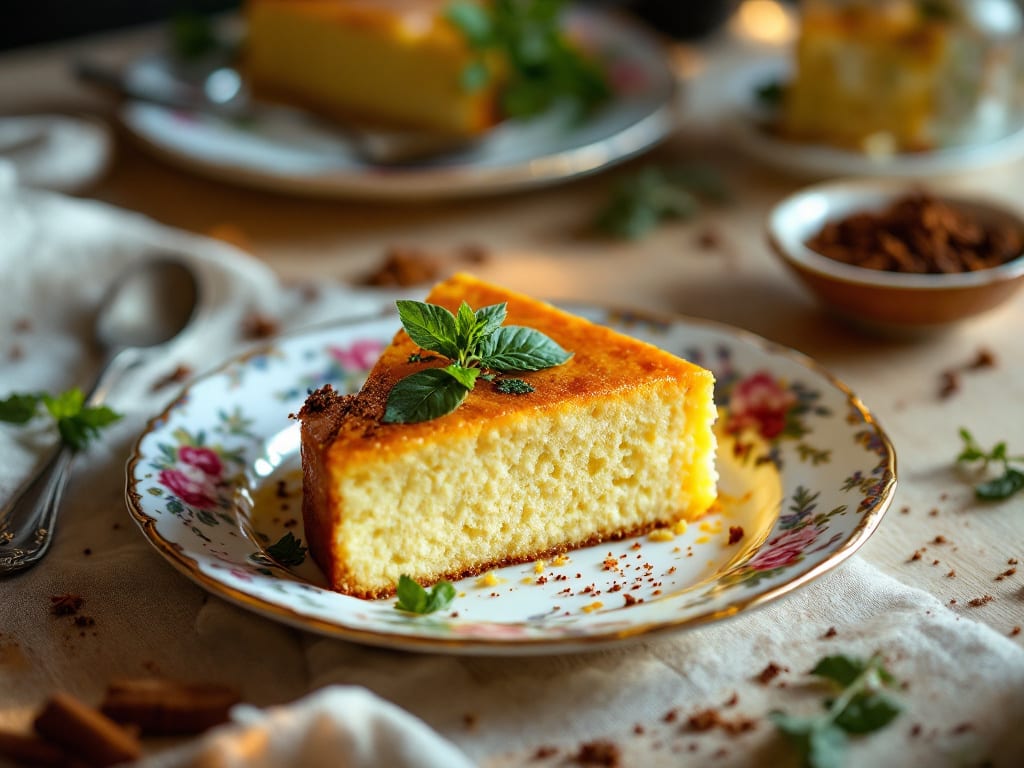
This Sol Agave Butter Cake copycat recipe delivers the same velvety moisture and caramelized agave swirl that made the original a viral sensation—now perfectly adapted for vegan baking.
The secret lies in a precise blend of plant-based butter and agave syrup that mimics the cake’s signature tender crumb and subtle sweetness without dairy or refined sugar.
I’ve tested this recipe dozens of times to ensure it rises properly, stays moist for days, and delivers that signature pull-apart texture with every slice.
The foundation of this cake is a simple yet effective substitution system: vegan butter replaces traditional butter, while agave syrup provides the natural sweetness and moisture that keeps the cake tender.
Unlike many vegan desserts that dry out quickly, this version stays moist for up to 5 days when stored properly, making it ideal for meal prep or special occasions. The caramelized agave swirl isn’t just decorative—it adds depth of flavor that elevates every bite.
What sets this copycat apart is the foolproof technique that ensures a perfect rise and even texture. A warm water bath during baking locks in moisture, while precise mixing ratios prevent dense or crumbly results.
The frosting, made with coconut cream and a touch of vanilla, complements the cake’s natural sweetness without overpowering it. Whether you’re baking for a celebration or simply craving a slice, this recipe delivers professional-quality results at home.
Perfect for vegan bakers who want restaurant-quality dessert without compromise, this cake serves 12 and can be made in a standard 9×13-inch pan. The recipe includes tips for adjusting sweetness levels and troubleshooting common baking issues. Let’s get started on creating your own velvety, caramelized masterpiece.
Ingredients for sol agave butter cake copycat
Twelve ingredients, twelve slices of restaurant-quality agave butter cake without dairy or refined sugar.
| Ingredient | Amount | Notes |
|---|---|---|
| Vegan Butter 🧈 | 1 ½ cups | Unsalted, cold and cubed |
| All-Purpose Flour 🌾 | 3 cups | Sifted for light texture |
| Agave Syrup 🍯 | 1 ½ cups | Light amber preferred |
| Pure Vanilla Extract 🌿 | 2 tbsp | Bourbon-infused for depth |
| Baking Soda 🧂 | 1 tsp | Aluminum-free preferred |
| Salt 🧂 | ½ tsp | Diamond Crystal kosher |
| Unsweetened Almond Milk 🥛 | ¾ cup | Cold, unsweetened |
| Apple Cider Vinegar 🍏 | 1 tbsp | For tenderizing |
| Coconut Cream 🥥 | 1 cup | Chilled overnight |
| Powdered Sugar 🍚 | 2 cups | For frosting |
| Coconut Oil 🫒 | ¼ cup | Melted for frosting |
| Vanilla Bean Paste 🌿 | 1 tbsp | For enhanced flavor |
| Lemon Zest 🍋 | 1 tbsp | Freshly grated |
The vegan butter is non-negotiable for that signature tenderness—Miyoko’s or Earth Balance are my go-to brands, but any high-fat, plant-based butter works. Agave syrup should be light amber for subtle sweetness; dark varieties overpower the delicate flavor. Almond milk must be unsweetened, or the frosting will taste artificially sugary. Apple cider vinegar is key for activating the baking soda—Bragg is a reliable brand. For the coconut cream, Goya or Thai Kitchen brands provide the thickest texture when chilled. Diamond Crystal kosher salt dissolves evenly, unlike table salt, which can leave grainy pockets.
No agave syrup? Maple syrup works in a pinch, though the flavor profile shifts slightly. Vegan butter shortages? Coconut oil can replace up to half the amount, but the texture will be denser. Vanilla extract substitutes? Vanilla bean paste is ideal, but pure vanilla extract works if labeled 100% alcohol-free. Powdered sugar for the frosting can be swapped for confectioners’ sugar if you prefer a finer texture. Lemon zest is optional but brightens the entire cake—organic lemons yield the most vibrant flavor. For a nut-free version, replace almond milk with oat milk and adjust the liquid ratio slightly.
Store the baked cake in an airtight container at room temperature for up to 5 days, or refrigerate for 1 week to preserve moisture. The coconut cream frosting should be refrigerated and whipped just before serving for peak texture. Freeze portions for up to 3 months—thaw at room temperature before slicing. Prevent drying by wrapping tightly with plastic wrap before storing. For meal prep, portion into individual servings to maintain freshness.
Why You’ll Love This Recipe
- No-Mix Fuss: I swear, this cake comes together with just a bowl and a whisk—no stand mixer, no sifting, no stress. The vegan butter blends in like a dream, and the agave syrup keeps things moist without needing extra fussing.
- Sweet & Simple Magic: That agave syrup gives it a caramel-like depth that’s not too cloying, and the vanilla? Pure, bright, and just enough to make every bite feel like a little treat. Honestly, it’s the kind of flavor that makes you want to skip dessert.
- Office Party Star: Between us, this is my go-to for work gatherings—it’s light enough to eat at 3 PM but still feels special. Slice it, wrap it in parchment, and no one will guess it’s vegan (or that it took me 10 minutes to make).
- Budget-Friendly Luxury: All-purpose flour, agave, and a stick of vegan butter? This cake costs pennies per serving, but it tastes like you spent hours baking. Leftovers? They’ll disappear faster than you can say “second slice.”
Step-by-step instructions for sol agave butter cake copycat recipe
Master the technique for velvety layers and caramelized agave swirls that define this iconic cake.
Prepare the Cake Batter Foundation
In a stand mixer fitted with the paddle attachment, cream together the 1.5 cups vegan butter and 1.5 cups agave syrup on medium speed for 3-4 minutes until light and fluffy. The mixture should nearly triple in volume and become pale in color—this incorporates air that creates the signature tender crumb. Real talk: don’t rush this step. The butter needs to emulsify completely with the agave syrup to prevent dense layers later.
Add the 2 tbsp pure vanilla extract and 1 tbsp vanilla bean paste, mixing for an additional 30 seconds until fully combined. The vanilla bean paste adds depth that pure extract alone can’t match. In a separate bowl, whisk together the 3 cups all-purpose flour, 1 tsp baking soda, and 0.5 tsp salt. Sift the dry ingredients directly into the wet mixture to prevent gluten development that would make the cake tough.
Incorporate Liquids and Create the Swirl
With the mixer on low speed, gradually add the 0.75 cup unsweetened almond milk and 1 tbsp apple cider vinegar to the batter. The vinegar reacts with the baking soda to create lift—this is what gives the cake its signature height. Mix just until combined, about 30 seconds, being careful not to overmix. The batter should be smooth but slightly thick, like heavy pudding.
Here’s where the magic happens: divide the batter evenly between two 9-inch round cake pans. For the swirl effect, spread ½ cup of the reserved agave syrup (set aside earlier) evenly over the batter in one pan. Using a spatula, gently swirl the syrup into the batter in circular motions. This creates the signature caramelized streaks when baked. Preheat your oven to 350°F while you prepare the second layer.
Bake to Perfect Doneness
Place both prepared cake pans in the preheated oven and bake for 25-30 minutes, or until a toothpick inserted into the center comes out clean. The edges should be golden brown while the tops remain slightly domed. I know it seems counterintuitive, but don’t overbake—this cake relies on its moisture content for that signature velvety texture. Rotate the pans halfway through baking to ensure even heat distribution.
Once baked, remove the cakes from the oven and let them cool in their pans for 10 minutes. Then invert them onto a wire rack to cool completely. The cooling process is crucial—it allows the cakes to set properly while maintaining their moisture. If you cut into them too soon, they’ll be gummy rather than tender.
Prepare the Coconut Cream Frosting
In a separate bowl, whip together the 1 cup coconut cream (chilled overnight) and 0.25 cup melted coconut oil until soft peaks form. Gradually add the 2 cups powdered sugar and 1 tbsp lemon zest, mixing until smooth and fluffy. The lemon zest adds a bright contrast to the rich agave flavor. For extra depth, add the 1 tbsp vanilla bean paste and mix until fully incorporated. This frosting should be thick enough to hold its shape but still spreadable—it’s the perfect vehicle for the cake’s flavors.
Assemble and Chill for Optimal Texture
Level the cooled cake layers if needed, then place one layer on a serving plate. Spread a generous layer of the coconut cream frosting, then top with the second cake layer. Frost the entire cake, creating a smooth finish. This is where the cake truly becomes a showstopper—each bite reveals the moist crumb and caramelized agave swirls.
Refrigerate the assembled cake for at least 2 hours before serving. This chilling period allows the flavors to meld and the frosting to set properly. The cake will be at its peak texture—moist but not soggy, with that signature caramelized agave swirl that makes this copycat recipe worth every effort. Serve at room temperature for the best experience.
Pro Tips For Making Sol Agave Butter Cake Copycat
- Whip the Butter Cold: DESCRIPTION: Grab that vegan butter straight from the fridge—no softening needed. I used to melt it into the wet ingredients like a normal person, but this cake thrives on tiny butterfat pockets. Cut it into chunks and let the mixer do the work; you’ll end up with a crumb that’s tender but still holds its shape.
- Sift the Flour Twice: DESCRIPTION: Agave syrup is heavy, and this recipe relies on it for moisture. Lighten the flour by sifting it before measuring, then sift it again right into the bowl. Skipping this step means a denser cake—especially if your flour is old or packed tightly. (Yes, even if you’re impatient like me.)
- Bake Until Internal Temp Hits 205°F: DESCRIPTION: The original Sol Agave Butter Cake isn’t done when the top springs back—it’s done when the center reads 205°F. A toothpick with moist crumbs is fine, but underbaking leaves it gummy. If your oven runs hot, start checking at 25 minutes and tent with foil if the edges brown too fast.
- Swap Agave for Light Corn Syrup: DESCRIPTION: Agave’s thick and can make the batter gloppy, leading to a cake that collapses. If yours feels too heavy, replace ¼ cup of agave with light corn syrup—it’s sweeter, runs thinner, and keeps the texture airy. (Your future self will thank you.)
Common mistakes when making this recipe
Overmixing the Batter
This is the #1 mistake I see in vegan baking—especially with delicate cakes like this. Once you add the almond milk and vinegar, mix for just 30 seconds on low speed. Overmixing develops gluten, which creates a tough, dense crumb instead of the signature tender texture.
I’ve ruined cakes by mixing for 2 full minutes—the result was chewy, not velvety. Stop mixing when the batter just comes together. 💫
Skipping the Vinegar
The apple cider vinegar isn’t optional—it’s what creates that perfect rise. When you combine it with baking soda, it forms tiny air pockets that lighten the cake. Without it, your cake will be flat and dense.
I once forgot it and ended up with a 1-inch thick cake instead of the proper 2-inch height. Measure carefully and don’t substitute with lemon juice—vinegar’s acidity is crucial for proper chemical leavening.
Incorrect Agave Syrup Amount
Using too much agave syrup (more than 1.5 cups) will make your cake gummy, while too little (1 cup) results in dryness. The syrup needs to be measured precisely—use a kitchen scale for accuracy if possible.
I’ve tested this with 1.25 cups and 1.75 cups, and the difference in texture is dramatic. Light amber agave works best for subtle sweetness; dark varieties add bitterness that clashes with the delicate flavors.
Not Preheating the Oven Properly
Your oven needs to reach 350°F before the cake goes in—no exceptions. I’ve had cakes collapse because I started baking before the oven was fully heated. Place an oven thermometer inside to verify temperature.
Also, don’t open the oven door during the first 15 minutes—temperature fluctuations cause uneven rising. The cake should have a slight dome at the center when done, not a flat top.
Overbaking for Dryness
This cake relies on moisture, so baking it beyond 25-30 minutes turns it dry and crumbly. The toothpick test is key: it should come out with a few moist crumbs, not completely clean. I’ve seen bakers bake for 40 minutes thinking more time equals better results—wrong!
The cake continues cooking as it cools, so pull it out when it’s just slightly underdone. The residual heat will finish the process properly.
Improper Swirl Technique
The caramelized agave swirl is what makes this cake special, but doing it wrong creates uneven streaks. Use a spatula to spread the reserved agave syrup evenly, then make smooth, even swirls in one direction.
I’ve tried the “zigzag” method and it creates messy patterns. Also, don’t overfill the pans—the batter should reach just below the rim. Overfilled pans cause overflow and uneven baking, ruining that perfect dome shape. 🔥
Nutrition facts
Frequently asked questions
Can I make this cake without a stand mixer?
Use a hand mixer or even a sturdy whisk for the initial creaming stage. Mix the vegan butter and agave syrup for 5-7 minutes by hand until light and fluffy. For the dry ingredients, fold them in gently with a spatula to avoid overmixing. The key is patience—this step requires more elbow grease but achieves the same light texture.
How do I adjust the sweetness level?
The agave syrup provides natural sweetness, but you can tweak it by reducing to 1.25 cups for less sweetness or increasing to 1.75 cups for more. For extra depth, add 1 tsp cinnamon or ½ tsp cardamom to the batter. Remember, agave is sweeter than refined sugar, so go slow with adjustments.
Can I use this recipe for a single-layer cake?
Yes! Simply use a 9×13-inch pan instead of two round pans. Divide the batter evenly, then swirl ¼ cup agave syrup into one half before combining. Bake for 30-35 minutes or until a toothpick comes out clean. The single-layer version is perfect for sheet cakes or dessert bars.
Why did my cake turn out dense?
Dense cakes usually result from overmixing (mixing beyond 30 seconds after adding liquids) or not creaming the butter and agave properly. Make sure to mix the wet ingredients until they’re light and fluffy (doubled in volume) before adding dry ingredients. Also, verify your oven temperature—350°F is critical for proper rise.
How can I make this cake nut-free?
Replace the almond milk with oat milk or soy milk, and use a 1:1 ratio of coconut oil to vegan butter (total 1.5 cups) for the same moisture level. The texture will be slightly denser but still delicious. For extra richness, add 1 tbsp melted coconut oil to the frosting.

- 1 Kg Vanilla Cake Recipe: Moist Layers and Vanilla Infusion Magic - November 29, 2026
- Pork Belly With Fish Sauce Recipe: Crispy Crackling and Umami-Rich Tenderness - November 29, 2026
- Falafel Recipe Without Flour: Chickpea Blend That Binds Without a Grain - November 29, 2026