
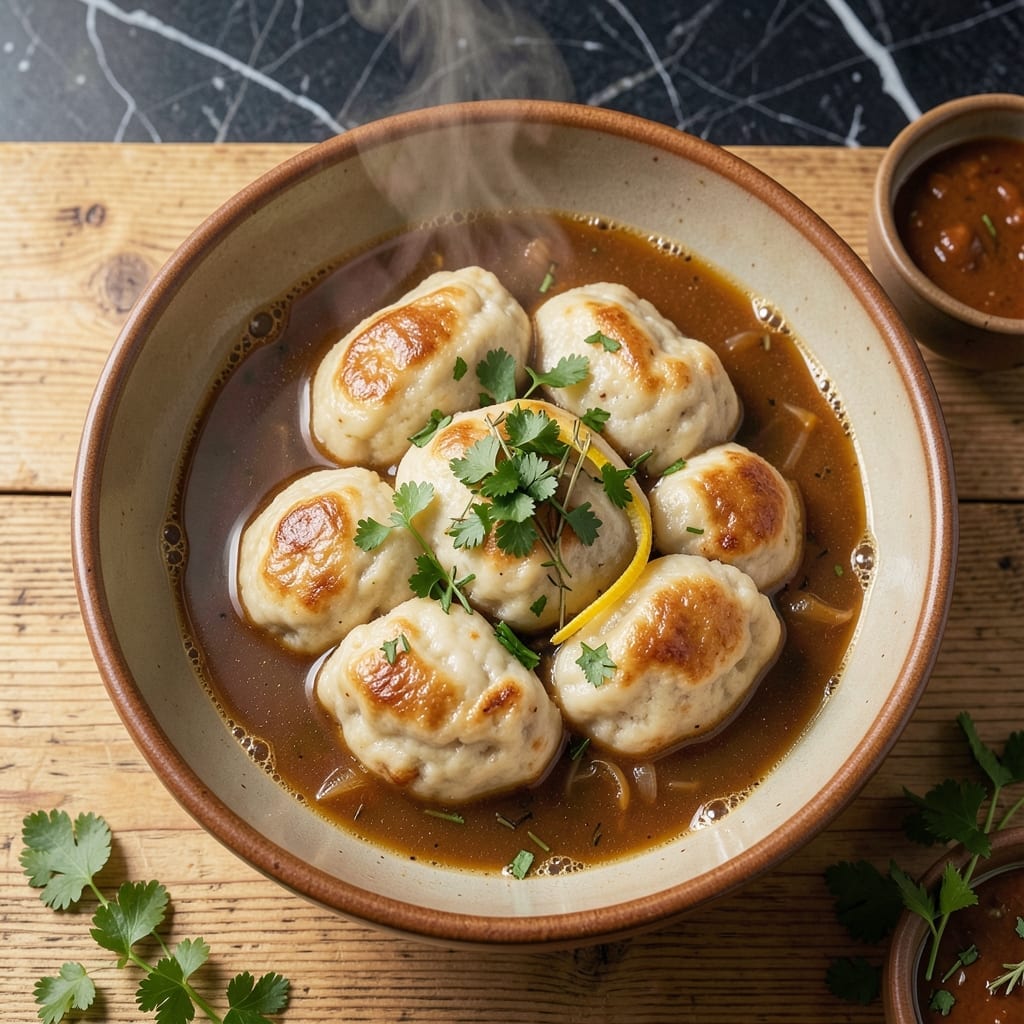
There’s something deeply satisfying about making traditional South African dumplings from scratch. These pillowy bites, known as “dompte” or “moerkoffie,” have a tender texture and rich, savory flavor that elevate any stew or soup.
The secret lies in a simple batter of flour, eggs, and baking powder, which transforms into light, fluffy dumplings when steamed in a fragrant broth. I’ve refined this method to ensure they hold their shape while soaking up the surrounding flavors.
What emerges are soft, airy dumplings with a subtle depth that pairs perfectly with hearty dishes. They’re a staple in South African kitchens, and once you try them, you’ll understand why.
This recipe stays true to tradition while keeping the process straightforward. Here’s how to make them just right.
Ingredients for South African Dumpling
Simple batter ingredients create these tender, traditional South African dumplings with rich savory flavor.
| Ingredient | Amount | Notes |
|---|---|---|
| All-Purpose Flour 🌾 | 2 cups | Sifted for lightness |
| Large Eggs 🥚 | 2 whole | Room temperature preferred |
| Baking Powder 🧂 | 2 tsp | Fresh for best rise |
| Salt 🧂 | 1 tsp | Fine grain preferred |
| Water 💧 | ¾ cup | Warm, for mixing batter |
| Vegetable Broth 🥣 | 4 cups | For steaming dumplings |
| Butter 🧈 | 2 tbsp | Melted, optional for richness |
| Fresh Parsley 🌿 | 2 tbsp | Chopped, for garnish |
| Ground Black Pepper 🌶️ | ½ tsp | Freshly ground preferred |
| Onion Powder 🧅 | ½ tsp | Adds subtle savory depth |
| Dried Thyme 🌿 | ½ tsp | Optional for herbal note |
The flour is the foundation here. King Arthur or Gold Medal all-purpose gives the right texture—avoid self-rising as it throws off the chemistry. Fresh baking powder is non-negotiable (check expiration dates). Most grocery stores carry reliable brands, but bulk bins at Whole Foods or Sprouts let you buy just what you need. Room temperature eggs incorporate more smoothly into the batter.
No all-purpose flour? Bread flour works at a 1:1 ratio, though the dumplings may be slightly chewier. Out of baking powder? Baking soda plus cream of tartar (1:2 ratio) in a pinch. Vegetable broth can be swapped for chicken or beef broth if you’re not keeping it vegetarian. The herbs are flexible—rosemary or sage can stand in for thyme if that’s what’s in your pantry.
Dumplings are best served fresh, but leftovers keep in an airtight container for 2-3 days. Reheat gently in broth to restore moisture. The batter can be mixed 1 hour ahead—just give it a quick stir before cooking. Freezing isn’t recommended as it alters the texture.
Why You’ll Love This Recipe
- 5-Ingredient Magic: I love that I only need flour, eggs, baking powder, salt, and water—nothing fancy, just pantry staples.
- Pillowy Perfection: The dumplings turn out light yet hearty, soaking up stew flavors like a dream.
- Soup’s Best Friend: Honestly, they’re my secret for turning any broth into a filling meal in minutes.
- Pennywise Comfort: A whole batch costs cents and stretches a simple pot of soup into a satisfying dinner.
Step-by-Step Instructions for South African Dumplings
Here’s the method. Straightforward, tested, works every time.
Step 1: Combine Dry Ingredients for Structure
In a large bowl, whisk together the 2 cups All-Purpose Flour, 2 tsp Baking Powder, 1 tsp Salt, 0.5 tsp Ground Black Pepper, 0.5 tsp Onion Powder, and 0.5 tsp Dried Thyme until evenly distributed. I always sift the flour first to ensure a light, airy texture in the final dumplings.
This dry mix forms the backbone of your dumplings, providing structure and rise. The baking powder is essential for lift, while the onion powder and thyme add subtle savory depth that defines the flavor.
Step 2: Incorporate Wet Ingredients for Tenderness
Create a well in the center of the dry ingredients. Add the 2 whole Large Eggs and 0.75 cup Water to the well. Using a fork, gradually incorporate the dry mixture into the wet ingredients until just combined. The batter should be thick but pourable—lumps are fine, as overmixing leads to tough dumplings.
I use warm water here to help activate the baking powder and encourage a gentle rise. The eggs add richness and bind the mixture, ensuring the dumplings hold together while remaining tender.
Step 3: Steam the Dumplings in Broth
Bring the 4 cups Vegetable Broth to a gentle simmer in a large, deep pot. Using two spoons, drop heaping tablespoon-sized portions of batter into the simmering broth. Avoid overcrowding—leave space between each dumpling to prevent sticking.
Cover the pot with a tight-fitting lid and steam for 15-18 minutes. Do not open the lid during cooking, as this releases steam and causes the dumplings to collapse. They’re done when they’re puffed and a toothpick inserted comes out clean.
Step 4: Finish and Serve
Once cooked, use a slotted spoon to transfer the dumplings to a serving dish. For added richness, drizzle with the 2 tbsp Butter while still hot. The butter will melt into the dumplings, enhancing their flavor and providing a glossy finish.
Garnish with the 2 tbsp Fresh Parsley for a pop of color and freshness. Serve immediately in shallow bowls with a ladle of the warm broth. The dumplings should be light, fluffy, and full of savory depth from the broth and seasonings.
Pro Tips For Making South African Dumpling
- Use Cold Water: I learned this the hard way—hot water makes the dumplings tough. Cold water keeps them light and fluffy, just like my grandmother used to make.
- Don’t Overmix: Stir the batter just until the flour is wet. Overmixing develops gluten, and you’ll end up with dense, rubbery dumplings instead of tender ones.
- Test with a Spoon: Drop a small spoonful into simmering stew first. If it holds together and floats, your batter’s ready—no more guessing.
- Add Eggs Last: Mix your dry ingredients with water first, then fold in the eggs. This prevents the batter from getting too thick too fast, which can ruin the texture.
Storing and Reheating This Dish
Refrigerator Storage
Let your dumplings cool completely before storing. Transfer them to an airtight container with a bit of the cooking broth to maintain moisture. They’ll keep in the fridge at 40°F or below for up to 3 days. The flavors deepen as they rest, making leftovers a treat. ❄️
Freezer Storage
Freezing isn’t ideal, but if needed, place cooled dumplings in a single layer on a baking sheet, freeze until solid, then transfer to a freezer-safe bag. They’ll keep for 1 month, though the texture may soften slightly upon thawing. Always label with the date.
Stovetop Reheating
Gently reheat dumplings in 1-2 cups of warm broth over medium-low heat for 5-7 minutes. This restores moisture and prevents them from drying out. Stir occasionally to ensure even heating.
Microwave Reheating
For a quick fix, place dumplings in a microwave-safe bowl with ¼ cup broth. Cover with a damp paper towel and heat on 50% power for 1-2 minutes. Check and repeat if needed, ensuring they reach 165°F.
I prefer stovetop reheating for best texture, but the microwave works in a pinch. 💡
Nutrition Facts
Frequently Asked Questions
Can I use self-rising flour instead?
Yes, but omit the baking powder and reduce salt by ½ tsp. Self-rising flour already contains leavening agents, so adding more can make dumplings dense.
Why are my dumplings dense or gummy?
Overmixing the batter develops gluten, which makes them tough. Stir just until combined, and ensure the broth stays at a gentle simmer—not a boil.
Can I bake these instead of steaming?
Baking won’t yield the same texture. Steaming in broth is key for their light, fluffy quality. If baking, use 375°F for 12-15 minutes, but expect a drier result.
What’s the best broth to use?
Vegetable or chicken broth works best for flavor. For extra richness, try beef broth or add 1 tbsp butter to the simmering liquid.

- BBQ Sausage Recipe Oven: Smoky Depth Without the Grill - September 28, 2026
- BBQ Chicken Bowl Recipe Rice: Smoky Sweetness Over Fluffy Grains - September 28, 2026
- Beef Cutlet Recipe Ideas: Crispy Breaded Patties With Bold Seasonings - September 28, 2026