
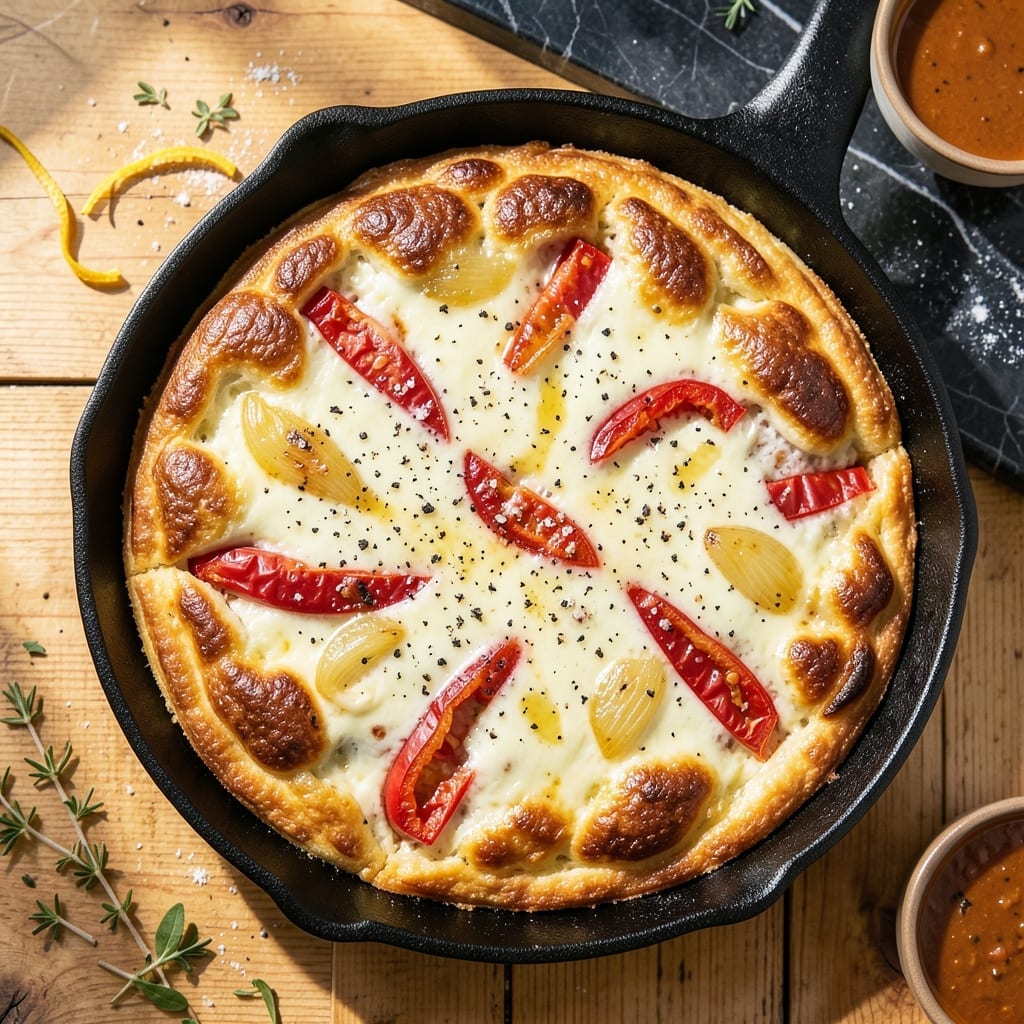
This frittata recipe delivers perfectly fluffy eggs with a golden crust, every time. I’ve refined the method to ensure consistent results whether you use a cast iron skillet or oven-safe pan.
The key is pre-cooking the vegetables to remove excess moisture, which prevents a soggy texture. Whisking the eggs vigorously incorporates air for that signature lightness, while a brief broil finishes the top to perfection.
What you get is a versatile dish that works for breakfast, brunch, or dinner. The base recipe is simple, but the customization options are endless—add your favorite vegetables, cheeses, or meats.
Serve warm or at room temperature, straight from the pan. Here’s how to make it.
Ingredients for The Only Frittata
Pantry staples and fresh veggies make this dish shine bright.
| Ingredient | Amount | Notes |
|---|---|---|
| Large Eggs 🥚 | 8 whole | Room temperature for best texture |
| Whole Milk 🥛 | ¼ cup | Or use half-and-half for richness |
| All-Purpose Flour 🌾 | 2 tbsp | Lightly spooned into measure |
| Baking Powder 🧂 | ½ tsp | Ensures fluffy lift |
| Kosher Salt 🧂 | ¾ tsp | Diamond Crystal preferred |
| Freshly Ground Black Pepper 🌶️ | ½ tsp | Coarse grind for texture |
| Bell Pepper 🌶️ | 1 whole | Any color, diced small |
| Yellow Onion 🧅 | ½ whole | Medium, finely diced |
| Garlic Cloves 🧄 | 2 cloves | Minced for even distribution |
| Spinach 🍃 | 2 cups | Fresh, roughly chopped (the good stuff, not the pre-shredded kind) |
| Shredded Cheddar Cheese 🧀 | 1 cup | Sharp cheddar for best flavor |
| Unsalted Butter 🧈 | 2 tbsp | For sautéing vegetables |
| Extra-Virgin Olive Oil 🫒 | 1 tbsp | For greasing the pan |
The eggs are the star here—always go for large, fresh eggs (trust me on the full-fat version for milk). The cheese? Sharp cheddar melts beautifully, but Gruyère or feta work great too. I grab my dairy from Whole Foods or the local farmers market when I can. The spinach should be fresh (frozen works in a pinch, but drain it well).
No bell pepper? Zucchini or mushrooms are great swaps. Out of fresh spinach? Kale or arugula add a nice bite. The flour helps stabilize the eggs—cornstarch at half the amount works if that’s what you’ve got. Want more flavor? Toss in sun-dried tomatoes or caramelized onions.
Leftovers keep 3-4 days in the fridge. Reheat gently in a skillet to maintain texture. Freezes well for 1 month if wrapped tight. Perfect for meal prep—slice and store portions for easy grab-and-go breakfasts.
Why You’ll Love This Recipe
- One Pan Wonder: I mix the eggs, milk, and a pinch of flour right in the pan—no extra bowls, no fuss.
- Fluffy Perfection: The baking powder gives it that light, airy texture I can never resist.
- Breakfast to Dinner: Honestly, I serve this for brunch, lunch, or even a quick dinner with a side salad.
- Stretches the Budget: Between us, six eggs and pantry staples feed my family for days.
Step-by-Step Instructions for Fluffy Frittata
Here’s the method I use for a perfectly set, golden-brown frittata every time.
Step 1: Prep the Vegetables for Maximum Flavor
Heat a 10-inch oven-safe skillet over medium heat and melt the 2 tbsp unsalted butter. Add the diced bell pepper and finely diced yellow onion, then cook for 5-6 minutes until softened and just beginning to caramelize.
Add the minced garlic cloves and cook for 30 seconds until fragrant—don’t let it brown. Stir in the chopped spinach and cook for 2 minutes until wilted but still vibrant green. Season with 0.75 tsp kosher salt and 0.5 tsp freshly ground black pepper.
Step 2: Create the Egg Mixture for Ultra-Fluffy Texture
In a large bowl, whisk together the 8 whole large eggs until the yolks and whites are fully combined. Add the 0.25 cup whole milk, 2 tbsp all-purpose flour, and 0.5 tsp baking powder. Whisk vigorously for 1 minute until the batter is smooth and slightly frothy.
This combination of flour and baking powder creates micro-bubbles in the eggs, ensuring a light, airy texture. The milk adds richness while keeping the mixture pourable. Let the batter rest for 2 minutes while you finish prepping the vegetables.
Step 3: Combine and Cook on the Stovetop
Pour the egg mixture evenly over the cooked vegetables in the skillet. Sprinkle the 1 cup shredded cheddar cheese uniformly across the top. Cook undisturbed over medium-low heat for 6-8 minutes until the edges begin to set and the bottom turns light golden brown.
Gently lift the edges with a spatula to allow the uncooked egg to flow underneath. You’ll see the frittata starting to puff slightly—that’s the baking powder at work. Rotate the pan occasionally for even cooking and browning.
Step 4: Finish Under the Broiler for Perfect Browning
Preheat your broiler to high. Once the frittata is mostly set with just a thin layer of uncooked egg on top, transfer the skillet to the broiler. Broil for 2-3 minutes until the top is golden brown and the center is completely set.
Watch it closely—the broiler can go from perfectly browned to burnt in seconds. The frittata is done when a knife inserted in the center comes out clean and the cheese is bubbly. Remove from the oven using oven mitts—the handle will be hot.
Step 5: Rest and Serve While Warm
Let the frittata rest in the skillet for 5 minutes before slicing. This allows the structure to set completely, making it easier to cut into neat wedges. Run a spatula around the edges to loosen it from the pan if needed.
Slide the frittata onto a cutting board and cut into 6-8 wedges. The texture should be light and custardy with a golden, slightly crisp top. Serve warm with a simple green salad or crusty bread to soak up any delicious bits left in the pan.
Pro Tips For Making The Only Frittata
- Whisk Aggressively: Beat those eggs and milk like you mean it—at least 30 seconds until frothy. I learned this the hard way after making dense frittatas that tasted more like omelets.
- Preheat the Pan: Get your skillet screaming hot before adding the batter, about 2 minutes over medium-high. Sounds weird, but it works: this guarantees a golden crust without a soggy bottom.
- Skip the Overmixing: Stir just until the flour disappears—lumps are fine. After burning three batches, I finally figured out that overmixing makes the frittata tough.
- Rest Before Serving: Let it sit 5 minutes out of the oven. My grandmother swore by this, and she was right: it sets the texture and makes slicing way cleaner.
Storing and Reheating This Dish
Fridge Storage
Let your frittata cool completely before storing—this takes about 1 hour at room temperature. Transfer to an airtight container or wrap individual wedges tightly in plastic wrap. It keeps well for 3-4 days in the fridge at 40°F or below. 💡
Freezing for Later
For longer storage, freeze slices on a baking sheet first for 1 hour, then transfer to a freezer bag. This prevents sticking. It stays fresh for up to 1 month. Thaw overnight in the fridge before reheating—this preserves the custardy texture.
Oven Reheating
Preheat your oven to 350°F and place slices on a baking sheet. Cover loosely with aluminum foil and warm for 10-15 minutes until heated through. This method keeps the edges from drying out while ensuring even warmth.
Skillet Revival
My favorite way to reheat is in a nonstick skillet over low heat. Add a pat of butter and cover the pan for 3-4 minutes. The steam helps restore that just-cooked fluffiness without making it soggy. ❄️
Microwave Shortcut
For a quick option, microwave individual slices on 50% power for 1-2 minutes. Place a damp paper towel over the top to retain moisture. Avoid high power, which can make the eggs rubbery.
Nutrition Facts
Frequently Asked Questions
Why add flour to the egg mixture?
The 2 tbsp all-purpose flour acts as a stabilizer, helping the eggs hold their shape while adding a subtle lift. Combined with the 0.5 tsp baking powder, it creates a fluffier texture that won’t collapse when sliced.
Can I make this without an oven-safe skillet?
Yes! Cook the base on the stovetop in any pan, then transfer to a greased baking dish. Broil for 2-3 minutes to finish. Just ensure your dish can handle the high heat of the broiler.
How do I prevent a soggy bottom?
Pre-cook the vegetables to remove excess moisture, and avoid overfilling the pan. Cook on medium-low heat until edges set before broiling. This ensures a crisp, golden crust every time.
What’s the best pan size for even cooking?
A 10-inch skillet is ideal for this recipe. It provides enough surface area for the eggs to cook evenly without being too thin or too thick. Cast iron works best for heat retention.

- BBQ Sausage Recipe Oven: Smoky Depth Without the Grill - September 28, 2026
- BBQ Chicken Bowl Recipe Rice: Smoky Sweetness Over Fluffy Grains - September 28, 2026
- Beef Cutlet Recipe Ideas: Crispy Breaded Patties With Bold Seasonings - September 28, 2026