
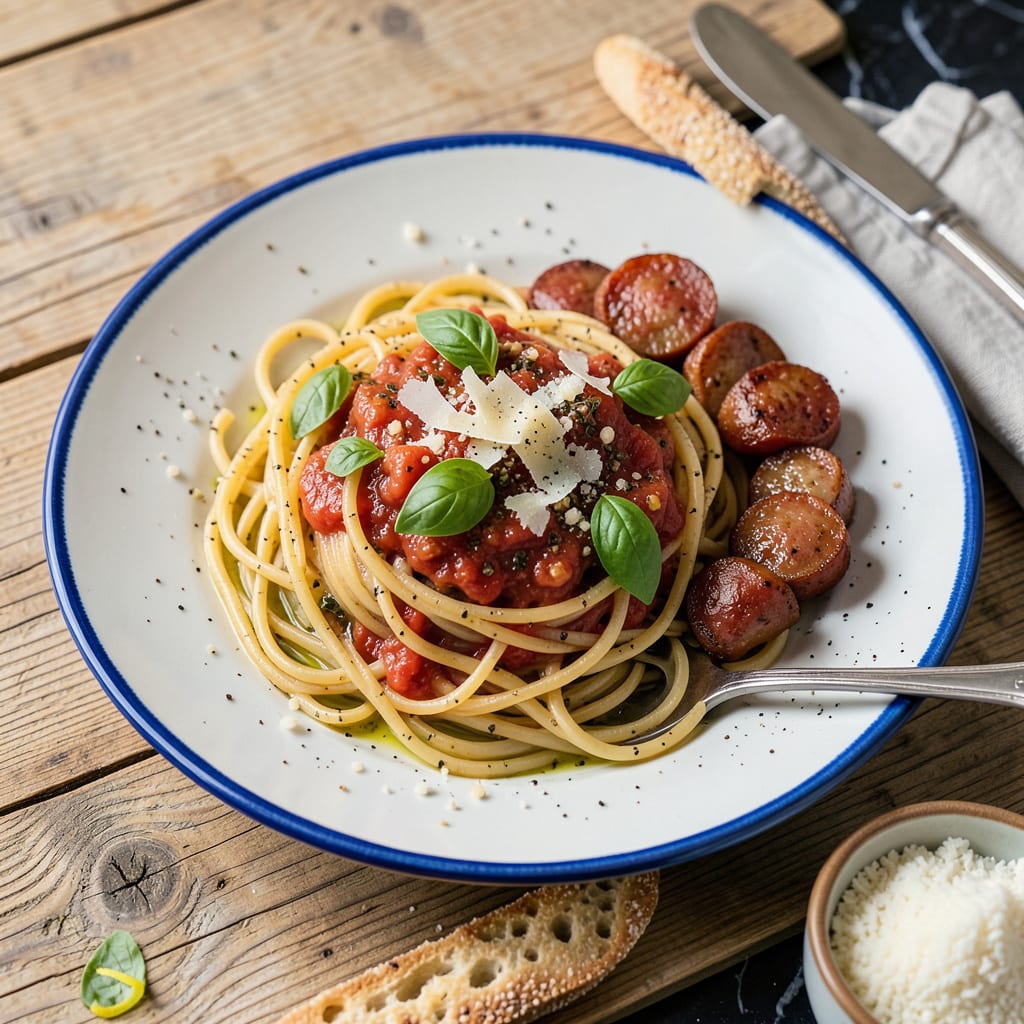
A perfect spaghetti recipe starts with al dente pasta tossed in a rich tomato sauce made from garlic, olive oil, crushed tomatoes, and fresh basil. Top with grated Parmesan and serve immediately for an authentic Italian experience.
What transforms basic ingredients into a restaurant-quality dish is the careful balance of textures and flavors. The secret lies in cooking the pasta just until it offers slight resistance—this al dente bite creates the ideal foundation for sauce absorption. 🔥 I always emphasize using high-quality crushed tomatoes as the base, since their natural sweetness and acidity form the backbone of the sauce’s complexity. The finishing touch of fresh basil and Parmesan isn’t just decorative—it adds bright, nutty notes that elevate every forkful.
This classic preparation works because it respects traditional Italian principles while remaining approachable for home cooks. The simplicity of the ingredient list might surprise you, but that’s exactly what makes it so effective. ✨ Each component plays a specific role: olive oil carries flavors, garlic builds depth, and the starchy pasta water helps emulsify the sauce into a velvety consistency that clings perfectly to the noodles.
💡 In This Article
- Key Techniques for Authentic Spaghetti Recipe Success
- Variations and Upgrades for Your Spaghetti Recipe
Key Techniques for Authentic Spaghetti Recipe Success
The magic starts with your pasta water—it should taste like the sea. I use 1 tablespoon of salt per gallon of water, which might seem excessive but is crucial for properly seasoning the noodles from the inside out.
The high salt concentration also raises the boiling point slightly, helping achieve that perfect al dente texture where the center remains slightly firm while the exterior becomes tender. 🔥 This texture isn’t just about mouthfeel; it creates microscopic channels that help the sauce cling better to each strand.
Your sauce’s foundation depends on two critical factors: acidity balance and fat distribution. Crushed tomatoes naturally contain about 4.5-5.5 pH, which provides the bright backdrop for other flavors. The olive oil you start with (about 3 tablespoons for 4 servings) serves as a flavor carrier, helping fat-soluble compounds from garlic and herbs disperse evenly.
What most people miss is the starch factor—adding 1/2 cup pasta water to your sauce creates an emulsion that transforms separate ingredients into a cohesive, velvety coating. ✨
Timing makes all the difference in flavor development. Garlic should sizzle in oil for exactly 30-45 seconds until fragrant but not browned—this releases alliinase enzymes that create those complex savory notes. The tomatoes need 20-25 minutes of simmering to break down properly and concentrate their natural sugars.
I always add basil at the very end (just 1-2 minutes before serving) because its volatile oils preserve best when minimally heated, maintaining that fresh, peppery aroma. ⚡
Here’s what’s actually happening when you combine everything: The starchy pasta water contains amylose molecules that act as natural thickeners, binding the oil and water-based ingredients together. As the sauce cools slightly on the cooked pasta, these molecules create a light gel structure that makes each bite feel intentionally crafted rather than saucy.
The Parmesan you sprinkle on top isn’t just decoration—its umami compounds and crystalline structure provide both flavor bursts and textural contrast against the smooth sauce. 💫
Temperature control separates good spaghetti from great. The pasta should hit the sauce while both are still hot (185-195°F range), allowing maximum flavor absorption. If you’re adding proteins like meatballs or shrimp, they need to join the sauce during the last 5-7 minutes of cooking to absorb flavors without overcooking.
I’ve found that resting the combined dish for exactly 2 minutes before serving lets the starches fully distribute, creating that restaurant-quality consistency where every strand carries sauce perfectly. 🌟
Consider these pro-level adjustments:
- Water ratio: Use 4 quarts per pound of pasta to prevent sticking
- Oil timing: Add olive oil to sauce after garlic to prevent bitterness
- Herb prep: Tear basil instead of chopping to preserve cell structure
- Cheese choice: Pecorino Romano offers sharper contrast than Parmesan
The final test of a well-made spaghetti is in the “twirl factor”—when you wind noodles around your fork, they should hold together with just enough sauce to glisten but not drip.
This balance comes from understanding how each ingredient interacts at a molecular level, from the salt in your water to the fat in your cheese. The best versions I’ve made follow these principles while still leaving room for personal touches—because even classic recipes benefit from thoughtful technique. 💛

- BBQ Sausage Recipe Oven: Smoky Depth Without the Grill - September 28, 2026
- BBQ Chicken Bowl Recipe Rice: Smoky Sweetness Over Fluffy Grains - September 28, 2026
- Beef Cutlet Recipe Ideas: Crispy Breaded Patties With Bold Seasonings - September 28, 2026