
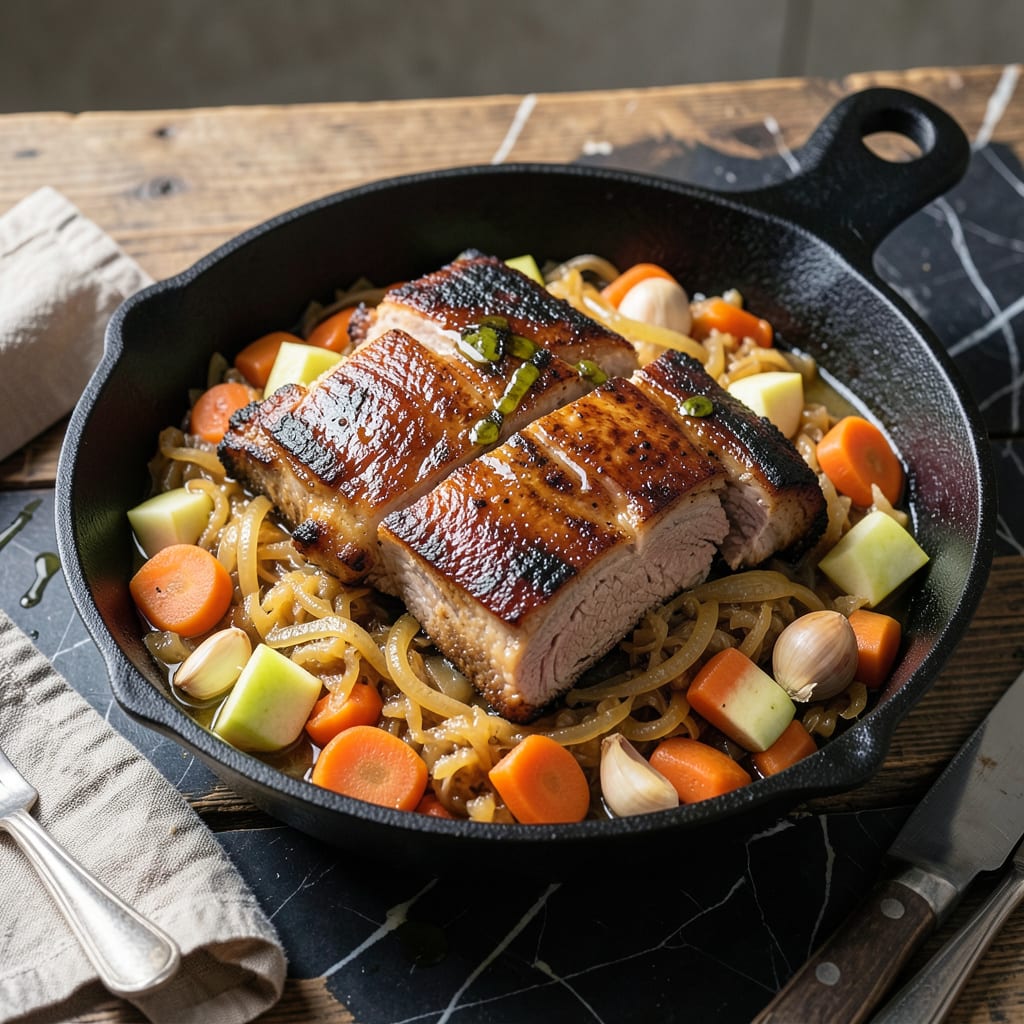
This German-style dish brings slow-simmered comfort to your table with tender spareribs and tangy sauerkraut.
The ribs become fall-off-the-bone tender while the sauerkraut softens into perfect balance with the meat. It’s a hearty, traditional meal that warms from the first bite.
Ingredients for Spareribs and Sauerkraut
Pantry staples meet hearty German flavors for a comforting slow-simmered meal.
| Ingredient | Amount | Notes |
|---|---|---|
| Pork Spareribs 🥩 | 2 ½ lb | Bone-in, cut into individual ribs |
| Sauerkraut 🥬 | 2 lb | Drained and rinsed lightly |
| Yellow Onion 🧅 | 1 whole | Medium, thinly sliced |
| Granny Smith Apple 🍏 | 1 whole | Peeled, cored, diced |
| junction Carrots 🥕 | 2 whole | Medium, sliced into rounds |
| Garlic Cloves 🧄 | 4 cloves | Minced finely |
| Bay Leaves 🌿 | 2 whole | Dried, for simmering |
| Juniper Berries 🍇 | 1 tsp | Lightly crushed |
| Caraway Seeds 🌿 | 1 tsp | Whole or lightly crushed |
| Apple Cider Vinegar 💧 | ½ cup | For tangy balance |
| Brown Sugar 🍚 | 2 tbsp | Light or dark variety |
| Dijon Mustard 🟡 | 1 tbsp | For depth of flavor |
| Chicken Broth 🥣 | 1 cup | Low-sodium preferred |
| Black Peppercorns 🌶️ | 1 tsp | Whole, for simmering |
The spareribs are the star here—look for well-marbled pork spareribs at your butcher or Costco for the best value. I prefer bone-in for that authentic texture, but boneless works in a pinch (just reduce cooking time). Libby’s sauerkraut is my go-to for canned—consistent quality, not too sour. Fresh sauerkraut from a deli is even better if you can find it.
No apple cider vinegar? White vinegar plus a teaspoon of sugar mimics the tang. Out of caraway seeds? Fennel seeds at the same amount work surprisingly well. If you don’t have juniper berries (they’re obscure, I get it), skip them—the dish will still taste great. The brown sugar can be swapped for honey or maple syrup if you prefer.
This tastes even better the next day—flavors meld overnight. Keeps 4-5 days in the fridge, freezes for 3 months. Leftovers make killer sandwiches with some mustard on rye.
Why You’ll Love This Recipe
- One Pot Wonder: I toss everything in a single pot and let the oven do the work—spareribs, sauerkraut, and all.
- Sweet-Sour Harmony: The Granny Smith apple cuts through the richness of the pork while the sauerkraut adds that tangy bite I crave.
- Feeds a Crowd: Between us, this is my go-to for Sunday suppers or when the in-laws drop by unexpectedly.
- Budget Stretcher: Pork spareribs are affordable, and a big batch means leftovers that taste even better the next day.
Step-by-Step Instructions for Spareribs and Sauerkraut
This slow-simmered dish comes together with rich, layered flavors that define German comfort food.
Step 1: Brown the Spareribs for Depth of Flavor
Pat the 2.5 lb Pork Spareribs dry with paper towels to ensure a good sear. Heat a large Dutch oven over medium-high heat with a touch of oil. Brown the ribs in batches for 3-4 minutes per side until deep golden brown on all sides.
This step builds the foundation of flavor. Don’t rush it—you want a rich, caramelized crust. As the ribs brown, the fat will render slightly, adding to the depth. Remove the ribs and set aside while you build the base of the dish.
Real talk: if your pan starts to smoke, reduce the heat slightly. The goal is a steady, even brown, not a burnt exterior.
Step 2: Sauté Aromatics and Build the Braising Liquid
In the same pot, add the thinly sliced Yellow Onion, diced Granny Smith Apple, and sliced Carrots. Cook for 5 minutes until the onion softens and the apple begins to break down. Stir in the minced Garlic Cloves and cook for 30 seconds until fragrant.
Add the 2 lb Sauerkraut, 1 tsp Caraway Seeds, 1 tsp Juniper Berries, 1 tsp Black Peppercorns, and 2 whole Bay Leaves. These spices are non-negotiable—they define the dish’s character. Pour in the 0.5 cup Apple Cider Vinegar, 2 tbsp Brown Sugar, 1 tbsp Dijon Mustard, and 1 cup Chicken Broth.
Stir well to combine, scraping up any browned bits from the bottom of the pot. This is where the magic happens.
Step 3: Braise Until Fall-Off-the-Bone Tender
Return the ribs to the pot, nestling them into the sauerkraut mixture. The liquid should just cover the ribs—if it doesn’t, add a splash of water. Bring to a simmer, then reduce the heat to low. Cover and let it braise for 2 to 2.5 hours.
Check occasionally to ensure the liquid hasn’t evaporated too much. You want a gentle simmer, not a rolling boil. The ribs are done when the meat pulls away from the bone easily with a fork and the sauerkraut is tender but still has a slight bite.
Here’s the thing—this dish rewards patience. The longer it simmers, the more the flavors meld together into something truly special.
Step 4: Adjust Seasoning and Serve
Once the ribs are tender, remove the Bay Leaves and discard. Taste the braising liquid and adjust the seasoning if needed. The balance of tangy, sweet, and savory should be just right, but I always add a pinch of salt if it tastes flat.
Serve the ribs hot, spooning the sauerkraut and braising liquid over the top. The meat should be so tender it nearly falls off the bone, and the sauerkraut should be infused with the rich, smoky flavor of the ribs.
Pro Tips For Making Spareribs And Sauerkraut
- Parboil the Ribs: I learned this the hard way—parboiling the spareribs for 10 minutes first removes excess fat and makes them tender before they hit the sauerkraut.
- Rinse the Sauerkraut: Skip the canned liquid and rinse the sauerkraut under cold water to cut the bitterness, unless you like that sharp tang.
- Layer Apples Last: Add the Granny Smith slices in the last 20 minutes of cooking so they soften but don’t turn to mush in the pot.
- Use Carrot Tops: Sounds weird, but it works: toss in the carrot greens with the sauerkraut for a subtle herby note that pairs well with the pork.
Dietary Considerations for This Dish
Gluten-Free Friendly
This dish is naturally gluten-free as written, making it perfect for those avoiding gluten. Just ensure your Dijon mustard and chicken broth are certified gluten-free brands—I trust Annie’s and Pacific Foods for these. Always double-check labels to be safe.
Low-Carb Adaptation
To reduce carbs, cut the brown sugar in half and replace with 1 tbsp erythritol. Skip the Granny Smith Apple or use ½ diced apple to maintain flavor with fewer carbs. The sauerkraut itself is low-carb, so this remains a hearty option.
Dairy-Free Note
This creation contains no dairy ingredients, so it’s safe for lactose-intolerant diners. The richness comes from the pork and sauerkraut, not from any dairy products. I love that it’s naturally inclusive for many dietary needs.
Sodium Considerations
Sauerkraut can be high in sodium, so I recommend rinsing it thoroughly before using. Choose low-sodium chicken broth and reduce added salt. You can also drain the sauerkraut and pat it dry to remove excess liquid and sodium. 💡
Vegetarian Alternative
For a meatless version, swap the spareribs for 2 lb smoked tofu or tempeh. Brown the tofu first, then simmer in the sauerkraut mixture for 30-40 minutes. The smoky flavor pairs well with the tangy kraut.
Pork Allergy Alert
Since pork is the primary protein, this dish isn’t suitable for those with pork allergies. In that case, try the vegetarian alternative above or use beef short ribs instead. The cooking method remains the same, though beef may need an extra 30 minutes of simmering.
Nutrition Facts
Frequently Asked Questions
Should I rinse the sauerkraut before cooking?
Yes, always rinse sauerkraut under cold water to reduce excess sodium. Drain well and pat dry before adding to the pot. This step ensures a balanced flavor without overpowering saltiness.
Can I use baby back ribs instead of spareribs?
Baby back ribs work well but may cook faster. Reduce braising time to 1.5-2 hours. Spareribs have more connective tissue, making them ideal for long, slow cooking.
How do I store leftovers?
Store in an airtight container in the fridge for up to 4 days. Reheat gently on the stove with a splash of broth to prevent drying. Freezes well for up to 3 months.
Why add apple to the dish?
The apple adds natural sweetness that balances the tangy sauerkraut. It softens during cooking, melting into the braising liquid for extra depth of flavor.

- Beyond Burger Recipe Ideas: Plant-Based Creativity for Every Meal - September 28, 2026
- BBQ Bison Recipe Steaks: Smoky Grill Mastery with Bold Flavor - September 28, 2026
- Chicken Breast Recipe Tender: Brine-Soaked Juiciness Without Overcooking - September 28, 2026