
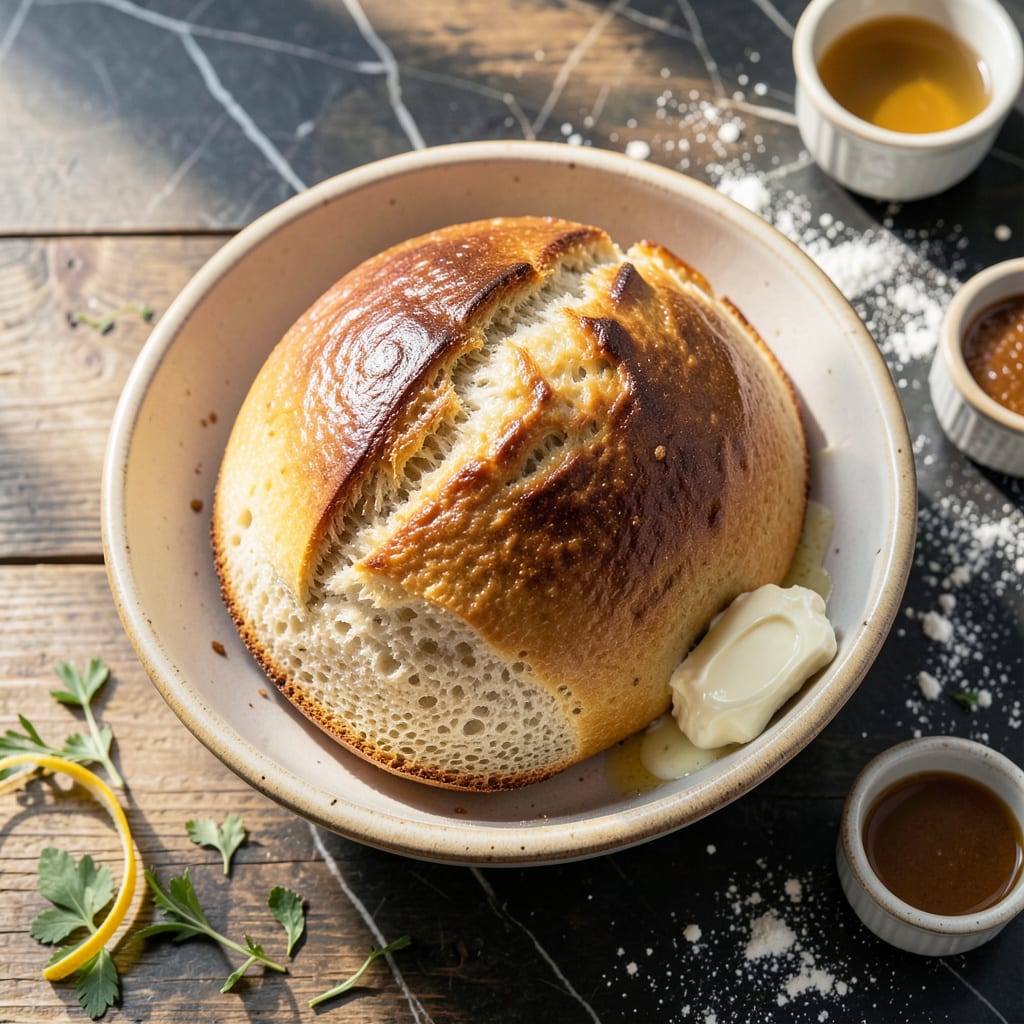
I’ve perfected this sugar-free white bread to deliver the same soft, fluffy texture you expect from traditional loaves. The secret lies in balancing alternative sweeteners with the right dough consistency.
This recipe proves you can enjoy homemade bread without compromise. The crust develops a golden finish, while the interior stays tender and light—ideal for sandwiches or toast.
Ingredients for Sugar Free White Bread
Pantry staples plus a few specialty items create this soft, fluffy homemade loaf without sugar.
| Ingredient | Amount | Notes |
|---|---|---|
| Bread Flour 🌾 | 4 cups | All-purpose works in a pinch |
| Instant Yeast 🍞 | 2 ¼ tsp | Active dry yeast acceptable |
| Warm Water 💧 | 1 ¼ cups | 110-115°F for yeast activation |
| Unsalted Butter 🧈 | 2 tbsp | Melted and cooled slightly |
| Large Eggs 🥚 | 2 whole | Room temperature preferred |
| Erythritol 🍚 | 2 tbsp | Alternative sweetener option |
| Xylitol 🍚 | 2 tbsp | Alternative sweetener option |
| Salt 🧂 | 1 ½ tsp | Fine sea salt preferred |
| Whole Milk 🥛 | ¼ cup | Warmed to 110°F |
| Vital Wheat Gluten 🌾 | 1 tbsp | Improves dough elasticity |
| Apple Cider Vinegar 🍏 | 1 tbsp | Balances sweetness and texture |
The flour is key here. King Arthur Bread Flour (available at Whole Foods or most grocery stores) gives the best rise, but all-purpose works if that’s what you have. Yeast freshness matters—check the expiration date on the packet. I grab mine from Trader Joe’s since they turn over inventory quickly. Warm the milk and water to about 110°F (warm but not hot to the touch) for proper yeast activation.
No erythritol? Monk fruit sweetener works at a 1:1 ratio, or skip it entirely for a neutral flavor. Whole milk can be swapped for 2% or even water (though richness suffers). For a dairy-free version, use unsweetened almond milk and coconut oil instead of butter. The vinegar helps with rise and texture—white vinegar works too if that’s what you have.
Store this bread wrapped in plastic at room temperature for 3-4 days, or freeze in slices for up to 3 months. It toasts beautifully straight from the freezer—no need to thaw. For best texture, slice when completely cooled (worth the extra minute).
Why You’ll Love This Recipe
- No-Fuss Rising: The instant yeast means I can skip the proofing step and just mix, knead, and let it do its thing.
- Buttery Richness: Unsalted butter and eggs give it that bakery-soft texture without needing sugar for flavor.
- Meal Prep Hero: I slice and freeze half the loaf for quick sandwiches all week—no store-bought bread compares.
- Budget Friendly: Bread flour and a few staples make two loaves for the cost of one at the grocery store.
Step-by-Step Instructions for Sugar Free White Bread
Here’s the method I use to create a perfectly soft, fluffy loaf every time.
Step 1: Activate the Yeast and Prepare Wet Ingredients
In a large mixing bowl, combine the 1.25 cups Warm Water, 0.25 cup Whole Milk, 2 tbsp Erythritol, and 2 tbsp Xylitol. The ideal temperature is 110-115°F—any hotter will kill the yeast, any cooler and it won’t activate properly.
Sprinkle the 2.25 tsp Instant Yeast over the surface of the liquid mixture. Let it sit for 5-7 minutes until it becomes foamy and bubbly. This visual confirmation means your yeast is active and ready to work its magic. Stir in the 1 tbsp Apple Cider Vinegar, which adds subtle tang and improves texture.
Step 2: Incorporate Dry Ingredients and Form the Dough
In a separate bowl, whisk together the 4 cups Bread Flour, 1.5 tsp Salt, and 1 tbsp Vital Wheat Gluten. The vital wheat gluten gives your bread that perfect elastic structure that bread flour alone might struggle with in sugar-free recipes.
Add the dry ingredients to the yeast mixture, then pour in the melted and cooled 2 tbsp Unsalted Butter and the 2 whole Large Eggs. Mix with a wooden spoon until a shaggy dough forms. You’ll notice the dough starts pulling away from the bowl—this is your cue to switch to kneading.
Step 3: Knead Until Smooth and Elastic
Turn the dough out onto a lightly floured surface. Knead vigorously for 8-10 minutes until it becomes smooth, elastic, and slightly tacky. If it sticks, resist the urge to add too much flour—just a light dusting is enough. The dough should spring back when poked.
I’ve found that using a stand mixer with a dough hook attachment works even better for this step. Mix on medium speed for 6-8 minutes until the dough passes the windowpane test: stretch a small piece thinly between your fingers and it should be translucent without tearing.
Step 4: First Rise and Shape the Loaf
Place the kneaded dough in a lightly greased bowl, turning once to coat all sides. Cover with a clean kitchen towel and let it rise in a warm, draft-free place for 1-1.5 hours or until doubled in size. The dough should be puffy and when you press it gently with your finger, the indentation should remain.
Once risen, punch down the dough to release air bubbles. Shape it into a loaf by flattening into a rectangle and rolling it tightly from the short end. Pinch the seam and tuck it under. Place the shaped loaf seam-side down in a greased 9×5-inch loaf pan.
Step 5: Second Rise and Bake to Golden Perfection
Cover the pan and let the dough rise again for 45-60 minutes until it domes about 1 inch above the rim of the pan. Preheat your oven to 375°F during the last 15 minutes of rising.
Bake for 25-30 minutes until the top is deep golden brown and the internal temperature reaches 190-200°F. If the top browns too quickly, tent loosely with foil. Remove from the pan immediately and let cool on a wire rack for at least 30 minutes before slicing to preserve the soft texture.
Pro Tips For Making Sugar Free White Bread
- Check Water Temperature: Use a thermometer to get your warm water between 105°F and 110°F—any hotter and you’ll kill the instant yeast, any cooler and it won’t activate properly. I learned this the hard way after my first three loaves refused to rise.
- Bloom the Yeast: Mix the instant yeast with warm water and let it sit for 5 minutes until foamy before adding other ingredients. Sounds weird, but it works: this guarantees your yeast is alive and ready to make the bread rise.
- Soften the Butter: Take the unsalted butter out 30 minutes before starting so it softens but doesn’t melt. After burning a batch with cold butter chunks, I finally figured out this simple step makes the dough come together smoothly.
- Use Room-Temp Eggs: Crack your large eggs into a bowl of warm water for 5 minutes to take the chill off before mixing. My grandmother swore by this, and she was right: it helps the dough rise more evenly without cold spots.
Best Sauces and Condiments for This Dish
Classic Butter Spread
Nothing beats salted butter on warm slices. I prefer Land O’Lakes for its rich flavor. For a lighter option, try whipped butter—it spreads easier on fresh bread. 💛
Sugar-Free Jams
Smucker’s Sugar Free preserves in strawberry or raspberry add fruity sweetness without the sugar. Spread 1-2 tbsp per slice for the perfect balance. These pair especially well for breakfast toast.
Cream Cheese Options
Philadelphia Cream Cheese offers a tangy contrast that complements the bread’s mild flavor. For a sweeter touch, blend with a bit of vanilla extract or cinnamon. Use 1-2 oz per serving.
Savory Garlic Herb
Mix ¼ cup softened butter with 1 minced garlic clove, 1 tbsp fresh parsley, and a pinch of salt. This savory spread transforms your loaf into garlic bread in minutes. Ideal for dinner sides.
Avocado Mash
Mash ½ ripe avocado with a squeeze of lime and sea salt. This healthy fat adds creaminess and pairs beautifully with the bread’s soft texture. Use within 24 hours for best freshness.
Spicy Mayo
Combine ¼ cup mayonnaise with 1 tsp sriracha for a kick. Duke’s Mayo works best for this. The heat contrasts nicely with the bread’s subtle sweetness from the erythritol. 🔥
Nutrition Facts
Frequently Asked Questions
Why does this recipe use both erythritol and xylitol?
Combining sweeteners mimics sugar’s complexity better than one alone. Erythritol adds bulk while xylitol provides a subtle cooling effect. You can use just one if preferred.
Can I make this without vital wheat gluten?
Yes, but the texture won’t be as light. The gluten improves elasticity in sugar-free dough. For best results without it, knead 2-3 minutes longer to develop structure.
How do I know when the bread is fully baked?
Check the internal temperature reaches 190-200°F. The crust should be deep golden brown and sound hollow when tapped. Underbaking creates a gummy texture.
Why does the recipe specify warm liquids?
Yeast activates best at 110-115°F. Too hot kills it, too cool slows fermentation. Use a thermometer for accuracy – this ensures proper rise.

- BBQ Sausage Recipe Oven: Smoky Depth Without the Grill - September 28, 2026
- BBQ Chicken Bowl Recipe Rice: Smoky Sweetness Over Fluffy Grains - September 28, 2026
- Beef Cutlet Recipe Ideas: Crispy Breaded Patties With Bold Seasonings - September 28, 2026