
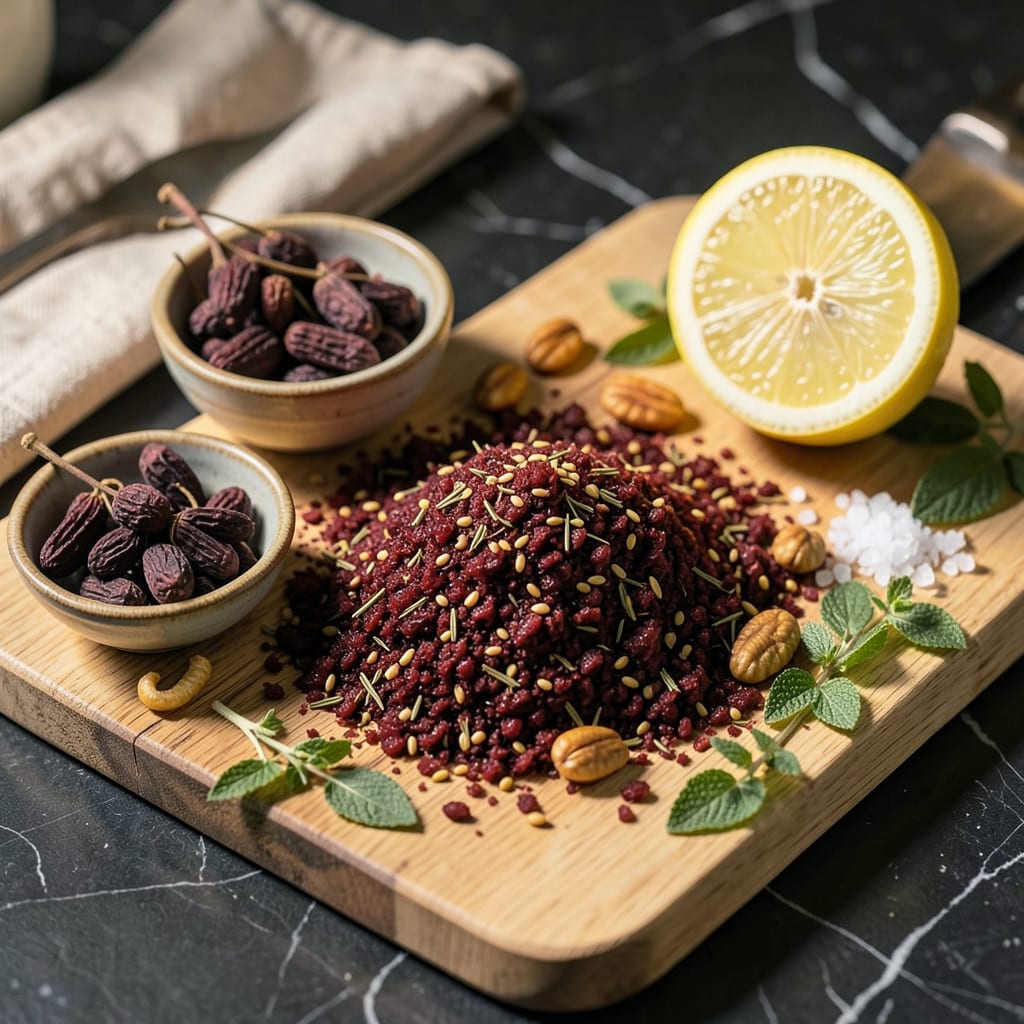
Make sumac seasoning by blending 3 tablespoons ground sumac berries with 1 tablespoon each of salt, garlic powder, and onion powder. Add ½ teaspoon black pepper and ¼ teaspoon cayenne for a tangy, citrusy Middle Eastern spice mix.
This vibrant blend transforms ordinary dishes with its signature lemony punch—without any actual citrus. 🔥 I love how the sumac’s natural tartness (thanks to malic acid) cuts through rich flavors, making it perfect for fatty meats like lamb or creamy dips. The cayenne adds just enough warmth to balance the brightness, while the garlic and onion powders create a savory foundation. What’s brilliant is how versatile this mix becomes: try it as a finishing sprinkle on avocado toast, stirred into yogurt sauces, or even rimmed on cocktail glasses for a surprising twist.
💡 In This Article
- Why Sumac Creates a Unique Tangy Flavor Profile
- Best Ways to Use Homemade Sumac Seasoning
Why Sumac Creates a Unique Tangy Flavor Profile
The magic of sumac comes from its high concentration of malic acid—the same compound that gives green apples their sharpness. Ground sumac berries contain about 15-20% malic acid, which delivers that signature puckering tartness without any citrus.
Unlike lemon zest (which contains citric acid), sumac’s acidity is more stable when heated, making it ideal for both raw applications and cooking. The berries also contain tannins that add subtle astringency, creating a complex flavor that’s both bright and slightly earthy. 🌟
In Middle Eastern cuisine, sumac serves as a flavor bridge between rich and fresh elements. Its acidity cuts through fatty meats like lamb kebabs or kofta, balancing the 20-30% fat content in these dishes. The spice also enhances grain-based meals—try sprinkling it on fattoush salad where it interacts with the olive oil’s peppery notes.
What’s fascinating is how sumac’s water-soluble pigments release their flavor gradually, which is why it works so well as a finishing spice rather than a cooking ingredient.
The science behind sumac’s pairing abilities lies in its pH level (around 2.5-3.0). This acidity level is perfect for denaturing proteins in meats, making them more tender while adding flavor.
When combined with salt in the seasoning blend, it creates a flavor amplification effect through ionic bonding—this is why the sumac-salt combination tastes more intense than either ingredient alone. The garlic and onion powders in the mix provide sulfur compounds that round out the sharpness with umami depth. ⚡
What sets sumac apart from other souring agents is its drying process. Traditional methods involve sun-drying the berries for 3-5 days, which concentrates the malic acid while preserving volatile aromatic compounds. This creates a more nuanced tartness compared to vinegar or citrus, which can be one-dimensional.
The drying also develops subtle caramel notes that emerge when the spice is lightly toasted—a technique used in some regional variations of the seasoning blend.
For comparison, sumac contains about 3 times more malic acid than a Granny Smith apple by weight, but with none of the sugar. This pure acidity makes it incredibly potent—a little goes a long way.
When you taste properly made sumac seasoning, you should experience that immediate bright tang followed by a warm, savory finish from the garlic and cayenne. The cayenne’s capsaicin (0.1-0.5% in most blends) doesn’t just add heat; it triggers endorphin release that makes the tartness more enjoyable. 💫
Pro tip: The freshness of your sumac matters tremendously. Over time, the malic acid degrades when exposed to light and air. Store your seasoning blend in an airtight container away from heat, and it will maintain peak flavor for 6-8 months.
You’ll know it’s fresh when the color remains deep burgundy—faded pink sumac has lost most of its acidic punch and aromatic complexity.

- BBQ Sausage Recipe Oven: Smoky Depth Without the Grill - September 28, 2026
- BBQ Chicken Bowl Recipe Rice: Smoky Sweetness Over Fluffy Grains - September 28, 2026
- Beef Cutlet Recipe Ideas: Crispy Breaded Patties With Bold Seasonings - September 28, 2026