
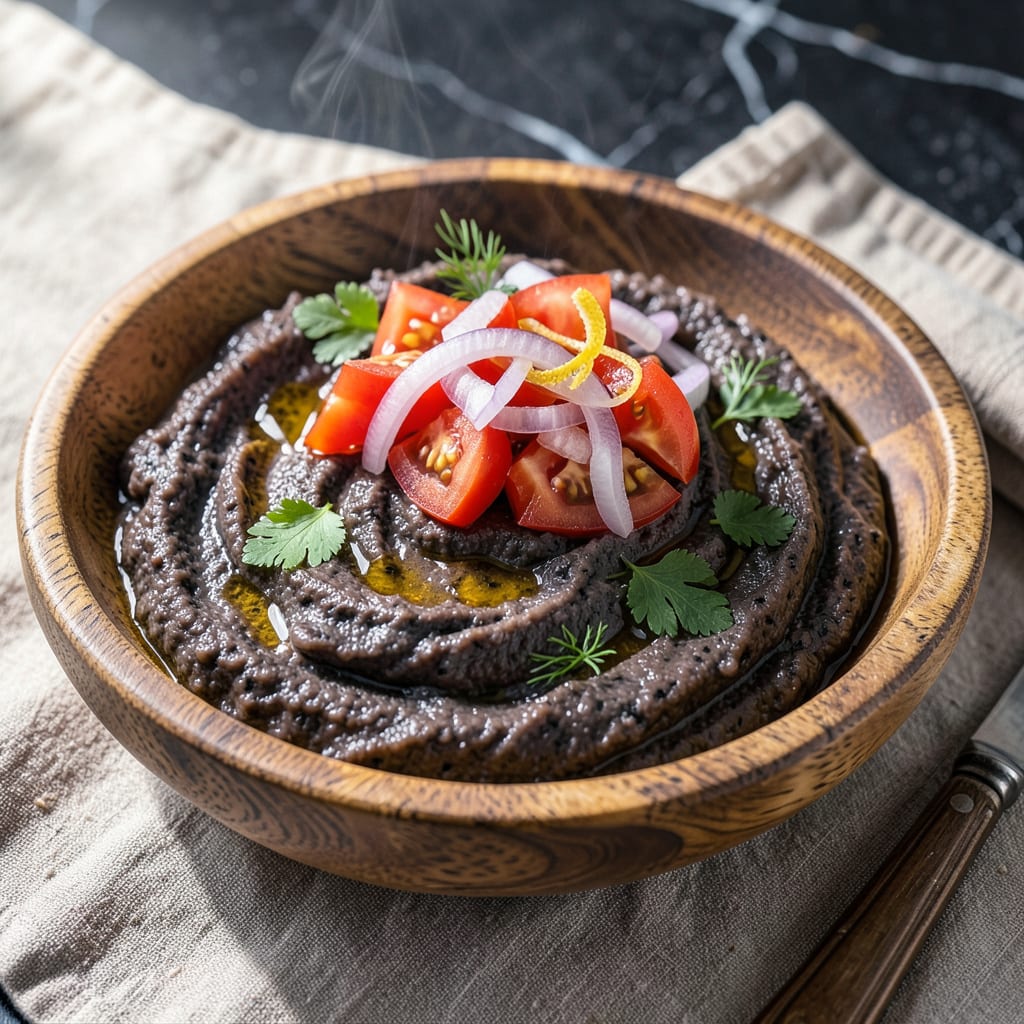
Vinete is a creamy Romanian eggplant dip made with roasted or grilled eggplant, onions, oil, and lemon juice or vinegar. It’s typically served chilled with fresh bread, crackers, or as a spread for sandwiches.
This beloved Eastern European spread transforms humble ingredients into something extraordinary through simple techniques. 🔥 The secret lies in how the eggplant is prepared—roasting or grilling it until deeply charred creates that signature smoky depth that defines authentic vinete. I love how the tangy lemon or vinegar cuts through the richness, balancing the dip perfectly.
What makes vinete so versatile is its ability to adapt to different meals. It shines as a cool contrast to hearty dishes like grilled meats or as a light appetizer with crusty bread. The texture should be velvety smooth, yet still have enough body to hold its shape when scooped. ✨
💡 In This Article
- Why Roasting Eggplant Is Key for Authentic Vinete
- Serving and Pairing Ideas for Vinete Dip
Why Roasting Eggplant Is Key for Authentic Vinete
The magic of vinete starts with how the eggplant is cooked—roasting or grilling it whole until the skin chars completely. This high-heat method (typically 400-450°F) triggers the Maillard reaction, where natural sugars and amino acids transform into complex flavor compounds. The result is a deep, smoky taste that boiling simply can’t achieve.
The charred skin also contributes bitterness that balances the dip’s richness. 🔥
When eggplant is roasted whole, the flesh steams inside its own skin, becoming incredibly tender while retaining moisture. This creates a creamy texture without needing excessive oil. Traditional Romanian methods often involve placing the eggplant directly on a gas flame or wood grill, which adds another layer of smokiness.
The difference is noticeable: boiled eggplant tastes flat and watery, while roasted eggplant delivers that signature velvety consistency.
The charring process also removes excess moisture, which is crucial for the right texture. Roasted eggplant flesh contains about 90% less water than raw, concentrating its flavor. This allows the dip to hold its shape when chilled, rather than becoming runny.
The blackened skin peels away easily after roasting, leaving behind only the smoky, tender pulp perfect for blending.
For best results, use medium-sized eggplants (about 1-1.5 lbs each) as they have fewer seeds and thicker flesh. The roasting time varies—typically 30-45 minutes depending on size—until the skin is completely collapsed and the flesh feels soft when pressed. This step is non-negotiable for authentic flavor. ✨
What most people don’t realize is that the resting period after roasting matters too. Letting the eggplant cool for 15-20 minutes allows the flavors to meld and excess liquid to drain away. This small step makes a big difference in the final texture, preventing a watery dip.
The cooled pulp blends more smoothly with the other ingredients.
Compare this to boiled eggplant, which absorbs water and dilutes flavor. The temperature difference is key: boiling happens at 212°F while roasting reaches 400°F+, creating entirely different chemical reactions. That’s why traditional recipes insist on roasting—it’s the foundation of vinete’s distinctive character. 💫

- BBQ Sausage Recipe Oven: Smoky Depth Without the Grill - September 28, 2026
- BBQ Chicken Bowl Recipe Rice: Smoky Sweetness Over Fluffy Grains - September 28, 2026
- Beef Cutlet Recipe Ideas: Crispy Breaded Patties With Bold Seasonings - September 28, 2026