
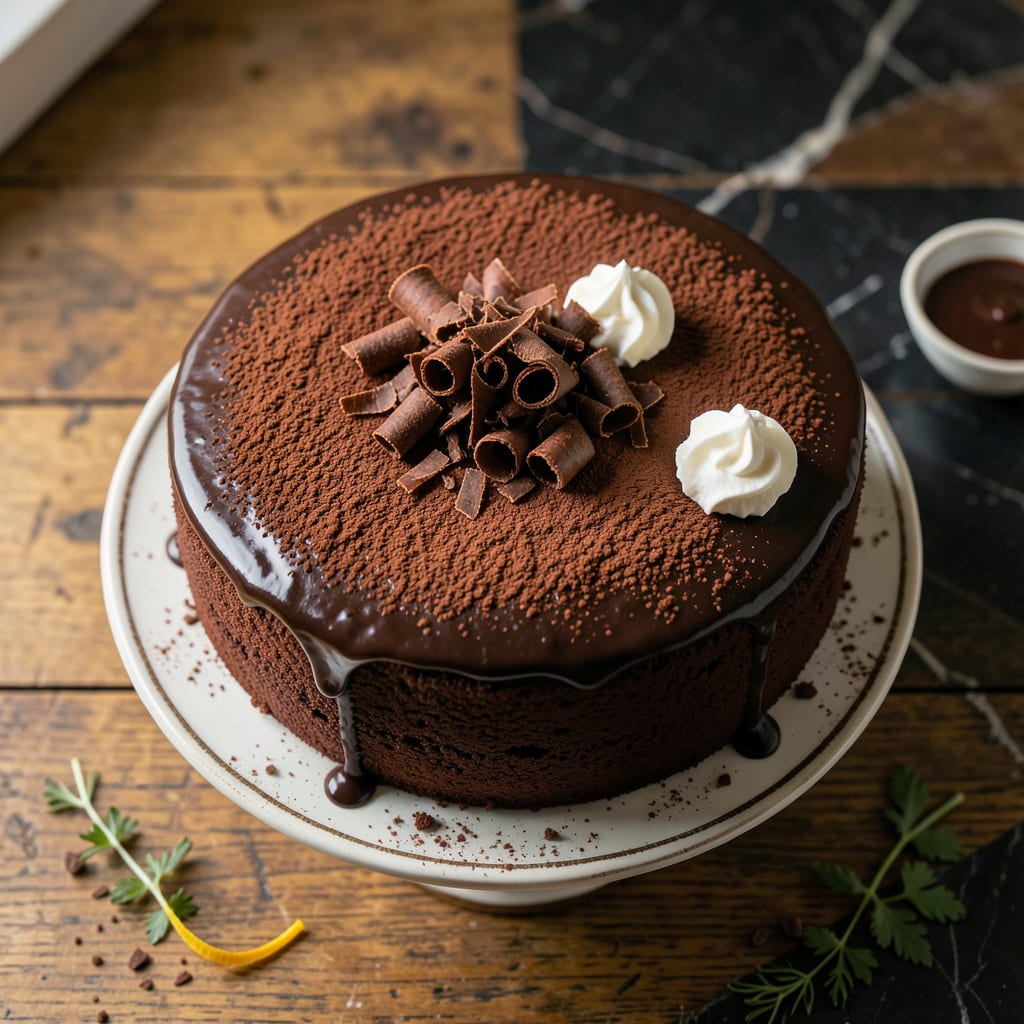
This Swiss chocolate cake delivers the rich, velvety texture that made Alpine desserts famous worldwide. The secret lies in high-quality chocolate and a precise baking method.
You’ll achieve a moist crumb with deep cocoa flavor in every bite. The result is a decadent cake that’s surprisingly simple to prepare at home.
Ingredients for Swiss Chocolate Cake
Decadent Alpine chocolate requires premium ingredients for authentic Swiss texture and depth.
| Ingredient | Amount | Notes |
|---|---|---|
| Bittersweet Chocolate 🍫 | 8 oz | 70% cacao, high-quality bars |
| Unsalted Butter 🧈 | 1 cup | Room temperature, European style preferred |
| Granulated Sugar 🍚 | 1 ¼ cups | Fine grain for even distribution |
| Large Eggs 🥚 | 4 whole | Room temperature, separated |
| All-Purpose Flour 🌾 | 1 ½ cups | Sifted for light texture |
| Dutch-Process Cocoa Powder 🍫 | ½ cup | Alkalized for smooth flavor |
| Vanilla Extract 🌿 | 2 tsp | Pure, not imitation |
| Baking Powder 🧂 | 1 tsp | Aluminum-free preferred |
| Salt 🧂 | ¼ tsp | Fine sea salt |
| Heavy Cream 🥛 | ½ cup | Cold, for whipped topping |
| Powdered Sugar 🍚 | 2 tbsp | For dusting finished cake |
The chocolate is non-negotiable here. Valrhona or Callebaut produce the velvety texture this recipe demands. European-style butter (like Plugrá) has higher fat content, which creates that signature richness. Most Whole Foods locations carry both. If using chocolate chips, ensure they’re high-quality with at least 70% cacao—avoid those waxy, compound chocolate disks.
No bittersweet chocolate on hand? Semisweet works in a pinch—just reduce sugar by 2 tablespoons. Dutch-process cocoa is essential (look for Hershey’s Special Dark or Guittard), as natural cocoa won’t give the same depth. For a gluten-free version, King Arthur’s measure-for-measure flour blends seamlessly. The eggs must be separated while cold, then brought to room temperature.
This cake keeps beautifully at room temperature for 3 days under a cake dome. For longer storage, wrap slices tightly and refrigerate for up to 1 week, or freeze for 3 months. The whipped cream topping is best added fresh—just before serving.
Why You’ll Love This Recipe
- One Bowl Wonder: I just melt the bittersweet chocolate and butter together, dump in the rest, and mix—no fancy steps.
- Rich Chocolate Hit: That deep, slightly bitter chocolate flavor from the bittersweet bars makes every bite feel luxurious.
- Crowd Pleaser: Birthdays, potlucks, or just because—this cake disappears fast wherever I bring it.
- Stays Fresh: Honestly, it tastes even better the next day, and it keeps well for three days at room temperature.
Step-by-Step Instructions for Swiss Chocolate Cake
Master the art of this European classic with precise technique and careful attention to detail.
Step 1: Melt Chocolate and Butter for a Smooth Base
In a heatproof bowl set over a saucepan of barely simmering water, combine the 8 oz Bittersweet Chocolate and 1 cup Unsalted Butter. Ensure the bowl doesn’t touch the water to prevent scorching. Stir occasionally until both are completely melted and the mixture is smooth and glossy.
This gentle melting method preserves the chocolate’s delicate flavor compounds. Remove the bowl from the heat and let the mixture cool slightly for 5 minutes—you want it warm but not hot enough to cook the eggs when added later.
Step 2: Whisk Eggs and Sugar to Ribbon Stage
In a separate large bowl, combine the 4 whole Large Eggs and 1.25 cups Granulated Sugar. Using a stand mixer or hand mixer, beat on high speed for 5-7 minutes until the mixture triples in volume, turns pale yellow, and leaves a ribbon-like trail when the whisk is lifted.
This step incorporates air, which gives the cake its light, airy texture. The eggs must be at room temperature to achieve maximum volume. Stop mixing once the ribbon stage is reached—over-beating can cause the mixture to deflate.
Step 3: Fold in Dry Ingredients for Structure
Sift the 1.5 cups All-Purpose Flour, 0.5 cup Dutch-Process Cocoa Powder, 1 tsp Baking Powder, and 0.25 tsp Salt into a medium bowl. Gradually fold this dry mixture into the egg-sugar mixture using a silicone spatula, alternating with the 2 tsp Vanilla Extract and the melted chocolate-butter mixture.
Work gently but thoroughly to maintain the air you’ve incorporated. The batter should be smooth and homogeneous with no visible streaks of flour. Avoid overmixing, which can develop gluten and result in a dense cake.
Step 4: Bake to Perfection
Pour the batter into a greased and parchment-lined 9-inch round cake pan. Smooth the top with a spatula and tap the pan gently on the counter to release any air bubbles. Bake in a preheated 350°F oven for 35-40 minutes, or until a toothpick inserted into the center comes out with a few moist crumbs attached.
The cake is done when the edges begin to pull away from the sides of the pan and the top feels springy to the touch. Do not overbake, as this can dry out the cake. Allow it to cool in the pan for 10 minutes before transferring to a wire rack to cool completely.
Step 5: Whip Cream and Assemble
Once the cake is fully cooled, whip the 0.5 cup Heavy Cream until soft peaks form. Spread or pipe the whipped cream over the top of the cake. Dust lightly with the 2 tbsp Powdered Sugar for a finishing touch.
Serve at room temperature to allow the rich chocolate flavors to fully shine. For best results, let the cake rest for at least 1 hour after assembling to allow the flavors to meld together.
Pro Tips For Making Swiss Chocolate Cake
- Melt Slowly: I learned this the hard way—melt the chocolate and butter together over low heat, stirring constantly. High heat will make the chocolate seize up and turn grainy.
- Room Temp Eggs: Sounds weird, but it works: take the eggs out 30 minutes before baking. They whip up fluffier and incorporate better into the batter.
- Skip Cold Ingredients: After burning three batches, I finally figured out that cold butter or chocolate straight from the fridge won’t blend smoothly. Everything mixes better at room temperature.
- Fold Don’t Stir: When adding flour, use a spatula and fold gently—this keeps the cake light. Over-stirring develops gluten and makes it dense.
Regional Styles of This Dish
Swiss Classic Version
The traditional Swiss approach uses Lindt Excellence 70% chocolate for its smooth texture and balanced sweetness. I always melt it with Swiss AOP butter for that authentic Alpine richness. The batter is often baked in a springform pan for easy release.
French Influence Style
In the French-speaking regions, they add 1 tsp espresso powder to intensify the chocolate flavor. I like using Valrhona Guanaja 70% for this version. The cake is often served with a chocolate ganache instead of whipped cream.
German Adaptation
German bakers often incorporate 1 cup ground hazelnuts into the batter for added texture. I fold them in gently at the end. The cake is typically dusted with cocoa powder rather than powdered sugar for a more intense finish.
Italian Alpine Variation
Northern Italian bakers add 1 tsp orange zest to brighten the chocolate flavor. I use Callebaut 811 chocolate for this version. The cake is often served with a scoop of vanilla gelato on the side.
Austrian Café Style
Viennese coffee houses serve this cake with a layer of apricot jam beneath the whipped cream. I warm ¼ cup jam with 1 tsp water before spreading. This adds a delightful fruity contrast to the rich chocolate.
Modern Swiss Fusion
Contemporary Swiss pastry chefs sometimes add 1 tsp cinnamon and ½ tsp cardamom for warmth. I use Felchlin Maracaibo 72% chocolate for this version. The spices create a complex flavor profile that’s still distinctly Swiss. ✨
Nutrition Facts
Frequently Asked Questions
Can I use milk chocolate instead of bittersweet?
It’s best to stick with bittersweet for authentic Swiss flavor, but you can substitute. Reduce sugar by 2-3 tablespoons if using milk chocolate to balance the sweetness.
Why do the eggs need to be room temperature?
Room temperature eggs whip up better, trapping more air for a lighter texture. Cold eggs won’t reach the ribbon stage as effectively, resulting in a denser cake.
How do I prevent the cake from sinking in the middle?
Ensure your baking powder is fresh and avoid opening the oven door during the first 25 minutes. Also, don’t overmix the batter—fold just until combined.
Can I make this ahead of time?
Yes! Bake the cake a day in advance and store it at room temperature. Add whipped cream and powdered sugar just before serving for the best texture.

- BBQ Sausage Recipe Oven: Smoky Depth Without the Grill - September 28, 2026
- BBQ Chicken Bowl Recipe Rice: Smoky Sweetness Over Fluffy Grains - September 28, 2026
- Beef Cutlet Recipe Ideas: Crispy Breaded Patties With Bold Seasonings - September 28, 2026