
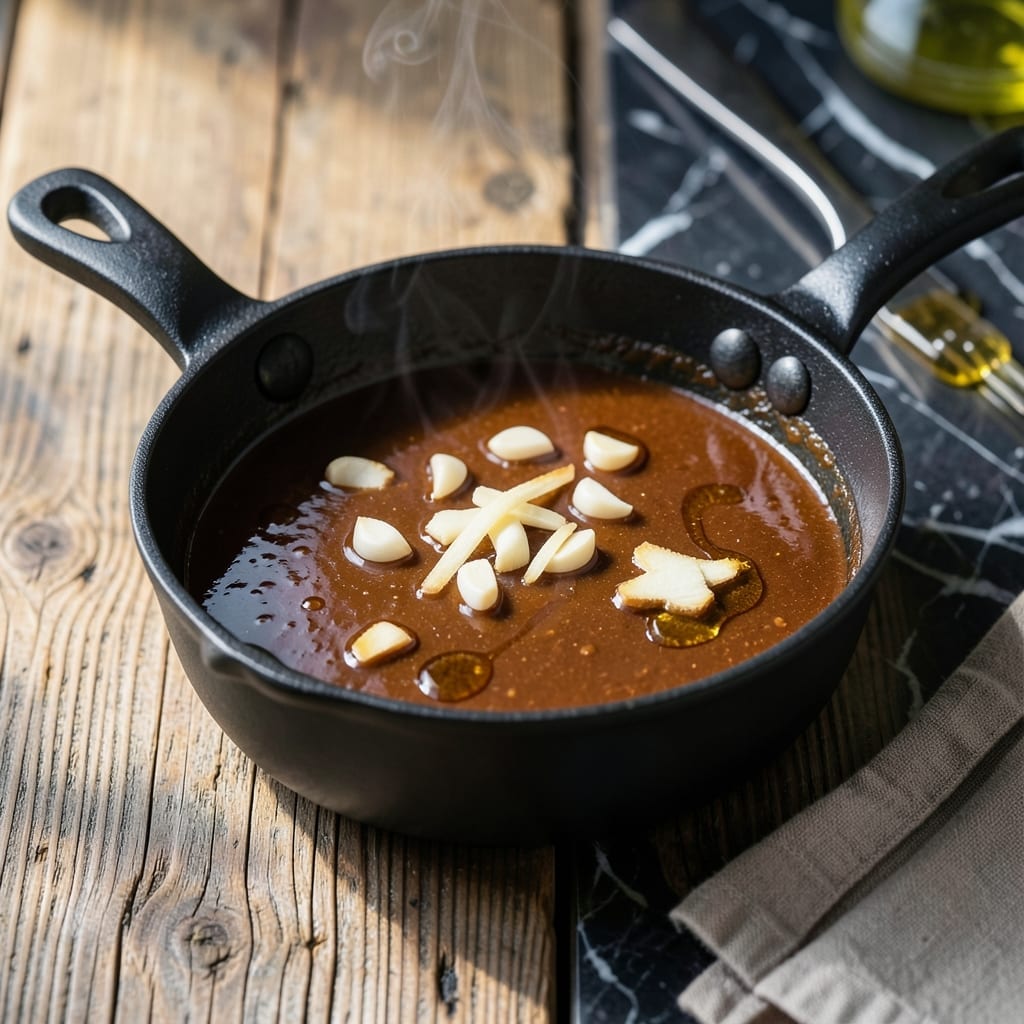
This 5-ingredient teriyaki glaze delivers the perfect balance of sweet and savory with minimal effort. I developed this streamlined version during busy service at my Asheville restaurant, where simplicity was key to consistency.
The beauty lies in its versatility—use it as a glaze for proteins, a stir-fry sauce, or a marinade. A 10-minute simmer transforms basic pantry staples into a glossy, restaurant-quality sauce that keeps for weeks.
What sets this apart is the precise ratio of soy sauce to honey, creating depth without overpowering sweetness. The addition of fresh garlic and ginger elevates it beyond store-bought versions.
Make a double batch and store in the fridge for quick flavor boosts anytime. This sauce proves that professional results don’t require complicated techniques.
Ingredients for Teriyaki Glaze Recipe Easy
Five pantry staples transform into a glossy, restaurant-quality sauce in minutes.
| Ingredient | Amount | Notes |
|---|---|---|
| Soy Sauce 🫒 | ½ cup | Low-sodium preferred for balance |
| Honey 🍯 | ½ cup | Raw or pure for best flavor |
| Fresh Garlic Cloves 🧄 | 3 cloves | Minced or pressed for intensity |
| Fresh Ginger Root 🌿 | 1 tbsp | Peeled and finely grated |
| Rice Vinegar 🍶 | 2 tbsp | Unseasoned for clean acidity |
The soy sauce is your foundation here. Kikkoman or San-J are reliable brands—low-sodium lets you control the salt level better. Honey adds depth, but make sure it’s pure (none of that corn syrup junk). I grab mine from local farmers markets when I can. Fresh garlic and ginger are non-negotiable—they’re what give this that bright, authentic flavor you can’t get from powders.
No honey? Maple syrup or agave work in a pinch, but the flavor shifts slightly sweeter. Out of rice vinegar? Apple cider vinegar at half the amount gets you close. The garlic and ginger can be swapped for 1 tsp each of powdered versions, but fresh is so much better. If you’re gluten-free, tamari instead of soy sauce works perfectly.
This keeps beautifully in the fridge for 3-4 weeks in a sealed jar. The flavors actually deepen over time. Freeze for up to 3 months if you want to make a big batch (worth it). Always give it a good stir before using—honey settles at the bottom.
Why You’ll Love This Recipe
- 5-Minute Magic: I simmer these five pantry staples together and boom—glossy, sticky teriyaki without babysitting the stove.
- Sweet-Savory Balance: The honey and soy sauce create that addictive contrast, while fresh ginger and garlic add just the right kick.
- Drizzle on Everything: I’ve tossed it with chicken, brushed it on salmon, even drizzled it over roasted veggies—never a waste.
- Budget Stretch: A small batch costs pennies and keeps for weeks, so I always have a flavor boost ready to go.
Step-by-Step Instructions for Teriyaki Glaze
This method delivers a glossy, perfectly balanced glaze with minimal effort and maximum flavor.
Step 1: Combine Wet Ingredients in a Saucepan
Pour the 0.5 cup Soy Sauce and 0.5 cup Honey into a small saucepan. I prefer low-sodium soy sauce here to control the saltiness of the final glaze. The honey should flow easily—if it’s crystallized, warm it gently first.
Add the 2 tbsp Rice Vinegar to the pan. The vinegar’s acidity will brighten the rich soy and honey flavors. Stir these three ingredients together over medium heat until the honey dissolves completely. You’ll see the mixture thin out slightly as it warms.
Step 2: Add Aromatic Ingredients
Once the wet ingredients are combined, add the 3 cloves Fresh Garlic Cloves, minced or pressed. I always press mine for maximum flavor release. The garlic will sizzle slightly when it hits the warm liquid—that’s your cue it’s working.
Next, stir in the 1 tbsp Fresh Ginger Root, finely grated. Fresh ginger is non-negotiable here; it provides a bright, spicy backbone that dried ginger can’t match. Cook for 1-2 minutes until the mixture becomes fragrant and the raw edge of the garlic mellows.
Step 3: Simmer and Thicken the Glaze
Reduce the heat to medium-low and let the mixture simmer. You’ll notice small bubbles forming around the edges first, then spreading across the surface. This gentle simmer allows the flavors to meld without burning the honey.
Let it cook for 8-10 minutes, stirring occasionally, until the glaze thickens enough to coat the back of a spoon. Watch for the color to deepen to a rich amber. If it starts to bubble too vigorously, reduce the heat slightly—you want a steady but gentle simmer.
Step 4: Cool and Test Consistency
Remove the saucepan from heat and let the glaze cool for 5 minutes. It will thicken further as it cools. To test the consistency, dip a spoon in and let it drip back into the pan. The glaze should ribbon off the spoon slowly, leaving a distinct trail.
If it’s too thick after cooling, stir in a teaspoon of warm water to loosen it. Conversely, if it’s still too thin, return it to the heat for 1-2 more minutes. The perfect glaze should be thick enough to cling to foods but still pourable.
Step 5: Store and Use
Transfer the cooled glaze to a clean jar or bowl. It will keep in the refrigerator for up to 2 weeks. For the best flavor, let it come to room temperature before using—cold glaze won’t coat as evenly.
This glaze works beautifully brushed on grilled meats during the last few minutes of cooking or drizzled over finished dishes. I like to use it on chicken, salmon, or even roasted vegetables for an instant flavor boost.
Pro Tips For Making Teriyaki Glaze Recipe Easy
- Simmer, Don’t Boil: Keep the heat at medium-low once the honey goes in—I learned this the hard way after burning two batches because honey caramelizes fast and turns bitter if it gets too hot.
- Grate the Ginger: Skip the mincing and use a microplane for the fresh ginger; it blends smoothly into the glaze and saves you from chewing on fibrous bits every time.
- Balance the Sweetness: Taste before the final simmer and add a splash more rice vinegar if the honey overpowers the soy—sounds weird, but it works.
- Bloom the Aromatics: Cook the garlic and ginger in a little oil for 30 seconds before adding liquids; my grandmother swore by this, and it actually changes the outcome.
Flavor Customization for teriyaki glaze recipe easy
Sweetness Adjustments
For a richer, deeper sweetness, swap the honey for dark brown sugar. Use ½ cup packed and dissolve it completely in the warm soy sauce. David, my taste-tester, prefers this version for its molasses notes. 💛
Spicy Kick
Add ½ tsp red pepper flakes with the garlic and ginger for subtle heat. For serious spice lovers, include 1 tbsp sriracha or 1 tsp gochujang during the final 2 minutes of simmering. The heat balances beautifully with the sweetness.
Umami Boost
Stir in 1 tbsp oyster sauce or 1 tsp fish sauce at the end for extra depth. I discovered this trick working in Charleston—it adds complexity without overwhelming the classic teriyaki profile. Just 1 tsp makes a noticeable difference.
Citrus Twist
Brighten the glaze with zest of 1 orange or 2 tbsp fresh lime juice added off-heat. The citrus cuts through the richness, making it perfect for seafood. I love this variation with grilled shrimp skewers.
Thicker Texture
For a syrup-like consistency, simmer 2-3 minutes longer until reduced by about ¼. This works beautifully for drizzling over desserts like ice cream or pound cake. Watch closely to prevent burning.
Ginger-Garlic Focus
Double the aromatics with 2 tbsp grated ginger and 6 garlic cloves for a bold, punchy version. This is my go-to when serving with strongly flavored meats like lamb or venison. The extra bite stands up to gamey flavors.
Nutrition Facts
Frequently Asked Questions
How long does this glaze keep in the fridge?
It stays fresh for 2 weeks in an airtight container. For best flavor, let it warm to room temperature before using.
Can I use a sugar substitute instead of honey?
Yes! Maple syrup or agave work well. For brown sugar, use ½ cup packed and dissolve completely in the warm sauce.
Why did my glaze turn out too thin?
It likely needs more simmering time. Return it to medium-low heat for an extra 2-3 minutes, stirring constantly.
Is this glaze suitable for vegetarians?
All ingredients are plant-based. Just confirm your soy sauce is vegetarian (some brands use fish in processing).

- BBQ Sausage Recipe Oven: Smoky Depth Without the Grill - September 28, 2026
- BBQ Chicken Bowl Recipe Rice: Smoky Sweetness Over Fluffy Grains - September 28, 2026
- Beef Cutlet Recipe Ideas: Crispy Breaded Patties With Bold Seasonings - September 28, 2026