
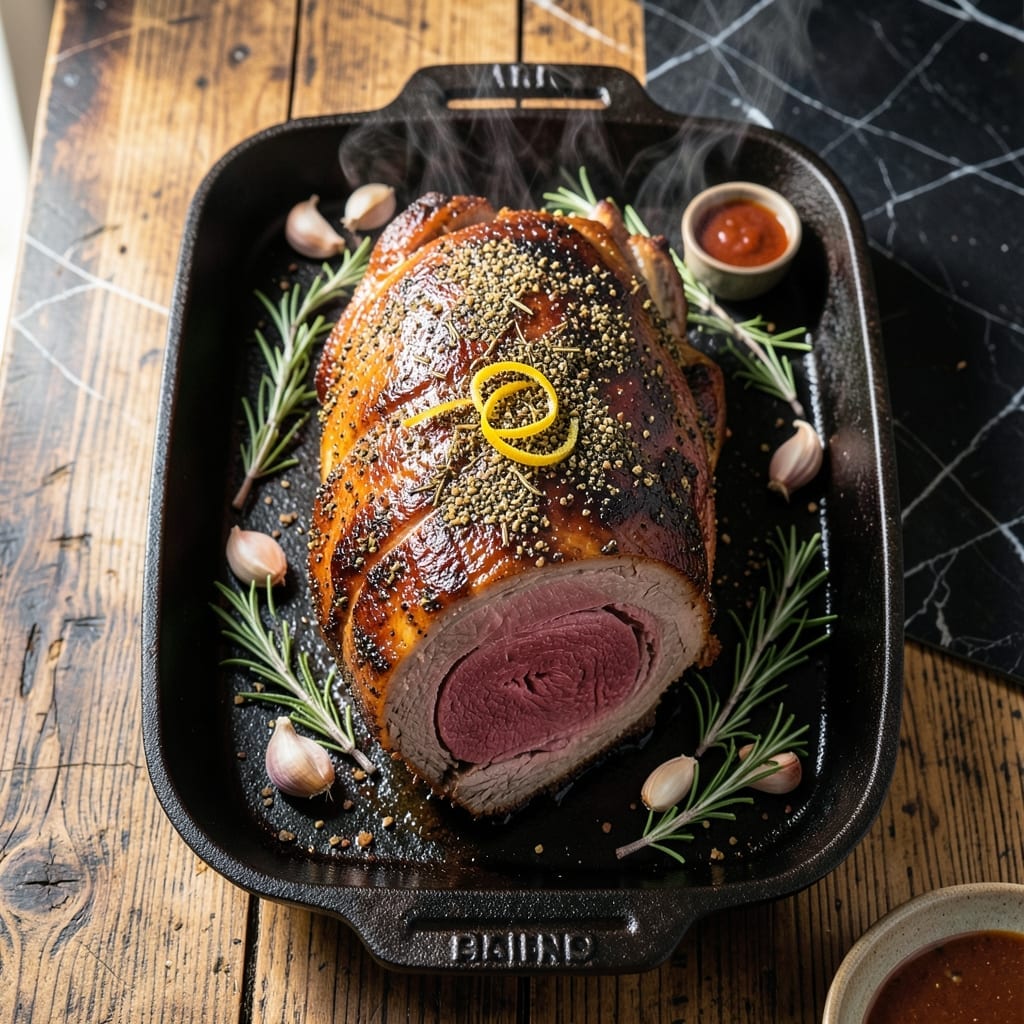
Achieving juicy prime rib with a perfectly seasoned crust at home is absolutely possible with the right technique. This method delivers steakhouse results without the steakhouse price.
The secret lies in a simple dry rub and precise oven temperatures that create a golden crust while maintaining tender, pink centers. I’ve tested this approach repeatedly to ensure consistent success.
What you’ll get is a show-stopping centerpiece with rich beefy flavor in every bite. The exterior forms a flavorful bark, while the interior stays impossibly tender.
Serve with classic sides like mashed potatoes and roasted vegetables for a complete steakhouse experience at home.
Ingredients for Texas Roadhouse Prime Rib
Prime rib demands quality ingredients for that signature Texas Roadhouse flavor and texture.
| Ingredient | Amount | Notes |
|---|---|---|
| Bone-In Prime Rib Roast 🥩 | 5 lb | First cut, well-marbled preferred |
| Kosher Salt 🧂 | 2 tbsp | Diamond Crystal preferred for texture |
| Coarse Black Pepper 🌶️ | 2 tbsp | Freshly cracked for maximum flavor |
| Garlic Powder 🧄 | 1 tbsp | Not garlic salt for pure flavor |
| Onion Powder 🧅 | 1 tbsp | Freshly ground if available |
| Dried Thyme 🌿 | 1 tsp | Rubbed between fingers to release oils |
| Dried Rosemary 🍃 | 1 tsp | Crushed lightly before applying |
| Olive Oil 🫒 | ¼ cup | Extra-virgin for richness |
| Fresh Garlic Cloves 🧄 | 4 cloves | Minced for paste consistency |
| Dijon Mustard 🟡 | 2 tbsp | Whole grain for texture |
| Red Wine 🍷 | ½ cup | Dry variety like Cabernet Sauvignon |
| Beef Broth 🥩 | 1 cup | Low-sodium for control |
The prime rib is non-negotiable here. Costco or Whole Foods carry excellent first-cut roasts with the marbling you need for juiciness. Look for bright red color with creamy white fat—avoid anything gray or dried out. The Diamond Crystal kosher salt is a professional touch; its larger crystals adhere better to the meat. For the herbs, Penzeys offers superior dried thyme and rosemary if you want to upgrade from grocery store brands.
No red wine? Substitute beef broth with 1 tbsp balsamic vinegar for acidity. Short on fresh garlic? Use 1 tbsp garlic powder instead of the 4 cloves. The Dijon mustard can be swapped for whole grain mustard—both add that tangy depth. If you can’t find bone-in, a boneless roast works, but adjust cooking time by about 15-20% since bones act as insulation.
Prime rib tastes best served immediately, but leftovers keep 3-4 days wrapped tightly in foil. For longer storage, slice before freezing—vacuum seal for up to 6 months. Always bring to room temperature before reheating to preserve moisture.
Why You’ll Love This Recipe
- Set and Forget: I rub the roast with salt, pepper, garlic, and onion powder, pop it in the oven, and let the dry heat do all the work.
- Crispy Crust: The coarse salt and pepper form this crave-worthy crust that cracks with every slice.
- Sunday Dinner Star: It’s my go-to for holidays or when I want to feel fancy on a random Tuesday.
- Next-Day Magic: Leftovers make unreal sandwiches—just pile the prime rib on a roll with a little horseradish.
Step-by-Step Instructions for Texas Roadhouse Prime Rib
Master the technique for a perfectly crusty exterior and tender, juicy interior every time.
Step 1: Create the Herb Crust and Prep the Roast
In a small bowl, combine the 2 tbsp kosher salt, 2 tbsp coarse black pepper, 1 tbsp garlic powder, 1 tbsp onion powder, 1 tsp dried thyme, and 1 tsp dried rosemary. Rub the mixture between your fingers to release the essential oils from the herbs.
Pat the 5 lb bone-in prime rib roast completely dry with paper towels. This step is crucial for achieving a proper sear. Brush the entire surface with the 2 tbsp Dijon mustard, then press the herb mixture evenly onto all sides of the roast. The mustard acts as a binder for the crust while adding depth of flavor.
Step 2: Sear the Roast for Maximum Flavor
In a large oven-safe pan or roasting pan, heat the 0.25 cup olive oil over high heat until it shimmers. Add the 4 cloves fresh garlic cloves and cook for 30 seconds until fragrant. Remove the garlic to prevent burning.
Place the prime rib in the hot pan, fat-side down. Sear for 3-4 minutes until a deep, golden brown crust forms. Turn the roast and sear the remaining sides for an additional 2-3 minutes each. This initial sear locks in juices and creates a flavorful crust reminiscent of steakhouse preparations.
Step 3: Roast to Juicy Perfection
Preheat your oven to 325°F. Transfer the seared roast to a roasting rack set inside a rimmed baking sheet, fat-side up. Insert a meat thermometer into the thickest part of the roast, avoiding the bone.
Roast in the oven for approximately 2 to 2.5 hours, or until the internal temperature reaches 120-125°F for medium-rare. Baste the roast every 30 minutes with the accumulated pan juices to enhance flavor and moisture. The bone-in cut helps regulate cooking, ensuring even doneness throughout.
Step 4: Rest and Prepare the Au Jus
Remove the roast from the oven and transfer it to a cutting board. Tent loosely with aluminum foil and let it rest for 20-30 minutes. This resting period allows the juices to redistribute, ensuring each slice remains moist and flavorful.
While the roast rests, place the roasting pan on the stovetop over medium heat. Add the 0.5 cup red wine and scrape up any browned bits from the bottom of the pan. Simmer for 2-3 minutes until reduced by half, then add the 1 cup beef broth. Simmer for an additional 5 minutes until slightly thickened. Strain the au jus and serve alongside the sliced prime rib.
Step 5: Slice and Serve
After resting, carve the prime rib into 1-inch thick slices, cutting between the bones for even portions. The meat should be tender and juicy with a perfectly crusty exterior.
Arrange the slices on a serving platter and drizzle with some of the prepared au jus. Serve immediately with the remaining au jus on the side for dipping. Each serving should showcase the rich, beefy flavor and the signature Texas Roadhouse-style crust.
Pro Tips For Making Texas Roadhouse Prime Rib
- Dry the Roast First: Pat the prime rib completely dry with paper towels before seasoning—I learned this the hard way after my first few attempts had a steamed, pale crust instead of that deep brown sear.
- Go Heavy on Salt: Use more kosher salt than you think, especially with a thick cut like this; the coarse grains need to penetrate, and a light hand leaves the flavor flat.
- Pull It Early: Take the roast out at 115°F internal temp—it’ll coast up to a perfect medium-rare while resting, and overcooking is the easiest way to ruin prime rib.
- Rest Under Foil: Tent it loosely with foil and let it rest for 20-30 minutes; skipping this step sends all the juices right onto the cutting board instead of staying in the meat.
Common Mistakes When Making This Recipe
Skipping the Dry Pat
I can’t stress this enough—always pat the roast completely dry before seasoning. Even a little moisture prevents that golden brown crust from forming properly. Use 3-4 paper towels and press firmly all over the surface. 💡
Overcrowding the Pan
When searing, give the roast plenty of space in the pan. Crowding causes steaming instead of browning. If your pan isn’t large enough, use two burners or sear in batches. A 12-inch cast iron skillet works perfectly for a 5 lb roast.
Ignoring Temperature
Don’t rely on cooking time alone—always use a meat thermometer. The internal temp should reach 120-125°F for medium-rare. I’ve seen too many perfect roasts ruined by guessing. A ThermoWorks instant-read is my go-to for accuracy.
Skipping the Rest
Cutting too soon causes all those precious juices to spill out onto the cutting board. Tent the roast loosely with foil and let it rest for the full 20-30 minutes. The temperature will rise another 5-10°F during this time—this is normal and desired.
Neglecting the Au Jus
Those browned bits in the pan are pure flavor gold. Don’t let them go to waste. Deglaze with ½ cup red wine first, then add 1 cup beef broth for a rich, savory sauce that complements every bite perfectly.
Inconsistent Slicing
For even cooking and presentation, slice against the grain into uniform 1-inch thick pieces. Use a long, sharp knife and cut between the bones. This ensures each serving has that perfect crust-to-center ratio we all love.
Nutrition Facts
Frequently Asked Questions
What’s the best way to store leftovers?
Wrap slices tightly in foil or place in an airtight container. Refrigerate for up to 3-4 days or freeze for 6 months. Reheat gently to preserve moisture.
Can I use a boneless roast instead?
Yes, but reduce cooking time by 15-20%. Bones act as insulation, so boneless cooks faster. Always check internal temp with a meat thermometer.
Why is patting the roast dry important?
Moisture prevents proper browning. A dry surface ensures a golden crust forms during searing. Use 3-4 paper towels for best results.
How do I know when it’s done?
Use a meat thermometer—120-125°F for medium-rare. The temp rises 5-10°F during resting, so pull it early. Never guess!

- BBQ Sausage Recipe Oven: Smoky Depth Without the Grill - September 28, 2026
- BBQ Chicken Bowl Recipe Rice: Smoky Sweetness Over Fluffy Grains - September 28, 2026
- Beef Cutlet Recipe Ideas: Crispy Breaded Patties With Bold Seasonings - September 28, 2026