
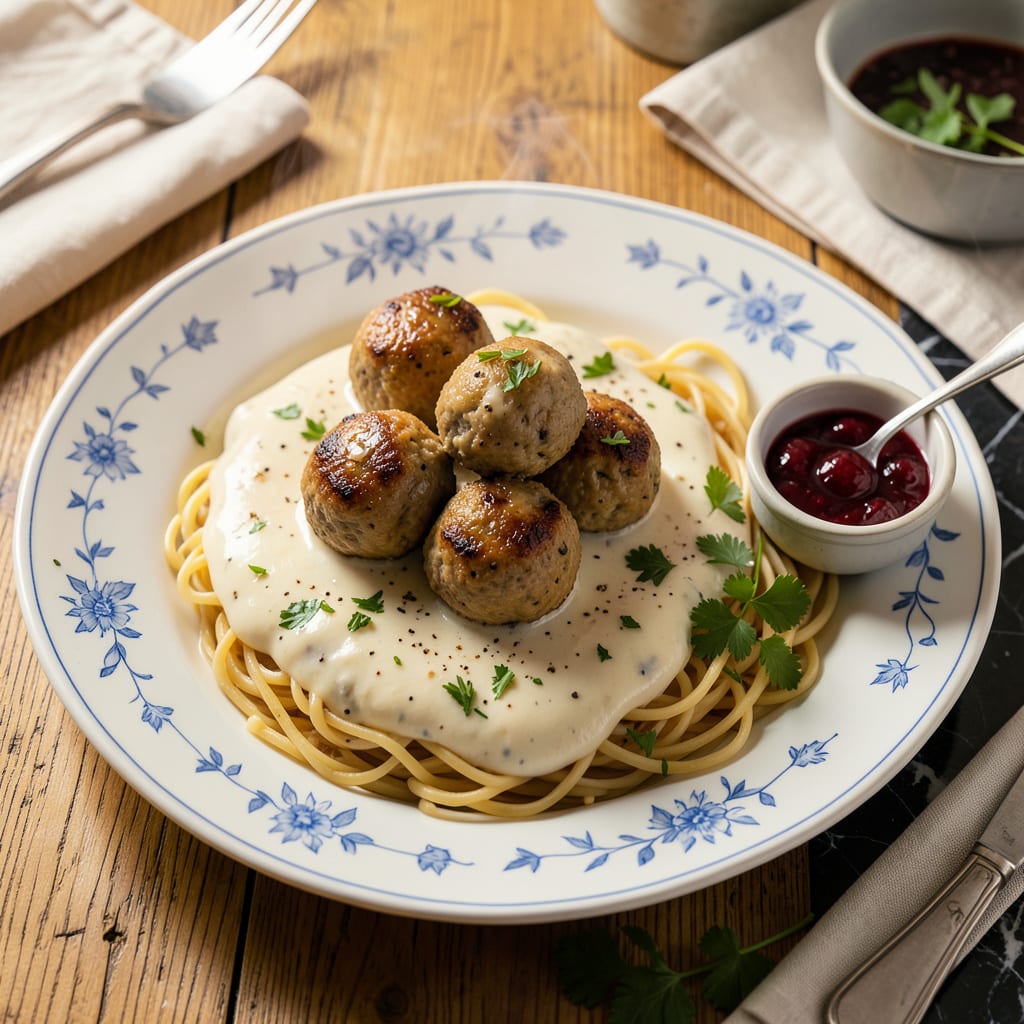
The Recipe Critic’s Swedish meatballs combine ground beef and pork with warm spices, breadcrumbs, and cream for tender, flavorful results. Served with a rich, creamy gravy, they’re perfect over mashed potatoes or egg noodles for a comforting meal.
This homemade version stands out because of its thoughtful balance of ingredients. The blend of beef and pork creates a juicier meatball than using just one type of meat, while the cream-soaked breadcrumbs act as a tenderizer and binder. 🔥 What really elevates the dish is the gravy—made by deglazing the pan with broth and finishing with sour cream for that signature tangy richness. It’s the kind of recipe that turns a simple weeknight dinner into something special.
I love how versatile these meatballs are—they work equally well for a cozy family meal or as an impressive dish for guests. The key is in the technique: gently browning the meatballs first builds flavor, while simmering them in the gravy ensures they stay moist. ✨ It’s a foolproof method that delivers restaurant-quality results every time.
💡 In This Article
- Secrets Behind The Recipe Critic’s Swedish Meatball Texture
- Pro Tips for Perfect Swedish Meatball Gravy Every Time
Secrets Behind The Recipe Critic’s Swedish Meatball Texture
The magic starts with the meat blend—ground beef and pork work together to create the ideal fat-to-lean ratio. Beef provides structure with its higher protein content (about 20% in 80/20 ground beef), while pork shoulder or ground pork adds moisture and tenderness thanks to its 15-20% fat content.
This combination prevents dryness while keeping the meatballs cohesive during cooking. 🔥
What truly transforms the texture is the cream-soaked breadcrumb technique. When breadcrumbs absorb 1/4 cup of heavy cream (or milk), they swell and create a gel-like matrix that binds the meat while adding moisture. This is called the “panade” method—used in professional kitchens to prevent meatballs from becoming dense.
The starch in breadcrumbs also helps retain juices during cooking, similar to how a brined turkey stays moist.
Cooking method makes all the difference. Pan-frying at medium heat (325-350°F) creates a delicate crust through the Maillard reaction (where proteins and sugars brown), while keeping the interior tender. Baking would dry them out, while high heat would make them tough. The final simmer in gravy—just 5-7 minutes—lets them absorb flavor without overcooking. ✨
Temperature control is critical at every stage. The meat mixture should stay cold (40°F or below) until cooking to prevent fat from rendering prematurely. When browning, aim for an internal temp of 145°F before adding to gravy—the carryover heat will bring them to a safe 160°F without drying.
This precision ensures each bite is juicy, not rubbery.
Even the spices play a textural role. Nutmeg and allspice contain natural enzymes that subtly break down proteins, making the meat more tender. The 1/4 teaspoon of each is enough to enhance texture without overpowering. It’s like how pineapple tenderizes meat in marinades, but with warm, aromatic depth instead of fruity acidity. 💫
For comparison, traditional Italian meatballs often use just beef with egg and dry breadcrumbs, resulting in a firmer bite. The Swedish version’s cream-based binder and pork addition create a noticeably silkier mouthfeel—almost like a cross between a meatball and a dumpling.
This is why they pair so perfectly with the velvety gravy rather than chunky tomato sauce.
Pro tip: Let the meatball mixture rest 10 minutes after mixing. This gives the salt time to dissolve proteins (myosin), improving binding, and lets the breadcrumbs fully hydrate. Skipping this step risks crumbly meatballs that fall apart in the gravy. The difference is night and day in both texture and flavor cohesion. ⚡

- BBQ Sausage Recipe Oven: Smoky Depth Without the Grill - September 28, 2026
- BBQ Chicken Bowl Recipe Rice: Smoky Sweetness Over Fluffy Grains - September 28, 2026
- Beef Cutlet Recipe Ideas: Crispy Breaded Patties With Bold Seasonings - September 28, 2026