
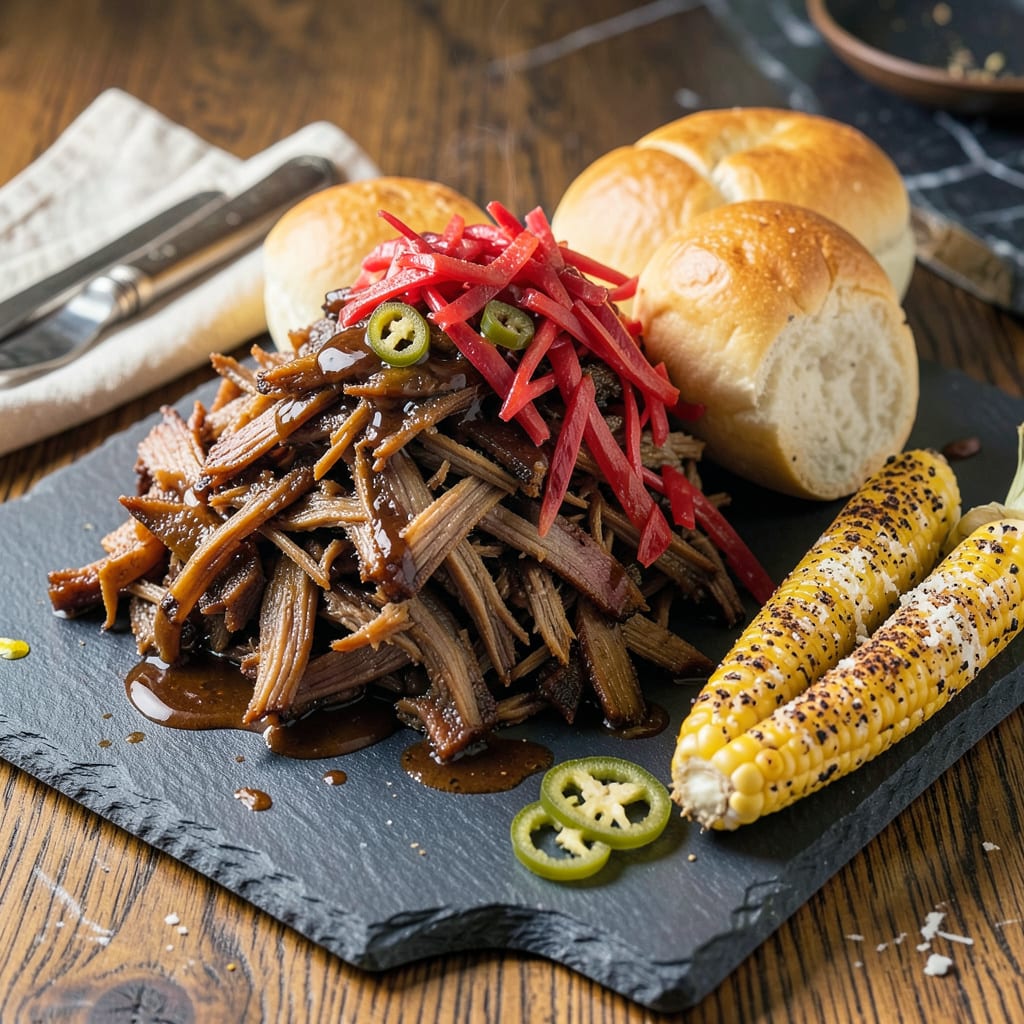
Start with a 4-5 lb pork shoulder, season generously with a dry rub, slow-cook at 225°F for 8-10 hours until fork-tender, then shred and mix with your favorite BBQ sauce. Rest before serving for maximum juiciness.
The magic of this dish lies in the transformation of tough connective tissue into melt-in-your-mouth tenderness. 🔥 At 225°F, collagen gradually breaks down over 8-10 hours, creating that signature velvety texture while allowing smoky flavors to penetrate deeply. I’ve found the fat cap plays a crucial role too—it bastes the meat naturally as it renders, preventing dryness even during extended cooking. What surprises many first-timers is how the resting period (at least 30 minutes) lets juices redistribute, making every bite more flavorful.
💡 In This Article
- Why Low-and-Slow Cooking Makes Perfect Pulled Pork
- Essential Tools and Ingredients for Pulled Pork Success
Why Low-and-Slow Cooking Makes Perfect Pulled Pork
The secret to that fall-apart texture lies in collagen—the tough connective tissue in pork shoulder. At temperatures between 160-205°F, collagen gradually converts to gelatin through hydrolysis, a process that requires both time and moisture. This transformation is what gives pulled pork its signature unctuous quality.
🔥 The magic number is around 203°F internal temperature, where collagen melts completely while muscle fibers remain intact enough to hold the structure.
Temperature control is everything. Below 195°F, collagen breaks down too slowly; above 225°F, proteins contract rapidly, squeezing out moisture. The sweet spot at 225°F allows for steady collagen conversion while minimizing moisture loss.
I’ve found that each pound of pork needs about 1.5-2 hours at this temperature—so a 5 lb shoulder typically hits perfection in 8-10 hours. The fat cap acts like a natural basting system, rendering slowly to keep the meat lubricated throughout the long cook.
Time isn’t just about tenderness—it’s about flavor development too. The Maillard reaction (browning) occurs gradually at low temperatures, creating complex flavors without burning. Smoke penetration happens more deeply over extended periods, with compounds like guaiacol and syringol infusing the meat.
What most people don’t realize is that the last 2 hours are critical for flavor concentration as moisture evaporates and surface caramelization intensifies.
The resting period is non-negotiable. When you pull pork straight from heat, the muscle fibers are tightly contracted. Resting for 30-60 minutes allows these fibers to relax and reabsorb juices—cutting too soon can lose up to 30% of the meat’s moisture.
I recommend wrapping in foil with a towel during resting to maintain temperature while juices redistribute. The difference between rested and unrested pork is night and day in both juiciness and ease of shredding.
Here’s what’s actually happening during that rest: The gelatinized collagen that was liquid at cooking temps begins to thicken as it cools, creating a silky mouthfeel. Meanwhile, the salt from your rub continues to work its magic through osmosis, balancing flavors throughout the meat.
This is why even slightly overcooked pork can taste amazing if rested properly—the gelatin compensates for any moisture loss during cooking. ✨
Pro tip: The fat cap isn’t just for moisture—it’s a flavor conductor. As it renders, it carries smoky, spicy, and sweet notes from your rub deep into the meat. For maximum effect, position the fat cap facing the heat source in your smoker or oven.
This creates a natural basting cycle where rendered fat continuously washes over the meat surface, building layers of flavor with each pass.

- BBQ Sausage Recipe Oven: Smoky Depth Without the Grill - September 28, 2026
- BBQ Chicken Bowl Recipe Rice: Smoky Sweetness Over Fluffy Grains - September 28, 2026
- Beef Cutlet Recipe Ideas: Crispy Breaded Patties With Bold Seasonings - September 28, 2026