
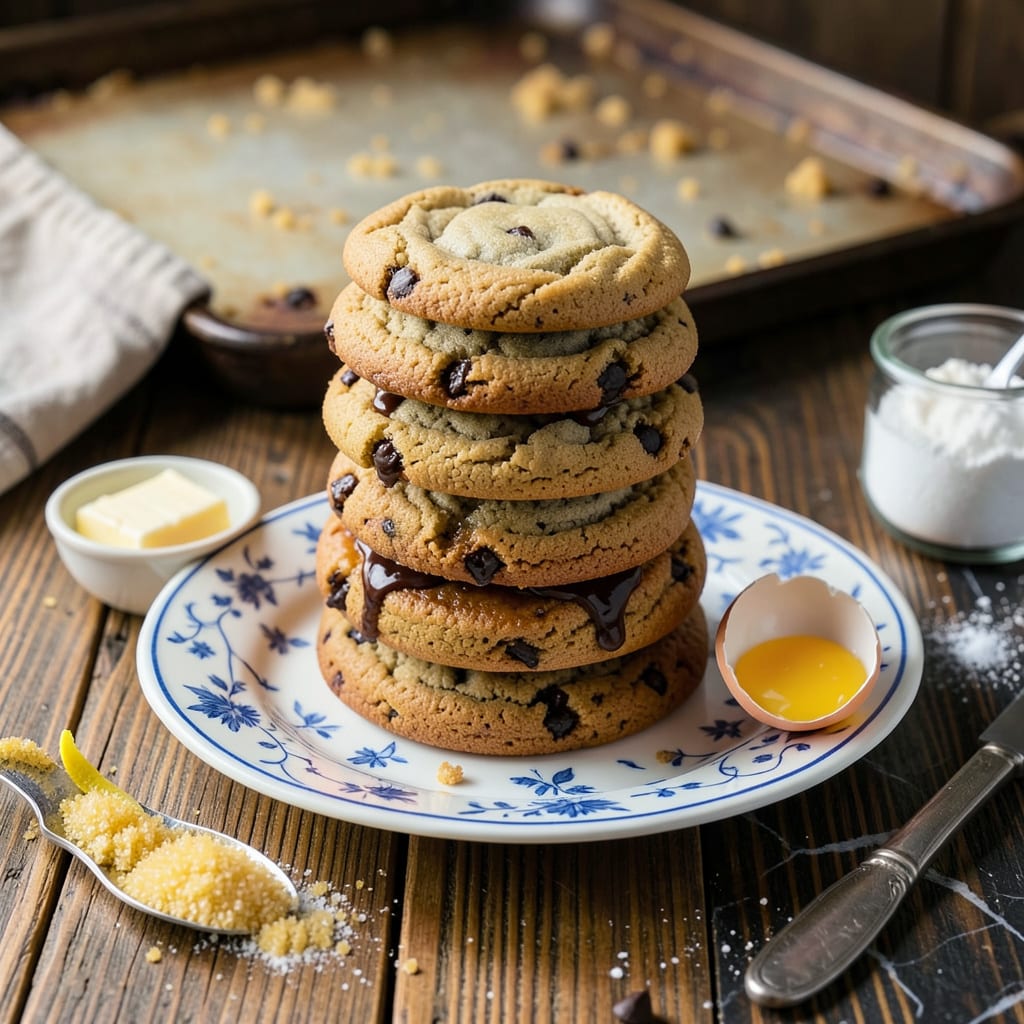
Baking powder creates carbon dioxide bubbles when mixed with liquid and heated, causing cookies to rise, develop a lighter texture, and spread properly. Without it, cookies may turn out dense or flat.
This leavening agent works like a tiny chemical factory in your dough. 🔥 The moment it encounters moisture and heat, it releases gas bubbles that expand during baking, creating that perfect balance between chewiness and airiness. I’ve found that recipes with the right amount of baking powder produce cookies with those coveted crisp edges and soft centers—something flat, heavy cookies just can’t achieve.
What’s particularly fascinating is how baking powder differs from baking soda. It contains both an acid and a base, so it activates twice: first when mixed with wet ingredients, and again when exposed to oven heat. This double action gives you more control over texture than single-acting leaveners provide. ✨
💡 In This Article
- How Baking Powder Changes Cookie Texture and Rise
- Best Practices for Using Baking Powder in Cookie Recipes
How Baking Powder Changes Cookie Texture and Rise
Baking powder acts as a double-acting leavening agent that transforms cookie structure through two distinct chemical reactions. The first occurs when it contacts liquid ingredients (like eggs or milk), where the acid component (cream of tartar) reacts with the alkaline sodium bicarbonate. This initial reaction produces about 30% of the total gas.
The second, more dramatic reaction happens when heat hits 140°F in the oven, releasing the remaining 70% of carbon dioxide. This staged process creates consistent lift throughout baking. 🔥
The gas bubbles expand as the cookie’s internal temperature rises, pushing against the gluten network formed by flour proteins. At 212°F, water in the dough turns to steam, further inflating these bubbles. The result? A cookie that rises 1/4 to 1/2 inch during baking, with a porous interior structure.
Compare this to cookies without leavening: they spread thinly and develop a dense, cake-like crumb rather than the ideal chewy-yet-airy texture we crave. ✨
What sets baking powder apart from baking soda is its built-in acidity. While baking soda requires acidic ingredients (like brown sugar or buttermilk) to activate, baking powder works independently. This makes it more reliable for recipes where acid levels might vary.
The standard ratio is 1 teaspoon per cup of flour, though chocolate cookies often need 1/4 teaspoon extra to counteract cocoa’s acidity. Too much causes bitter flavors, while too little leaves cookies flat and heavy. 💫
The timing of gas release creates what bakers call “oven spring” – that magical moment when cookies puff dramatically in the first 5-7 minutes of baking. As the dough warms, the gas bubbles expand until the protein structure sets at 160-180°F, locking in the texture.
This is why underbaked cookies collapse (the structure wasn’t set) while overbaked ones become dry (moisture evaporated before structure formed).
Temperature plays a crucial role in this process. Chilled dough (straight from fridge) delays the initial reaction, allowing more gas to release in the oven for taller cookies. Room-temperature dough spreads faster as the gas escapes before the structure sets.
Professional bakers often chill dough for 24-48 hours to control this balance, resulting in cookies with perfect thickness and even browning. 🌟
For those wondering about substitutions, you can mimic baking powder by combining 1/4 teaspoon baking soda + 1/2 teaspoon cream of tartar per teaspoon needed. However, this lacks the double-acting benefit. The commercial product’s precise formulation ensures consistent results across different flour types and moisture levels – something homemade mixes often struggle to achieve.

- BBQ Sausage Recipe Oven: Smoky Depth Without the Grill - September 28, 2026
- BBQ Chicken Bowl Recipe Rice: Smoky Sweetness Over Fluffy Grains - September 28, 2026
- Beef Cutlet Recipe Ideas: Crispy Breaded Patties With Bold Seasonings - September 28, 2026