
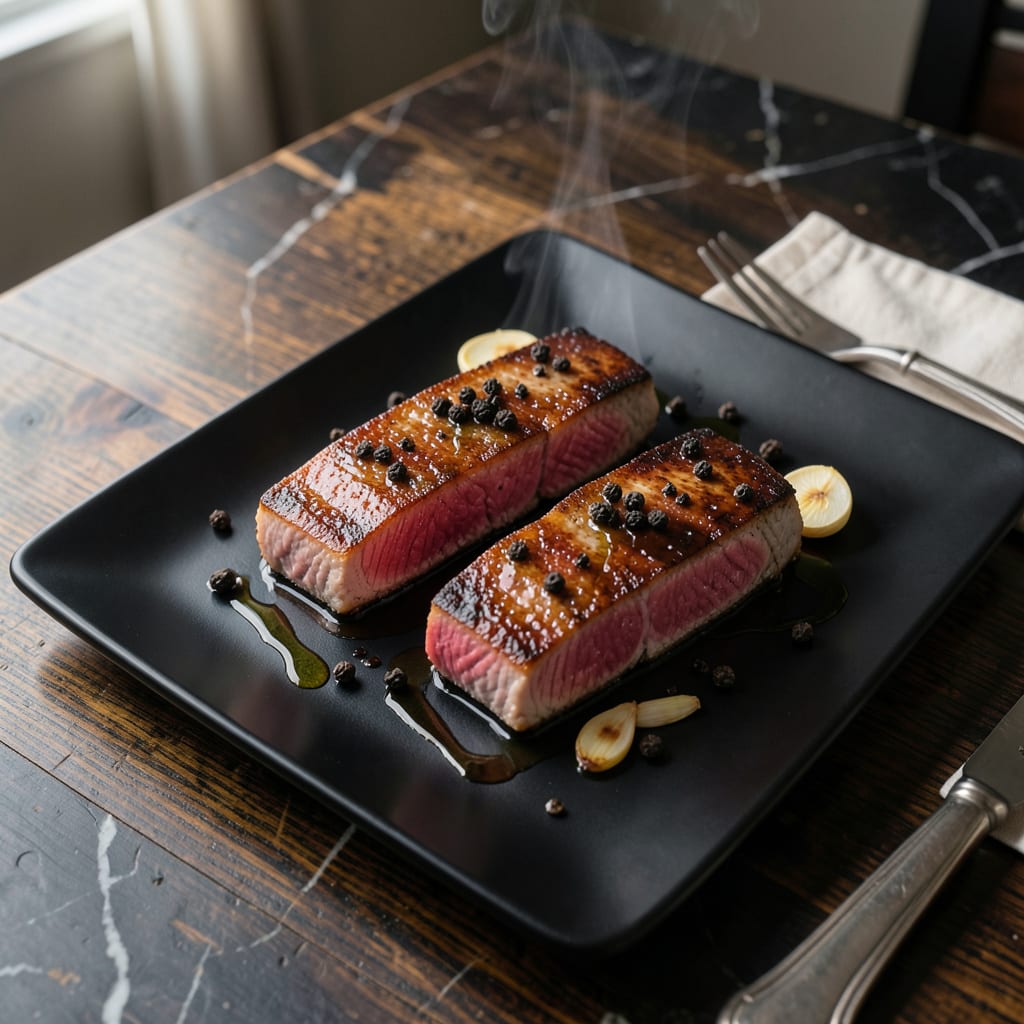
This pan-seared tuna steak delivers restaurant-quality results with minimal effort. The pepper crust adds bold flavor while keeping the inside tender and juicy.
With just a few ingredients and 10 minutes of cooking time, you’ll have a dish that looks and tastes like it came from a professional kitchen. Simple, precise, and consistently impressive.
Ingredients for Tuna Steak Easy
Sushi-grade tuna, bold pepper crust, and a handful of pantry staples create this impressive dish.
| Ingredient | Amount | Notes |
|---|---|---|
| Tuna Steaks 🐟 | 4 whole | Sushi-grade, 1-1.5 inches thick |
| Black Peppercorns 🌶️ | 2 tbsp | Freshly cracked for crust |
| Sea Salt 🧂 | 1 tsp | Coarse flakes preferred |
| Olive Oil 🫒 | 3 tbsp | High smoke point, divided |
| Garlic Cloves 🧄 | 2 cloves | Minced for aromatics |
| Soy Sauce 💧 | 2 tbsp | Low-sodium recommended |
| Sesame Oil 🫒 | 1 tsp | Toasted, for finishing |
| Fresh Ginger 🌿 | 1 tbsp | Finely grated |
| Green Onions 🧅 | 2 whole | Thinly sliced for garnish |
| Sesame Seeds 🌾 | 1 tsp | Toasted, for garnish |
| Lemon 🍋 | 1 whole | Cut into wedges for serving |
| Wasabi Paste 🌿 | 1 tsp | Optional for serving |
The tuna must be sushi-grade—look for it labeled as such at Whole Foods or a trusted fishmonger. Freshness is non-negotiable for raw or rare-cooked fish. The peppercorns should be whole and recently ground; pre-ground lacks the aromatic punch needed for the crust. A high-smoke-point oil is essential for achieving that perfect sear without burning. I prefer avocado oil for its neutral flavor and stability at high heat.
No sushi-grade tuna available? Salmon steaks work as a substitute with similar texture. Black peppercorns can be swapped for Sichuan peppercorns for a different heat profile. Low-sodium soy sauce prevents the dish from becoming overly salty, but tamari works for a gluten-free option. The sesame oil is potent—use sparingly to avoid overpowering the delicate tuna flavor.
Serve immediately for best texture. Leftovers can be refrigerated for up to 24 hours, but the tuna is best consumed fresh. Store unused sushi-grade tuna in the coldest part of your fridge and use within 1-2 days of purchase.
Why You’ll Love This Recipe
- Five-Minute Sear: I can go from pan to plate in under 10 minutes—just a hot skillet, olive oil, and those beautiful tuna steaks.
- Garlic-Kissed Crust: The crushed garlic and peppercorns form this insane crust that makes every bite ridiculously good.
- Fancy Enough for Guests: I serve this when I want to impress without the stress. Honestly, it looks like a restaurant dish with zero extra effort.
- Meals for Days: Leftovers? They make the best next-day salads or tacos. I’ll be real: I sometimes double the batch just for this.
Step-by-Step Instructions for Pan-Seared Tuna Steak with Pepper Crust
This streamlined approach guarantees perfectly seared tuna with minimal effort and maximum flavor.
Step 1: Prepare the Pepper Crust and Season the Steaks
Place the 2 tbsp black peppercorns on a cutting board and coarsely crack them using the flat side of a chef’s knife or a pepper mill. You want irregular pieces for texture, not a fine powder. Transfer the cracked peppercorns to a shallow dish.
Pat the 4 whole tuna steaks dry with paper towels—moisture prevents proper searing. Press each steak into the cracked peppercorns, coating both sides generously. Season both sides with the 1 tsp sea salt, pressing lightly so it adheres. This crust will create a bold, aromatic layer that contrasts beautifully with the tender fish.
Step 2: Sear the Tuna to Perfection
Heat 2 tbsp olive oil in a large skillet over high heat until it shimmers but doesn’t smoke. The oil is ready when it ripples when you tilt the pan. Add the tuna steaks and sear undisturbed for 2-3 minutes per side for medium-rare. Resist the urge to move them—this ensures a deep, even crust.
You’ll know they’re ready to flip when the edges appear opaque and the crust is deeply browned. For thicker steaks, reduce the heat to medium-high after flipping to prevent burning the pepper while ensuring the center cooks through. The internal temperature should reach 125-130°F for ideal doneness.
Step 3: Infuse with Aromatics and Finish
Reduce the heat to medium and add the remaining 1 tbsp olive oil to the skillet. Add the 2 cloves minced garlic cloves and 1 tbsp grated fresh ginger, stirring for 30 seconds until fragrant. Be careful not to let the garlic burn—it should turn just lightly golden.
Pour in the 2 tbsp soy sauce and swirl the skillet to coat the tuna steaks. Remove the skillet from heat and let the steaks rest in the warm sauce for 1 minute. This brief rest allows the flavors to meld and the juices to redistribute, ensuring each bite is moist and flavorful.
Step 4: Garnish and Serve
Transfer the tuna steaks to a serving platter. Drizzle with the 1 tsp sesame oil and any remaining pan sauce. The sesame oil adds a nutty depth that complements the pepper crust beautifully. Sprinkle with the 1 tsp toasted sesame seeds and the 2 whole thinly sliced green onions for freshness and color.
Serve immediately with the 1 whole lemon cut into wedges and 1 tsp wasabi paste on the side. The acidity from the lemon brightens the dish, while the wasabi adds a spicy kick for those who enjoy it. Slice against the grain for the most tender texture, and enjoy while warm.
Pro Tips For Making Tuna Steak Easy
- Sear Hot, Stay Rare: Crank the pan to smoking hot before adding the tuna—2 minutes per side max for perfect medium-rare. I learned this the hard way after turning my first few steaks into hockey pucks.
- Pat Dry First: Blot the tuna steaks with paper towels before seasoning. Sounds tedious, but it actually changes the outcome—wet steaks steam instead of sear.
- Skip the Overcrowding: Give each steak its own space in the pan, or the temperature drops and they boil in their own juices. My grandmother swore by this, and she was right.
- Rest Before Serving: Let the steaks rest 3-5 minutes under foil after cooking. Does it look weird? Yes. Does it work? Every single time—the juices redistribute instead of pooling on the plate.
Serving Suggestions for Leftovers
Plating Like a Pro
Slice the tuna against the grain into ½-inch thick pieces and fan them out on a warm plate. This presentation highlights the beautiful sear on the exterior while showcasing the perfect pink center. I always use a sharp Santoku knife for clean cuts. 💫
Fresh Garnish Ideas
Sprinkle the sliced green onions and toasted sesame seeds over the top for color and texture. A drizzle of the pan sauce with sesame oil adds a glossy finish. The contrast of the dark crust with the vibrant garnishes makes the dish pop visually.
Side Pairings
A light cucumber salad with rice vinegar and a pinch of sugar balances the richness. For something heartier, jasmine rice or sticky sushi rice soaks up the delicious pan juices beautifully. I love the simplicity of steamed bok choy with a splash of soy sauce.
Sauce Accompaniments
Serve the lemon wedges and wasabi paste on the side for customizable flavor. The bright acidity from the lemon cuts through the richness, while the wasabi adds a spicy kick. A small dish of pickled ginger offers a refreshing palate cleanser between bites.
Beverage Pairings
A crisp Sauvignon Blanc complements the dish with its citrus notes. For beer lovers, a light Japanese lager like Sapporo works wonderfully. I also enjoy a green tea hot or iced—its subtle bitterness pairs perfectly with the pepper crust. 🍵
Final Touch
Add a sprinkle of flaky sea salt right before serving to enhance all the flavors. This final step elevates the dish from great to extraordinary. Trust me, your guests will notice the difference this small detail makes.
Nutrition Facts
Frequently Asked Questions
What’s the best way to tell when it’s done?
Use a meat thermometer to check the internal temperature. For perfect medium-rare, it should reach 125-130°F. The edges will also appear opaque when ready.
Can I use frozen tuna instead?
Only if it’s labeled sushi-grade and properly thawed. Thaw overnight in the fridge, then pat completely dry before cooking. Never refreeze after thawing.
Why is sushi-grade important?
This ensures the fish is safe to eat at rare or raw levels. Regular tuna may contain parasites or bacteria that cooking at higher temps normally kills.
How long should I let it rest after cooking?
Just 1 minute in the warm pan sauce is ideal. This allows juices to redistribute without overcooking the delicate fish.

- BBQ Sausage Recipe Oven: Smoky Depth Without the Grill - September 28, 2026
- BBQ Chicken Bowl Recipe Rice: Smoky Sweetness Over Fluffy Grains - September 28, 2026
- Beef Cutlet Recipe Ideas: Crispy Breaded Patties With Bold Seasonings - September 28, 2026