
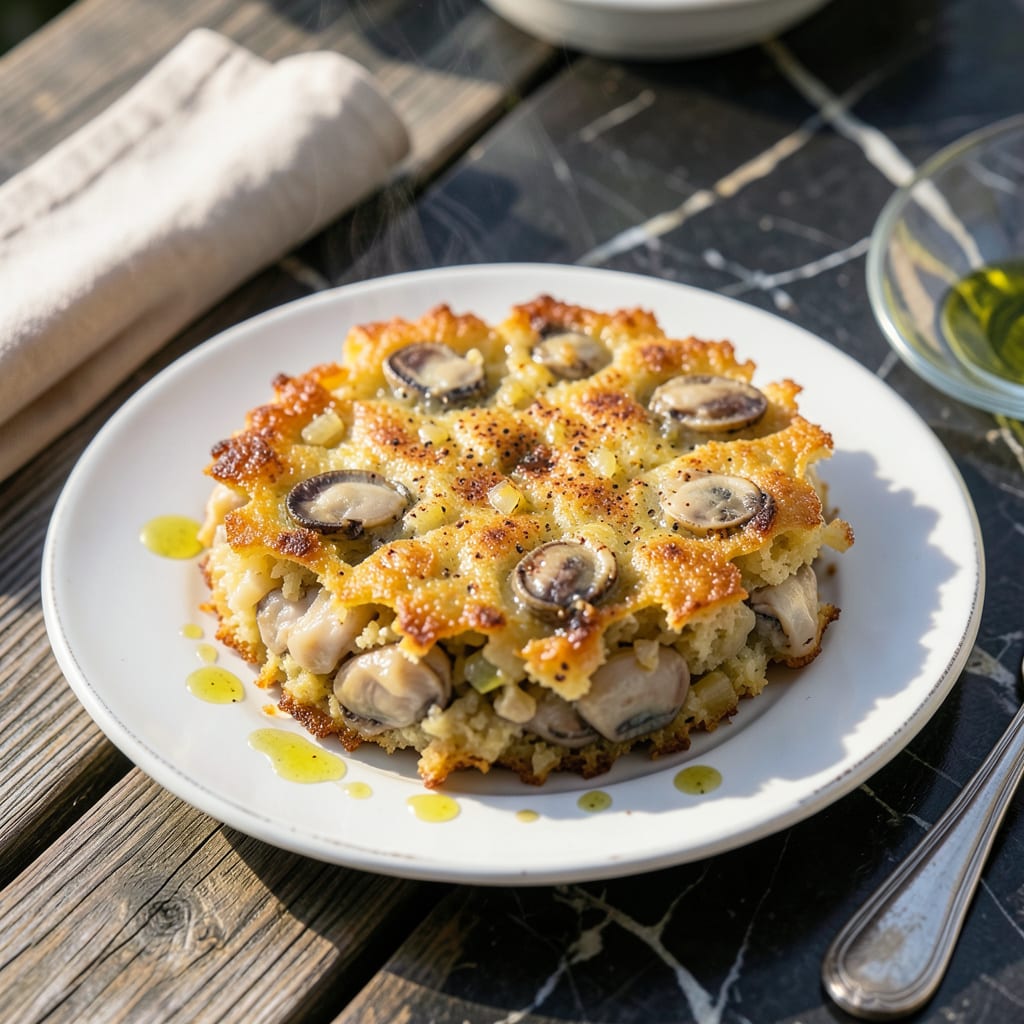
This Rocky Point-style clam cake recipe delivers the crispy, golden tradition of Rhode Island’s shore with every bite.
I’ve perfected the batter and frying method to ensure a light, airy interior and a shatteringly crispy exterior, just like the local favorites.
Ingredients for Clam Cake Recipe Rocky Point
Fresh clams, crisp batter, and Rhode Island flair come together for this shore tradition.
| Ingredient | Amount | Notes |
|---|---|---|
| Fresh Littleneck Clams 🦪 | 2 lb | Shucked, chopped, juice reserved |
| All-Purpose Flour 🌾 | 2 cups | Sifted for light texture |
| Baking Powder 🧂 | 1 tbsp | For lift and airiness |
| Large Eggs 🥚 | 2 whole | Beaten, room temperature |
| Whole Milk 🥛 | ¾ cup | Cold, for crisp batter |
| Old Bay Seasoning 🌶️ | 1 tbsp | Authentic coastal flavor |
| Salt 🧂 | 1 tsp | Diamond Crystal preferred |
| Freshly Ground Black Pepper 🌶️ | ½ tsp | Coarse grind for texture |
| Minced Fresh Parsley 🌿 | 2 tbsp | For garnish and brightness |
| Minced Fresh Chives 🌱 | 1 tbsp | Optional, for color |
| Neutral Oil 🛢️ | 4 cups | For deep frying, 350-375°F |
| Finely Diced Yellow Onion 🧅 | ¼ cup | Sautéed for depth |
| Minced Garlic Cloves 🧄 | 2 cloves | Lightly cooked in batter |
The clams are non-negotiable—littlenecks are traditional for their sweet, tender meat. Source them from a trusted seafood market or specialty grocer like Whole Foods. Ensure they’re as fresh as possible (closed shells, ocean scent). The flour should be all-purpose, sifted to prevent dense cakes. For authentic flavor, Old Bay is the gold standard, though Zatarain’s works in a pinch.
No fresh clams? Canned chopped clams (with juice) are acceptable—drain but reserve the liquid for the batter. For a gluten-free version, swap the flour for a 1:1 GF blend. Out of Old Bay? Celery salt plus paprika approximates the profile. The milk can be substituted with buttermilk for extra tang, or thinned yogurt if that’s what you have.
Batter can rest 30 minutes before frying for optimal texture. Fry in batches to avoid crowding—keeps oil temperature steady. Leftovers (if any) hold 1-2 days in the fridge. Reheat in a 350°F oven for 10 minutes to restore crispness.
Why You’ll Love This Recipe
- One-Bowl Wonder: I dump everything—flour, eggs, milk, chopped clams—into one bowl, stir, and fry. No fancy steps, just crispy, golden clam cakes in minutes.
- That Ocean Bite: Fresh Littleneck clams shine here, giving each bite that briny, buttery taste that screams coastal New England.
- Beach Day Staple: Honestly, these are my go-to for picnics, potlucks, or even a quick dinner. They’re just as good cold the next day.
- Budget-Friendly Feast: A pound of clams stretches far with simple pantry staples, making this a low-cost way to treat a crowd.
Step-by-Step Instructions for Clam Cakes
This traditional method delivers that signature crispy exterior and tender interior every time.
Step 1: Prepare the Clams and Aromatics
Shuck the 2 lb fresh littleneck clams, reserving all the juice. Chop the clam meat into ¼-inch pieces—this ensures even distribution in the batter. In a small skillet, sauté the 0.25 cup finely diced yellow onion and 2 cloves minced garlic cloves in a splash of the reserved clam juice until translucent and fragrant, about 3-4 minutes.
Strain the clam juice through a fine-mesh sieve to remove any grit, then combine it with enough cold water to measure 1 cup total liquid. This step is crucial for that authentic briny flavor without any sandy texture. Set both the chopped clams and the liquid aside while you prepare the batter.
Step 2: Create the Light, Airy Batter
In a large bowl, whisk together the 2 cups all-purpose flour, 1 tbsp baking powder, 1 tbsp Old Bay seasoning, 1 tsp salt, and 0.5 tsp freshly ground black pepper. The baking powder is what gives these their signature lift and airy texture.
Make a well in the center and add the 2 whole large eggs and 0.75 cup whole milk. Whisk from the center outward until just combined—the batter should be thick but pourable. Fold in the sautéed onion and garlic mixture, then gently stir in the chopped clams. The batter will look slightly lumpy, but avoid overmixing to maintain a tender crumb.
Step 3: Heat the Oil to the Perfect Temperature
Pour the 4 cups neutral oil into a deep, heavy-bottomed pot or Dutch oven, filling it no more than halfway. Heat over medium-high heat until the oil reaches 360°F on a deep-fry thermometer. I always test the temperature by dropping in a small piece of batter—if it sizzles vigorously and rises to the surface immediately, the oil is ready.
Maintaining the correct temperature is critical. If the oil is too cool, the clam cakes will absorb excess oil and become greasy. If it’s too hot, the outside will burn before the inside cooks through. Adjust the heat as needed to keep the temperature steady between 350-375°F throughout frying.
Step 4: Fry to Golden, Crispy Perfection
Using a 2-tablespoon cookie scoop or measuring spoon, carefully drop portions of batter into the hot oil, working in batches to avoid overcrowding. Fry for 3-4 minutes, turning occasionally, until the clam cakes are deep golden brown on all sides and cooked through.
Transfer the fried clam cakes to a paper towel-lined plate or wire rack to drain. The internal temperature should reach 165°F if you’re using a thermometer, but you can also test one by breaking it open—the center should be fully set and moist, not doughy. Keep the finished clam cakes warm in a 200°F oven while you fry the remaining batches.
Step 5: Finish and Serve Immediately
Sprinkle the hot clam cakes with the 2 tbsp minced fresh parsley and 1 tbsp minced fresh chives for a burst of color and freshness. The herbs add a bright contrast to the rich, savory clam flavor.
Serve immediately while still hot and crispy. These are best enjoyed fresh out of the fryer, with a side of tartar sauce or lemon wedges for that classic Rhode Island experience. The contrast between the crispy exterior and the tender, clam-studded interior is what makes this dish a shore tradition.
Pro Tips For Making Clam Cake Recipe Rocky Point
- Chop Clams Fine: I learned this the hard way—if your Littlenecks aren’t minced to near-paste consistency, the cakes fall apart in the fryer. Pulse them in a food processor or take your time with a knife.
- Rest the Batter: After mixing, let it sit for 10 minutes before frying. The flour absorbs the milk and eggs better, which keeps the clam cakes from turning gummy in the middle.
- Skip Cold Oil: Sounds weird, but it works: start frying only when the oil hits 350°F. Drop a pinch of batter in—if it sizzles and floats immediately, you’re good.
- Drain on Rack: My grandmother swore by this, and she was right: use a wire rack, not paper towels, to drain the cakes. It keeps them crisp on all sides instead of steaming the bottoms.
Troubleshooting clam cake recipe rocky point
Oil Temperature Issues
If your clam cakes are absorbing too much oil, your oil is likely too cool. Use a thermometer to maintain 360°F throughout frying. If the cakes brown too quickly, the oil is too hot—lower the heat slightly. I always keep a ThermoWorks thermometer handy for precision. 🌡️
Dense or Gummy Cakes
Overmixing the batter is the usual culprit. Stir just until the dry ingredients are moistened—small lumps are fine. Also, ensure your baking powder is fresh; old leavening loses its potency. I test mine by dropping a bit in hot water—it should bubble vigorously.
Cakes Falling Apart
This often happens if the clams release too much moisture. Pat the chopped clams dry with paper towels before folding them into the batter. The reserved clam juice should be strained well to remove any grit, which can also cause structural issues.
Uneven Cooking
Frying in batches is key. Crowding the pot lowers the oil temperature, leading to uneven cooking. I use a Dutch oven and fry no more than 6-8 cakes at a time. Turn them occasionally for even browning on all sides.
Bland Flavor
Don’t skip the Old Bay—it’s essential for that authentic Rhode Island taste. If you’re out, mix 1 tsp celery salt with ½ tsp paprika and ¼ tsp black pepper as a substitute. Also, ensure your clams are fresh; their briny sweetness is irreplaceable. 💫
Greasy Aftertaste
Drain the fried cakes on a wire rack instead of paper towels to prevent steam from making them soggy. If they still taste greasy, your oil temperature was likely too low. Next time, heat the oil to 375°F before adding the batter.
Nutrition Facts
Frequently Asked Questions
What’s the best oil for frying?
Use a neutral oil with a high smoke point like vegetable or canola. Maintain 360°F for crisp, golden results. Avoid olive oil—it burns at frying temps.
Can I use canned clams?
Yes! Drain canned clams but reserve the juice for the batter. Pat them dry to prevent soggy cakes. Fresh is ideal, but canned works in a pinch.
How do I keep them warm while frying batches?
Place finished cakes on a wire rack in a 200°F oven. This keeps them crispy without overcooking. Serve immediately for best texture.
Why did my cakes turn out dense?
Overmixing the batter or old baking powder are common causes. Stir just until combined, and check your leavening’s freshness. Small lumps are fine!

- BBQ Sausage Recipe Oven: Smoky Depth Without the Grill - September 28, 2026
- BBQ Chicken Bowl Recipe Rice: Smoky Sweetness Over Fluffy Grains - September 28, 2026
- Beef Cutlet Recipe Ideas: Crispy Breaded Patties With Bold Seasonings - September 28, 2026