
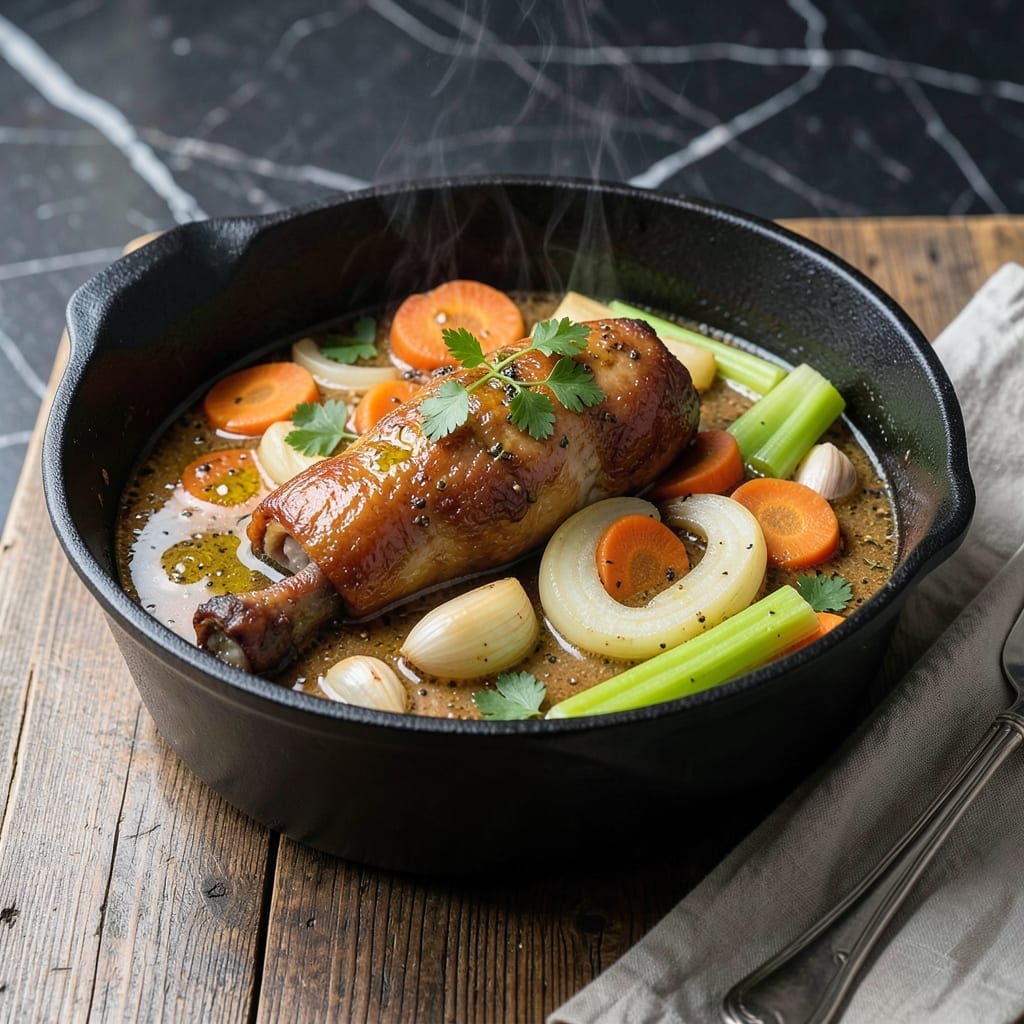
There’s a secret to building deep, rich flavor in soups and stews that most home cooks overlook. Turkey necks, when boiled properly, create a golden stock that forms the backbone of countless dishes.
This method transforms an often-discarded cut into liquid gold. Simmering the necks with aromatics extracts collagen and gelatin, resulting in a silky, full-bodied broth that store-bought versions can’t match.
You’ll end up with a versatile base that elevates everything from simple soups to complex braises. The slow simmering process coaxes out every bit of flavor, creating a stock that’s rich without being heavy.
Use this as your foundation for any recipe calling for poultry stock. The depth of flavor will speak for itself.
Ingredients for Turkey Neck Recipe Boiled
Transform humble turkey necks into a silky, golden stock with these aromatics and seasonings.
| Ingredient | Amount | Notes |
|---|---|---|
| Turkey Necks 🦃 | 2 lb | Fresh or thawed, trimmed of excess fat |
| Yellow Onions 🧅 | 2 whole | Quartered with skin on |
| Carrots 🥕 | 3 whole | Cut into large chunks |
| Celery Stalks 🌿 | 3 whole | Cut into large chunks |
| Garlic Cloves 🧄 | 6 cloves | Lightly crushed, unpeeled |
| Fresh Parsley Stems 🌿 | 1 cup | Tied together for easy removal |
| Bay Leaves 🍃 | 2 whole | Dried, whole leaves |
| Black Peppercorns 🌶️ | 1 tbsp | Whole, lightly crushed |
| Kosher Salt 🧂 | 1 tbsp | Diamond Crystal preferred |
| Cold Water 💧 | 4 cups | Or enough to cover by 2 inches |
| Apple Cider Vinegar 🍏 | 2 tbsp | For brightness and balance |
The turkey necks are the foundation—source them fresh from a butcher or grab frozen from Whole Foods. Look for necks with some cartilage and connective tissue, as these break down into collagen-rich gelatin during simmering. The onion skins add a gorgeous golden color (don’t peel them), and organic carrots and celery ensure a clean, pure flavor in the final stock.
No turkey necks? Chicken necks or wings work in a pinch, though the flavor will be less robust. Missing fresh parsley stems? Dried thyme or rosemary sprigs can substitute—just tie them in cheesecloth. The vinegar might seem odd, but a splash brightens the stock considerably. If you’re out of apple cider vinegar, white wine vinegar or lemon juice works too.
Stock keeps 5 days refrigerated in airtight containers or 6 months frozen. Skim off any fat after chilling—it solidifies at the top for easy removal. Strain and cool before storing to preserve freshness.
Why You’ll Love This Recipe
- Set It & Forget It: Honestly, just toss the turkey necks, onions, and veggies in a pot and let them simmer—no babysitting required.
- Rich & Hearty: The garlic and slow-cooked turkey necks make a broth so deep, I end up sipping it straight from the pot.
- Meal Prep Star: I make a big batch on Sunday and use it for soups, stews, or over rice all week.
- Budget Winner: Turkey necks are cheap, and this stretches into multiple meals—my wallet notices.
Step-by-Step Instructions for Turkey Neck Stock
This method ensures a rich, flavorful stock with minimal effort and maximum depth.
Step 1: Prepare the Aromatics and Turkey Necks
Begin by rinsing the 2 lb Turkey Necks under cold water and patting them dry with paper towels. Trim any excess fat if necessary, though a small amount adds richness to the final stock.
Quarter the 2 whole Yellow Onions with the skin on—this adds a beautiful golden hue and depth of flavor. Cut the 3 whole Carrots and 3 whole Celery Stalks into large, uniform chunks. Lightly crush the 6 cloves Garlic Cloves without peeling to release their aroma while keeping them intact for easy removal later.
Step 2: Combine Ingredients and Cold Water
Place the turkey necks in a large stockpot. Add the prepared onions, carrots, celery, and garlic. Tie the 1 cup Fresh Parsley Stems together with kitchen twine for easy retrieval, then add them to the pot along with the 2 whole Bay Leaves.
Add the 1 tbsp Black Peppercorns and 1 tbsp Kosher Salt. Pour in the 4 cups Cold Water, ensuring the ingredients are covered by about 2 inches. The cold start is crucial—it allows impurities to rise to the surface for easy skimming.
Step 3: Simmer Gently for Maximum Flavor Extraction
Bring the mixture to a boil over medium-high heat, then immediately reduce to a gentle simmer. Skim off any foam or impurities that rise to the top during the first 15-20 minutes. This step ensures a clean, clear stock with pure flavor.
Add the 2 tbsp Apple Cider Vinegar—this helps extract calcium and other minerals from the turkey necks, resulting in a more nutrient-rich stock. Maintain a low simmer, uncovered, for 3-4 hours. You’ll know it’s ready when the turkey necks are falling apart and the liquid has reduced slightly, concentrating the flavors.
Step 4: Strain and Finish the Stock
Carefully strain the stock through a fine-mesh sieve into a large bowl or another pot, pressing gently on the solids to extract all the liquid. Discard the solids—they’ve given all their flavor to the stock.
Let the stock cool slightly, then skim off any fat that rises to the surface if you prefer a leaner finish. For immediate use, the stock is ready as is. For storage, transfer it to airtight containers once fully cooled. This stock will keep in the refrigerator for up to 5 days or in the freezer for 3 months.
Pro Tips For Making Turkey Neck Recipe Boiled
- Skim the Foam: As the turkey necks simmer, a layer of foam will rise to the top—skim it off with a spoon every 10-15 minutes for a cleaner, more flavorful broth.
- Parboil First: I learned this the hard way—start by boiling the necks alone for 10 minutes, then drain and rinse. It removes impurities that can make your broth cloudy.
- Keep the Lid Ajar: Resist the urge to seal it tight; leave the lid slightly cracked to let steam escape and prevent the broth from turning murky.
- Smash the Garlic: Instead of mincing, just smash the cloves with the side of your knife—it releases more flavor into the broth with zero extra effort.
Storing and Reheating Leftovers
Refrigerator Storage
Let this stock cool completely before transferring to airtight containers—I prefer glass jars with tight lids. Store in the fridge for up to 5 days. The flavors deepen overnight, making it even better for soups or braises. ❄️
Freezer Storage
For longer storage, freeze in quart-sized freezer bags or silicone molds. Lay bags flat to save space and freeze for up to 3 months. Leave 1-inch headspace to prevent expansion issues.
Stovetop Reheating
Gently reheat on medium-low heat in a saucepan until it reaches 165°F. Stir occasionally to prevent hot spots. Add a splash of water if it reduces too much.
Microwave Reheating
Microwave in 1-minute intervals at 50% power, stirring between each. Cover with a damp paper towel to retain moisture. This method works best for small portions.
Reviving Frozen Stock
Thaw overnight in the fridge or submerge the sealed bag in cold water for 30-60 minutes. Never thaw at room temperature. Once thawed, reheat using either stovetop or microwave methods.
Fat Removal Tip
After chilling, the fat solidifies at the top—simply scrape it off with a spoon. For a clearer stock, avoid stirring while reheating to prevent reincorporating the fat. 💡
Nutrition Facts
Frequently Asked Questions
How long should I simmer the necks?
Simmer them for 3-4 hours on low heat. This slow process extracts collagen and rich flavor from the bones, creating a silky, full-bodied stock that can’t be rushed.
Can I use frozen turkey necks?
Yes, but thaw them completely first in the fridge for 24 hours. This ensures even cooking and prevents the stock from becoming watery or diluted.
Why is vinegar added to the stock?
The 2 tbsp apple cider vinegar helps break down the bones, pulling out calcium and minerals for a more nutrient-rich, flavorful broth. It also balances the richness.
What if my stock turns cloudy?
Cloudiness usually means impurities weren’t skimmed early. Next time, start in cold water and skim foam during the first 15-20 minutes for a clearer result.

- BBQ Sausage Recipe Oven: Smoky Depth Without the Grill - September 28, 2026
- BBQ Chicken Bowl Recipe Rice: Smoky Sweetness Over Fluffy Grains - September 28, 2026
- Beef Cutlet Recipe Ideas: Crispy Breaded Patties With Bold Seasonings - September 28, 2026