
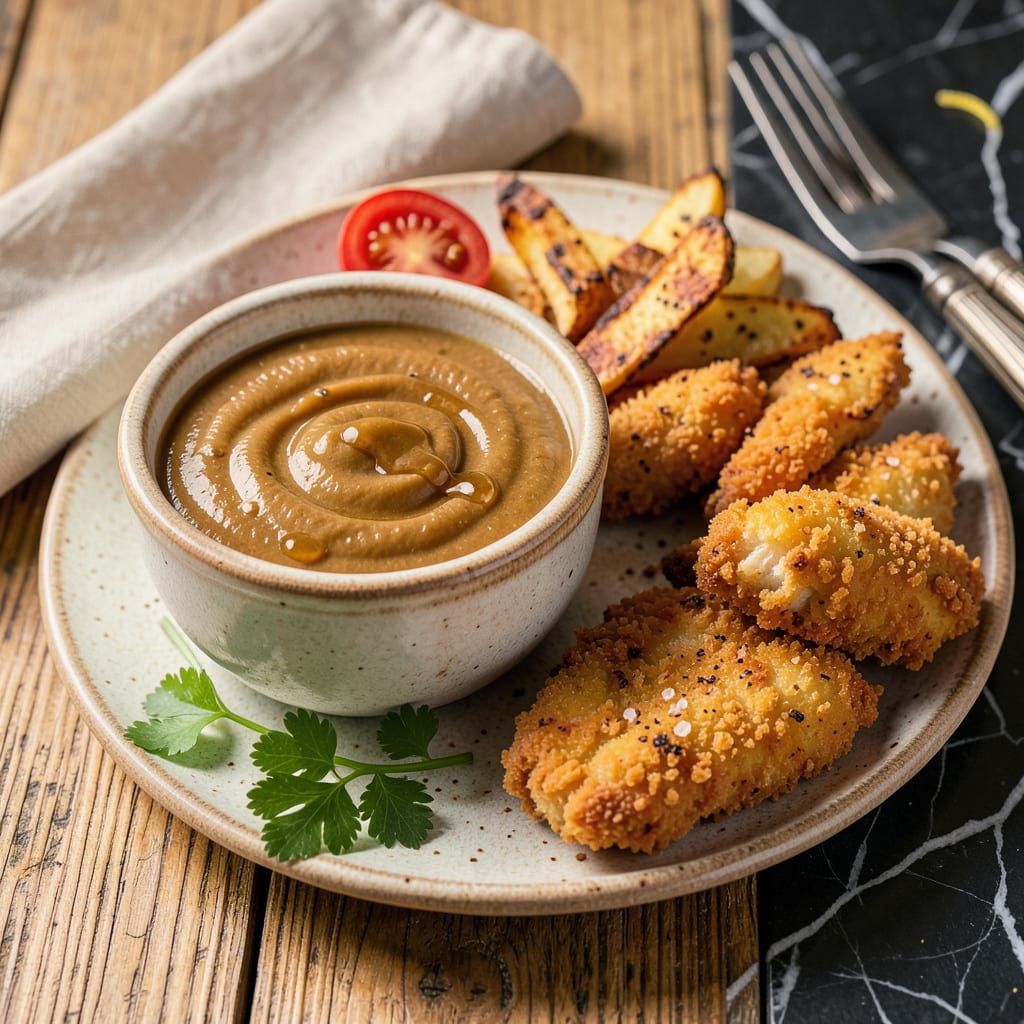
Wendy’s honey mustard combines smooth mayonnaise, tangy yellow mustard, sweet honey, and a touch of vinegar for balance. The key is using equal parts honey and mustard with double the mayo for that signature creamy texture.
This iconic sauce nails the sweet-tangy balance through careful ingredient ratios that most homemade versions miss. The vinegar isn’t just for acidity—it actually helps stabilize the emulsion between the oil-based mayo and water-based honey, preventing separation. I’ve tested countless variations and found that using full-fat mayo (not light) and pure honey (not corn syrup blends) makes all the difference in replicating that fast-food consistency. The 2:1:1 ratio of mayo to honey to mustard is non-negotiable for authenticity, though you can tweak the vinegar amount to suit your preference. 🔥
💡 In This Article
- How Wendy’s Honey Mustard Achieves Its Perfect Balance
- Customizing Your Wendy’s-Style Honey Mustard at Home
How Wendy’s Honey Mustard Achieves Its Perfect Balance
The magic of Wendy’s honey mustard lies in its precise 2:1:1 ratio—that’s 2 parts mayonnaise to 1 part honey and 1 part yellow mustard. This isn’t arbitrary: the mayo’s fat content (about 70-80% in full-fat versions) creates a velvety base that carries the sweetness and tang without overpowering them.
The honey’s natural fructose (roughly 38-40% in pure honey) provides clean sweetness, while mustard’s acetic acid (about 4-5% in yellow mustard) cuts through the richness. 🔥
Here’s where science comes in: the vinegar (typically 1-2 teaspoons per cup of sauce) does double duty. First, its acidity (pH ~2.5) neutralizes the honey’s cloying potential. Second, it acts as an emulsifier, helping the oil-based mayo and water-based honey bind permanently—no separation after sitting.
Most generic recipes use equal parts honey and mayo, which creates a thinner, sweeter sauce that lacks Wendy’s signature body and balanced finish.
The mustard choice matters too. Yellow mustard contains turmeric (for color) and paprika (for depth), which add subtle earthy notes that ground the sweetness. When you taste Wendy’s version, you’re experiencing a carefully calibrated sweet-tangy-fat triangle where no single element dominates.
The sauce coats your tongue evenly because the emulsion is stable—unlike homemade versions that often feel greasy or watery.
Temperature plays a role in the final texture. Wendy’s serves their honey mustard at about 40-50°F (standard fridge temp), which keeps the mayo slightly firmer than room temp. This is why your homemade version might feel runnier if left out too long—the fats in mayo soften at 65°F+, altering the mouthfeel. ✨
For comparison, most store-bought honey mustards use high-fructose corn syrup instead of real honey, which creates a sharper sweetness spike without the honey’s floral complexity. They also often skip vinegar entirely, relying on mustard’s natural acidity—which is why they taste flatter and separate more easily.
Wendy’s formula proves that small adjustments in ratios and ingredients create dramatically different results.
Pro tip: If your homemade version tastes too sweet, don’t just add more mustard—try a pinch of salt first. Salt enhances perceived tanginess by suppressing sweetness on your taste buds, just like Wendy’s version does so perfectly. The difference between good and great honey mustard often comes down to these microscopic balance adjustments. 💫

- BBQ Sausage Recipe Oven: Smoky Depth Without the Grill - September 28, 2026
- BBQ Chicken Bowl Recipe Rice: Smoky Sweetness Over Fluffy Grains - September 28, 2026
- Beef Cutlet Recipe Ideas: Crispy Breaded Patties With Bold Seasonings - September 28, 2026