
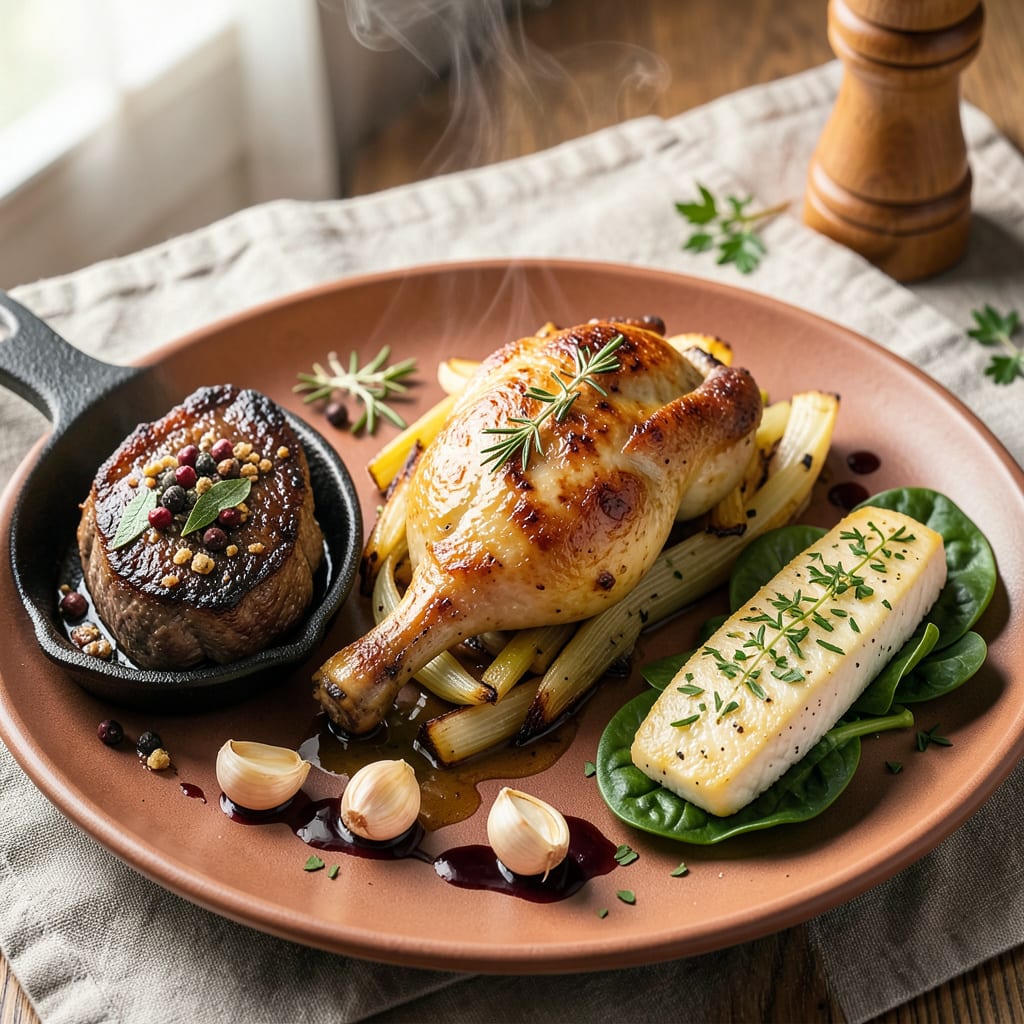
Thyme, oregano, or savory work best as rosemary substitutes, offering similar piney, earthy flavors. For a milder touch, try marjoram or sage in equal amounts. Fresh-for-fresh or dried-for-dried ratios ensure balanced taste.
When swapping herbs, the secret lies in matching the dominant flavor compounds. Rosemary’s signature piney sharpness comes from compounds like cineole and camphor, which thyme and oregano naturally share. This makes them seamless replacements in hearty dishes like braised lamb or roasted potatoes. 🔥
For delicate recipes where rosemary might overpower, I recommend sage or marjoram—they deliver warmth without the intensity. The 1:1 substitution rule works because these herbs have comparable volatile oil concentrations, ensuring your dish maintains its intended aromatic balance. ✨
💡 In This Article
- How Rosemary’s Flavor Profile Guides Substitute Choices
- Best Rosemary Substitutes by Dish Type
How Rosemary’s Flavor Profile Guides Substitute Choices
Rosemary’s distinctive taste comes from its complex chemistry—specifically terpenes like cineole (eucalyptus-like), camphor (cooling, medicinal), and pinene (fresh pine). These compounds create that bold, slightly minty sharpness we associate with Mediterranean cooking. When choosing substitutes, we need herbs that share these dominant terpenes to maintain the dish’s intended flavor architecture. 🔥
Thyme and oregano work beautifully because they contain similar terpene profiles. Thyme has 30-50% thymol (warm, slightly minty) and 10-20% cineole, mirroring rosemary’s piney notes. Oregano brings carvacrol (peppery, slightly bitter) that complements rosemary’s camphor undertones.
Both herbs deliver that earthy backbone without overpowering—use them in 1:1 ratios for roasted meats or vegetable dishes where rosemary’s intensity would shine.
For recipes needing a gentler approach, marjoram and sage offer balanced alternatives. Marjoram contains sabinene (woody, citrusy) that softens the piney edge, while sage’s thujone (herbaceous, slightly bitter) provides depth without sharpness. These work particularly well in breads, stuffings, or delicate sauces where rosemary might dominate.
The key is matching the herb’s volatile oil concentration—rosemary contains 1-2.5% essential oils, so substitutes should fall in this range for proper balance. ✨
The fresh vs. dried decision matters because drying concentrates these oils. Fresh rosemary is 60-70% water, so when dried, its oils become 3-5x more potent. This explains why dried thyme (with 2-3% essential oils) can replace dried rosemary measure-for-measure, but fresh substitutions may need adjustment.
Always crush dried herbs to release their oils fully—this simple step can double the flavor impact in your cooking. 💫
Consider the dish’s cooking method too. Rosemary’s oils are heat-stable up to 350°F, making it ideal for roasting. Thyme shares this heat tolerance, while more delicate herbs like basil or tarragon (with lower terpene stability) work better in quick-cooking or no-heat applications.
The science here is about flash points—higher-heat dishes need herbs whose aromatic compounds won’t break down prematurely. 🌟
An often-overlooked factor is the herb’s physical structure. Rosemary’s needle-like leaves release flavor slowly, which is why whole sprigs work well in long simmers. For substitutes, match the physical form: use whole thyme sprigs for soups, finely chopped oregano for marinades, and rubbed sage for quick sautés.
This ensures the flavor releases at the right pace throughout cooking. ⚡
Remember that regional pairing matters too. Rosemary thrives in Mediterranean cuisine because its terpenes complement olive oil’s fatty acids and garlic’s sulfur compounds.
When substituting, consider the entire flavor matrix—thyme pairs beautifully with lemon and olive oil just as rosemary does, while savory bridges well to dishes with beans or game meats where rosemary would traditionally appear. 💛

- BBQ Sausage Recipe Oven: Smoky Depth Without the Grill - September 28, 2026
- BBQ Chicken Bowl Recipe Rice: Smoky Sweetness Over Fluffy Grains - September 28, 2026
- Beef Cutlet Recipe Ideas: Crispy Breaded Patties With Bold Seasonings - September 28, 2026