
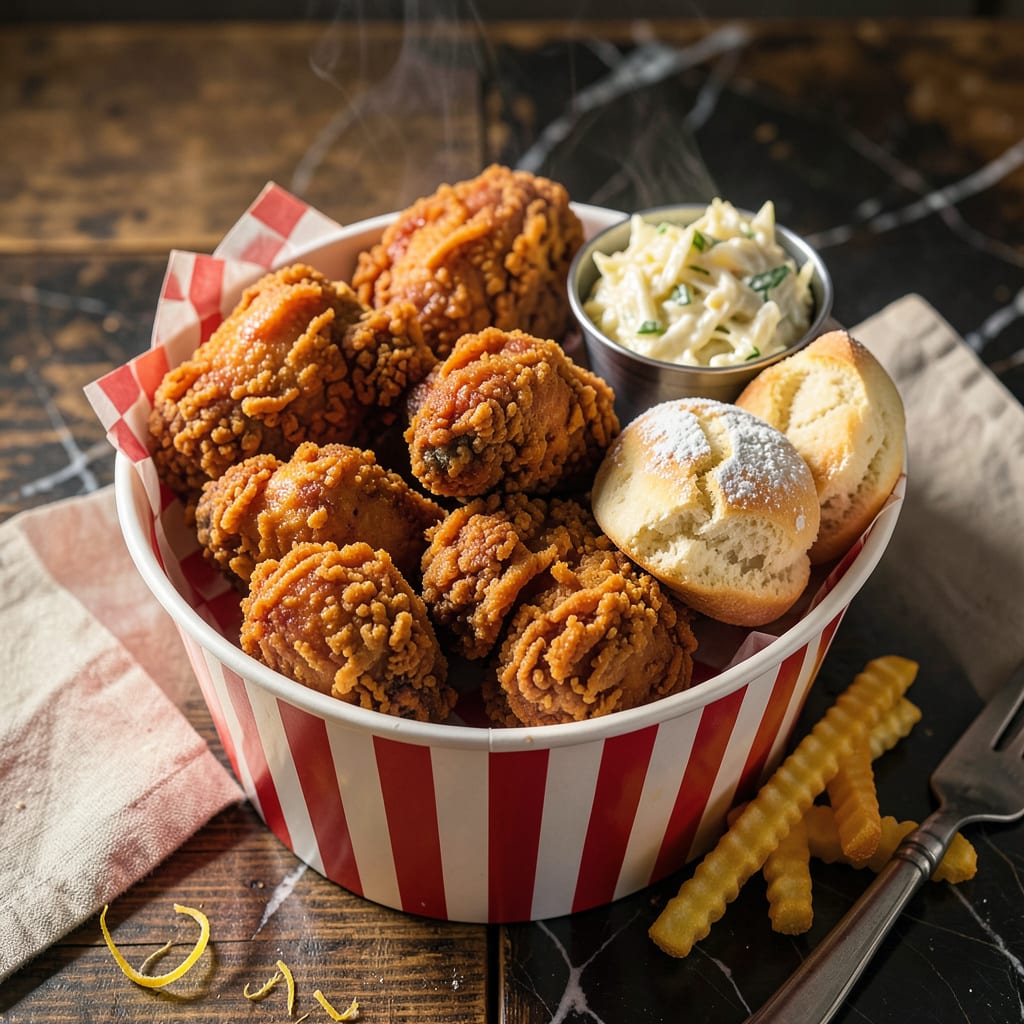
KFC’s original secret recipe is a blend of 11 herbs and spices, including salt, thyme, basil, oregano, celery salt, black pepper, dried mustard, ginger, paprika, garlic salt, and white pepper. The exact proportions remain closely guarded by the company.
This carefully balanced combination creates the iconic flavor profile that’s made KFC a global phenomenon since the 1950s. 🌟 What’s fascinating is how these common kitchen spices transform into something extraordinary through Colonel Sanders’ precise ratios and cooking method. The recipe’s secrecy isn’t just marketing—it’s a carefully maintained tradition that’s included legal battles, vaults, and even a handwritten copy locked in a safe.
Interestingly, the spices themselves aren’t rare, but their specific blend and application technique make all the difference. I’ve found that the magic happens in how they interact with the pressure-frying process, creating that unmistakable crispy exterior and juicy interior. This is why countless copycat attempts fall short—they might have the right ingredients but miss the critical preparation nuances.
💡 In This Article
- The History Behind KFC’s Famous 11 Herbs and Spices
- How to Recreate KFC’s Signature Fried Chicken at Home
The History Behind KFC’s Famous 11 Herbs and Spices
Colonel Harland Sanders didn’t invent his legendary blend overnight—it was perfected over years of trial and error in his gas station kitchen during the 1940s. The original recipe emerged from Sanders’ frustration with slow sales at his Corbin, Kentucky service station. He experimented with different spice combinations, testing them on travelers who stopped for gas.
The breakthrough came when he combined 11 specific herbs and spices that created a flavor profile both familiar and uniquely addictive. 🌟
The 1980s brought the recipe into the spotlight when KFC moved the handwritten formula to a high-security vault in Louisville. This wasn’t just marketing—the company took extraordinary measures, including splitting the recipe into two parts stored in separate locations. The spices themselves were sourced from two different suppliers who only knew half the formula each.
Even today, only a handful of executives know the complete proportions, with components mixed in separate facilities before final blending.
What makes this blend revolutionary is how ordinary ingredients create extraordinary results. The paprika provides color and mild sweetness, while celery salt and white pepper add depth without overpowering. The dried mustard and ginger introduce subtle heat that builds gradually.
Sanders’ genius was balancing these flavors so they complement rather than compete—creating a taste that’s immediately recognizable yet impossible to replicate exactly. ✨
The recipe’s cultural impact extends beyond fast food. It became a symbol of American ingenuity during the 1950s franchise boom, proving that carefully guarded secrets could build empires. The 1980s vault controversy even inspired legal battles when competitors tried to reverse-engineer the formula.
Today, the recipe represents more than just seasoning—it’s a piece of culinary history that transformed how the world experiences fried chicken.
Interestingly, the cooking method is just as crucial as the spices themselves. Sanders’ original pressure-frying technique at 350°F for 8-10 minutes creates a chemical reaction where the spices caramelize slightly, forming that signature crispy crust.
This is why copycat recipes often fail—they focus on ingredients but overlook how the high-pressure, high-temperature process fundamentally changes the flavor profile. 🔥
The recipe’s endurance proves its brilliance. While fast food trends come and go, KFC’s original blend has remained virtually unchanged since 1940. The company has introduced variations (like Extra Crispy or Nashville Hot), but the core 11-herb-and-spice formula stays sacred.
This consistency across decades—through ownership changes and global expansion—shows how Sanders’ original vision created something timeless rather than just trendy.
For home cooks attempting recreations, the biggest challenge isn’t sourcing the spices (most are kitchen staples) but achieving the right balance. Even a 1/8 teaspoon variation in white pepper or celery salt can dramatically alter the flavor.
The recipe’s true magic lies in how these common ingredients interact during the pressure-frying process, creating something greater than the sum of its parts. That’s why after 80+ years, no one has perfectly cracked the code. 💫

- Beef Cutlet Recipe Ideas: Crispy Breaded Patties With Bold Seasonings - September 28, 2026
- Bluefin Tuna Recipe Ideas: Sushi-Grade Seared and Sesame-Crusted - September 28, 2026
- Blue Zone Recipe Ideas: Longevity-Boosting Meals for Vibrant Living - September 28, 2026