
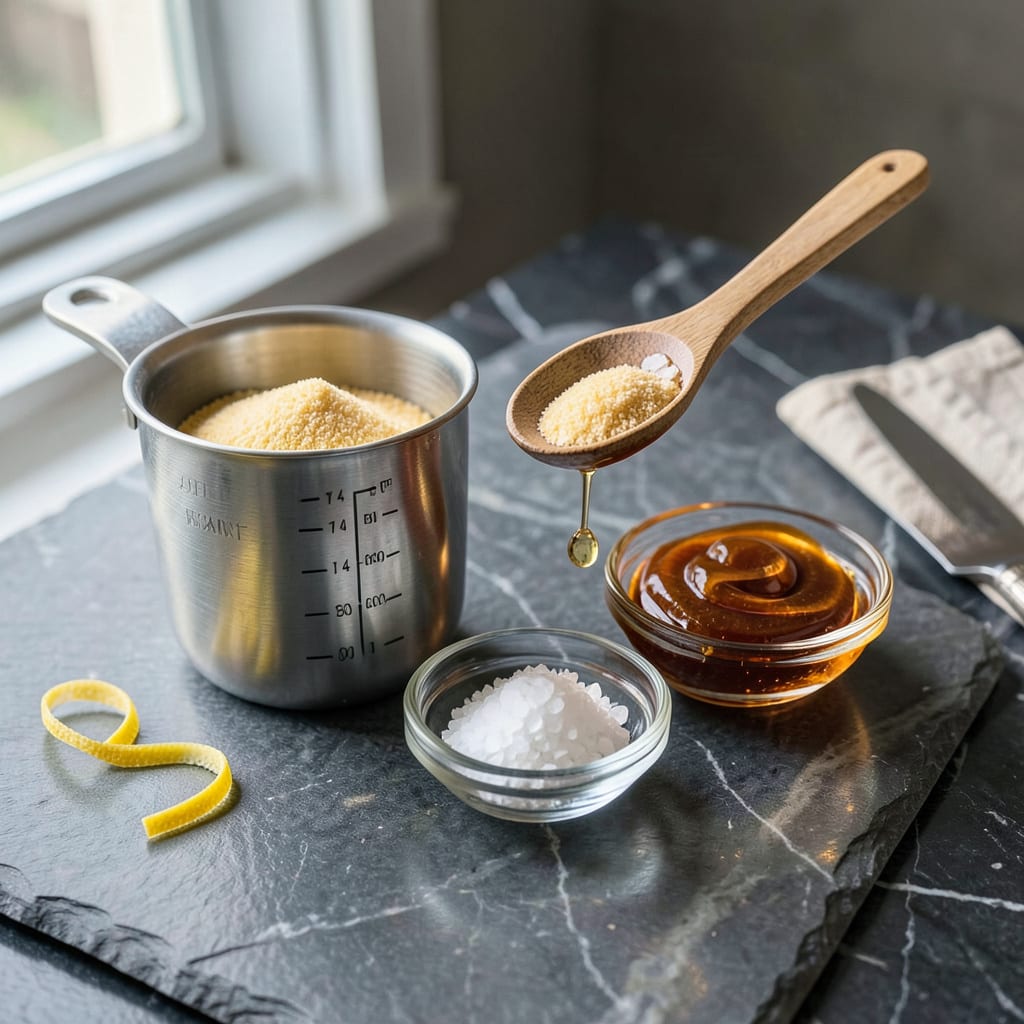
“Scant” in a recipe means slightly less than the stated amount—just under the full measurement. For example, a scant teaspoon is about ¾ of a full teaspoon, ensuring precision without overdoing an ingredient.
This subtle measurement technique plays a crucial role in baking and delicate dishes where ingredient ratios matter. 🔥 Think of it as a baker’s secret weapon—just enough to activate a reaction (like yeast or baking soda) without tipping the balance. I’ve found it particularly useful in recipes where moisture content or leavening agents need fine-tuning, like pie crusts or soufflés.
What’s fascinating is how this term bridges old-school cooking wisdom with modern precision. ✨ Traditional cooks used “scant” when measuring tools were less accurate, while today’s chefs rely on it for intentional under-measuring—especially with potent ingredients like salt or spices that can dominate flavors.
💡 In This Article
- Why Recipes Use “Scant” Instead of Exact Measurements
- How to Measure a Scant Amount Without Guesswork
Why Recipes Use “Scant” Instead of Exact Measurements
The term “scant” isn’t just old-fashioned terminology—it’s a deliberate technique to control chemical reactions in cooking. In baking, for instance, a scant teaspoon of baking soda (about 0.75 tsp) prevents over-leavening that could make cakes bitter or collapse. This precision matters because baking soda requires exact acid ratios to neutralize properly.
🔥 The difference between 1 tsp and 0.75 tsp might seem tiny, but it can mean the difference between a light, fluffy texture and a dense, soapy-tasting disaster.
Flavor balance also drives this practice. Potent ingredients like salt, vanilla extract, or spices can dominate a dish if overused. A scant tablespoon of soy sauce (roughly 2.25 tsp) in stir-fry preserves umami without overwhelming, while a full tablespoon might make the dish unpleasantly salty.
This technique shines in delicate recipes like custards or meringues, where even 0.125 tsp of extra vanilla can throw off the intended flavor profile. ✨ Traditional French pastry chefs swear by this method for macarons, where almond flour ratios affect both taste and structural integrity.
Historically, “scant” measurements originated when kitchen tools lacked precision. Before standardized measuring cups (invented in 1896), cooks relied on visual estimation—what we’d now call a scant cup was simply “not quite full.” Modern recipes preserve this term for ingredients where slight under-measuring improves results.
Consider pie crusts: a scant 1/4 cup of ice water (about 3 tbsp) creates flakier layers than a full 1/4 cup, because excess moisture develops gluten, making crusts tough. 💫
The science behind this involves molecular interactions. In caramelization, a scant 1/2 cup of sugar (approximately 0.4 cup) might prevent crystallization that occurs with full measurements. For yeast-based doughs, slightly less sugar (scant 1 tbsp instead of full) can slow fermentation just enough to develop more complex flavors without overproofing.
This level of control explains why professional bakers and chocolatiers still use this term—it’s about harnessing chemical processes, not just following instructions. ⚡
Environmental factors make “scant” particularly valuable. At high altitudes, where liquids evaporate faster, a scant measurement of liquid (about 10% less) compensates for reduced atmospheric pressure. Humid climates might require scant amounts of flour because moisture in the air affects dough hydration.
These adjustments prevent common baking failures like sunken cakes or gummy cookies—problems that often stem from following measurements too literally. 🌟
What most home cooks don’t realize is that “scant” often appears with ingredients that have exponential effects. A scant 1/8 tsp of cayenne (about 1/16 tsp) in chili adds warmth without heat overload, while a full measure might make it inedible.
Similarly, in cheese-making, a scant 1/4 tsp of rennet ensures proper curd formation without creating a rubbery texture. This isn’t just about being cautious—it’s about understanding how ingredients interact at a molecular level to create the perfect end result.
The term also serves as a buffer for ingredient variability. Natural products like honey or molasses can vary in density—what registers as 1 cup on a scale might actually be 1.2 cups by volume.
Calling for a scant cup accounts for these natural fluctuations, especially important in recipes where moisture content affects cooking times and textures. This is why you’ll often see “scant” in jam recipes or when working with fresh herbs, where water content can vary dramatically between batches.

- BBQ Sausage Recipe Oven: Smoky Depth Without the Grill - September 28, 2026
- BBQ Chicken Bowl Recipe Rice: Smoky Sweetness Over Fluffy Grains - September 28, 2026
- Beef Cutlet Recipe Ideas: Crispy Breaded Patties With Bold Seasonings - September 28, 2026