
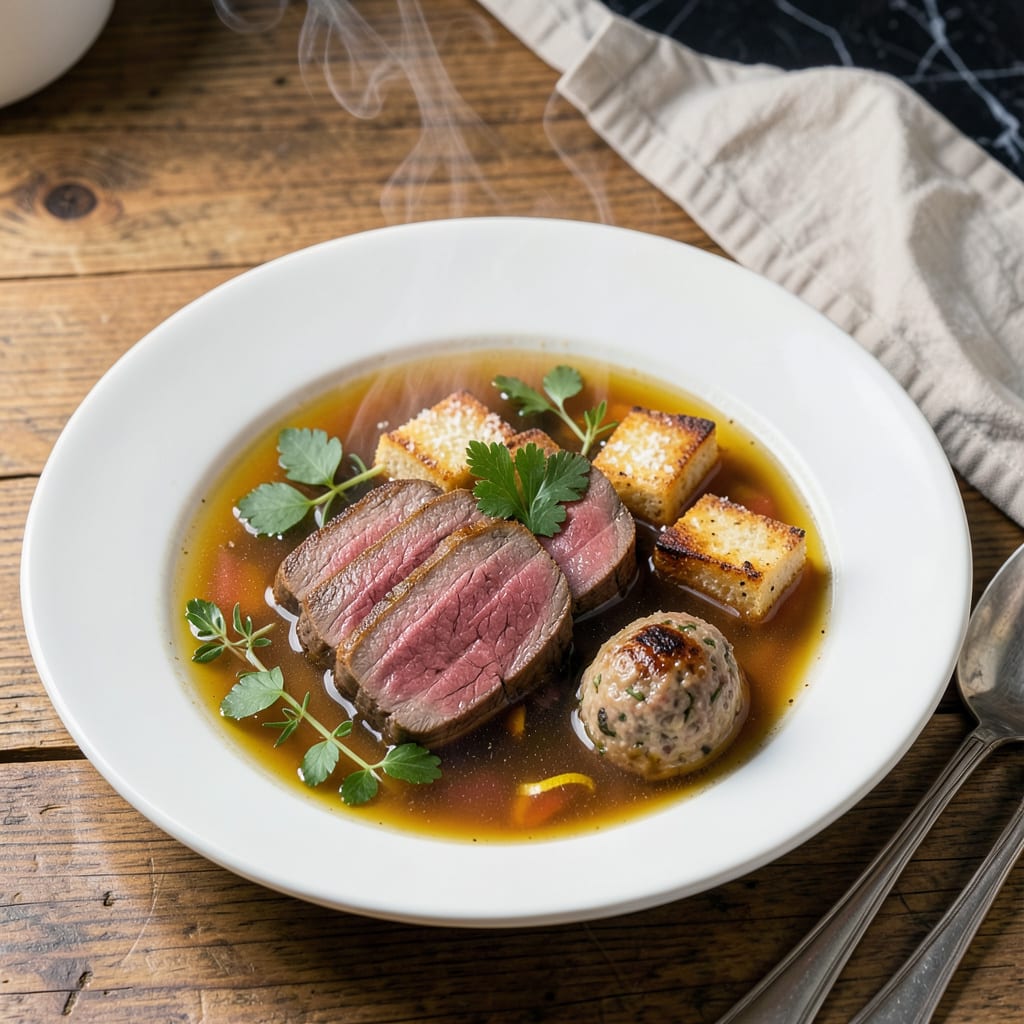
Beef base is a concentrated paste or powder made from cooked beef, vegetables, and seasonings. It dissolves in hot water to create rich beef broth or stock, adding deep umami flavor to soups, stews, gravies, and sauces without needing homemade stock.
Think of this as your secret weapon for building complex flavors in minutes. 🔥 Unlike bouillon cubes, beef base delivers a more concentrated punch—just 1 teaspoon can replace 1 cup of broth when properly diluted. I rely on it when I need to boost savory depth in dishes like braised short ribs or mushroom risotto, especially when time doesn’t allow for slow-simmered stock.
What sets it apart is the production process: real beef stock gets reduced with aromatics and spices, then dehydrated into that potent paste or powder. ✨ This means you’re getting actual meat essence rather than artificial flavors, though sodium levels can be high—so I always taste as I go.
💡 In This Article
- How Beef Base Is Made and Why It’s a Kitchen Staple
- Best Ways to Use Beef Base in Cooking (With Ratios)
How Beef Base Is Made and Why It’s a Kitchen Staple
The production process starts with real beef bones and trimmings that get simmered for hours to extract collagen and flavor compounds. This stock gets reduced by about 75% to concentrate the meaty essence, then blended with roasted vegetables (like onions, carrots, and celery) and spices.
The mixture is cooked down further before being dehydrated into either a thick paste or fine powder—this intense reduction is why just 1 teaspoon packs as much flavor as 1 cup of homemade broth. 🔥
What makes beef base superior to bouillon cubes is its ingredient quality and concentration. While bouillon typically contains more fillers and artificial flavors, premium beef bases use actual rendered beef fat and often include natural MSG (from ingredients like hydrolyzed wheat protein) to amplify umami.
The dehydration process preserves these compounds for up to 2 years in your pantry—far longer than fresh stock’s 3-5 day fridge life. ✨
The sodium content deserves attention: most commercial beef bases contain 1,000-1,500mg per teaspoon—about half your daily recommended intake. This high concentration means you can use less while achieving richer flavor, but it also requires careful seasoning.
I always dissolve the base in hot water first (never add directly to dishes) to control the salt intensity and prevent overpowering the final dish.
Chefs love beef base for its versatility in building layers of flavor. The Maillard reaction during stock reduction creates hundreds of aromatic compounds that bouillon cubes simply can’t replicate.
When you bloom the base in hot oil before adding liquids (a technique called “pincage”), these compounds caramelize further, adding incredible depth to pan sauces and braises. This is why professional kitchens always keep it on hand—it’s essentially instant fond development. 💫
For comparison, here’s how it stacks up against other beef flavorings:
- Beef bouillon cubes: 30-40% salt content, artificial flavors, 4-6 month shelf life
- Beef stock concentrate: 60-70% real ingredients, no MSG, 1 year shelf life
- Premium beef base: 80-90% real beef content, natural umami boosters, 2 year shelf life
The secret to using it well lies in proper dilution—always start with 1 teaspoon per cup of hot water and adjust from there. I’ve found this ratio works perfectly for everything from French onion soup to beef stroganoff, giving you restaurant-quality results with minimal effort.
The key is remembering that beef base is a flavor concentrate, not a seasoning—so treat it like you would a reduced demi-glace in professional cooking. ⚡

- Bluefin Tuna Recipe Ideas: Sushi-Grade Seared and Sesame-Crusted - September 28, 2026
- Blue Zone Recipe Ideas: Longevity-Boosting Meals for Vibrant Living - September 28, 2026
- Beefaroni Recipe With Tomato Soup: One-Pot Nostalgic Comfort - September 28, 2026