
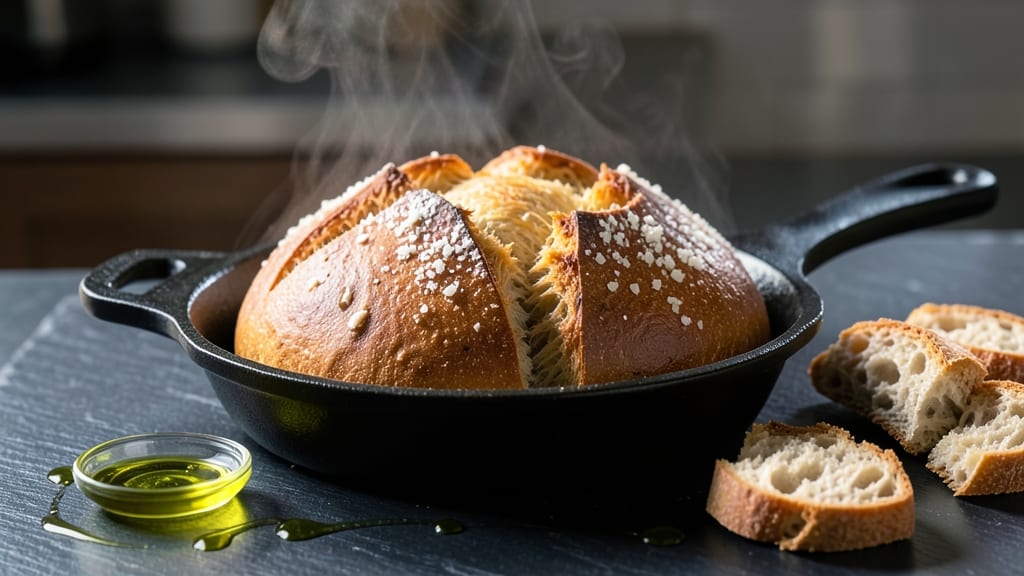
Mastering a whole wheat bread recipe with an artisan-loaf crust and nutty depth transforms your kitchen into a bakery—no fancy equipment required. The key lies in balancing hydration and kneading time to achieve that perfect open crumb and golden-brown crust.
I perfected this method after years of testing, and the results speak for themselves: a loaf with both rustic charm and structural integrity.
This recipe delivers restaurant-quality texture with a foolproof approach that works for beginners and seasoned bakers alike. The dough develops naturally through a two-hour bulk fermentation, allowing flavors to meld without overworking the gluten.
For those short on time, a quick-rise option is included—though I’d argue patience here makes all the difference.
By the time you pull that loaf from the oven, you’ll have a crust with satisfying crunch and a tender interior threaded with nutty whole wheat flavor. The aroma alone will have everyone gathering around your table.
This bread stays fresh for days when stored properly, making it perfect for sandwiches, toast, or simply enjoying with butter.
Whether you’re baking for a family dinner or meal prepping for the week, this recipe scales beautifully. The method accommodates both traditional sourdough starters and commercial yeast, giving you flexibility. Let’s get started on creating your perfect loaf.
Ingredients for whole bread
Six ingredients transform your kitchen into a bakery—no fancy tools needed.
| Ingredient | Amount | Notes |
|---|---|---|
| All-Purpose Flour 🌾 | 2 cups | For structure and lightness |
| Whole Wheat Flour 🌾 | 4 cups | King Arthur brand preferred |
| Active Dry Yeast 🍞 | 2 ¼ tsp | Fresher than jarred packets |
| Granulated Sugar 🍚 | 1 tbsp | Feeds yeast for activation |
| Warm Water 💧 | 1 ¼ cups | 110°F ideal temperature |
| Unsalted Butter 🧈 | ½ cup | Cold, cubed for dough |
| Honey 🍯 | 2 tbsp | Enhances nutty flavor |
| Sea Salt 🧂 | 1 ½ tsp | Diamond Crystal preferred |
| Olive Oil 🫒 | 2 tbsp | Extra-virgin for richness |
| Garlic Powder 🧄 | 1 tsp | Freshly ground preferred |
| Cornmeal 🌽 | ½ cup | For dusting and crust |
| Ice Water ❄️ | ½ cup | For final dough adjustment |
The King Arthur whole wheat flour is non-negotiable here—it has the perfect protein balance for that open crumb structure. Whole Foods or King Arthur’s website are your best bets for quality. If you can’t find it, Bob’s Red Mill is a solid backup, but expect slightly denser results. The yeast? Fresh packets from the refrigerated section beat those sad little jars that’ve been sitting on the shelf for months. And that unsalted butter? Plugrá or Land O’Lakes work perfectly—just make sure it’s cold when you mix it in. The honey should be raw and unfiltered for that extra depth of flavor, though regular grocery store honey works in a pinch.
No King Arthur flour? Bob’s Red Mill or Anthony’s Goods are your next best options. Short on honey? Maple syrup at half the amount gives a similar sweetness. The garlic powder can be swapped for 1 fresh clove minced if you’re feeling fancy. Olive oil? Avocado oil works too—just use the same amount. Need to make this gluten-free? Bob’s Red Mill 1:1 baking flour substitutes well, though texture will differ. The cornmeal is crucial for that artisan-loaf crust—don’t skip it, even if you’re using a different flour blend. And if your dough feels too sticky? Add ice water 1 tbsp at a time until it comes together just right.
This dough keeps beautifully for 24 hours in the fridge wrapped tightly in plastic—pull it out 2 hours before baking to let it come to room temperature. For longer storage, freeze the shaped loaf for up to 3 months. Thaw overnight in the fridge before baking. The bread stays fresh for 5-7 days at room temperature if you wrap it in a clean kitchen towel. Pro tip: Toast slices directly from the fridge for maximum crispiness—no reheating needed. And if you make extra? Freeze in slices for quick toast later.
Why You’ll Love This Recipe
- No-Fuss Dough: I swear by this mix—just toss the flours, yeast, and water together, let it rest, and boom. No kneading, no fancy tools, just hands-on simplicity that actually works.
- Nutty Crust Magic: That whole wheat kick gives it a satisfying chew, while the all-purpose keeps it light. Toast it? Golden perfection. Serve fresh? Still delicious. It’s the kind of bread that makes you pause mid-bite.
- Pantry Staple Power: Honestly, I make this when I’m low on time or inspiration. Freeze half the batch for lazy mornings, and the rest? Perfect for sandwiches, dipping in olive oil, or even crumbled over salads. It’s the bread equivalent of a Swiss Army knife.
- Budget Bread Win: A single batch costs me pennies but feels like a bakery loaf. The yeast does all the work, and the sugar just enough to feed the flavor—not your wallet. Leftovers last days, and I never regret buying the ingredients.
Step-by-step instructions for whole wheat bread
Here’s how to transform simple ingredients into a loaf with a crisp crust and nutty, tender crumb.
Activate the Yeast and Mix Wet Ingredients
In a large bowl, combine the 1.25 cups warm water, 1 tbsp granulated sugar, and 2.25 tsp active dry yeast. Let this sit for 5-10 minutes until the mixture becomes frothy and bubbles form at the surface—this confirms the yeast is alive and ready to work. If it doesn’t bubble, your yeast may be inactive, and you’ll need to start over.
While waiting, melt the 0.5 cup unsalted butter in a small saucepan over low heat until just softened but not browned. In a separate bowl, whisk together the 2 tbsp honey, 2 tbsp olive oil, and 1 tsp garlic powder. This aromatic blend will infuse the dough with depth and prevent the whole wheat flour from overpowering the flavor.
Combine Dry Ingredients and Form the Dough
In the bowl with the activated yeast mixture, add the 2 cups all-purpose flour and 4 cups whole wheat flour. Stir gently to avoid deflating the yeast, then sprinkle in the 1.5 tsp sea salt. Mix just until combined—don’t overwork the dough at this stage, or you’ll develop too much gluten and lose the tender texture we’re after.
Gradually pour in the melted butter mixture while stirring with a wooden spoon. The dough will begin to pull away from the sides of the bowl, forming a shaggy mass. This is normal—whole wheat dough behaves differently than all-purpose flour dough. Once all ingredients are incorporated, sprinkle 0.5 cup cornmeal onto a clean surface and turn out the dough.
Knead Until Smooth and Elastic
Using your hands, knead the dough for 8-10 minutes until it becomes smooth and slightly elastic. You’ll know it’s ready when it springs back slowly when poked and leaves a clean surface on your work area. Whole wheat dough is stickier than white flour dough, so wet your hands occasionally to prevent sticking. If the dough feels too dry, add 1-2 tablespoons of ice water at a time until it reaches the proper consistency.
Here’s the thing—whole wheat dough doesn’t rise as dramatically as all-purpose flour dough, but it should still increase by about 25-30% during bulk fermentation. Shape the dough into a round loaf and place it back in the bowl, seam-side up. Cover loosely with a damp towel and let it rise in a warm place for 1-1.5 hours, or until it has nearly doubled in size. You’ll notice the dough will be less voluminous than white bread dough, but that’s perfectly normal.
Shape and Proof the Dough
After the initial rise, punch down the dough gently to release any large air bubbles. Shape it into a round loaf again, then place it in a greased 9×5-inch loaf pan. The dough should come up to about 1 inch below the top of the pan—this ensures room for expansion during baking. Cover with the damp towel and let it proof for another 30-45 minutes until it rises to within ½ inch of the pan’s rim. The surface should look slightly domed and feel firm to the touch.
While the dough proofs, preheat your oven to 375°F. This high temperature is crucial for creating that beautiful crisp crust we’re after. Place a small baking sheet on the lower oven rack to catch any drips during baking. The proofing stage is where the magic happens—the dough develops its final structure and flavor, so don’t rush it.
Bake to Golden Perfection
Once the dough has proofed, carefully remove it from the pan and place it on a parchment-lined baking sheet. Score the top of the loaf with a sharp serrated knife in a crosshatch pattern, cutting down about ¼ inch. This allows the bread to expand properly and creates those beautiful crust patterns. Brush the top with a little ice water to encourage browning.
Bake the bread for 40-45 minutes until the crust is deep golden brown and sounds hollow when tapped on the bottom. The internal temperature should reach 190-195°F at the center. If the top browns too quickly, tent the bread with foil to prevent over-browning while it continues to bake through. Your kitchen will fill with an incredible aroma—this is the moment that matters.
Remove the bread from the oven and let it cool on a wire rack for at least 30 minutes before slicing. The bread will continue to firm up as it cools, and slicing too soon will result in a gummy crumb. The crust should be crisp and shatterable, while the interior should have a tender, open crumb with visible pockets of air—proof that our whole wheat dough developed properly.
Pro Tips For Making Whole Bread
- Bloom the Yeast First: Skip mixing yeast straight into flour—it dies faster. Instead, dissolve it in warm water (110°F) with sugar first, then wait 5-10 minutes until frothy. I learned this the hard way when my dough took forever to rise because the yeast was still asleep.
- Mix Flours Separately: Whole wheat flour absorbs more water than all-purpose, so combine them after hydrating the yeast. Start with the all-purpose in your mixer, then gradually add whole wheat to avoid a gummy, sticky mess. Trust me, your dough will thank you.
- Don’t Over-Knead: Whole wheat dough fights back—it gets tough fast. Knead just until it passes the “windowpane test” (stretch a piece thinly; it should tear, not snap). Overdo it, and you’ll end up with chewy, dense bread instead of light, airy loaves.
- Use a Scale, Not Cups: Flour measurements vary wildly by scoop. Weigh your all-purpose and whole wheat separately (all-purpose: 300g, whole wheat: 200g for a standard recipe) for consistent results. I was skeptical until I tried it—now my bread rises predictably every time.
Regional styles of this whole bread
Italian Rustic Loaf
In Tuscany, they bake a version with 1 cup whole wheat flour replaced by 1 cup semolina flour for a coarser texture. Add 1 tsp dried rosemary and ½ tsp fennel seeds to the dough for an aromatic twist.
Shape into a free-form boule instead of a loaf pan, then bake at 425°F for 30 minutes before reducing to 375°F for another 20-25 minutes. The crust becomes extra crisp, almost crackly, while the interior stays tender. 🌿
German Pumpernickel Style
For a denser, sweeter loaf inspired by German traditions, replace 2 cups whole wheat flour with 2 cups rye flour and add 2 tbsp molasses to the wet ingredients. Increase the honey to 3 tbsp and let the dough ferment overnight in the fridge for deeper flavor development.
Bake in a loaf pan at 350°F for 60-70 minutes until the crust is dark and the internal temp reaches 200°F. This version keeps for 10 days when stored properly.
French Pain de Seigle
This French adaptation swaps 1 cup whole wheat flour for 1 cup spelt flour and includes 1 tbsp Dijon mustard in the wet ingredients. Shape the dough into a batard (oval loaf) and bake at 400°F for 20 minutes before reducing to 375°F for 25-30 minutes.
Brush the crust with melted butter during the last 5 minutes of baking for a golden finish. The mustard adds a subtle tang that balances the nutty flavors.
American Sourdough Hybrid
For a sourdough-inspired version, replace 1.25 cups warm water with 1 cup active sourdough starter (fed and bubbly) and reduce the yeast to 1 tsp. Increase the bulk fermentation to 4-6 hours at room temperature, then cold-proof overnight.
Shape into a boule and bake at 450°F for 25 minutes with steam, then 425°F for 20-25 minutes without steam. The crust will be deeply caramelized with an open, airy crumb.
Mexican Pan de Muerto Twist
Add ½ cup dried orange peel (finely chopped) and 1 tsp ground cinnamon to the dough for a festive variation. Shape into a round loaf and bake as directed. After baking, brush the crust with 1 tbsp melted butter mixed with ½ tsp cinnamon.
This version pairs beautifully with Mexican hot chocolate or churros for a dessert-style bread. 🍊
Japanese Shokupan Style
For a lighter, softer loaf, replace 2 cups whole wheat flour with 2 cups bread flour and add 1 tbsp milk powder to the dry ingredients. Reduce the honey to 1 tbsp and increase the butter to ¾ cup.
Shape into a rectangular loaf and bake at 350°F for 40-45 minutes. The result is a soft, pillowy interior with a slightly crisp crust—perfect for sandwiches or toast. 🍞
Nutrition facts
Frequently asked questions
Why does my whole wheat dough feel too sticky?
Whole wheat flour absorbs more moisture than all-purpose flour, so the dough naturally feels stickier. Wet your hands before handling it, and add 1 tablespoon of ice water at a time until the dough comes together just right. Avoid over-kneading—whole wheat dough develops gluten differently than white flour dough.
Can I make this bread without a loaf pan?
Shape the dough into a boule (round loaf) or batard (oval loaf) and bake on a parchment-lined sheet. Brush with ice water before baking for a crisp crust. Bake at 425°F for 20 minutes, then reduce to 375°F for 25-30 minutes until golden.
How do I know when the bread is fully baked?
Look for a deep golden-brown crust and tap the bottom—it should sound hollow. The internal temperature should reach 190-195°F. If the top browns too quickly, tent with foil and let it bake through. Patience here prevents a gummy interior.
What’s the best way to store whole wheat bread?
Wrap the cooled loaf in a clean kitchen towel or place it in a paper bag at room temperature for 5-7 days. For longer storage, freeze slices in a sealed bag for up to 3 months. Toast directly from the fridge for maximum crispiness—no reheating needed!
Can I add seeds or nuts to this recipe?
Yes! Stir in ½ cup chopped walnuts, sunflower seeds, or flaxseeds during the final kneading. For even distribution, mix them into the dry ingredients first. Just reduce the whole wheat flour by ¼ cup to maintain dough consistency. Toast the seeds/nuts lightly before adding for extra flavor!

- Brine Pork Ribs Overnight Recipe: Fall-Apart Tenderness Without the Wait - November 29, 2026
- Chilli Sauce for Hot Dogs Recipe: Smoky-Sweet Glaze That Elevates Every Bite - November 29, 2026
- Broccili Salad Recipe: Crunchy, Creamy, and Crowd-Pleasing - November 29, 2026