
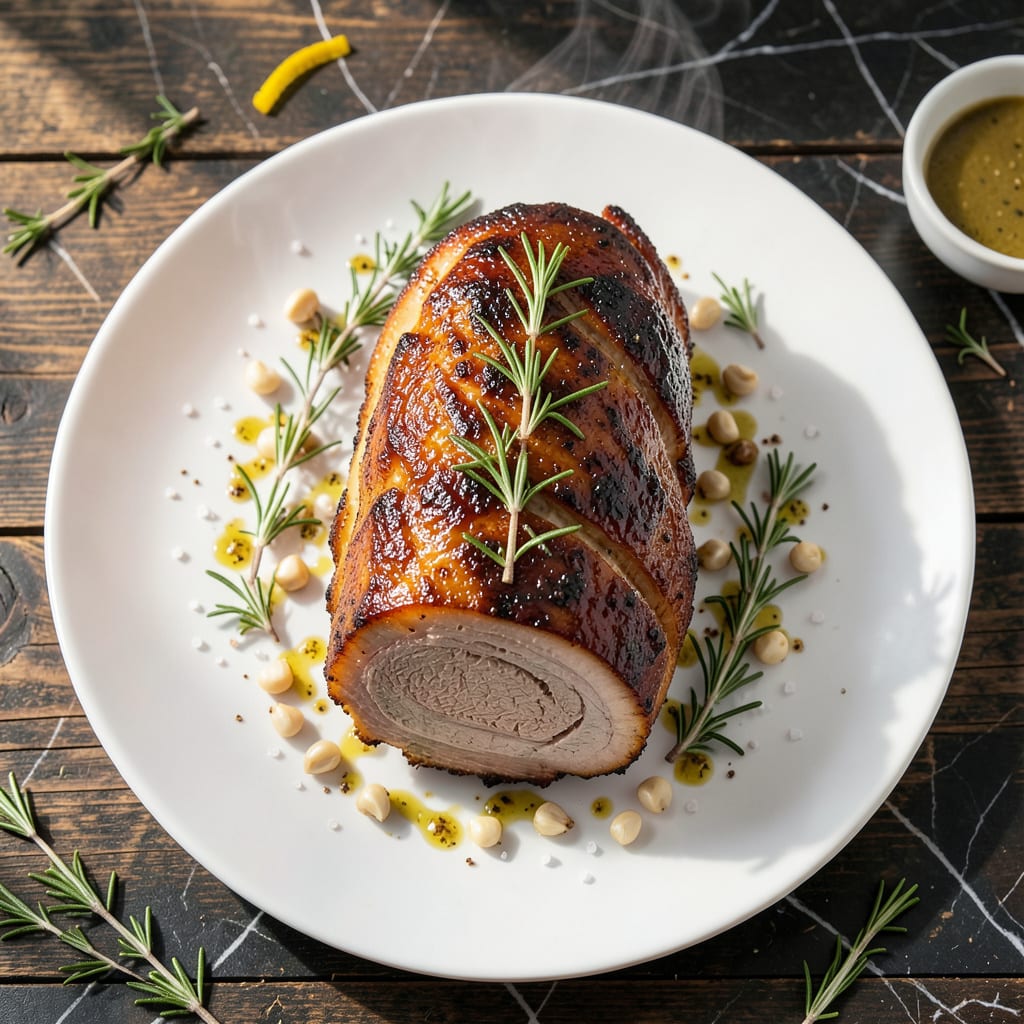
This herb-crusted pork loin transforms Sunday dinner into a centerpiece-worthy meal with minimal effort. The secret lies in a simple rub of fresh herbs and garlic that creates a fragrant crust as it roasts.
In about 2 hours, you’ll have tender, juicy pork with perfectly seasoned edges—ideal for serving family or guests. The aroma alone will have everyone gathering around the table early.
Ingredients for Whole Roasted Pork Loin
Sunday dinner just got an upgrade with this centerpiece-worthy pork loin and its aromatic herb crust.
| Ingredient | Amount | Notes |
|---|---|---|
| Pork Loin 🥩 | 3 lb | Boneless, center-cut preferred |
| Fresh Rosemary 🌿 | 2 tbsp | Finely chopped, stems removed |
| Fresh Thyme 🍃 | 2 tbsp | Leaves stripped from stems |
| Garlic Cloves 🧄 | 6 cloves | Minced for maximum flavor |
| Olive Oil 🫒 | ¼ cup | Extra-virgin for richness |
| Kosher Salt 🧂 | 2 tsp | Diamond Crystal preferred |
| Black Pepper 🌶️ | 1 tsp | Freshly ground for best results |
| Dijon Mustard 🟡 | 2 tbsp | Smooth, not whole grain |
| Dry White Wine 🍷 | ½ cup | For deglazing pan |
| Chicken Stock 🥣 | 1 cup | Low-sodium preferred |
| Unsalted Butter 🧈 | 2 tbsp | For basting finish |
| Yellow Onion 🧅 | 1 whole | Medium size, roughly chopped |
| Carrots 🥕 | 3 whole | Peeled and cut into chunks |
The pork loin is the star here. Center-cut, boneless gives you even cooking and that perfect crust-to-meat ratio. I get mine from Whole Foods—they always have great quality, and the butchers will trim it up for you if you ask nicely. Look for pieces with a nice fat cap (don’t trim it off!), about 3 pounds to feed a crowd. The fat renders down as it roasts, keeping everything juicy.
Out of fresh herbs? Dried at one-third the amount works, but you’ll lose some of that vibrant color and aroma. No white wine? Apple cider or extra stock with a splash of vinegar gets you close. For the Dijon, any smooth mustard will do—just avoid the sweet varieties. The butter at the end isn’t strictly necessary but adds a ridiculous amount of flavor (trust me on this one).
This reheats like a dream—tastes even better the next day. Carve and store in airtight containers for up to 4 days, or freeze slices for 3 months. The pan juices make an insane gravy if you’ve got the energy.
Why You’ll Love This Recipe
- Set and Forget: I rub the pork loin with olive oil, garlic, rosemary, and thyme, pop it in the oven, and walk away—no babysitting required.
- Sunday Dinner Vibes: That combo of crispy herb crust and juicy pork center? My family starts hovering near the kitchen an hour before it’s done.
- Feeds the Week: One roast, endless options—sandwiches, tacos, fried rice. Honestly, I make it on purpose just for the leftovers.
- Budget Hero: A pork loin feeds a crowd for less than fancy cuts, and those fresh herbs stretch across multiple meals.
Step-by-Step Instructions for Herb-Crusted Pork Loin
Here’s the method. Straightforward, tested, works every time for your Sunday roast.
Step 1: Prepare the Herb Marinade and Season the Pork
In a small bowl, combine the 0.25 cup olive oil, 2 tbsp Dijon mustard, 2 tbsp fresh rosemary, 2 tbsp fresh thyme, minced 6 cloves garlic cloves, 2 tsp kosher salt, and 1 tsp black pepper. Stir until the herbs and garlic are evenly distributed throughout the mixture.
Place the 3 lb pork loin on a clean work surface and pat it dry with paper towels. This ensures the marinade adheres properly. Rub the herb mixture all over the pork, pressing it into the meat so every surface is well coated. Let it sit at room temperature for 30 minutes to allow the flavors to penetrate.
Step 2: Sear the Pork for a Flavorful Crust
Preheat your oven to 375°F. While it heats, place a large oven-safe skillet or Dutch oven over medium-high heat. Add the pork loin and sear on all sides for 2-3 minutes per side until the surface is golden brown and a crust begins to form.
This searing step locks in juices and creates a rich, flavorful base for the pan sauce you’ll make later. Don’t rush it—you want a deep, even color on every side. If the pork starts to smoke, reduce the heat slightly.
Step 3: Roast with Aromatic Vegetables
Scatter the roughly chopped 1 whole yellow onion and 3 whole carrots (peeled and cut into chunks) around the pork in the skillet. Transfer the skillet to the preheated oven and roast for 45-60 minutes, or until the internal temperature reaches 145°F.
The vegetables will caramelize as they cook, adding sweetness and depth to the dish. Baste the pork with the pan juices every 15-20 minutes to keep it moist and ensure even browning. You’ll know it’s done when the meat is firm to the touch and the juices run clear.
Step 4: Rest and Make the Pan Sauce
Remove the pork from the oven and transfer it to a cutting board. Tent it loosely with foil and let it rest for 10-15 minutes. This resting period allows the juices to redistribute, ensuring the meat stays moist and tender when you slice it.
While the pork rests, place the skillet on the stovetop over medium heat. Add the 0.5 cup dry white wine and scrape up all the browned bits from the bottom of the pan. Let it simmer for 2-3 minutes until reduced by half, then stir in the 1 cup chicken stock and 2 tbsp unsalted butter. Simmer for another 3-4 minutes until the sauce thickens slightly.
Step 5: Slice and Serve
Slice the pork loin into ½-inch thick pieces and arrange them on a serving platter. Spoon the pan sauce and roasted vegetables over the top. The pork should be juicy and tender with a fragrant herb crust, and the sauce should be rich and glossy.
Serve immediately while the pork is still warm. This dish pairs beautifully with mashed potatoes or crusty bread to soak up the delicious sauce. The herb crust and caramelized vegetables make it a showstopper for any Sunday dinner.
Pro Tips For Making Whole Roasted Pork Loin
- Sear It First: Start with a hot pan to sear the pork loin on all sides—about 2-3 minutes per side—before transferring to the oven. I learned this the hard way after my first few roasts came out pale and lacking that deep, caramelized crust.
- Score the Fat: Use a sharp knife to make shallow cuts in the fat cap, about ¼-inch deep, so the rosemary, thyme, and garlic can penetrate deeper. Sounds tedious, but it actually changes the outcome by infusing more flavor into the meat.
- Skip the Cold Meat: Let the pork loin sit at room temperature for 30-45 minutes before roasting. After burning a few ends from uneven cooking, I finally figured out this simple step guarantees more even doneness.
- Rest Before Carving: Tent the roast with foil and give it a solid 10-15 minutes to rest after pulling it from the oven. My grandmother swore by this, and she was right: it keeps the juices locked in instead of pooling on the cutting board.
Make-Ahead Tips for This Recipe
Overnight Herb Marinade
For maximum flavor, prepare the herb mixture the night before. Combine 0.25 cup olive oil, 2 tbsp Dijon mustard, and all herbs in a bowl, then rub onto the pork. Cover and refrigerate for up to 12 hours. The flavors penetrate deeper with time. 💡
Prep Vegetables Early
Chop the 1 yellow onion and 3 carrots the morning of cooking. Store them in a sealed container in the fridge. This saves 10 minutes of prep when you’re ready to roast.
Room Temperature Pork
Take the pork out of the fridge 1 hour before cooking to ensure even roasting. This step prevents dry edges and ensures the center cooks perfectly. I set mine on the counter while preheating the oven.
Partial Cook Ahead
Sear the pork and start roasting, then pause cooking when it hits 120°F internal. Cool, refrigerate, and finish roasting the next day. Add 10-15 minutes to the total time.
Sauce Prep
Measure out the 0.5 cup white wine and 1 cup chicken stock ahead of time. Store in the fridge so they’re ready for deglazing. Cold liquid helps lift those flavorful browned bits.
Carving and Storage
Slice the pork only when ready to serve—it stays juicier whole. For leftovers, store sliced pork in airtight containers with some pan sauce for up to 4 days. 🍽️
Nutrition Facts
Frequently Asked Questions
What internal temperature should I aim for?
Remove from oven at 145°F internal temperature. It will rise to 150-155°F while resting. Use a meat thermometer for accuracy.
Can I use dried herbs instead of fresh?
Yes, use 1/3 the amount of dried. Fresh herbs provide better flavor and color, but dried work in a pinch.
How do I prevent dry meat?
Don’t skip the 30-minute marinade rest or the 10-15 minute post-roast rest. Baste every 15-20 minutes while cooking.
What if my pork has a fat cap?
Leave it on! The fat renders during roasting, basting the meat naturally. It crisps beautifully and adds flavor to the pan sauce.

- Beefaroni Recipe With Tomato Soup: One-Pot Nostalgic Comfort - September 28, 2026
- Bread Recipe KitchenAid Mixer: Foolproof Loaf With Perfect Rise - September 28, 2026
- BBQ Oysters Recipe Grill: Smoky Garlic Butter Bliss - September 28, 2026