
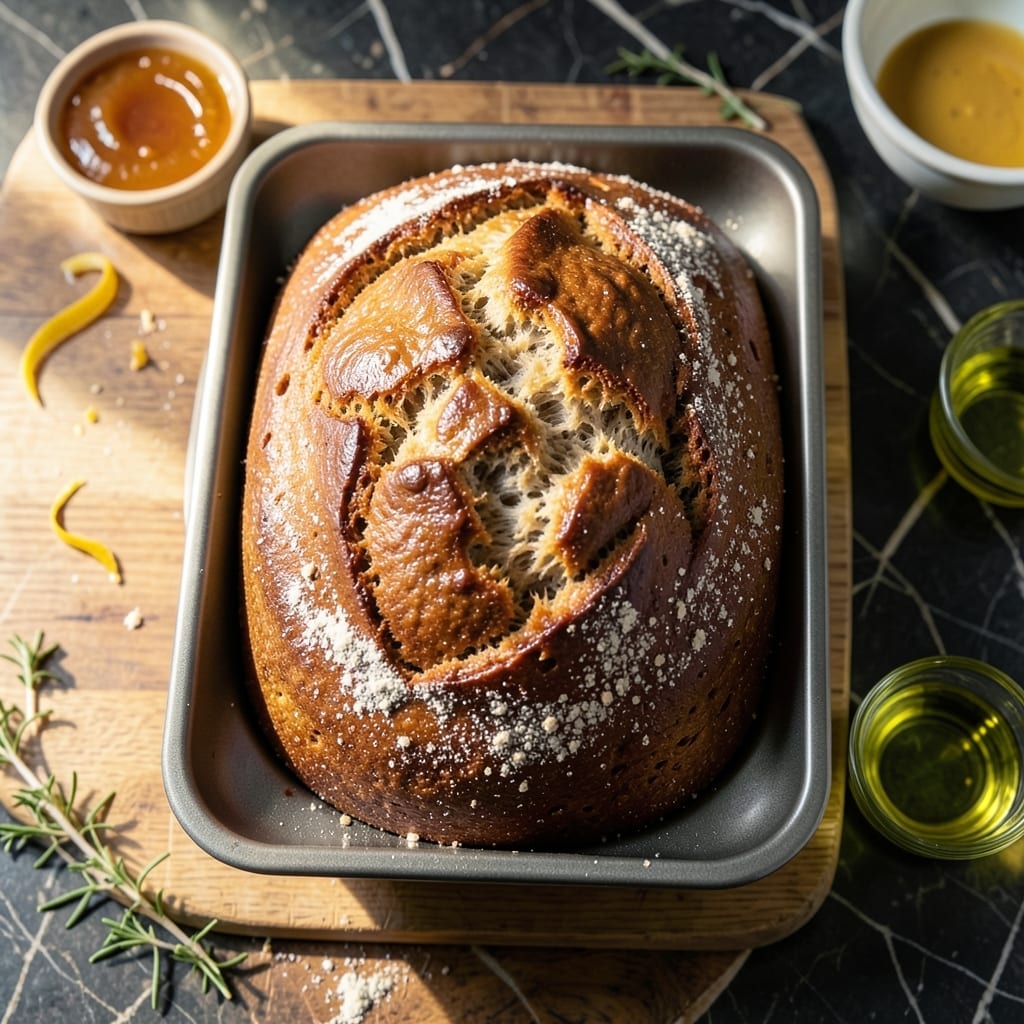
This bread machine recipe takes the guesswork out of whole wheat bread, delivering consistent results with minimal effort.
You’ll get a loaf with a nutty flavor and perfect texture, all while your machine handles the mixing, kneading, and baking.
Ingredients for Whole Wheat Bread Recipe for Bread Machine
Simple ingredients transform into that nutty, wholesome loaf you crave from the machine.
| Ingredient | Amount | Notes |
|---|---|---|
| Whole Wheat Flour 🌾 | 3 cups | Fine ground for best texture |
| Bread Flour 🌾 | 1 cup | All-purpose works in pinch |
| Water 💧 | 1 ¼ cups | Warm, about 110°F |
| Honey 🍯 | 3 tbsp | Maple syrup for vegan option |
| Olive Oil 🫒 | 2 tbsp | Mild flavor preferred |
| Active Dry Yeast 🍞 | 2 ¼ tsp | One packet, check expiration |
| Salt 🧂 | 1 ½ tsp | Fine sea salt preferred |
| Vital Wheat Gluten 🌾 | 1 tbsp | Improves rise and texture |
| Powdered Milk 🥛 | 2 tbsp | Non-fat variety works best |
| Butter 🧈 | 1 tbsp | Unsalted, softened |
| Cinnamon 🌿 | ½ tsp | Optional for warmth |
The flour ratio is key here. King Arthur whole wheat and bread flour give the best rise and crumb. I grab mine from Whole Foods bulk bins—cheaper and fresher. The yeast needs to be fresh (check the date on the packet), and warm water (not hot!) is critical. Too hot kills the yeast, too cold slows it down. 110°F is the sweet spot.
No honey? Maple syrup or agave work fine—use the same amount. Swap olive oil for melted butter if you prefer. For a lighter loaf, reduce whole wheat to 2 cups and add another cup of bread flour. The vital wheat gluten isn’t mandatory, but it helps with the rise (especially in humid weather). Bob’s Red Mill makes a good one.
Store flour in airtight containers to keep bugs out—lasts 6-12 months. Yeast keeps in the fridge for 4 months or freezer for 6 months. Once opened, use within a week for best results. The loaf freezes beautifully for up to 3 months.
Why You’ll Love This Recipe
- Set It & Forget It: I dump the ingredients in the bread machine, press start, and walk away—no kneading, no fuss, just fresh bread hours later.
- Warm Honey Sweetness: The honey adds just the right touch of natural sweetness that balances the nutty whole wheat flavor perfectly.
- Meal Prep Hero: I slice and freeze loaves to pull out for sandwiches or toast all week, so I’m never without good bread.
- Budget Friendly: A few pantry staples and my bread machine turn out a loaf that costs pennies compared to store-bought.
Step-by-Step Instructions for Whole Wheat Bread in a Bread Machine
This method ensures a perfect loaf with minimal effort and maximum flavor.
Step 1: Prepare and Measure All Ingredients
Begin by gathering all your components. I like to measure everything out first—this prevents mid-process scrambling. Use 3 cups Whole Wheat Flour, 1 cup Bread Flour, 1.25 cups Water warmed to about 110°F, 3 tbsp Honey, and 2 tbsp Olive Oil in separate prep bowls.
Also measure the dry ingredients: 2.25 tsp Active Dry Yeast, 1.5 tsp Salt, 1 tbsp Vital Wheat Gluten, 2 tbsp Powdered Milk, 1 tbsp Butter (softened), and 0.5 tsp Cinnamon. The warmth of the water activates the yeast, so ensure it’s not too hot—above 120°F can kill it.
Step 2: Layer Ingredients in the Bread Machine Pan
Insert the pan into your bread machine. Start with the wet ingredients: add the 1.25 cups Water, 3 tbsp Honey, and 2 tbsp Olive Oil to the bottom of the pan. The liquid creates a barrier that helps distribute heat evenly during kneading.
Next, add the dry ingredients in this order: 3 cups Whole Wheat Flour, 1 cup Bread Flour, 1 tbsp Vital Wheat Gluten, 2 tbsp Powdered Milk, 1.5 tsp Salt, and 0.5 tsp Cinnamon. Real talk: keep the salt and yeast separate at this stage—salt can inhibit yeast activation if they touch directly.
Finally, create a small well in the center of the flour and add the 2.25 tsp Active Dry Yeast. Place the 1 tbsp Butter in one of the corners. This layering ensures the yeast activates properly once the machine starts.
Step 3: Select the Correct Bread Machine Setting
Secure the pan in the bread machine and close the lid. Select the “Whole Wheat” or “Basic” setting on your machine, depending on the available options. If your machine has a crust control, I recommend choosing medium for this recipe—it balances a soft interior with a slightly firm crust.
Set the loaf size to 1.5 or 2 pounds, as this recipe makes a standard-sized loaf. Press start and let the machine do its work. The cycle will take approximately 3 to 4 hours, depending on your machine. You’ll hear the kneading begin within the first 10-15 minutes—this is your cue that everything is mixing properly.
Step 4: Monitor and Adjust as Needed
About 10 minutes into the kneading cycle, check the dough consistency through the machine’s window. It should form a smooth, slightly tacky ball. If it looks too dry, add 1-2 tablespoons of water. If it’s too sticky, sprinkle in 1-2 tablespoons of bread flour. Don’t overdo it—small adjustments make a big difference.
Resist the urge to open the lid frequently; temperature fluctuations can affect the rise. Trust the process. The machine will handle the kneading, rising, and baking automatically. You’ll know it’s in the baking phase when you start to smell that incredible, warm bread aroma.
Step 5: Cool and Slice the Bread
Once the cycle completes, the machine will typically switch to a “keep warm” setting. Let the bread cool in the pan for 5-10 minutes before carefully removing it. This brief rest helps the loaf set and makes it easier to handle.
Transfer the loaf to a wire rack and let it cool completely for at least 1 hour. I know it’s tempting to slice into it right away, but cooling ensures the texture is perfect and prevents a gummy crumb. When ready, slice with a serrated knife using a gentle sawing motion to maintain the loaf’s shape.
Pro Tips For Making Whole Wheat Bread Recipe For Bread Machine
- Warm the Water: Use lukewarm water around 110°F—too hot kills the yeast, too cold slows the rise. I learned this the hard way after a few dense loaves.
- Measure Flour Right: Spoon whole wheat flour into your measuring cup, then level it off—scooping directly packs it down and makes bread dense. Sounds tedious, but it works.
- Skip the Overflow: Never fill the bread machine pan more than 2/3 full—whole wheat dough expands more than you think. After my first overflow disaster, I now always leave room.
- Add Vital Wheat Gluten: Mix in 1 tablespoon of vital wheat gluten per cup of whole wheat flour if your loaf feels heavy. My grandmother swore by this, and she was right.
Dietary Considerations for This Recipe
Gluten-Free Adaptation
For gluten-free needs, replace the wheat flours with 3 cups gluten-free bread flour blend (I like King Arthur measure-for-measure). Add 1 extra tbsp xanthan gum to improve structure. The texture will be denser but still delicious. 🌾
Vegan Version
Swap the honey for 3 tbsp maple syrup and use vegan butter instead of regular butter. The powdered milk can be omitted or replaced with 2 tbsp almond flour for richness. No other changes needed!
Lower Sugar Option
Reduce or eliminate the honey by replacing it with 1 tbsp sugar or 1 tbsp monk fruit sweetener. The yeast still needs some sugar to activate, so don’t skip it entirely. I’ve had great results with 1 tbsp coconut sugar too.
Nut Allergy Considerations
This recipe is naturally nut-free, but always check your vital wheat gluten and flour labels. Some brands process in facilities that handle nuts. I use Bob’s Red Mill for guaranteed nut-free products. 💡
Dairy-Free Modifications
For dairy-free baking, replace the butter with 1 tbsp coconut oil and use unsweetened coconut milk powder instead of powdered milk. These swaps maintain the recipe’s moisture and richness without dairy.
High-Altitude Adjustments
At elevations above 3,500 feet, reduce yeast by ¼ tsp and increase water by 1-2 tbsp. The lower air pressure can cause bread to rise too quickly, so these tweaks help control the process.
Frequently Asked Questions
Can I use all whole wheat flour instead of mixing with bread flour?
You can, but the loaf will be denser. The bread flour adds gluten for better rise. For best texture, keep at least 1 cup bread flour in the mix.
Why does my bread collapse in the middle?
This usually means the yeast was old or the water was too hot. Always check yeast expiration and use 110°F water. Overproofing can also cause collapse, so don’t extend the cycle.
How do I get a softer crust?
Brush the top with melted butter or olive oil right after baking. Also, select the “light crust” setting if your machine has one.
Can I add mix-ins like nuts or seeds?
Add up to ½ cup of chopped nuts, seeds, or dried fruit when the machine beeps during the kneading cycle. Fold them in evenly for best distribution.
Nutrition Facts

- BBQ Sausage Recipe Oven: Smoky Depth Without the Grill - September 28, 2026
- BBQ Chicken Bowl Recipe Rice: Smoky Sweetness Over Fluffy Grains - September 28, 2026
- Beef Cutlet Recipe Ideas: Crispy Breaded Patties With Bold Seasonings - September 28, 2026