
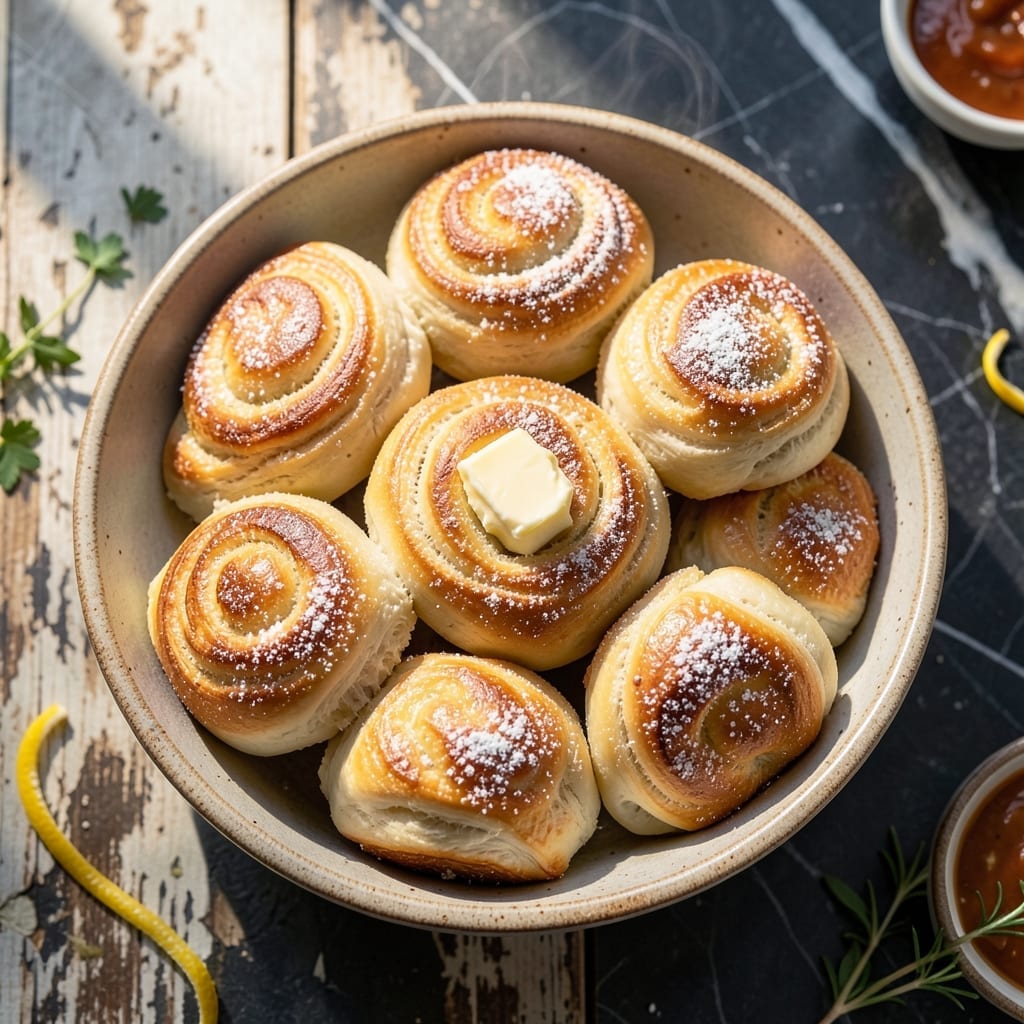
There’s nothing quite like the smell of warm, buttery yeast rolls fresh from the oven. This recipe delivers the soft, pillowy texture and rich flavor that define classic Southern baking.
With just a handful of simple ingredients and a little patience for proofing, you’ll create golden-brown rolls that pull apart into fluffy layers. The dough comes together smoothly, and the baking process fills your kitchen with an irresistible aroma.
These rolls are perfect for holiday dinners, Sunday suppers, or any meal that needs a touch of homemade comfort. Their tender crumb and buttery taste make them a staple worth mastering.
Serve warm with extra butter for the ultimate Southern experience.
Ingredients for Yeast Rolls Recipe Southern
Simple pantry staples and a touch of patience create these classic Southern rolls.
| Ingredient | Amount | Notes |
|---|---|---|
| All-Purpose Flour 🌾 | 4 cups | Plus extra for dusting |
| Active Dry Yeast 🍞 | 2 ¼ tsp | 1 packet, proofed in warm water |
| Granulated Sugar 🍚 | ¼ cup | For feeding yeast and sweetening dough |
| Whole Milk 🥛 | 1 cup | Warm, about 110°F |
| Unsalted Butter 🧈 | ½ cup | Melted and cooled, plus extra for brushing |
| Large Egg 🥚 | 1 whole | Room temperature for even mixing |
| Salt 🧂 | 1 ½ tsp | Fine sea salt preferred |
| Vegetable Shortening 🫒 | 2 tbsp | For extra tenderness |
| Honey 🍯 | 2 tbsp | Optional for slight sweetness |
The flour quality matters here. King Arthur or Gold Medal all-purpose gives the best structure for soft, pillowy rolls. Yeast freshness is non-negotiable—check the expiration date and store it in the fridge once opened. For the milk, whole milk produces the richest flavor and tenderest crumb, but 2% works in a pinch. Warm it gently—too hot kills the yeast, too cold won’t activate it.
No whole milk? 2% or even evaporated milk can substitute, though the texture may be slightly less rich. Butter must be unsalted to control the sodium level—Land O’Lakes or Kerrygold are reliable. Shortening adds flakiness, but if you’re out, use an equal amount of melted butter. Honey can be swapped for maple syrup or sugar if you prefer a less sweet roll.
Store yeast in the fridge or freezer for up to 6 months. Dough can rise overnight in the fridge for better flavor development. Baked rolls keep 3-4 days at room temperature in an airtight container, or freeze for up to 1 month.
Why You’ll Love This Recipe
- One Bowl Wonder: I mix everything right in the same bowl—no fancy equipment, just flour, yeast, and warm milk coming together effortlessly.
- Buttery Heaven: That rich whole milk and unsalted butter create a melt-in-your-mouth texture that’s pure Southern comfort.
- Holiday Staple: These rolls are my go-to for Sunday suppers, Thanksgiving, or just because it’s Tuesday.
- Budget Friendly: Flour, yeast, and milk stretch further than you’d think—feeds a crowd without breaking the bank.
Step-by-Step Instructions for Southern Yeast Rolls
Here’s the method. Straightforward, tested, works every time.
Step 1: Activate the Yeast
In a small bowl, combine the 2.25 tsp Active Dry Yeast, 0.25 cup Granulated Sugar, and 1 cup Whole Milk heated to 110°F. Stir gently and let sit for 5-10 minutes until the mixture becomes frothy and doubled in volume.
This proofing step is critical—if the yeast doesn’t foam, it’s inactive and your rolls won’t rise. Look for a bubbly, creamy head on the surface. If it doesn’t react, check your milk temperature (too hot kills yeast, too cold won’t activate it).
Step 2: Mix and Knead the Dough
In a large mixing bowl, whisk together the activated yeast mixture, 1 whole Large Egg, 0.5 cup Unsalted Butter (melted and cooled), 2 tbsp Vegetable Shortening, 2 tbsp Honey, and 1.5 tsp Salt. Gradually add the 4 cups All-Purpose Flour, one cup at a time, mixing until a shaggy dough forms.
Turn the dough onto a lightly floured surface and knead for 8-10 minutes until smooth and elastic. The dough should be soft but not sticky—add a tablespoon or two of extra flour if needed. You’ll know it’s ready when it springs back when poked gently with your finger.
Step 3: First Rise Until Doubled
Place the kneaded dough in a greased bowl, turning once to coat all sides. Cover with a clean kitchen towel and let rise in a warm, draft-free place for 1-2 hours or until doubled in size.
For best results, I like to place the bowl in an oven with the light turned on—this creates the perfect 80-85°F environment. The dough is ready for the next step when it has visibly doubled and a finger pressed into it leaves a slow-to-rebound indentation.
Step 4: Shape and Second Rise
Punch down the risen dough to release air bubbles. Turn it onto a floured surface and divide into 12 equal portions. Shape each portion into a smooth ball by rolling it between your palms, then place the balls in a greased 9×13-inch baking pan.
Cover and let rise again for 45-60 minutes until the rolls have puffed up and are nearly touching each other. They should look full and rounded, not flat. This second rise ensures those fluffy layers Southern yeast rolls are known for.
Step 5: Bake to Golden Perfection
Preheat oven to 375°F. Bake the risen rolls for 15-18 minutes or until the tops are golden brown and the internal temperature reaches 190°F.
Brush the hot rolls with additional melted unsalted butter immediately after removing from the oven. This adds shine and extra richness. Serve warm—they should pull apart easily with a tender, buttery interior.
Pro Tips For Making Yeast Rolls Recipe Southern
- Proof the Yeast: Always dissolve the active dry yeast in 110°F whole milk with a pinch of sugar first—if it doesn’t foam in 5-10 minutes, your rolls won’t rise. I learned this the hard way after wasting a batch.
- Use Room-Temp Butter: Softened unsalted butter blends into the dough evenly, but don’t microwave it—just set it out for 30 minutes. Cold butter tears the gluten, and melted butter changes the texture.
- Resist Over-Flouring: Add flour slowly when kneading; the dough should stick slightly to your fingers. Southern yeast rolls need that tender, slightly tacky consistency—too much flour makes them dense.
- Brush with Butter: Right after baking, coat the rolls with melted unsalted butter. My grandmother swore by this, and it keeps them soft for days—plus, it adds that classic Southern richness.
Troubleshooting This Recipe
Yeast Won’t Activate
If your yeast mixture doesn’t foam after 10 minutes, check the milk temperature first. It must be 110-115°F—any hotter kills the yeast, any cooler leaves it dormant. I always use a candy thermometer for accuracy. 🌡️
Dense or Flat Rolls
This usually means either underproofing or over-flouring. Let the dough rise until truly doubled—about 1-2 hours in a warm spot. During kneading, add flour sparingly; too much makes rolls tough. The dough should be slightly tacky, not dry.
Rolls Not Browning
Ensure your oven is fully preheated to 375°F before baking. If they still look pale, brush with extra melted butter before baking for better browning. A dark metal pan also helps achieve that golden crust.
Dough Overflows Pan
This happens when rolls are shaped too large or overproofed. Divide into 12 equal portions and leave space between them. If they double in size before baking, they’re ready. For extra insurance, use a 10×15-inch pan instead.
I learned this the hard way during my first Thanksgiving attempt!
Dry or Crumbly Texture
Overbaking is the most common culprit. Pull them out when they reach 190°F internal temperature. Also, weighing your flour can help—1 cup should be about 120 grams. Too much flour makes rolls dry and dense. 💡
Nutrition Facts
Frequently Asked Questions
Can I use instant yeast instead of active dry?
Yes! Skip the proofing step and mix instant yeast directly with dry ingredients. Reduce the amount by 25% since it’s more concentrated.
Why did my rolls turn out dense?
Underproofing or over-flouring are the usual culprits. Let dough rise until doubled, and add flour sparingly during kneading.
How do I store leftover rolls?
Keep in an airtight container at room temperature for 3-4 days. For longer storage, freeze for up to 1 month.
Can I make these ahead of time?
Shape the rolls, cover, and refrigerate overnight. In the morning, let them rise at room temperature for 1-2 hours before baking.

- Bread Recipe For Bread Machine: Hands-Off Artisan Loaf With Perfect Rise - September 30, 2026
- BBQ Chicken Drumsticks Recipe Air Fryer: Smoky Char in Half the Time - September 30, 2026
- Korean BBQ Sauce Recipe Homemade: Sweet and Spicy Umami Glaze - September 30, 2026