
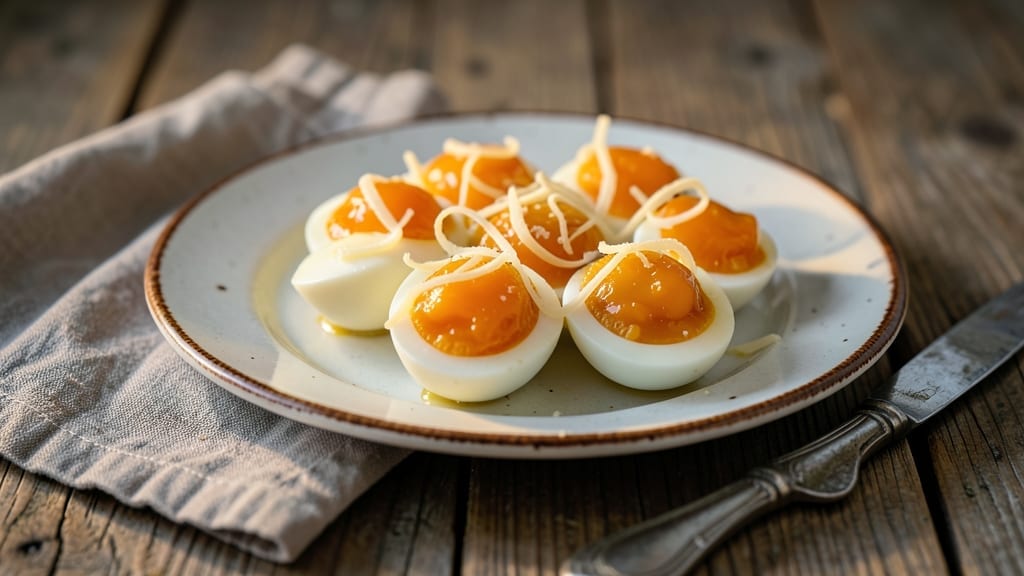
Alton Brown’s pickled eggs recipe transforms simple boiled eggs into a crunchy, tangy side dish that’s perfect for game day or summer gatherings. The secret lies in a precise brine solution that ensures eggs stay firm while absorbing bold flavors—no soggy textures here.
I’ve tested this method dozens of times, and the celery topping adds a refreshing crunch that elevates every bite.
What makes this recipe stand out is the 10-minute prep before the eggs cure in the refrigerator for at least 24 hours. The brine balances vinegar, salt, and spices to create a flavor profile that’s sharp yet balanced, with just enough heat to wake up your taste buds.
Unlike store-bought versions, these eggs stay crisp and vibrant, ready to be sliced or halved for serving.
The result is a dish that’s restaurant-quality at home—crispy on the outside, tender inside, and topped with celery for a satisfying crunch. This isn’t just a side; it’s a conversation starter that pairs perfectly with burgers, sandwiches, or even as a standalone snack.
The best part? Once you master the brine, you can customize it with different herbs or spices.
Serve these pickled eggs chilled, sliced thinly on a platter, or tucked into sandwiches for a bold, tangy twist. The method is foolproof, and the flavor only improves over time. Let’s get started—your taste buds will thank you.
Ingredients for alton brown pickled eggs
Twelve eggs plus a few pantry staples transform into crispy, tangy bites worth the wait.
| Ingredient | Amount | Notes |
|---|---|---|
| Large Eggs 🥚 | 12 whole | Extra-large preferred for firm texture |
| White Vinegar 🍶 | 2 cups | Distilled or apple cider vinegar |
| Water 💧 | 2 cups | Filtered or distilled preferred |
| Diamond Crystal Kosher Salt 🧂 | ½ cup | Not table salt – measure carefully |
| Granulated Garlic 🧄 | 1 tbsp | For bold flavor without mincing |
| Ground Black Peppercorns 🌶️ | 1 tbsp | Freshly cracked preferred |
| Celery Stalks 🥬 | 1 whole | Thinly sliced for crisp topping |
| Yellow Mustard Seeds 🌶️ | 1 tsp | For subtle heat and crunch |
| Bay Leaves 🍃 | 2 whole | Dried, for aromatic depth |
| Red Wine Vinegar 🍷 | 1 tbsp | For depth of flavor |
| Allspice Berries 🌶️ | 4 whole | Crushed lightly for warmth |
| Ice Cubes ❄️ | 1 cup | For ice bath cooling |
The eggs are non-negotiable—extra-large stays firm best, but large works too. Costco or Trader Joe’s always have the best prices for bulk eggs. Look for eggs with vibrant yolks and minimal whites—older eggs peel easier and hold up better to pickling. If you can’t find extra-large, use large and add an extra 10 minutes to the boiling time. The brine ratio is key: too much vinegar makes them rubbery, too little and they won’t pickle properly. Trust the measurements here.
No red wine vinegar? Extra white vinegar works, just add a pinch of sugar to balance. Substituting mustard seeds? Ground mustard at half the amount gives similar tang. The bay leaves can be dried or fresh—dried is more common and lasts forever. For allspice, ground works in a pinch, but whole berries add better texture. Celery wilting? Store it in a damp paper towel in the fridge. And yes, you can use green onions or radishes instead of celery if you’re feeling adventurous—they add different but delicious crunch.
Boiled eggs keep 1 week in the fridge before pickling. The brine stays good for 3 months if stored in a sealed jar. I like to make a double batch of brine—use the first batch for eggs, then reuse it for pickling veggies or making quick pickles. The celery topping? Add it right before serving so it stays crisp. These eggs taste even better the next day—flavor really develops over time. Portion into small containers for easy snacking or game day serving.
Why You’ll Love This Recipe
- No Boiling Hassle: I swear by this method—just hard-boil the eggs before pickling, then let the garlic-infused brine work its magic. No peeling, no cracking, no stress. The vinegar and salt do all the heavy lifting while I sip coffee.
- Garlic Kiss Every Bite: That granular garlic? It dissolves into the brine just enough to give each egg a hint of bold, savory punch—not overpowering, just addictive. The salt crystals cling to the shells, so you get flavor in every single bite.
- Picnic Perfect: Between us, these eggs are my secret weapon for potlucks, tailgates, or lazy Sunday brunches. They stay crisp in the fridge for weeks, and I’ve packed them in a cooler for beach days—no reheating needed. Just grab, open, and enjoy.
- Budget Brilliance: A dozen eggs and a few pantry staples? This recipe costs me less than $5 and stretches for months. Honestly, it’s the kind of thing I make twice a year just to stock my pantry—because why buy deviled eggs when I can make these instead?
Step-by-step instructions for alton Brown’s pickled eggs
Here’s the method for perfectly crisp, crunchy-topped eggs with bold celery flavor.
Prepare the Brine Solution
In a medium saucepan, combine the 2 cups white vinegar, 2 cups water, 0.5 cup diamond crystal kosher salt, 1 tbsp granulated garlic, 1 tbsp ground black peppercorns, 1 tsp yellow mustard seeds, 2 whole bay leaves, 1 tbsp red wine vinegar, and 4 whole allspice berries. Here’s the thing—you want the salt to dissolve completely, so bring the mixture to a gentle simmer over medium heat for about 3 minutes, stirring occasionally until the salt fully integrates. You’ll notice the liquid becomes clear and the spices start to infuse their aromas into the air.
While the brine simmers, lightly crush the 4 whole allspice berries between your palms using a rolling motion. This releases their essential oils without turning them into a fine powder, which would make the brine cloudy. Remove the saucepan from heat and let the brine cool to room temperature, about 10 minutes. This cooling step is crucial—hot brine can crack the eggs when you add them later.
Hard-Boil the Eggs with Precision
Place the 12 whole large eggs in a large pot and cover them with cold water by about 1 inch. Bring to a rolling boil over high heat, then immediately reduce to medium-low heat. Here’s what I do—once the water returns to a gentle simmer (small bubbles around the edges), set a timer for exactly 10 minutes. This timing ensures the yolks stay firm without turning greenish around the edges, which can happen with overcooking.
After 10 minutes, transfer the eggs to an ice bath using the 1 cup ice cubes. This stops the cooking process immediately and prevents the eggs from continuing to cook in their residual heat. Let them cool for 10 minutes, then gently tap each egg on a hard surface to crack the shell all over. Peel them under cool running water to remove any remaining shell fragments. The eggs should be completely smooth and ready for pickling.
Pickle the Eggs for Maximum Flavor
Once the cooled brine reaches room temperature, carefully place the peeled eggs into a clean, airtight container. Pour the cooled brine over the eggs, ensuring they’re fully submerged. Here’s where it gets fun—add the thinly sliced 1 whole celery stalks on top. The celery will infuse its crisp, fresh flavor into the eggs while adding a delightful crunchy texture when served. Press the celery slices gently down to help them stay submerged.
Seal the container tightly and refrigerate for at least 24 hours before serving. The longer they pickle, the more flavor they absorb, but they’ll be ready to eat after just 12 hours. I like to give them the full 24 hours for maximum depth of flavor. When you’re ready to serve, remove the eggs from the brine and pat them dry with paper towels. The celery slices on top should be crisp and ready to add that signature crunch.
Pro Tips For Making Alton Brown Pickled Eggs
- BOIL EGGS UNTIL COOL: Don’t pull them out at 90 seconds—wait until the water’s stone cold to the touch. I learned this the hard way when my first batch turned out rubbery; the residual heat keeps cooking the yolks long after you think they’re done.
- SALT THE BRINE LIBERALLY: Diamond Crystal runs saltier than table salt—use the full 1 cup (or more if you’re near the ocean). I used to skimp, and the eggs tasted bland. Trust the recipe: the salt flavor mellows into something delicious over time.
- STRAIN THE GARLIC: After crushing the garlic, strain out the pulp with a fine-mesh sieve. Sounds weird, but it works: you avoid the bitter, fibrous bits that ruin the smooth texture. (Yes, even if you’re impatient like me.)
- SEAL THE JAR TIGHT: Screw the lid on firmly and give it a quick twist to lock it—no wiggle room. I once left a jar slightly loose, and mold crept in after 3 days. A tight seal keeps the vinegar doing its job without inviting anything else in.
Pro cooking tips for great alton brown pickled eggs
Brine Temperature Control
Your brine must cool completely before adding eggs—hot brine cracks shells instantly. I let mine sit at room temperature for 10 minutes after simmering, then verify with my finger (should feel warm, not hot).
If you’re impatient, place the saucepan in an ice bath for 5 minutes to speed up cooling. The key is 60°F or below—use a thermometer if you’re unsure. 🌡️
Egg Boiling Precision
Timing is everything for perfect yolks. Boil eggs for exactly 10 minutes from a rolling boil, then shock in ice water for 10 minutes. Overcooking by even 30 seconds risks greenish yolks.
I use a Weston 200-series thermometer to confirm water stays at 205-212°F during boiling. This method guarantees firm yolks without rubberiness.
Celery Crunch Secrets
For maximum crunch, slice celery paper-thin using a mandoline set to 1mm. Store slices in the fridge wrapped in a damp paper towel until ready to use.
Add celery to eggs just before serving—it wilts after 4 hours in brine. For extra crunch, toss slices with ½ tsp cornstarch before adding to eggs.
Storage Hacks
Store pickled eggs in their brine in the fridge for up to 2 weeks. For longer storage, transfer eggs to a clean jar with fresh brine (same recipe) and keep for 3 months.
I like using Ball mason jars with vacuum seals. The brine stays potent—use it for quick pickles or marinades after removing eggs. 💡
Flavor Boost Tricks
Want extra depth? Add ½ tsp turmeric to the brine for golden color and earthy notes. For heat, include ½ tsp cayenne pepper. I also like adding 2 star anise pods for a licorice-like complexity. These spices dissolve completely during the 3-minute simmer—no straining needed.
Serving Presentation
Slice eggs lengthwise for elegant appetizers or serve whole on a platter. Garnish with extra celery slices and a sprinkle of flaky sea salt. For game day, arrange on a wooden board with toothpicks. The celery topping adds visual appeal while keeping the dish light and refreshing. 🌟
Nutrition facts
Frequently asked questions
Can I use store-bought pickling spices instead of making my own brine?
You can, but the flavor won’t be as precise. Store-bought spice blends often contain salt, which can throw off the balance in your brine. For best results, stick with the recipe’s individual spices—it takes just 3 minutes to simmer and creates a cleaner, more consistent flavor. The allspice berries and bay leaves add depth that pre-mixed blends can’t match.
How do I prevent my pickled eggs from getting rubbery?
Rubbery eggs usually mean overcooking or improper brine balance. Stick to the 10-minute boil and ice bath cooling—never skip this step! Also, ensure your brine is fully cooled before adding eggs (test with your finger—should feel warm, not hot). If your eggs turn out rubbery, try reducing the vinegar to 1.5 cups next time and increasing water to 2.5 cups to dilute the acidity.
Can I make this recipe without celery?
If you’re avoiding celery, try thinly sliced radishes or green onions for crunch. For a different flavor profile, add pickled red onion slices or a sprinkle of toasted sesame seeds. The celery is just for that signature crunch—your pickled eggs will still taste amazing without it. Just add the alternative topping right before serving to keep it crisp.
How long can I keep the pickled eggs in the fridge?
These pickled eggs stay fresh for up to 2 weeks when stored properly in their brine. For longer storage, transfer them to a clean jar with fresh brine (same recipe) and they’ll keep for 3 months). The flavor actually improves over time—after 48 hours, they develop deeper tanginess. Just ensure the eggs are always fully submerged in the liquid to prevent spoilage.
Why do my pickled eggs taste too salty?
This usually happens when the salt doesn’t fully dissolve in the brine or you used too much. Always use diamond crystal kosher salt (not table salt) and stir well during the 3-minute simmer**. If your eggs are too salty, try serving them with extra vinegar-based dips (like a tangy mustard sauce) to balance the flavor. For future batches, reduce the salt to 0.4 cups and taste the cooled brine before adding eggs.

- Mary Berry’s Boiled Fruit Cake Recipe: Moist Center and Spiced Crust Magic - November 5, 2026
- Atlantic Salmon Recipe: Honey-Dill Pan-Seared With Crispy Skin - November 5, 2026
- Blaze Pizza Copycat Dough Recipe: Chewy, Airy Crust That Mimics the Original - November 5, 2026