
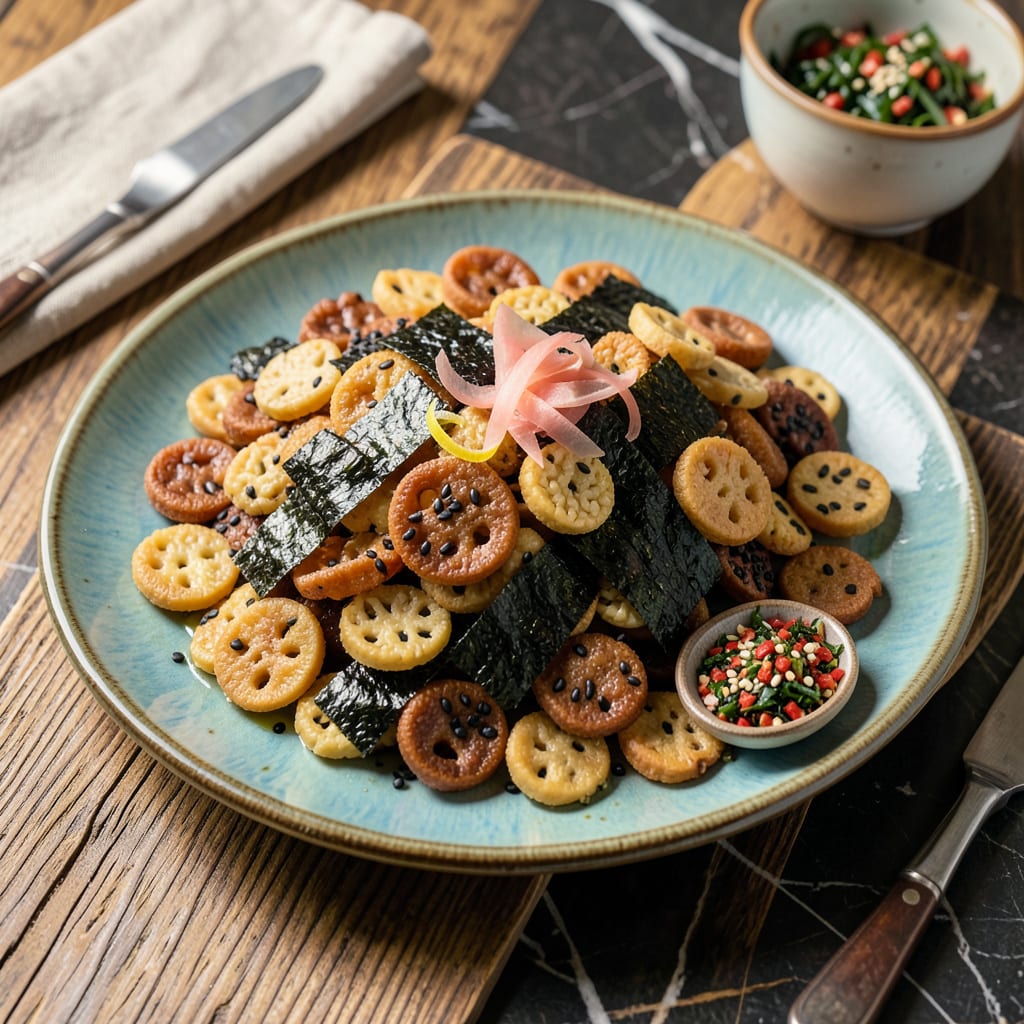
Arare are bite-sized Japanese rice crackers made by shaping glutinous rice dough into small pieces, deep-frying until crispy, and seasoning with soy sauce or nori. The key is using mochiko (sweet rice flour) and maintaining oil temperature at 320-340°F for even cooking.
This traditional snack gets its addictive crunch from the unique properties of glutinous rice flour, which creates a light yet sturdy structure when fried. 🔥 The frying process transforms the dough into airy pockets that shatter satisfyingly with each bite. What’s fascinating is how the seasoning application—whether it’s a delicate dusting of nori or a bolder soy glaze—completely transforms the flavor profile while maintaining that signature crispy texture.
I’ve found that the secret to perfect arare lies in the dough’s moisture balance and resting time before frying. The flour absorbs just enough liquid to become pliable but not sticky, while a short rest allows the gluten to relax for even expansion during cooking. This attention to detail is what separates homemade versions from store-bought alternatives.
💡 In This Article
- Traditional Techniques Behind Authentic Arare Texture
- Flavor Variations and Serving Ideas for Homemade Arare
Traditional Techniques Behind Authentic Arare Texture
The magic of arare’s signature crunch starts with mochiko flour, which contains 100% glutinous rice starch—unlike regular rice flour. This unique composition creates a dough that’s elastic yet firm, allowing it to expand dramatically during frying.
When the dough hits 320-340°F oil, the moisture inside instantly vaporizes, creating those iconic air pockets that give arare its light, crispy structure. 🔥
Moisture content is everything. The ideal dough contains about 28-32% water by weight—just enough to bind the flour without making it sticky. Too much water and the crackers become dense; too little and they won’t expand properly.
I’ve found that letting the dough rest for 20-30 minutes before frying allows the flour to fully hydrate, resulting in more uniform expansion and crispiness. ✨
The frying temperature isn’t arbitrary—it’s a precise balance. At 320°F, the exterior cooks quickly enough to form a crisp shell while the interior steams and expands. Go above 340°F and you risk burning the outside before the center cooks through.
The oil temperature also affects how much the crackers puff: lower temps create denser arare, while the sweet spot produces that perfect hollow crunch. 🌟
Here’s what most home cooks miss: the resting phase after shaping. Letting the cut dough pieces sit uncovered for 10-15 minutes before frying creates a slight skin that helps them hold their shape during the violent expansion in hot oil. This step is crucial for achieving that professional-looking uniform texture rather than misshapen blobs. ⚡
The seasoning application timing matters too. Traditional methods call for tossing the fried arare in seasoning while still warm (180-200°F), which helps flavors adhere better. Soy sauce-based seasonings caramelize slightly on contact, creating an extra layer of flavor complexity. For nori versions, the seaweed’s natural oils bloom when hit with residual heat, intensifying the umami.
💫
Pro tip: The ambient humidity in your kitchen affects the dough’s behavior. On humid days, you might need to reduce water by 1-2 teaspoons per cup of flour to compensate. The test? Press a piece of dough between your fingers—it should hold together but not stick.
This attention to environmental factors is what separates good arare from extraordinary ones. 💛
- Flour choice: Only mochiko (sweet rice flour) works—regular rice flour lacks the necessary elasticity
- Oil type: Neutral oils like canola or vegetable with 375°F smoke point prevent off-flavors
- Batch size: Fry in small batches (10-12 pieces) to maintain oil temperature
- Cooling: Spread on wire rack (not paper towels) to prevent steam from making them soggy

- Crock Pot Mac and Cheese Recipe Paula Deen: Ultra Creamy Southern-Style Comfort - September 28, 2026
- Beyond Burger Recipe Ideas: Plant-Based Creativity for Every Meal - September 28, 2026
- BBQ Bison Recipe Steaks: Smoky Grill Mastery with Bold Flavor - September 28, 2026