
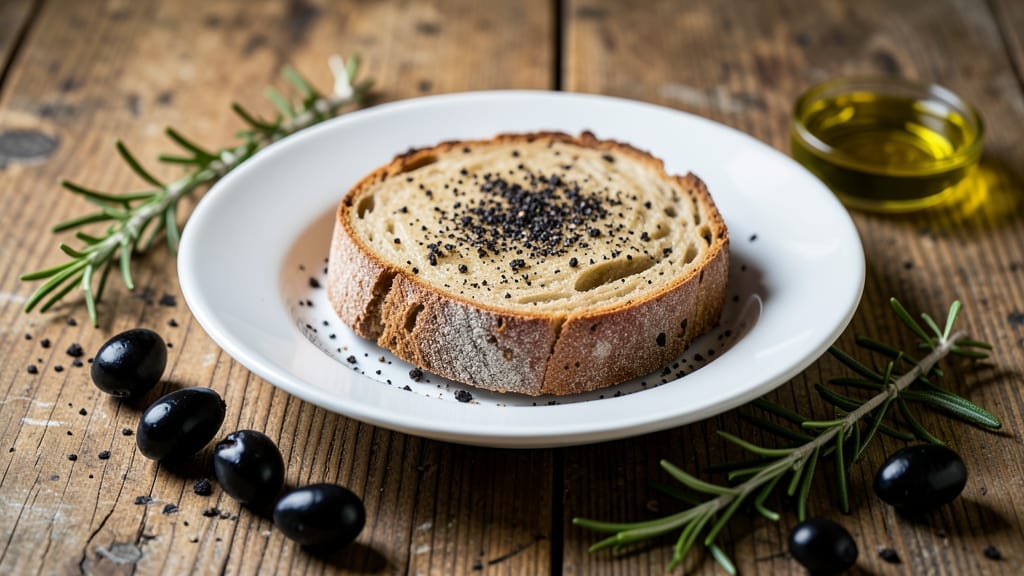
This artisan olive bread recipe delivers the kind of flaky perfection that makes every slice worth savoring—where briny olives and aromatic herbs transform simple dough into something extraordinary. 💛 The secret lies in a precise balance of olive oil, finely chopped olives, and fresh rosemary, layered into the dough for bursts of flavor in every bite.
I developed this recipe after years of experimenting with rustic bread techniques, and it never fails to impress.
The process begins with a foolproof dough made from high-quality flour, olive oil, and a touch of honey for subtle sweetness that balances the saltiness of the olives.
Kneading and shaping are where the magic happens—folding the dough just right creates those signature flaky layers, while the olives and herbs get evenly distributed. Proofing for the right amount of time ensures a light, airy crumb that’s crisp on the outside and tender within.
Baking at the perfect temperature unlocks the bread’s full potential—golden, crackling crust with pockets of olive-infused richness throughout. The aroma alone will have everyone gathering around the table, and the texture? Melt-in-your-mouth layers that pair beautifully with soups, charcuterie, or as the star of a sandwich.
This isn’t just bread; it’s a centerpiece.
For an extra touch, brush the baked loaf with olive oil and sprinkle with flaky sea salt while still warm. Serve it fresh, or store it wrapped in a cloth to keep it moist. The versatility of this bread makes it perfect for any meal—let’s get baking!
Ingredients for artisan olive bread
Simple ingredients transform into artisan olive bread perfection with flaky layers and herb-infused richness.
| Ingredient | Amount | Notes |
|---|---|---|
| All-Purpose Flour 🌾 | 4 ½ cups | High-quality bread flour preferred |
| Extra-Virgin Olive Oil 🫒 | ¾ cup | Cold-pressed for best flavor |
| Active Dry Yeast 🍄 | 2 ¼ tsp | Instant yeast works too |
| Granulated Sugar 🍯 | 1 tbsp | Feeds the yeast gently |
| Warm Water 💧 | 1 ½ cups | 110°F ideal temperature |
| Honey 🍯 | 2 tbsp | Subtle sweetness balance |
| Fine Sea Salt 🧂 | 1 ½ tsp | Kosher salt preferred |
| Black Pepper 🌶️ | ½ tsp | Freshly ground preferred |
| Fresh Rosemary 🌿 | ½ cup | Chopped finely for infusion |
| Green Olives 🫒 | 1 cup | Pitted, finely chopped |
| Flaky Sea Salt 🧂 | 1 tbsp | For finishing after baking |
The flour quality makes all the difference—King Arthur or Caputo are ideal for authentic texture. Bulk bins at natural food stores often have fresher flour than pre-packaged options. For the yeast, Saf-Instant works perfectly and eliminates the need to proof it first. The olive oil should be cold-pressed—anything less loses that fruity depth of flavor. When chopping the olives, use a food processor for even distribution without overworking the dough.
No fresh rosemary? Dried rosemary at one-third the amount works, but the flavor profile changes—it’s earthier rather than bright. Substituting Kalata olives for green gives a milder taste, though the texture remains similar. Want to skip the honey? Brown sugar at half the quantity provides a deeper molasses note. The flaky sea salt should be Maldon or similar—it melts beautifully on the bread’s surface. For the water, filtered is best to avoid off flavors.
Keep the dough covered with a damp towel while it rises—2-3 hours at room temperature is ideal. For best results, shape the loaf within 30 minutes of the final rise to maintain structure. Bake on a preheated steel pan for that crackling crust. Store in a canvas bread bag or wrapped in a cloth to retain moisture for 3-4 days. Freezing works too—slice and freeze for up to 3 months with parchment between layers.
Why You’ll Love This Recipe
- No-Fuss Flaky Layers: The fold-and-rise technique makes this bread feel fancy, but honestly? It’s just a few strategic folds and a little patience. No fancy tools—just your hands and a bowl—and you’ve got that restaurant-worthy texture I crave.
- Mediterranean Crusty Bliss: That crispy edge with the creamy center? Chef’s kiss. The rosemary and olives infuse the dough while baking, so every slice is packed with bright, herby, briny goodness—no extra marinating required.
- Feeds a Crowd (or Your Cravings): This loaf is big enough to share, but small enough to finish in a few days. Perfect for game day, a picnic, or just when you’re that person who always shows up with the best bread.
- Budget-Friendly Luxury: Cold-pressed olive oil and fresh rosemary might sound pricey, but the rest of the ingredients are pantry staples. And honestly, the flaky layers and savory depth make it feel like a splurge—even when you’re using the last bit of flour in the bag.
Step-by-step instructions for artisan olive bread
Here’s how to craft bread with perfect flaky layers and vibrant Mediterranean flavors.
👨🍳 Step 1: Create the Olive and Rosemary Dough Base
In a large mixing bowl, combine the 4½ cups all-purpose flour, 1½ tsp fine sea salt, ½ tsp black pepper, and 2¼ tsp active dry yeast. Mix gently to distribute the dry ingredients evenly. In a separate bowl, whisk together the 1½ cups warm water (110°F), 1 tbsp granulated sugar, 2 tbsp honey, and ¾ cup extra-virgin olive oil. Pour this wet mixture into the dry ingredients and stir until a shaggy dough forms.
Add the ½ cup finely chopped fresh rosemary and 1 cup finely chopped green olives to the dough. Use a wooden spoon or dough whisk to incorporate these ingredients thoroughly. The dough will be sticky at this stage—this is normal. Cover the bowl with a damp kitchen towel and let it rest for 15 minutes. This initial rest helps the flour absorb the liquid and the yeast begin activating.
🍳 Step 2: Develop the Dough for Flaky Layers
After the 15-minute rest, turn the dough out onto a lightly floured surface. Sprinkle a generous amount of flour over the work surface and your hands to prevent sticking. Knead the dough for 8-10 minutes using a fold-and-turn motion. Pull one side of the dough toward you, fold it over, and rotate the dough a quarter turn. Repeat this process, working the dough until it becomes smooth and elastic.
Here’s the key to flaky layers: once the dough is smooth, shape it into a rectangle about 12×8 inches. Fold the dough in thirds like a letter, with the short ends meeting in the center. This creates three distinct layers. Seal the edges by pinching them tightly. Place the folded dough seam-side down in a lightly oiled bowl, cover with a damp towel, and let it rise in a warm place for 1 hour or until it has nearly doubled in size.
🥘 Step 3: Shape and Layer for Maximum Flakiness
After the dough has risen, turn it out onto a lightly floured surface again. Gently deflate the dough by pressing down with your fingers. Shape it into a 12×8-inch rectangle once more. This time, spread ¾ cup of the extra-virgin olive oil evenly over the surface of the dough, leaving a ½-inch border around the edges. Sprinkle 1½ teaspoons of the fine sea salt evenly over the oiled surface.
Now for the layering technique: place the ½ cup chopped fresh rosemary and 1 cup chopped green olives in a line down the center of the dough, about 2 inches from the bottom edge. Fold the long sides of the dough inward over the filling, then fold the bottom edge up to seal the package completely. This creates a log shape with layers of flavor and moisture trapped inside. Place the sealed dough seam-side down in a 9×5-inch loaf pan that has been lightly greased with olive oil.
⏰ Step 4: Proof and Bake for Crispy Crust
Cover the loaf pan with a damp towel and let the dough proof for 45-60 minutes until it has risen about 1 inch above the rim of the pan. Preheat your oven to 375°F while the dough proofs. When the dough is ready, brush the top with a thin layer of extra-virgin olive oil and sprinkle the 1 tablespoon flaky sea salt evenly over the surface. This final step creates a beautiful, crispy crust and enhances the flavor.
Bake the bread for 35-40 minutes until the top is golden brown and the internal temperature reaches 190°F. The bread is done when it sounds hollow when tapped on the bottom. For extra browning, place the loaf under the broiler for 1-2 minutes at the end of baking. Remove from the oven and let it cool in the pan for 10 minutes before transferring to a wire rack to cool completely.
Pro Tips For Making Artisan Olive Bread
- Bloom Yeast in Oil: DESCRIPTION: Mix the yeast with a spoonful of warm olive oil (not water) first—it activates faster and keeps the dough from tasting flat. I learned this the hard way when my bread came out dense; the oil gives the yeast a head start.
- Avoid Over-Kneading: DESCRIPTION: Stop when the dough springs back slowly after poking it—overworking it makes gluten tough and chewy. I used to go until it looked “perfect,” but this bread should stay tender. Two minutes past that point is usually too far.
- Use Room-Temp Olive Oil: DESCRIPTION: Cold oil won’t emulsify properly, leading to dry dough. Let your extra-virgin olive oil sit out for 30 minutes before measuring—it makes all the difference in texture. (Yes, even if you’re impatient like me.)
- Skip the Extra Water: DESCRIPTION: The recipe’s water-to-flour ratio is precise; adding more weakens structure. If the dough feels sticky, wet your hands and work it gently instead. I’ve ruined batches by “fixing” it with extra water—don’t repeat that mistake.
Regional styles of this dish
Mediterranean-Inspired Twist
In Greece, this bread often features Kalata olives and thyme instead of rosemary, creating a more subtle herbal profile. I’ve adapted this by using 1 cup Kalata olives and adding 1 tbsp dried thyme during the dough mixing.
The result is a softer crumb with a delicate, earthy aroma that pairs perfectly with grilled meats and tzatziki. 🌿
Southern Italian Rustic Style
Southern Italian bakers often skip the loaf pan entirely, shaping the dough into a free-form boule or oval. After proofing, they brush the dough with olive oil and sprinkle ½ cup crushed Kalata olives on top before baking.
This creates a rustic, textured crust that’s ideal for dipping into minestrone soup or olive oil. The key is to shape the dough loosely to allow the olives to peek through. 🔥
Spanish Pan con Aceite
In Spain, this bread becomes pan con aceite when infused with garlic and paprika. Mix 3 minced garlic cloves and 1 tsp smoked paprika into the dough during the initial kneading.
After baking, drizzle with extra-virgin olive oil and sprinkle with flaky sea salt. This version is perfect for serving with jamón ibérico or as a base for tapas. 🧄
French Olive and Herb Loaf
French bakers often incorporate herbes de Provence for a more complex herb blend. Replace the rosemary with 1 tbsp herbes de Provence and add ¼ cup chopped black olives for a lighter touch.
Shape the dough into a baguette-style loaf and bake on a baking sheet for a crispier exterior. This version shines alongside cheese platters or as a sandwich loaf for croque-monsieur. 🥖
North African Olive Bread
For a North African twist, add 1 tsp ground cumin and ½ tsp ground coriander to the dough. Use 1 cup pitted black olives for a deeper, bolder flavor. Shape the dough into a flat, round loaf and bake on a preheated pizza stone.
Serve warm with spiced lamb tagine or as a side for shakshuka. The spices add warmth that complements the briny olives beautifully. 🌍
Nutrition facts
Frequently asked questions
Why does this recipe use olive oil instead of butter?
Extra-virgin olive oil creates those signature flaky layers while adding a rich, fruity depth that butter can’t match. The oil also keeps the bread moist longer and enhances the Mediterranean flavors from the olives and rosemary. For best results, use cold-pressed olive oil—it has the most vibrant flavor!
Can I substitute dried rosemary for fresh?
Yes, but use one-third the amount of dried rosemary compared to fresh. The flavor will be more earthy rather than bright. For example, replace ½ cup fresh with 1 tablespoon dried. The texture remains similar, but the aroma changes noticeably.
What if my dough doesn’t rise enough?
Check your yeast first—it should be active when mixed with warm water (it should foam within 5-10 minutes). If the dough rises slowly, try placing it in a warm oven with the light on while it proofs. A rising tray or proofing box can also help maintain consistent warmth. The dough should nearly double in size.
How do I prevent the olives from sinking to the bottom?
Distribute the ½ cup chopped olives evenly along the center of the dough before folding it into a log shape. Press them gently into the dough but don’t overwork it—this ensures they stay dispersed throughout the loaf. The 2-inch border from the edges helps too!
Can I make this bread without a loaf pan?
Shape the dough into a free-form oval or boule after proofing. Brush the top with olive oil and sprinkle with flaky sea salt, then bake on a baking sheet. This creates a rustic crust perfect for dipping in soups or olive oil. The texture stays just as rich!

- Beetroot Pizza Recipe: Vibrant Purple Sauce with Crispy Crust - November 29, 2026
- White Peppered Gravy Recipe: Silky-Smooth Sauce for Roasted Meats - November 29, 2026
- James Martin’s Cottage Pie Recipe: Flaky Pastry Over Hearty Beef Filling - November 29, 2026